




The historical performance of Bitcoin exhibits a pronounced seasonality not only in October but throughout the entire fourth quarter. This was stated by contributors to CryptoQuant, the XWIN Research group.


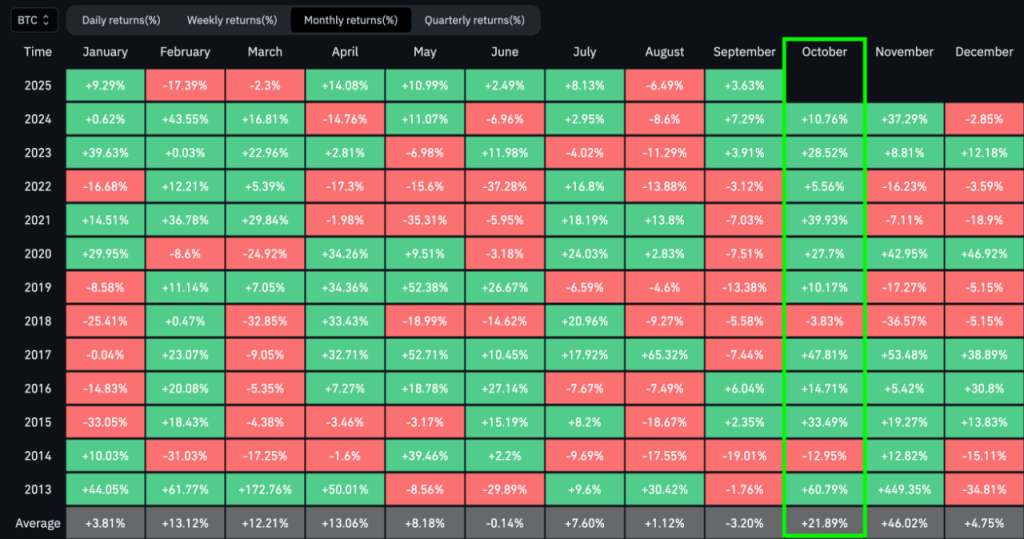
While August and September often show negative or zero returns (averaging -0.54% and -4.16% respectively), October (+29.9%), November (+37.5%), and December (+4.75%) consistently outperform them, analysts noted.
“This Uptober phenomenon is not isolated: it marks the beginning of a structural year-end rally, fueled by macroeconomic, behavioral, and cyclical factors,” emphasized XWIN Research.
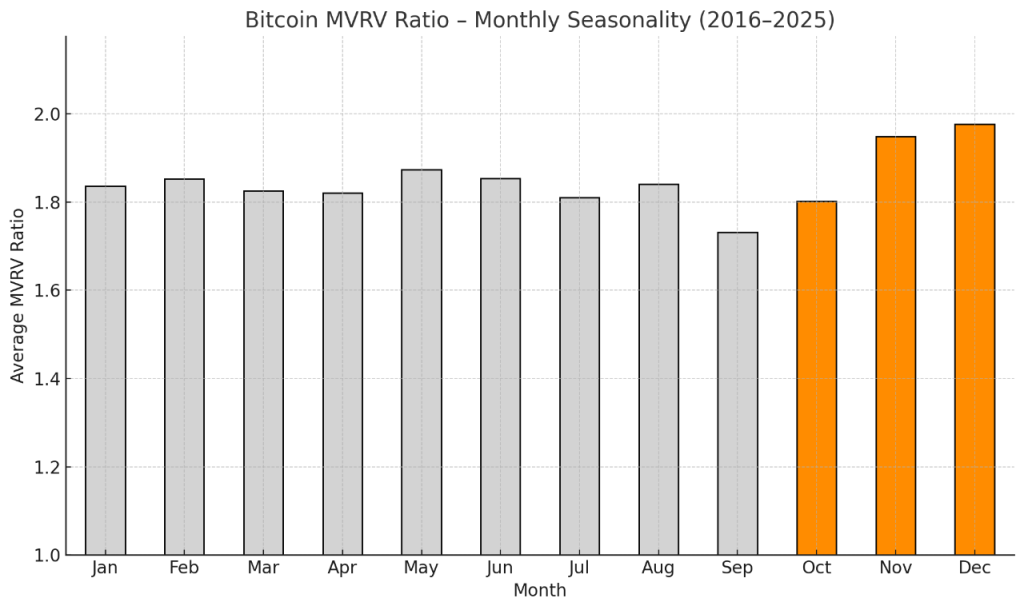
According to the specialists, their view is supported by the MVRV indicator. From 2016 to 2025, the metric remained around 1.8 for most of the time, then rose above 1.9 in October, approaching 2.0 by December. This signals increased investor returns, reflecting market demand and confidence, experts explained.


Drivers of the Rally
XWIN Research identified several factors underpinning the market’s “strength” in the fourth quarter:
- Capital rotation accelerates as institutional investors rebalance portfolios at year-end, providing an influx of fresh capital;
- Macro catalysts — US elections, FOMC decisions, and monetary policy easing — often weaken the dollar, pushing investors towards riskier assets like Bitcoin;
- Historical halving cycles also coincide with fourth-quarter rallies, as supply reductions exert upward pressure;
- Investor psychology amplifies effects: after summer stagnation, optimism returns, provoking FOMO and impulsive buying.
“Seasonal narratives like Uptober become self-fulfilling, fueling demand and driving prices up. As a result, October is not just a strong month but a flashpoint for a broader bullish phase in the fourth quarter, often culminating in an explosive year-end rally,” analysts concluded.
Earlier, on September 30, the US government suspended operations for the first time since 2018. The leading cryptocurrency rose above $116,000.