



Bitcoin mining difficulty rises by more than 7%
Based on the latest difficulty adjustment, Bitcoin’s mining difficulty rose by 7.31% to 15.56 T.
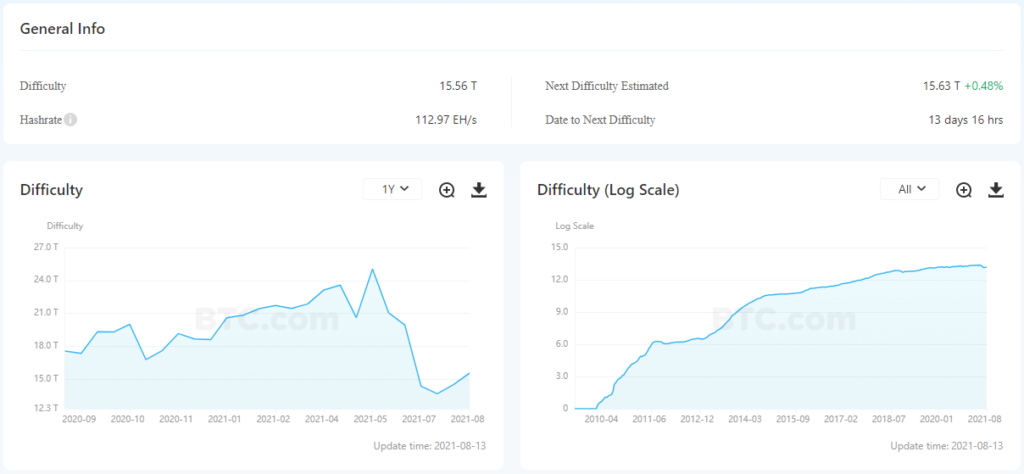
Over the past two weeks, the average block interval stood at 9 minutes 19 seconds.
At the end of July, Bitcoin mining difficulty rose for the first time in two months. After hitting a peak in May, it gradually declined, first shedding 16%, and then a further 5.3%. The ensuing fall was a record drop — 27.94%. The metric fell by 4.8%.
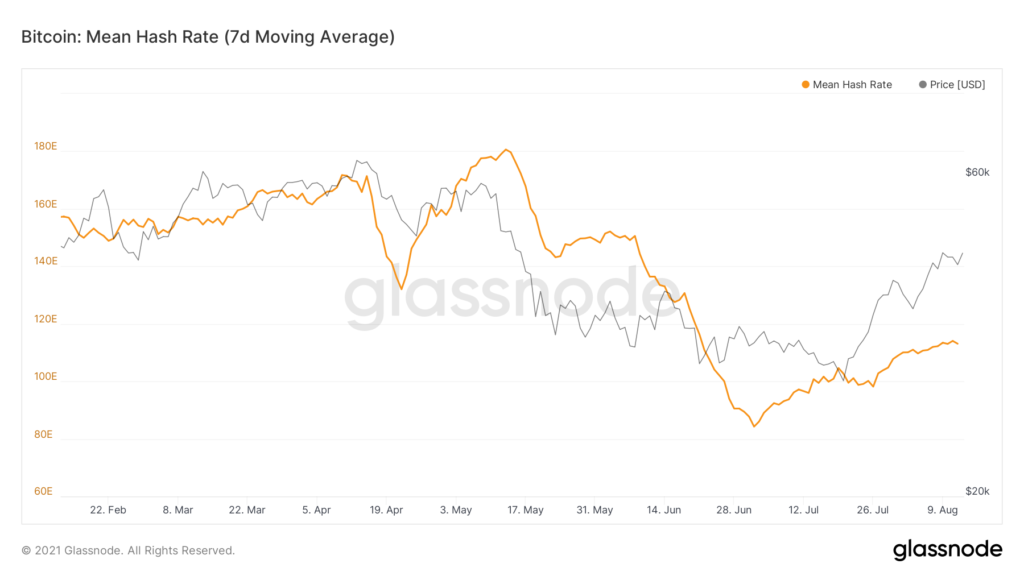
The difficulty of Bitcoin is inextricably linked to the network’s hash rate, which, judging by the smoothed 7-day moving average chart, has been rising steadily over the last three weeks. The metric reached 113 EH/s, well below its May maximum of 180 EH/s.
Despite the ban on cryptocurrency mining in China, pools from China (AntPool, Poolin, ViaBTC, F2Pool) still hold leading positions in total hash rate. This is because major players are relocating equipment and deploying computing power abroad.
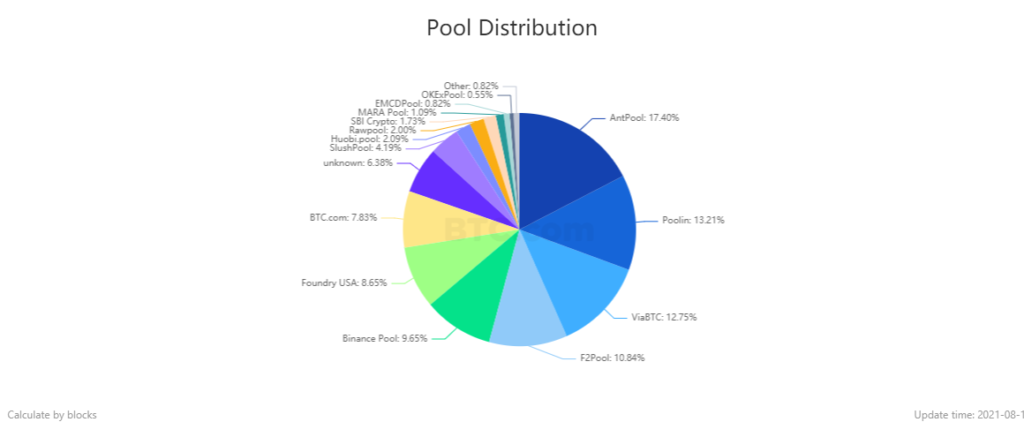
In March 2021, leading mining operations in China ceased to dominate Bitcoin’s hash rate.
Subscribe to ForkLog’s news on VK.
Рассылки ForkLog: держите руку на пульсе биткоин-индустрии!