




As a result of another recalculation, Bitcoin mining difficulty rose by 6.03%. The metric reached 14.5 trillion hashes (T).


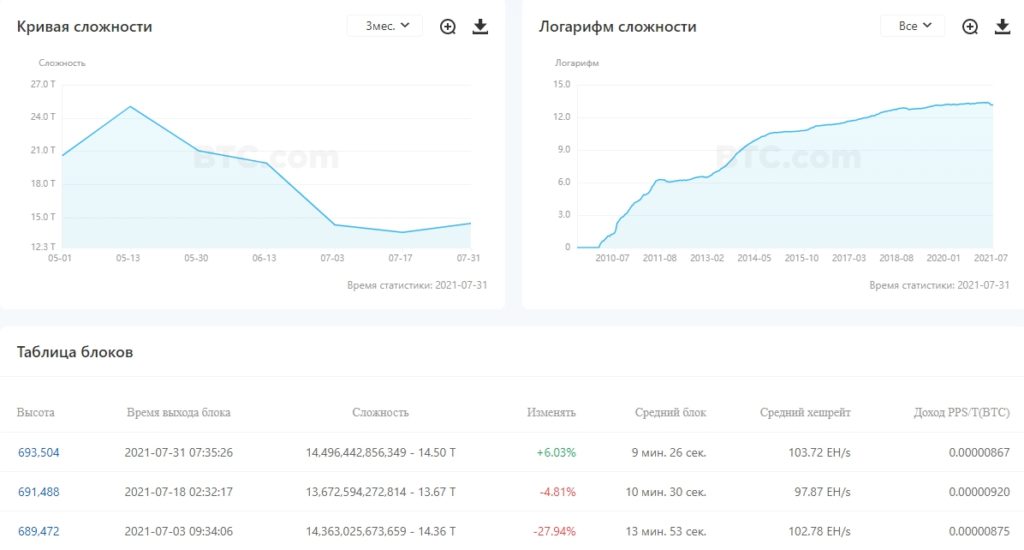
This is the first increase since May 13, when it reached a maximum at a level of 25.05 T.
After that the metric continued to shrink: first having fallen 16%, and then a further 5.3%. The subsequent drop proved record-breaking — 27.94%. Then the difficulty decreased by 4.8%.
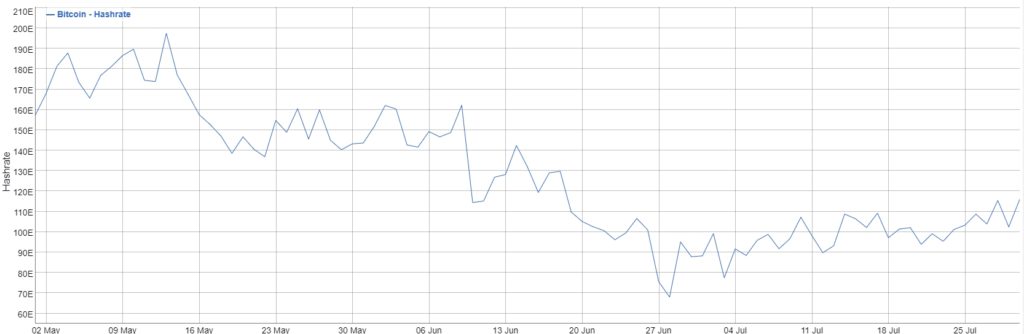
The metric correlates with Bitcoin’s hashrate, which began to fall in May, after power-supply problems for miners in China’s Sichuan province, one of the world’s leading cryptocurrency mining hubs at the time.
The computing power of the network of digital gold continued to shrink, as Chinese authorities began cracking down on the industry in the country.
However in July the hashrate began to recover amid the return to the network of miners’ equipment that had moved their operations from China to other jurisdictions.
According to BitinfoCharts, at the time of writing the metric stood at 116.45 EH/s. The service logged a low of 68 EH/s on June 28.


Poolin’s vice-president Alejandro de la Torre noted in ForkLog that the era of China’s dominance in mining can be considered over due to the migration of capacity to other jurisdictions.
However, according to the Cambridge Centre for Alternative Finance, the share of miners from China in Bitcoin’s hashrate had fallen below 50% as early as March 2021.
Subscribe to ForkLog’s updates on Facebook.