




Since May, Bitcoin has remained in a consolidation zone, but without a resurgence in demand, new highs in the near term appear unlikely. This view was presented by Glassnode.
On June 22, the leading cryptocurrency failed to hold the $99,000 level amid escalating conflict in the Middle East. Within two days, prices recovered following reports of de-escalation, returning to the consolidation range of $100,000-$110,000, where they have been since May.
According to analysts, Bitcoin found support at the upper boundary of the $93,000-$100,000 corridor. This zone was marked by significant accumulation of the asset in the first quarter of 2025.


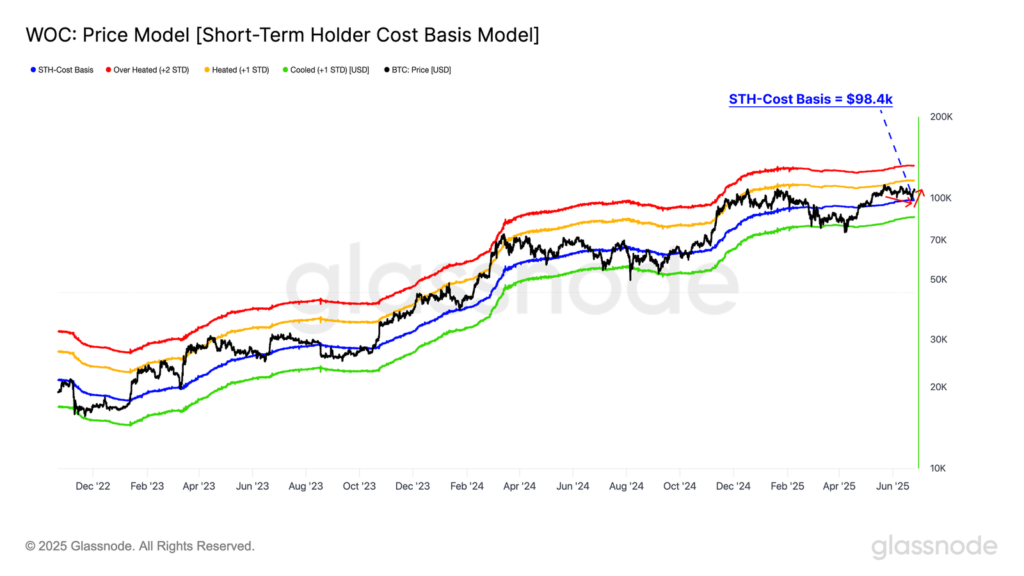
“As long as the price holds above this range, the bull market structure remains intact,” noted Glassnode.
However, a break below the corridor could trigger a deeper correction, analysts warned.
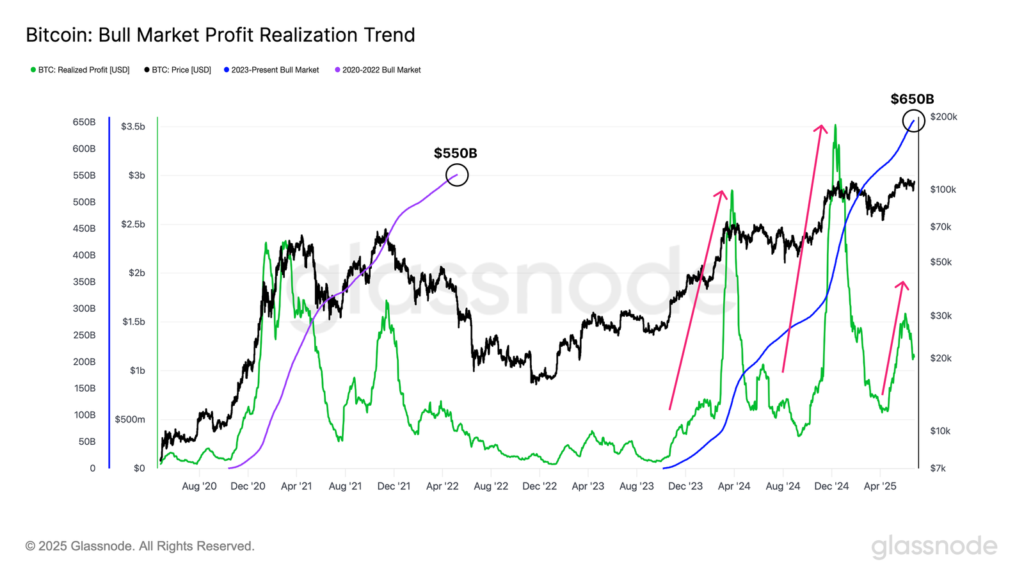
Realized profit in this cycle has already exceeded $650 billion compared to $550 billion during the 2020-2022 period, but its realization has now slowed.
The volume of on-chain transfers has decreased by 32% since the end of May, indicating a decline in investor activity.
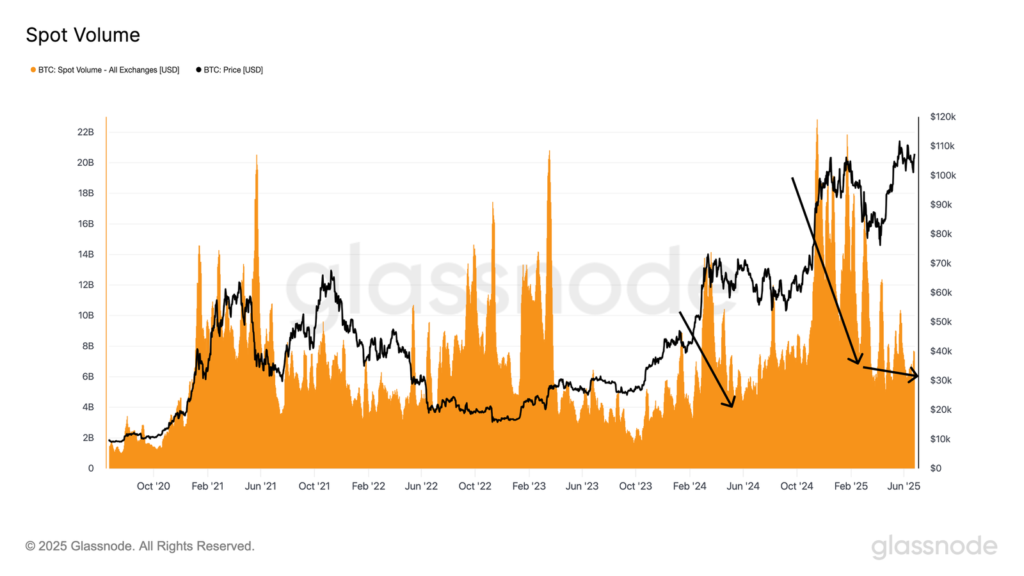
According to analysts, recent price movements were solely driven by news headlines. Even reaching a historic high above $111,000 was not accompanied by a noticeable surge in spot trading volumes, unlike previous ATHs.
The futures market remains relatively active, but open interest has decreased by 7%, and liquidation volumes have increased in both directions, experts noted. Meanwhile, funding rates are declining, indicating a reduced appetite for long positions and leverage.
According to Glassnode experts, these trends indicate growing market fatigue.
“Without a revival in demand and conviction, the chances of breaking to new highs in the short term seem limited,” they concluded.
Earlier, technical analysts pointed to patterns suggesting Bitcoin could rise above $120,000 this summer.
CryptoQuant presented a “conservative” price forecast for the leading cryptocurrency, predicting it will reach $160,000.