



Just add water: Pakistan between a crypto dream and hard reality
Pakistan seeks technological sovereignty, yet these ambitions collide with hard economic and political realities, low living standards and a long-running conflict with India, which controls the headwaters of key rivers.
ForkLog examines how an Islamic republic with vast human capital is trying to build a digital future amid instability.
First steps into the digital economy
Pakistan, a country of more than 255 million people, is actively embracing digital technologies. Recent years have brought rising interest in cryptocurrencies and artificial intelligence. Young people, especially in big cities like Karachi and Lahore, increasingly use blockchain applications and dabble in trading.
This is not mere fashion — for many it is a hedge against financial instability. Digital assets are an attractive tool for preserving and growing savings amid high inflation of the Pakistani rupee. For a young, tech-savvy population, cryptocurrencies have also become a means for cross-border transfers and income.
Yet not all Pakistanis can afford high-speed internet. According to data for 2025, only 45.7% of the population has a stable connection, and rural areas often remain uncovered altogether. This markedly slows the mass adoption of digital currencies.
A crypto paradox
Pakistan’s crypto landscape is a classic clash between government and populace. Digital assets sit in a grey area. In 2022 the authorities considered banning cryptocurrencies and planned to block websites related to digital assets. In parallel, the state bank announced a CBDC launch by 2025.
Despite this, the country shows one of the highest adoption rates in the world. Thanks to retail investors, Pakistan entered the global top ten for crypto adoption in 2024.
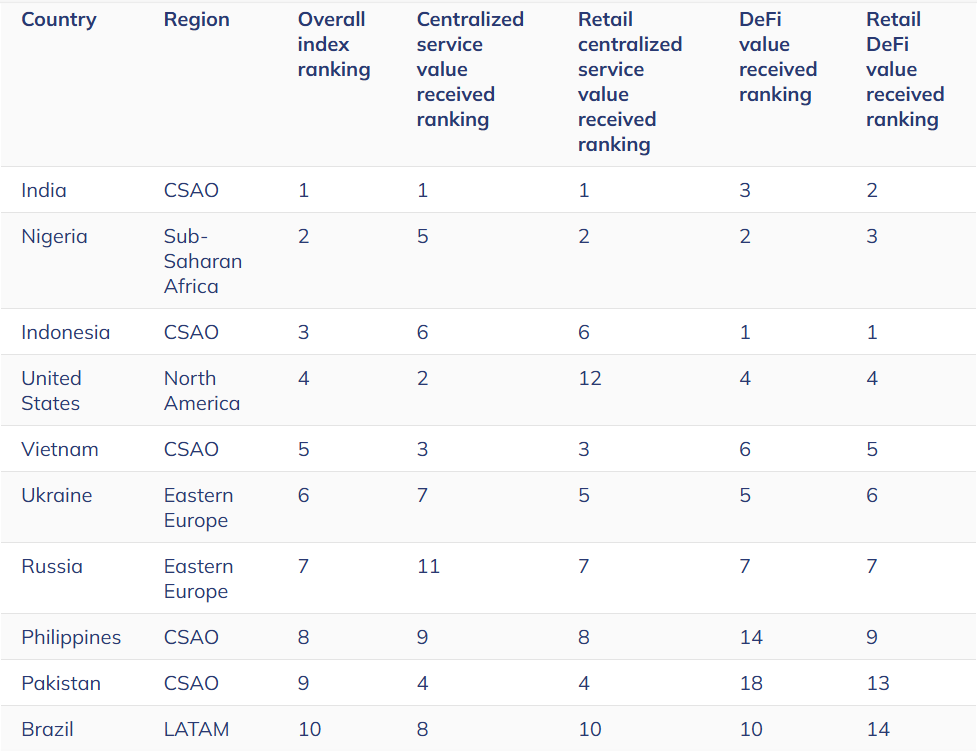
Analysts also forecast further rapid growth: by the end of 2025 the number of crypto users in the country is expected to exceed 27 million, with industry revenue reaching $1.6 billion.
Dreams of bitcoin mining and state reserves
In 2021 the Khyber Pakhtunkhwa province announced plans to build state-run farms to mine digital gold. The idea was to use cheap hydropower to top up the treasury.
The initiative stalled until 2025, when the head of the Council on Cryptocurrencies, Bilal bin Saqib, announced plans to channel surplus electricity into bitcoin mining and to power data centres for AI. Later local media reported that the government would allocate 2 GW for these purposes.
The emphasis is on using excess energy from renewables — hydro, wind and solar. It is a balanced environmental agenda without Luddism: the country does not fear technology but seeks to minimise harm to nature.
Soon Saqib announced the creation of a national reserve in digital gold. These intentions, like other moves in crypto and artificial intelligence, raised concerns at the IMF.
Pakistan has announced ambitious plans to use surplus renewable energy for mining and to create a bitcoin fund. However, practical implementation requires a clear legislative framework. As of now, such a legal base has yet to be developed, the main obstacle to the goal.
A digital Silk Road
Pakistan’s technological sprint would be impossible without China. Beijing is Islamabad’s main partner, and this cooperation goes far beyond politics. It is embedded in the mega-project of the China–Pakistan Economic Corridor (CPEC).
Key areas of support:
- infrastructure — Chinese companies are actively laying fibre-optic cables. One example is the PEACE (Pakistan & East Africa Connecting Europe) submarine cable, which reduces Pakistan’s dependence on existing routes and directly connects it to friendly countries;
- artificial intelligence and surveillance — China is helping to deploy “Safe City” systems in Islamabad, Lahore and other megacities. These are integrated platforms with thousands of cameras and AI algorithms for facial recognition and behaviour analysis;
- 5G connectivity — Chinese giants Huawei and ZTE are the main contractors for testing and rolling out fifth-generation networks in Pakistan.
For China, a technologically advanced and stable Pakistan is a guarantee of the security of its investments in CPEC and a key node in the “Belt and Road” initiative.
The internet under control
The internet in Pakistan is tightly regulated, but the methods differ from China’s. If the “Great Firewall” is a complex, preventive content-filtering system, Pakistan’s approach is reactive and blunt.
The main regulator is the Pakistan Telecommunication Authority (PTA). Its toolkit:
- platform blocks — the authorities have not hesitated to shut off access to YouTube, TikTok, Wikipedia and, more recently, to the social network X nationwide. The blocks are targeted and temporary;
- shutdowns — during political protests or unrest, the government regularly turns off mobile internet across the country or in specific regions. This is seen as an effective way to disrupt protesters’ coordination;
- traffic throttling — reducing access speeds to certain resources to make them uncomfortable to use.
Such methods inflict direct damage on the digital economy, but the authorities deem them justified to maintain control.
India’s water lever
Pakistan’s main vulnerability is access to water. The country critically depends on rivers that originate in India or in Indian-controlled Kashmir. This is a legacy of the Partition of British India, which New Delhi uses as a powerful lever of pressure.
Relations are governed by the 1960 Indus Waters Treaty. Under it, Pakistan receives the flows of the “western” rivers (Indus, Jhelum, Chenab), and India the “eastern” (Ravi, Beas, Sutlej). India, however, has the right to build hydropower plants on the “Pakistani” rivers.
The latest flare-up of the Kashmir conflict, which began in April 2025, once again highlighted this vulnerability. In response to the escalation, India restricted the flow of water in the Chenab and Jhelum rivers, which Pakistan uses for agriculture and power generation. Such actions allow India to exert direct economic pressure on its neighbour.
In this context, technological development becomes a matter of survival. Artificial intelligence is already used to optimise water consumption in agriculture, and a shift to alternative energy sources, including mining powered by hydropower plants, helps reduce critical dependence on rivers controlled by India.
Economic realism and a key to the future
To gauge how realistic Pakistan’s plans for digitalisation and cryptocurrencies are, consider the economic indicators. The average income in the country is $1,824 a year — extremely low by global standards. Buying, for instance, mining equipment remains out of reach for the overwhelming majority of Pakistanis.
This figure explains much: why people flee into cryptocurrencies from poverty, why the government cannot finance its own IT projects and why the country is so dependent on Chinese loans and technology. Talk of creating sophisticated AI ecosystems or buying bitcoin for state reserves can sound detached from a reality in which millions lack basic needs.
Pakistan stands at a crossroads. On one side lie vast human capital, an interest in digital finance and support from China. On the other — capricious regulation, poverty and persistent tensions with India.
The country must find a balance between ambition and reality. If plans for a bitcoin reserve and mining pay off, they could offer a model for other developing countries. But without resolving basics — from internet access to energy stability — such projects risk remaining on paper.
The path is fraught with risks: from digital authoritarianism to economic isolation in case of failure. Yet for the country, such a technological leap could be a chance for a better future.
Рассылки ForkLog: держите руку на пульсе биткоин-индустрии!