



Meme tokens: from joke to scam
Born as a joke, meme coins have become an integral part of the crypto ecosystem. Rooted in popular characters and humour, some have found an audience and attracted legions of supporters, building strong communities and developer teams.
The sector would seem to have examples to emulate. Yet rather than offering anything unique or innovative, meme coins in the main have become one of the most volatile and speculative corners of the market.
Communities scrutinise every word from influencers to spin it into a token; newcomers hope to get rich (though insiders usually do); even politicians have joined the chase. What this trend could bring—and the risks it poses to crypto—is the subject of this piece.
This is no joke
The best-known representative is Dogecoin (DOGE). It was the first to break into and remain in the top ten cryptoassets by market capitalisation (CoinGecko), competing with weightier projects.
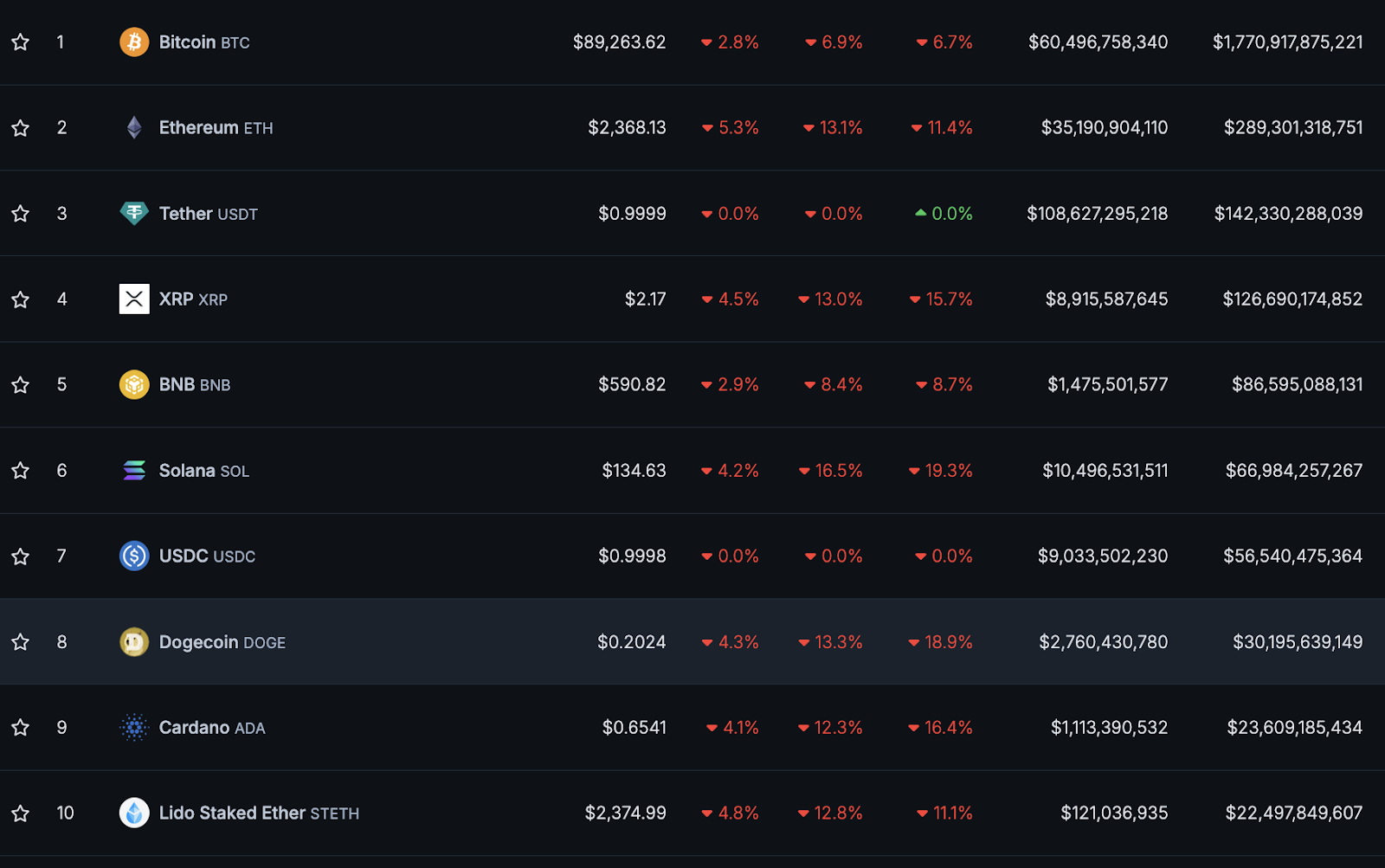
Dogecoin was conceived as a spoof on the proliferation of cryptocurrencies, yet it quickly built a strong community. Its chief ambassador became Elon Musk—his energetic promotion restarted network development and broadened the user base, helped by celebrities such as Snoop Dogg, Lil Yachty and Mark Cuban.
Dogecoin likely owes its popularity to its irreverent take on serious matters. The project has infrastructure, a development plan and a team of engineers. Over 11 years the meme token has travelled a long road to acceptance, becoming a popular tool among merchants for taking payments. It also ignited the trend of “dog coins”.
Shiba Inu and Floki Inu have proved no worse in concept or execution than Dogecoin. The former’s team is actively expanding the project, offering a metaverse, a layer-2 solution atop Ethereum, and plans to turn SHIB—the ecosystem’s core asset—from a meme into a utility token.
Floki Inu’s team also touted serious plans. In late 2024 developers announced they were preparing to launch an ETP for European investors.
These examples show that meme coins can evolve into full-fledged crypto-ecosystems with real development. But that requires team effort, attention to the end product and community support. In practice, such projects are exceptions; most of the sector has become a vehicle for speculation.
Young and restless
Meme coins lowered the barrier to entry: one needn’t buy the first or second cryptocurrency and hope for outsized gains if one can catch them by getting in early on a meme coin. Even so, this still constrained mass speculation—creators needed at least some technical skill, which not everyone had.
Pump.fun, a Solana-based platform, changed that by reducing new-asset creation to a minimum. Since the “meme-coin factory” went live, cumulative commission income has reached $431m. Users have launched more than 6.3m coins with a combined capitalisation above $5bn, though many did not survive.
The ease of spinning up a meme token triggered a boom in unbacked speculative coins. The work of scammers became easier, and insider trading flourished. Any pronouncement by an influencer started to be read as a signal for the next shitcoin.
In January 2025 a class action was filed against Pump.fun’s operator, Baton Corporation. The project was accused of selling unregistered securities in the form of tokens and of facilitating Ponzi and pump-and-dump schemes. This happened just as shifts in the approach of America’s Securities and Exchange Commission (SEC) and other authorities to crypto regulation were already under way.
Politicians
The meme-coin sector attracted Donald Trump, newly and unexpectedly crypto-friendly. Neither his status as head of state, possible violations of law nor questions of ethics deterred him. Two days before his inauguration he announced the launch of TRUMP, which surged before swiftly correcting—investors suffered losses of about $2bn. His wife Melania followed suit. At the time of writing neither the SEC nor any other regulator had taken an interest in the asset.
Around the same time a curious story unfolded on another continent. On February 9th, an announcement appeared in the X account of Faustin-Archange Touadéra, president of the Central African Republic (CAR), about launching a state meme token, CAR. Many doubted it was real, though at its peak the token’s capitalisation reached $1.05bn. Within a day CAR fell by 96%, and if this was indeed an “experiment” meant to aid national development and put the country on the international stage, it failed.
The title of most scandalous project is currently held by LIBRA, helped along by Argentina’s president, Javier Milei. He promoted the token, spurring a rally that was short-lived. The president later tried to distance himself, but he was nevertheless accused of fraud, participation in a pump-and-dump scheme and threatened with impeachment.
Regulators again showed no interest; instead, researchers and analysts stepped in. They saw links between the teams responsible for launching the LIBRA and MELANIA meme tokens.
Consequences
This may not yet be a catastrophe, but it already carries serious reputational risks for a crypto industry that was supposed to have moved beyond the Wild West phase.
In a conversation with journalists, BOB co-founder Dom Harz noted that the scandals around LIBRA—and earlier TRUMP, MELANIA, BARRON and HAWK—have undermined Solana’s reputation. A network conceived as an “Ethereum killer” is increasingly associated not with innovation but with fraud, scams, insiders and pump schemes.
“The narrative of Solana as the best retail network for onboarding has just changed and is now associated with fraud and insider trading. It will take time to fix this,” — believes Rollup Ventures co-founder known as Andy.
According to a Chainplay survey of 1,066 respondents, nearly 80% of crypto investors bought president-approved meme coins TRUMP, CAR and LIBRA, but two-thirds lost money.
“Instead of fostering long-term engagement, these meme coins have led to significant disappointment. High volatility, rapid pump-and-dump cycles and the absence of durable value have driven many away,” the researchers noted.
By their count, for 37% of investors these “presidential” tokens were their first experience with digital assets. Afterward, 21% of newcomers opted out of further participation in the market. A volatile, speculative niche thus threatens to impede the mass adoption the industry seeks.
Conclusion
For the most part, meme coins have ceased to be projects with their own stories, infrastructure and goals. They now look like opportunities for insiders, grifters and the quick-buck crowd.
If the industry wants long-term growth, its participants must ensure users see in cryptocurrencies not just a vehicle for speculation, but a financial system of the future.
Рассылки ForkLog: держите руку на пульсе биткоин-индустрии!