



As a result of yet another recalculation, the mining difficulty of the first cryptocurrency rose by 0.51%. The metric offset the previous a slight retracement and reached a new high at 36.95 T.


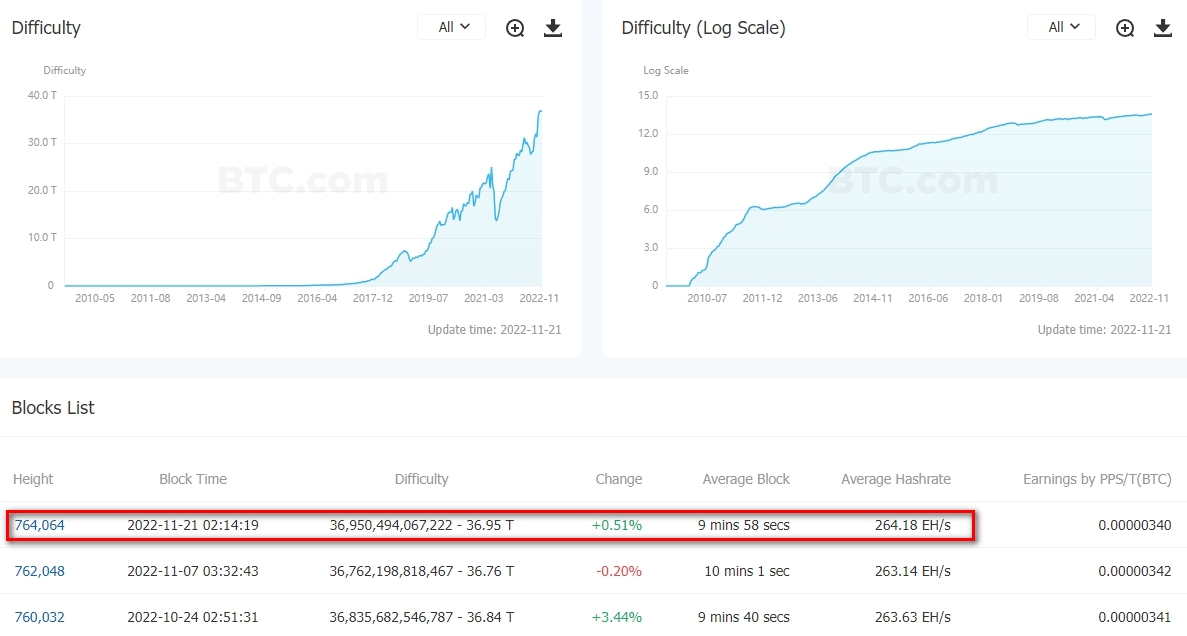
Average hashrate over roughly six weeks has remained steadily above the level of 260 EH/s.
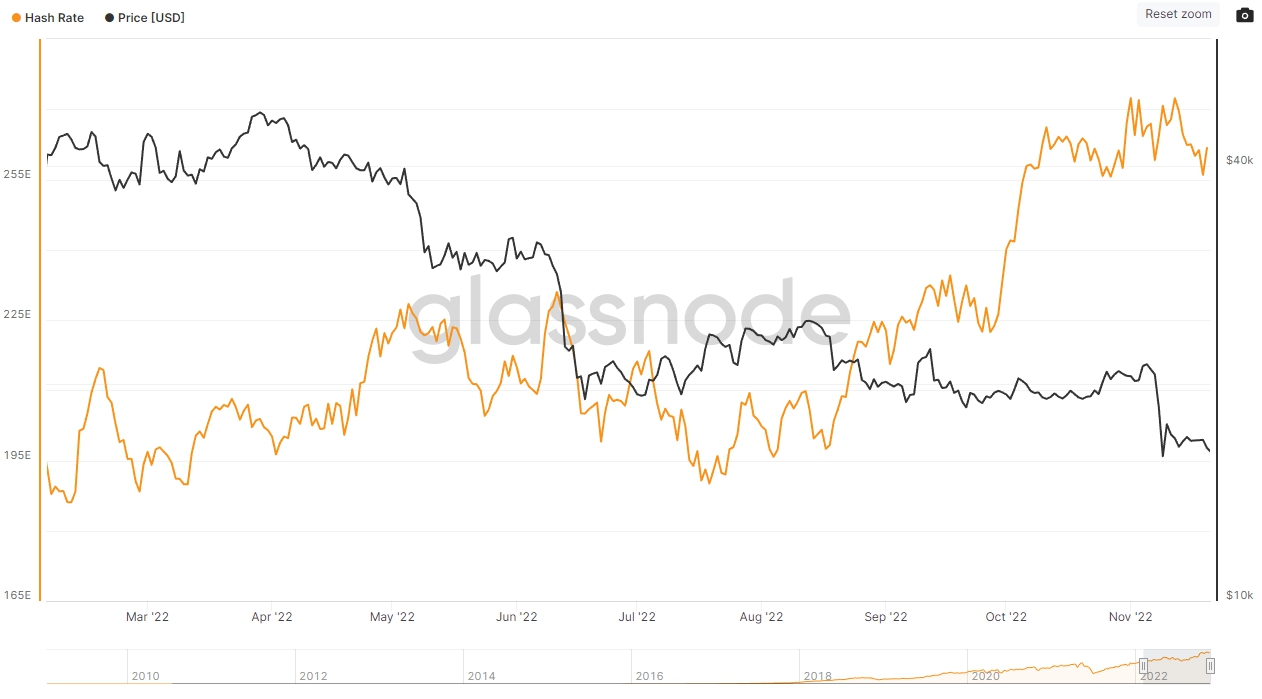
According to Glassnode, the network’s hashing power (7-day smoothed moving average) was recorded on November 1 — 272.4 EH/s. On November 12 the metric approached the maximum, surpassing 272 EH/s.

In terms of mining pools, leadership by Bitcoin’s hashrate share is firmly held by Foundry USA (26.73%). On the second and third places are AntPool (17.51%) and Binance Pool (14.98%).


In June, Arcane Research analysts noted that miners’ fell by 80% compared with the November 2021 peak — to levels two years ago. Revenue was weighed by price stagnation, higher electricity tariffs, and the ongoing rise in difficulty.
In the same month, publicly traded industry companies for the first time sold more cryptocurrency than they mined. In July the trend continued, its turnaround occurred in August.
In October, Arcane Research analysts estimated the miners’ «pain threshold» at $18,300 per BTC. At the time of writing, digital gold is trading at around $16,090 (CoinGecko).
Glassnode noted that the aggregate balance of Bitcoin miners hit a 10-month low.
Hashprice (the daily mining revenue per unit of computing power) is near $56 per PH/s. At the start of the year, the figure was $247.


In September, the provider of mining infrastructure Compute North filed for bankruptcy.
In October, Nasdaq-listed Core Scientific warned of insolvency. Argo Blockchain, listed on the stock exchange, reported risks of shortening or halting mining operations due to lack of funding.
Read ForkLog’s Bitcoin news on our Telegram — cryptocurrency news, prices and analysis.