


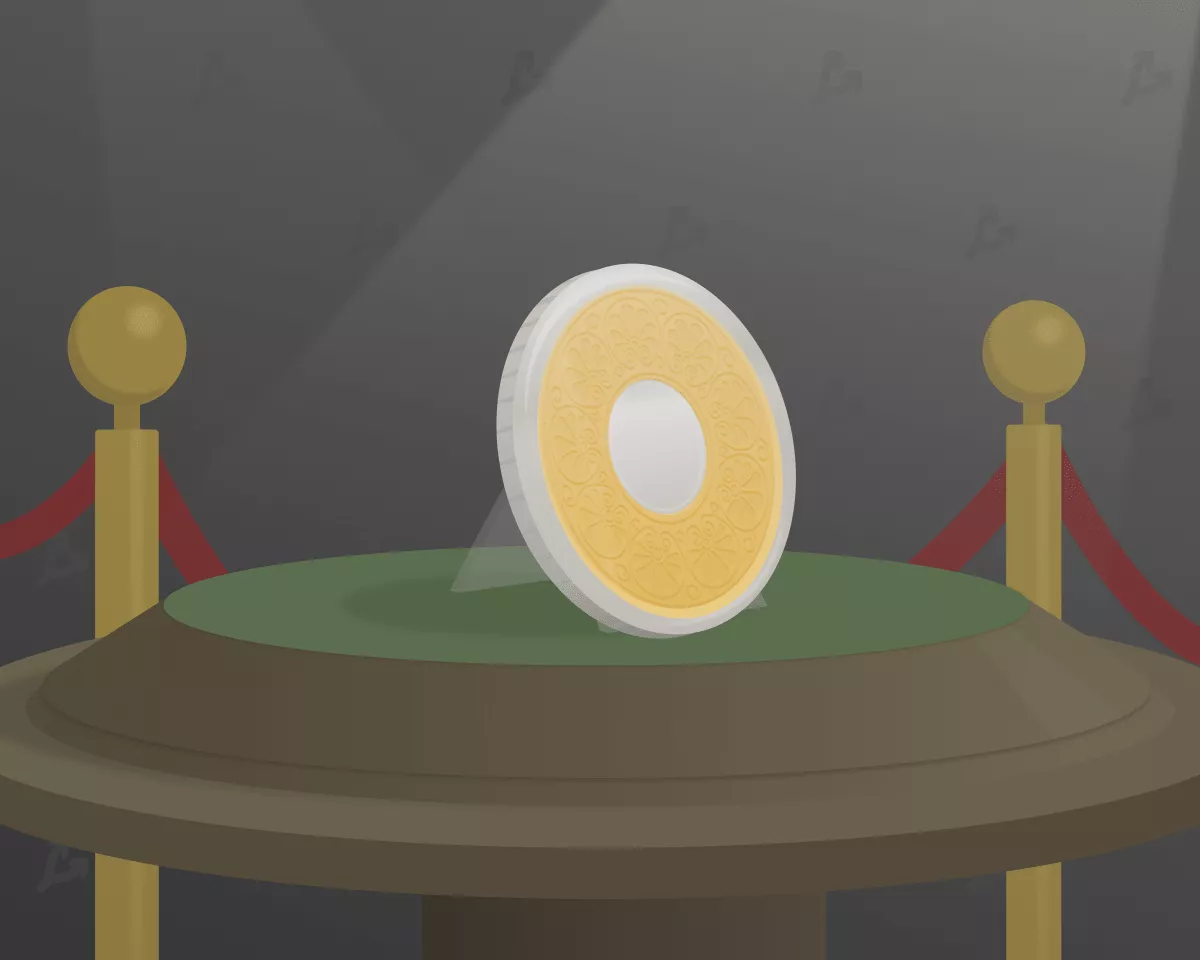
NFT as a New Class of Virtual Assets: Prospects (Part I)
ForkLog publishes the third part of Dmitry Bondar’s series on non-fungible tokens (NFTs) as a new class of virtual assets. First part is an introduction to the NFT market, second on the close kinship between cryptocurrencies and collectibles, the third, about the prospects for NFTs.
We talked about the past and present of NFTs; now we will try to look into the future. In which directions will NFTs develop, and what challenges might they face?
Let’s begin with technical prospects: fast and cheap transactions, interoperability of NFTs, decentralized storage of NFT metadata. We will next discuss the economic prospects of tokenizing NFTs and the integration of NFTs into decentralized finance applications: shards, loans backed by NFTs and trading shards, the NFT valuation dilemma, tokenization of NFT collections, NFTs and farming. We will finish with the question of NFT regulation, for which there is currently no answer. Until authorities answer to which asset class freely traded digital objects from virtual worlds belong, regulating such a frontier of financial thinking—shards and Aavegotchi—will be impossible.
Fast and Cheap Transactions
Primarily, the NFT market faces throughput and high fees on the Ethereum network. The memory of CryptoKitties, which clogged the network and made miners a little richer, is still fresh. Today Ethereum is a network for the rich; only those moving digital assets worth thousands of dollars can pay such fees.
NFT projects will look for relief in sidechains, up to a federated Bitcoin sidechain, and on other blockchains, for example, WAX and Flow. NFTs have reduced owners’ dependence on their developers; the next step is reducing NFT’s dependence on a single blockchain.
Interoperability of NFTs
The ability to use NFTs outside their native environment increases their usefulness and liquidity. Cross-chain NFT transactions and the ability to trade NFTs from different blockchains on a single marketplace will be a breakthrough for the NFT market, but NFT interoperability also has a more interesting aspect. It is the ability to use items and characters from one game in another game. The ability to move from one virtual world to another with your virtual belongings.
Second-layer games atop CryptoKitties is the first experience of building a game around NFT, not NFT around a game. Aavegotchi is the first experience of building a game around deposit certificates turned into NFTs. The Enjin Gaming Universe expands, and its example inspires other projects. A metaverse in which you can use NFTs from different virtual worlds is even further than Polkadot. Let’s hope that the project Eminence attracted public attention precisely for this reason.
Decentralized Storage of NFT Metadata
NFT metadata, which turn a plain token into a game character or a digital artwork, can be stored centrally or in a decentralized manner. Not only stablecoins, but NFTs can be centralized. First, the issuer of the token can reserve the right to freeze and confiscate this token. Second, they can control the provisioning of this token.
If NFT metadata are stored under the control of a centralized server, then they can change them or simply shut down the server.
Decentralized storage of NFT metadata does not necessarily happen on-chain – the ability to store data directly on the blockchain is very limited. One can upload these metadata to IPFS, for example, via Pinata, and other decentralized data storage networks, such as Arweave or Filecoin. Decentralized storage of NFT metadata is a further reduction of owners’ dependence on their producers.
You can also decentralize ownership of NFTs if you tokenize them.
Shards
NFTs are non-fungible and indivisible, but tokenization can fix this. NIFTEX allows wrapping NFTs into interchangeable and divisible ERC-20 tokens – shards.
The scheme for issuing shards is as follows. The user chooses into how many shards to split the NFT, what portion of shards to keep, and what portion to sell on the primary market and at what price. Then the NFT is sent to a smart contract that manages the provision of shards, and the shards are listed for sale at the designated price. The initial shard sale lasts two weeks, after which all unsold shards are returned to the issuer.
After the initial shard issuance, the NFT secured by those shards can be redeemed in two ways. The first is to collect 100% of the shards. If this were the only way to redeem shards, it would be a very niche version of the gold standard, since obtaining 100% of the shards can be problematic for various reasons, and thus there is a risk that the NFT would be frozen forever. To avoid this, there is a second method provided by the buyout clause.
If you own shards of an NFT that you want to redeem in full, you can make a buyout offer to other holders. You designate the buyout price for the missing shards in ETH and deposit this ETH amount and your shards into a smart contract. Other holders of shards of that NFT have two weeks to reject or accept your offer.
To reject your offer, they would need to fully buy out the shards you posted at your price. If this does not happen within two weeks, your offer is deemed accepted: you receive the desired NFT, the shards you posted are burned, and your ETH is used to settle the remaining shards of that NFT.
Shards enable fractional ownership of NFTs and simplify their integration into decentralized finance applications, primarily trading and lending.
NFT-backed Loans and Shard Trading
MetaCartel funded the RocketNFT experiment – a DAO for loans backed by NFTs. On the NFT lending market NFTfi allows lending and borrowing backed by NFTs. Decentraland in collaboration with Ripio Credit Network offers a mortgage – the purchase of LAND in digital form on credit. Game characters and items, digital land and artworks can be used as collateral. Get a loan backed by your favourite game character and not play with it until you repay the debt.
The problem of NFT as collateral is its indivisibility and low liquidity, but shard trading can fix this: shards of an NFT in the form of ERC-20 tokens that trade on Uniswap are more liquid than whole NFTs that trade on NFT marketplaces. This makes possible the aforementioned “lending against NFT collateral” models that require examination of each loan request by the lender, and could be complemented by automatic loans collateralized by shards in credit AMM pools like Compound.
If shard trading develops and traders begin using borrowed shards for leverage, then shard credit AMM pools will emerge – shards can be used not only as collateral but also as deposits. The value of shard trading lies in creating a new pricing mechanism for unique items.
NFT Valuation Dilemma: Auctions vs Exchanges
Traditionally, auctions are used to sell unique items, and NFTs do not overturn these traditions. Digital lands and artworks are sold at auction on primary and secondary markets, as with their analogue predecessors. Appraisers of these virtual assets strive to apply the experience of the real estate market and art valuation. In existing workings on NFT valuation methodologies, nothing fundamentally new is introduced – the basis is prices of NFTs formed at auctions or at fixed prices.
What is new is shard trading. From the shard price one can estimate the “capitalization” of the whole NFT. The sale of an NFT on the primary market may occur not via an auction but via the initial shard issuance. The subsequent price of the tokenised NFT will be formed on the secondary shard market. For example, shards of Cocaine Cowboy, a character from Axie Infinity, rose by 3427% as of 22 November 2020 compared with the price at the primary issuance.
If an NFT backed by shards is bought out via a buyout-style auction provided by the buyout clause, then its current price becomes the buyout price formed as a result of that auction. Unredeemed after buyout, the NFT shards will represent not this NFT, but a share of ETH paid for it during the buyout. Thus, after the buyout the NFT price can no longer be calculated as the current capitalization of its shards.
Thanks to trading in the tiniest fractions of a digital collectible, a new mechanism for pricing unique items emerges. The reason a fractional NFT has value does not change – it is the same reason as for a whole NFT: someone wants to collect NFTs.
We will discuss new models of collecting and tokenizing NFT portfolios, as well as new farming models using NFTs, in the second part of this article.
(to be continued)
Subscribe to ForkLog news on Telegram: ForkLog Feed — the full news feed, ForkLog — the most important news and polls.
Рассылки ForkLog: держите руку на пульсе биткоин-индустрии!