


Polygon fees rise 1,000% after POLS launch
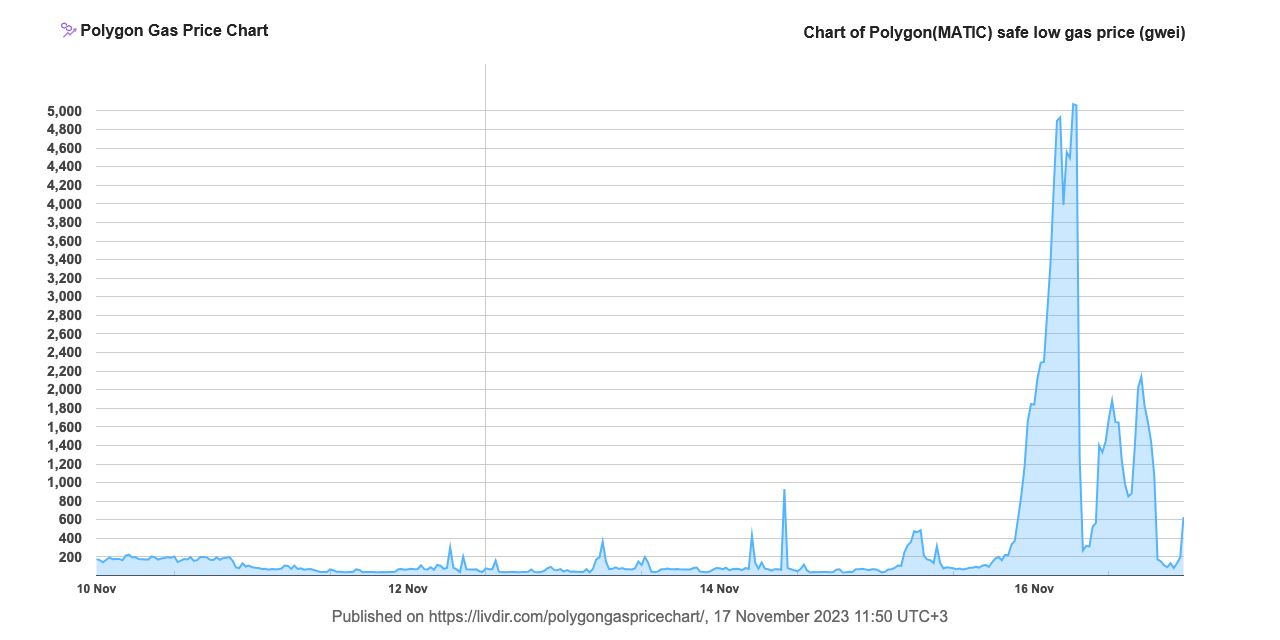
On 16 November, gas costs on the Polygon network jumped by almost 1000%, to around 5000 Gwei (~$0.1), as users began actively creating POLS tokens inspired by Ordinals.
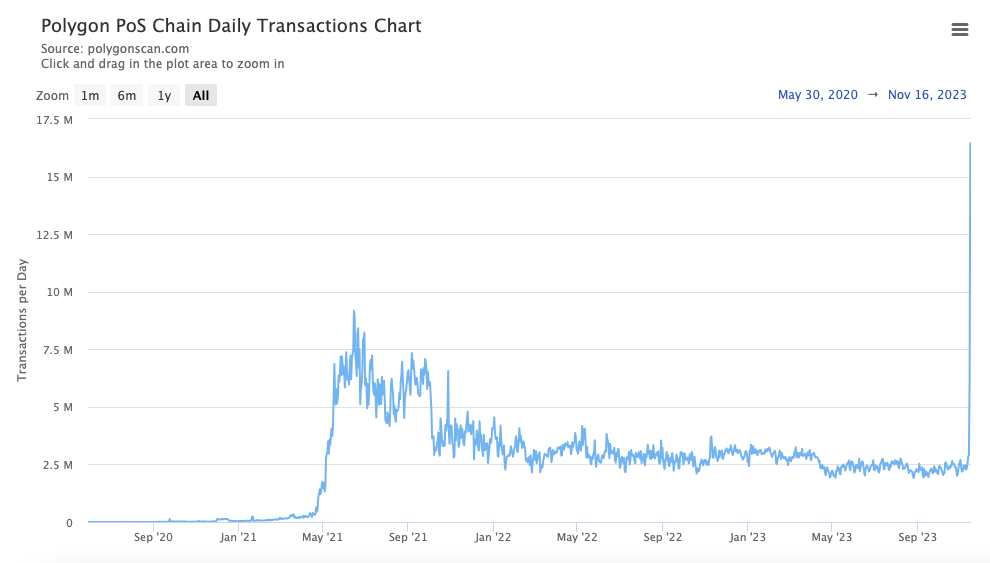
Activity in the blockchain also surged sharply: the number of transactions rose from 2.89 million to a historic high of 16.5 million.
Meanwhile, fees on Polygon, even at peak load, did not exceed those on Ethereum. The transfer fee on the second-largest blockchain by market capitalization reached $30.
At the time of writing, Polygon gas costs had stabilised at the standard level of 1000 Gwei.
The spike was driven by the popularity of the recently launched PRC-20 standard, which allows creating non-fungible tokens similar to Ordinals on the Bitcoin network.
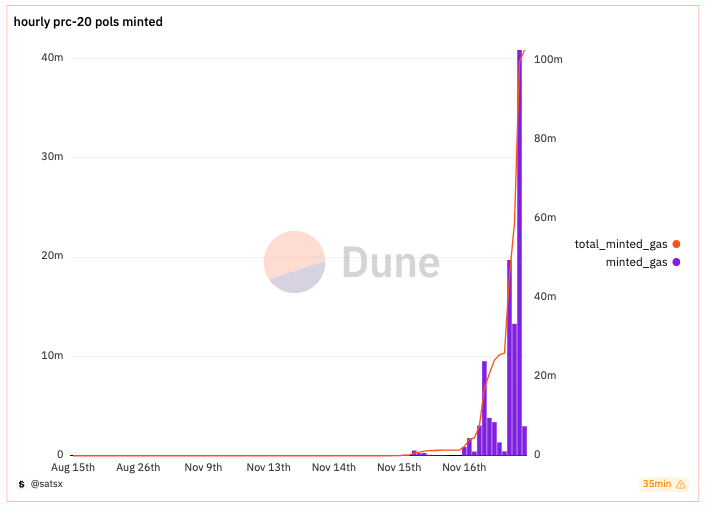
According to the Dune dashboard, since November 15 more than 102 million MATIC (~$87.5 million) has been spent minting POLS. The Baby Shark collection is the most popular.
PRC-20 works practically identically to BRC-20, but Polygon’s mechanism uses transaction-call data to generate NFTs.
Co-founder Sandeep Nailwal responded to the situation. He noted that the number of transactions per second at one moment reached 170.
What is going on on @0xPolygon POS chain? 6m transactions in last 24 hrs. 170 TPS on average. 1mn+ MATIC burnt by the protocol. The chain worked smoothly, gas fees went crazy though but no reorgs or 0 blocks etc.
I hear there is some game Baby Shark Launching, could that be the…
— Sandeep Nailwal | sandeep. polygon ? (@sandeepnailwal) November 16, 2023
“The blockchain worked smoothly, gas fees were crazy, but there were no reorganizations, zero blocks and the like,” added Nailwal.
launched a smart contract on the Ethereum mainnet for the Polygon Ecosystem Token (POL), which is intended to replace MATIC. Details of the proposal to replace the coin appeared in September.
In late June, Polygon Labs unveiled the expected Polygon 2.0 architecture.
Рассылки ForkLog: держите руку на пульсе биткоин-индустрии!