




The primary threat of quantum computing to Bitcoin lies in the issue of consensus rather than technology, according to James Check, founder of the analytical service Checkonchain.
You allow the old coins to come back to market.
Since there is no chance we come to consensus to freeze them, focus on the tech side of quantum safe wallets, and let the market sort out the rest. https://t.co/7xOZRVYl5r
— _Checkmate 🟠🔑⚡☢️🛢️ (@_Checkmatey_) November 23, 2025
According to the expert, network participants will never reach an agreement on blocking coins in old addresses vulnerable to quantum computers. Political disagreements will prevent the community from responding swiftly to the threat.
As a result, hackers may be able to breach long-dormant wallets, releasing a significant volume of bitcoins, previously thought lost, back into the market.
Check was commenting on the opinion of Delphi Digital’s head of research, known by the pseudonym Ceteris Paribus. The latter noted that while implementing quantum resistance is technically feasible, it does not resolve the fate of old coins. The main issue lies in the secondary nature of technology compared to the network’s social layer.
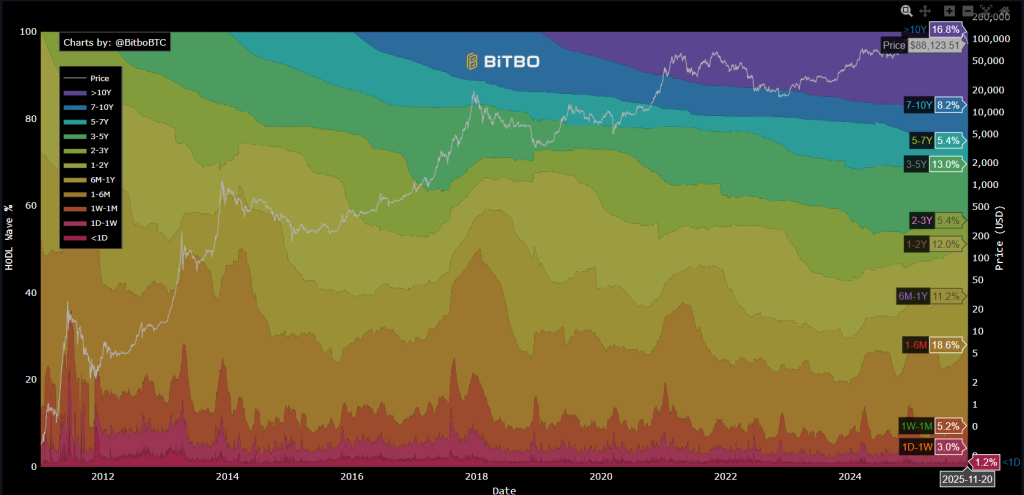
According to BitBo, 32.4% of the total bitcoin supply has remained unmoved for over five years. 16.8% of coins have not been transferred for more than 10 years. It is unknown what portion of these funds is permanently lost and what is held in long-term storage.


In April, Blockstream CEO Adam Back told Cointelegraph that the community would have to choose between disabling old vulnerable addresses or allowing attackers to steal funds. Check believes it is right to allow these coins to “return to circulation.”
Institutions Monitor the Situation
Jan van Eck, CEO of investment firm VanEck, stated in an interview with CNBC that despite the risks to encryption and privacy posed by quantum computing, Bitcoin remains a good investment for now.
He noted that it is important for those outside the industry to know that there is already an active discussion within the community about whether the current network protection is robust enough against emerging technologies.
Van Eck emphasized his firm’s pragmatic approach: the company believes in digital gold but is prepared to “exit” the asset if it deems its fundamental thesis compromised.
Back in November, analyst Willy Woo suggested a method to protect Bitcoin from the quantum threat.
Later, Back stated that systems capable of breaking the first cryptocurrency’s cryptography will not appear for another 20-40 years.