



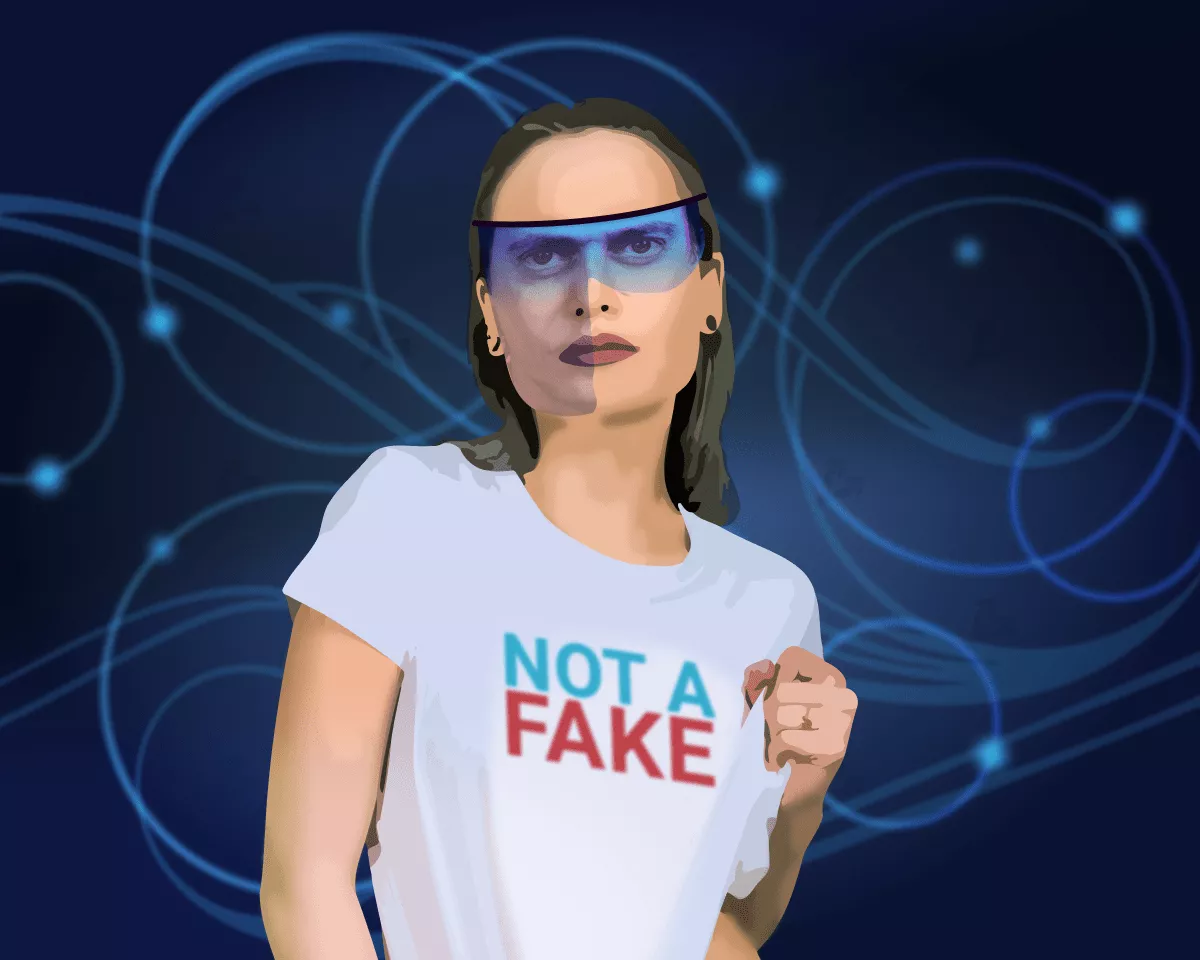
Stanford researchers Rene DiResta and Josh Goldstein have identified more than 1,000 fake LinkedIn profiles with AI-generated profile photos.
Meet Keenan Ramsey. Her LinkedIn profile says she sells software for RingCentral & has a business degree from NYU. She likes CNN, Amazon, & Melinda French Gates. Her pitches come punctuated with emojis.https://t.co/TyoBp2qxIP pic.twitter.com/LLfIvph17N
— Shannon Bond (@shannonpareil) March 27, 2022
According to DiResta, she received a message from a person named Keanu Ramsey, which looked like a standard software advertisement. However, upon closer examination it turned out that Ramsey was a fictitious identity.
The profile image looked like a standard portrait. However, the photograph contained a number of markers indicating a fabrication produced by a service like This Person Does Not Exist. DiResta noted the eye alignment, the missing earring, and the blurred hair in the background.
“This is not a story about misinformation or disinformation, but rather the intersection of a fairly ordinary use of AI technology in business and, as a consequence, questions of ethics and expectations,” said the researcher.
Researchers from the nonprofit NPR studied DiResta’s and Goldstein’s claims. According to them, more than 70 companies were linked to the fake profiles. Several organisations said they had hired external marketers, and they were surprised by the use of fake profiles. They also deny sanctioning such campaigns.
According to NRP, fake profiles are often used by companies to pitch software to new clients. If a potential client responds, they are redirected to a real person. Using this technique, companies can significantly expand their presence without increasing staff, the experts added.
Back in September 2021, researchers explained, how to distinguish fake photos from real ones.
In November, researchers created an algorithm that simplifies the creation of deepfakes.
Subscribe to ForkLog AI news on Telegram: ForkLog AI — all the news from the world of AI!