




Over the past year the combined TVL of BTCFi protocols has grown more than sixfold—from $975m to over $6.5bn. According to DeFi Llama, bitcoin has entered the top three DeFi ecosystems by TVL, behind Ethereum and Solana.
Protocols such as Babylon are opening new income opportunities for holders of the original cryptocurrency. Yet participation in BTCFi creates conditions that make it easier to track users with on-chain analytics.
Together with the team behind the bitcoin mixer Mixer.Money, we examine the state of BTCFi and tools to preserve privacy.
The state of BTCFi
BTCFi (Bitcoin Finance) is an ecosystem of decentralised finance applications built on bitcoin or using BTC as the primary asset. BTCFi protocols enable yield from staking, lending and other financial operations.
As of June 2025 most BTCFi funds are concentrated in four protocols: Babylon Protocol, Lombard Finance, Threshold Network and Solv Protocol.
Babylon Protocol has been the main driver of BTCFi’s growth. As of June, it ranks first in the ecosystem with TVL of about $4.85bn.
Technically, the project is a network based on the Babylon SDK and a set of smart contracts between bitcoin and partner PoS networks. A user sends digital gold to a special address on the Bitcoin mainnet. The coins become collateral for validators who secure the Bitcoin Supercharged Networks (BSN). In return, stakers receive rewards from the PoS networks.


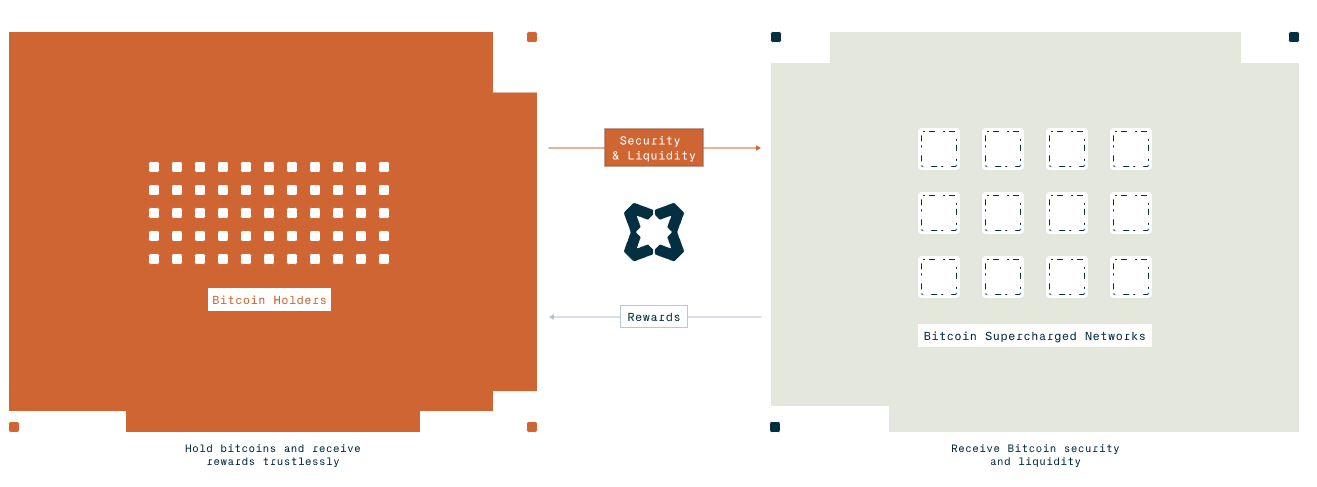
At publication, the average yield on Babylon is about 0.5% annually, depending on the chosen partner network. The minimum to participate is 0.005 BTC; the unbonding period is seven days (1,008 blocks).
Lombard Finance tackles a key problem of direct staking—funds being locked. Whereas bitcoins are locked in Babylon, Lombard issues a liquid staking token—LBTC on Ethereum—pegged 1:1 to bitcoin.
A user deposits BTC into Lombard; the protocol stakes it in Babylon and mints an equivalent amount of LBTC. Rewards accrue directly to the LBTC balance. On redemption, the tokens are burned and the user receives their bitcoins back in seven days.
As of June 2025, Lombard is the second-largest protocol in BTCFi with roughly $1.8bn in TVL. LBTC is integrated with Aave, Morpho and other DeFi platforms.
Threshold Network issues a wrapped bitcoin on Ethereum without intermediaries. The protocol mints tBTC, collateralised 1:1 with BTC.
The main difference from the popular Wrapped Bitcoin (WBTC) is decentralisation. Instead of a centralised custodian, issuance of tBTC is governed by a validator network using threshold signatures. At present more than 100 active validators secure the protocol.
In June 2025 Threshold launched support for tBTC on Starknet, opening bitcoin’s path into the world of ZK-rollups.
The team at Solv Protocol has built a Staking Abstraction Layer—an overlay that simplifies connecting bitcoin to various protocols. Its core product is SolvBTC, issued 1:1 against BTC.
How transparency becomes a problem
Analytics firms are constantly improving transaction-tracking tools, and the advent of BTCFi gives them new opportunities.
“The UTXO model in bitcoin initially provided a higher level of anonymity compared with Ethereum’s account model. However, the growth of BTCFi brings Ethereum behaviour patterns into the network of the first cryptocurrency. Users increasingly reuse the same addresses to interact with protocols and, overall, care less about privacy. This significantly simplifies the work of on-chain analysts and moves bitcoin away from its original ideals of confidentiality toward ‘ETF-isation’ and ‘etherisation’,” note Mixer.Money.
Beyond “ideological” aspects, full transparency can also be a financial liability. A telling example is trader James Wynn’s story. On the Hyperliquid decentralised exchange he lost millions of dollars by opening large bitcoin long positions that were visible to every participant.
Other players could track his actions and potentially use that information to manipulate the market. In response to Wynn’s post about closing yet another losing position, Blockstream co-founder and CEO Adam Back noted:
“Just trade with leverage on a platform that doesn’t broadcast your liquidation level to the whole world. It makes it easier for people to hunt your stops. They can nudge the price to liquidate you and profit. Stop it,” — he noted.
In such cases, bitcoin mixers and other transaction-anonymisation tools become necessary to ensure user confidentiality.
“Undoubtedly, blockchain transparency has its advantages, but in the context of BTCFi it often turns into a vulnerability. Large players can track competitors’ fund flows and use this information against them,” representatives of Mixer.Money comment.
They outline several scenarios for using bitcoin mixers in BTCFi:
- anonymising income. A user stakes 10 BTC via Lombard Finance and earns 0.5 BTC in rewards. On withdrawal, 10.5 BTC would return to the original address, revealing the income. The solution is to create a new address and use a mixer. After 12–24 hours, an equivalent amount arrives at new addresses with no link to the originals;
- protecting large holdings. An institutional investor manages a 1,000 BTC portfolio and wants to deploy 20% into BTCFi without revealing the size of the entire position. The 200 BTC are split into 5–10 BTC tranches, each passing through a mixer with different time delays. The cleaned coins go to new addresses for interacting with protocols;
- corporate confidentiality. A public company plans to invest $50m in BTCFi. Premature disclosure could affect the share price or create a risk of front-running. The funds pass through a mixer with compliance observed. The company keeps internal records for audit, but publicly the transactions are not linked to corporate wallets;
- protection against targeted attacks. A DeFi trader regularly profits from arbitrage across BTCFi protocols. Competitors start tracking their addresses and copying strategies. Using a mixer after each series of profitable trades breaks the chain and prevents competitors from analysing trading patterns.
“Not everyone who uses bitcoin wants all their actions to be in full view of the world. We believe privacy is an option that should be available to everyone,” conclude representatives of Mixer.Money.
How to preserve privacy in BTCFi
Modern bitcoin mixers employ multi-layer mixing with thousands of intermediate addresses, temporal randomisation and exchange integration to create additional breaks in the chain.
For example, Mixer.Money mixes coins in three modes: “Mixer”, “Exact payment” and “Full anonymity”. The “Mixer” mode provides basic anonymity—sufficient to thwart manual transaction analysis, but not advanced on-chain analytics.
“In the ‘Full anonymity’ and ‘Exact payment’ modes, Mixer.Money sends users bitcoins obtained directly from large exchanges and with the corresponding status,” — emphasise Mixer.Money.
On-chain analysis services can only track bitcoin withdrawals from an exchange to a wallet. The involvement of major trading venues reduces the risk of receiving coins of dubious origin.
Mixer.Money randomly selects send times and the proportions of transaction amounts to make it harder to infer links between operations from timestamps.
“We see huge potential in BTCFi, but we also stress how important it is to keep a balance between innovation and privacy. Confidentiality has always been one of bitcoin’s founding principles. Today there are many technologies to anonymise transactions—for example, CoinJoin or silent payments. However, bitcoin mixers remain the most versatile and time-tested tool,” said Mixer.Money.
Conclusions
The BTCFi sector has become a noticeable part of the crypto industry. Billions of dollars’ worth of bitcoins are locked in Babylon, giving investors new opportunities to earn yield.
However, in the context of BTCFi, blockchain transparency often becomes a problem, allowing competitors and on-chain analysts to track user transactions. Tools such as Mixer.Money are becoming a necessity for those who want to preserve the privacy of their financial operations.