


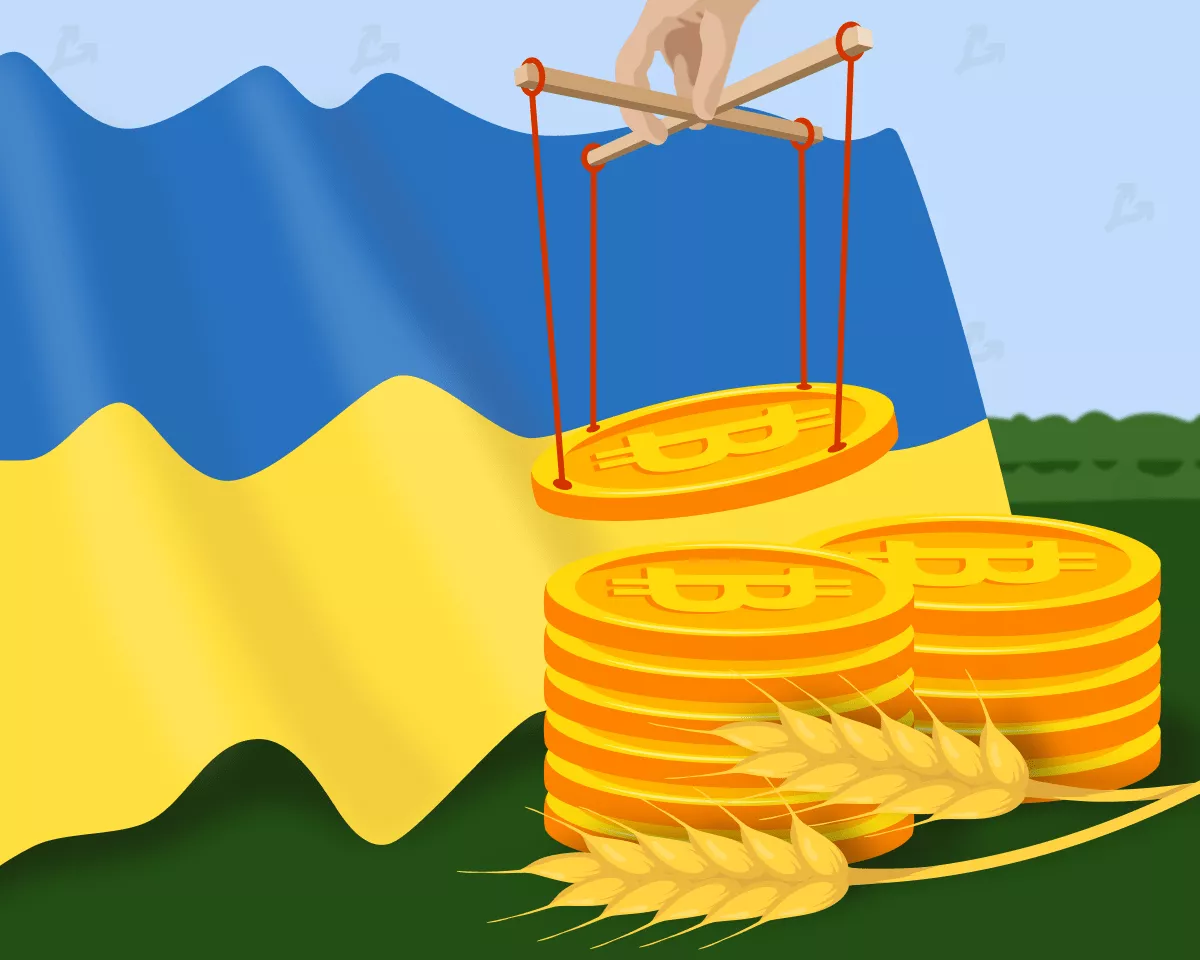
Ukraine’s financial regulators criticise updated bill on virtual assets
On the site of the Verkhovna Rada of Ukraine they published the updated text of the bill ‘On Virtual Assets’. It recommended for adoption in the second reading by the Committee on Digital Transformation. The text differs from the one adopted in the first reading.
- Virtual assets are designated in the document as intangible property. Exchanges and exchangers will be required to obtain a special permit, and a mandatory KYC procedure is provided for users, according to the bill.
- The regulation of the market was proposed to be split between the Ministry of Digital Transformation, the National Bank and the National Securities and Stock Market Commission. The latter two criticised the bill and said there were no clearly defined powers and spheres of influence.
- The bill’s authors told ForkLog that they would revise the document taking into account all comments.
The bill treats virtual assets (VA) as intangible property, a subject of civil circulation having value. They can certify property or non-property rights, including ‘the right to claim other objects of civil rights’.
The document distinguishes financial instruments and VA, backed by monetary values.
To operate legally in Ukraine, cryptocurrency exchanges and exchangers must obtain a permit from the Ministry of Digital Transformation.
Service providers must disclose their ownership structure to enable the identification of ultimate beneficiaries and implement internal financial monitoring procedures to prevent money laundering derived from criminal activity.
The permit will be valid for one year and may be revoked by a regulator’s decision if the companies no longer meet its requirements.
Statutory capital for VA-related service providers is set at 35,000 non-taxable minimum incomes of citizens. For custodial trading platforms, this amount is 70,000 non-taxable minimum incomes of citizens.
The document prohibits operation in Ukraine of trading platforms that are under Russian jurisdiction or have Russian citizens among their beneficiaries.
The bill requires users of cryptocurrency exchanges and exchangers to undergo a mandatory KYC procedure, listing full name, account number or electronic wallet, and passport data. For legal entities, this list includes the organisation’s code in the Unified State Register of Enterprises and Organisations of Ukraine.
Trading platforms whose registration does not provide for customer verification will have to align their procedures with the law.
The regulators of the virtual assets market in Ukraine are defined as: the Ministry of Digital Transformation, the National Bank and the National Securities and Stock Market Commission (NSSMC).
Representatives of the National Bank and the National Securities and Stock Market Commission criticised the document’s provisions and recommended returning it for revision. The agencies’ letters to the head of the Verkhovna Rada, Dmytro Razumkov, are in ForkLog’s possession.
The National Bank stated there are ‘significant gaps and conceptual errors’ in the document that could lead to legal uncertainty.
In the NSSMC’s note, it was pointed out that the bill does not clearly delineate the powers among the three regulators and does not define their spheres of influence or mechanisms for coordinating activities in the VA market.
“The bill does not define any concrete powers that the NSSMC should exercise in the regulation of the VA turnover. This approach contradicts the provisions of the Constitution of Ukraine”, the agency added.
The terminology and categorisation of VA presented in the document also raise questions for regulators.
In the NSSMC’s note, it is emphasised that the bill lacks a definition of VA turnover, although ‘this term is foundational and widely used in the text of the bill’.
The Commission noted that the classification of VA and the approaches to building the regulation system do not correspond to ‘the best international practice and EU law’.
The bill lacks important blocks of questions on investor protection and countering crimes in the VA market, the agency noted. The document does not define ‘at the level of law’ procedures for checks of market participants and the enforcement measures that may be applied in case of violations of the law, the NSSMC said.
The regulator noted that the document states that VA is not a means of payment in Ukraine.
‘However, the bill does not prohibit exchanging them for property, works or services, and does not limit the possibility of exchanging VA only for other VA or for the national currency’, the National Bank’s letter states.
The regulator fears that the absence of such restrictions risks creating a ‘parallel settlement system outside the control of the National Bank’.
The National Bank asked to clearly define its powers:
‘The absence of such provisions directly in the bill may lead to an inadequacy of the legal regulation mechanism for VA turnover’.
The Verkhovna Rada’s main legal department recommended sending the bill for revision.
Part of the lawyers’ remarks focuses on terminology. According to their conclusion, defining VA as ‘an intangible asset, a thing in civil turnover’ is not entirely correct, since the category ‘an object of civil turnover’ is not defined in the law.
The definition of VA states that it ‘exists in the VA turnover system’. In the lawyers’ view, this ‘automatically excludes any regulation outside this sphere’.
The conclusion notes that the bill leaves unregulated fundamental questions for ‘unambiguous understanding of the organisation of VA turnover’. The provision on issuing a permit, rather than a license to provide VA-related services, was also criticised.
Lawyers of the Verkhovna Rada, like the NBU and NSSMC, stressed the need for a clear definition and consolidation of regulators’ powers over VA turnover.
“The provisions of the bill do not create completed legal mechanisms required for its implementation, and do not meet constitutional requirements”, the conclusion states.
The bill’s authors told ForkLog that they will revise the document taking into account the comments.
Deputy Minister of Digital Transformation Oleksandr Bornyakov told ForkLog in an interview that the ministry often faces criticism from various state bodies who consider the bill ‘not sufficiently perfect’ or ‘not taking into account certain interests’.
He explained that the need to protect state interests is often understood as the need to impose additional restrictions and ‘other seemingly unjustified complications of doing business’.
According to him, for the Ministry of Digital Transformation, the interests of participants in the cryptocurrency market are the main priority.
‘We are forced to constantly work on bringing positions closer and taking into account genuinely useful proposals from regulators in the industry. We hope to achieve an effective consensus and create a legal framework that will be convenient and easy for business and citizens to use. In the final draft of the bill the terms, in particular ‘turnover’, as well as the powers of other regulators and many other things, will be clarified and added,’ noted Bornyakov.
The last plenary session of the IX convocation of the Verkhovna Rada is scheduled for July 13. Parliamentarians’ holidays will run until September.
‘We are doing everything possible so that the bill makes it to the last plenary week,’ said Bornyakov.
Earlier, the Verkhovna Rada adopted in the first reading the bill ‘On Virtual Assets’ in December 2020.
It complements the earlier law implementing FATF standards to counter money laundering and the financing of terrorism.
Follow ForkLog’s bitcoin news on our Telegram — cryptocurrency news, prices and analysis.
Рассылки ForkLog: держите руку на пульсе биткоин-индустрии!