



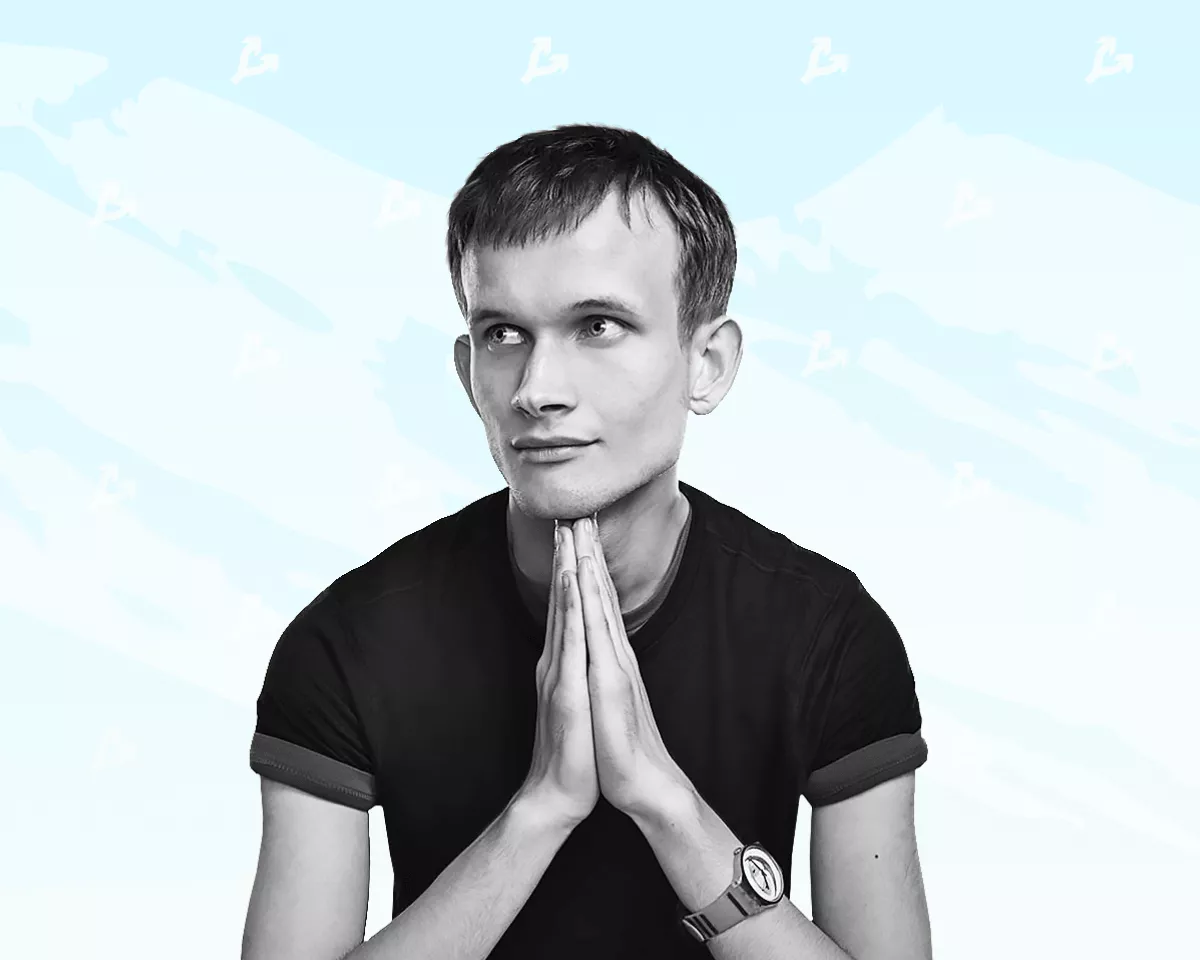
Ethereum co-founder Vitalik Buterin described five directions for developing the ecosystem of the second-largest cryptocurrency that inspire him.
“My admiration for Ethereum is now more closely tied to certain categories that have already proven themselves and are only getting stronger,” he said.
Money
According to Buterin, cryptocurrency acts as a lifeline in the poorest countries. After The Merge transactions became faster and safer.
Social recovery and multisig-wallets are becoming increasingly practical. There remains great promise for rollups. There is progress, but it will take years to realise it, he added.
For wealthy nations, cryptocurrencies appear to be a more convenient option than fiat.
“They can combine the advantages of digitalisation with respect for privacy — the very thing cash possesses,” he explained.
Buterin noted that centralized stablecoins do not align with the values of crypto-punks. In his view, the middle ground in this segment could be supported by DAOs and asset-backed real-world assets (RWA) “stablecoins”.
“Such stablecoins could combine sufficient reliability, censorship-resistance, scalability and economic practicality to meet the needs of a large number of real users. But for this to work, there would need to be real legal work on developing reliable issuers, and a healthy dose of sustainability-focused DAO governance mechanisms,” he explained.
DeFi
The Ethereum cofounder believes the DeFi space is transitioning from a “super-capitalised monster on steroids yield farming” to a stable environment where safety is emphasised and a few most valuable applications matter most.
In DeFi, the most important products will be:
- decentralised stablecoins;
- prediction markets;
- synthetic assets (derivatives on stock indices and real estate may appear);
- layers for efficient on‑chain trading between other assets (to enable on‑chain operations).
Identity
Buterin doubts that an attempt to create a centralized platform to solve all aspects of this task would be successful.
In his view, the future lies with standalone projects focused on individual elements and adding extra capabilities for interaction. The privacy question will be a challenge, which will have to be “worked on.”
DAOs
To improve reliability in decentralized governance, the following innovations are needed:
- a kind of non-financial governance or a two‑chamber hybrid, where decisions are made not only by governance-token holders but also by some other class of users;
- “deliberate friction” — certain types of decisions could take effect only after a sufficiently long delay, giving users time to see if something is going wrong.
Hybrid applications
Buterin believes many applications are not fully networked, but they still leverage the advantages of blockchains and other systems to improve their trust models.
As an example, he cited voting. Buterin acknowledged that countries and voters will need a long time to acclimate to the security guarantees of electronic voting, whether or not it uses blockchain.
“Verifiable centralized services” may find use in many scenarios, including:
- proof of solvency;
- government registries;
- corporate accounting;
- games;
- applications in supply chains;
- tracking of access authorization.
Earlier, Buterin proposed using zk-SNARKs to verify exchange balances. Earlier, the zk-Rollups protocol based on zk-SNARKs he called a priority tool for solving Ethereum’s scalability problem.
The updated network roadmap envisions full integration of zero-knowledge proof technology.
Read ForkLog’s bitcoin news in our Telegram — cryptocurrency news, prices and analysis.