
What is the Bitcoin halving?
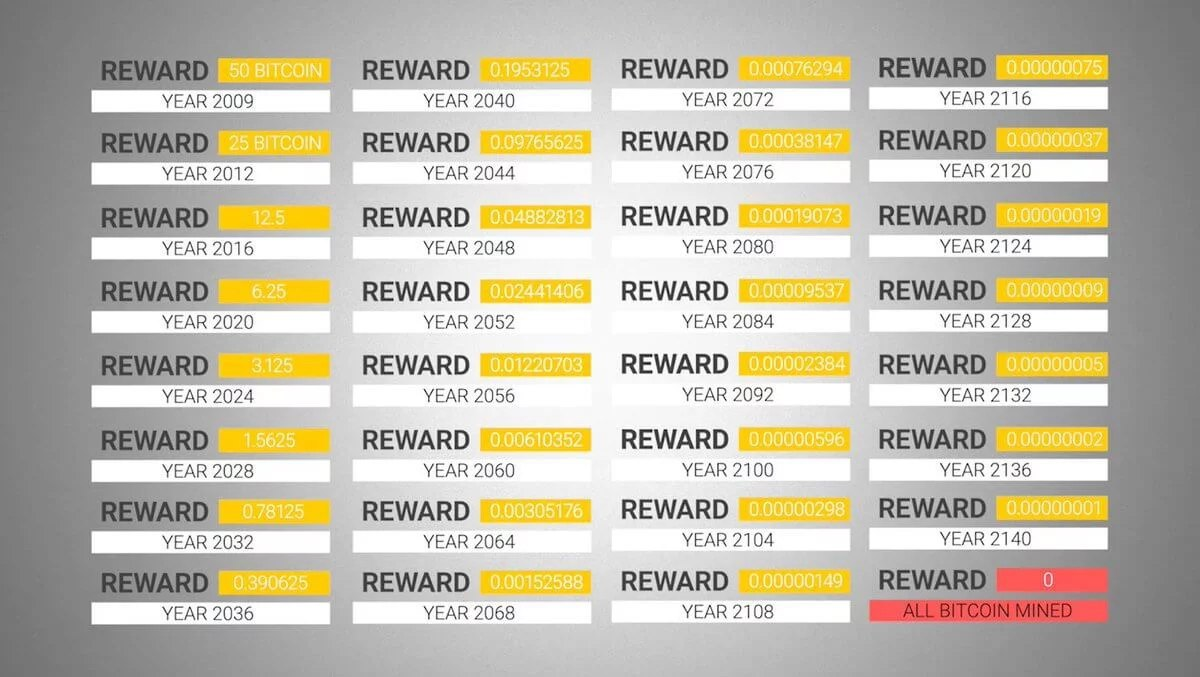
The halving is the programmed twofold cut to the reward paid to miners for adding a new block to the blockchain. Satoshi Nakamoto encoded halvings every 210,000 blocks—roughly once every four years—until issuance ends when 21m coins have been mined (expected around 2140).
How many halvings have there been, and when is the next?
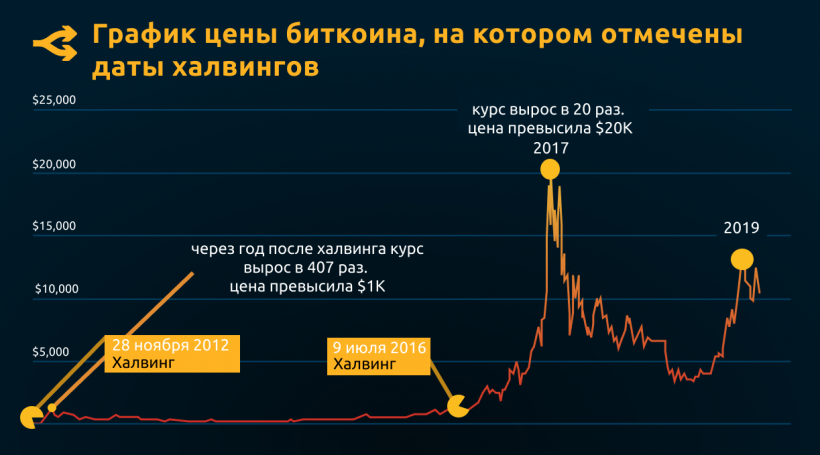
The Bitcoin network has halved three times: 28 November 2012, 9 July 2016 and 11 May 2020. Early on, miners earned 50 BTC per block; after the first halving that fell to 25 BTC, after the second to 12.5 BTC, and after the third to 6.25 BTC.
The fourth halving will cut the block reward to 3.125 BTC. It is expected in mid-April 2024 at block #840000. The fifth halving should occur in 2028—after which the reward will drop to 1.5625 BTC. After the sixth halving, expected in 2032, miners will for the first time receive less than a whole bitcoin per block.
Block rewards will keep shrinking roughly every four years until 2140.


Why is there a halving?
The halving’s main purpose is to control issuance and restrain inflation.
Even before the first halving in 2012, Ethereum creator Vitalik Buterin explained its necessity by comparing bitcoin to gold: “The world’s gold reserves are limited, and with each gram mined it becomes harder and harder to obtain the remaining gold. As a result of such limited supply, gold has preserved its value as an international medium of exchange and store of value for more than six thousand years, and there is hope that bitcoin will do the same.”
How does the halving affect mining and miners?
To keep the network stable, Satoshi Nakamoto ensured that when mining activity drops, difficulty adjusts downward. If, after a halving, some miners find production unprofitable and quit, reducing the network hashrate, the difficulty of producing the digital gold will decline accordingly.
This means the intervals between new blocks remain about the same, and transaction processing speed does not suffer from miner exits.
Mining profitability also depends on the price and the volume of transactions in the network: if these are high enough, the negative effect of a lower reward will be weaker.
In 2023 miners’ income also rose thanks to the popularity of Inscriptions—a way to record data on the bitcoin blockchain. Glassnode analysts claim that up to 30% of miners’ fee revenue in 2023 came from such “inscriptions”.
How does the halving affect bitcoin’s price?
The first two halvings were followed by heightened volatility over the next 12–18 months: the price could rise from $11 to $1,100 or from $230 to $20,000—and then fall fivefold. After the third halving, the peak reached $69,000, more than eight times higher than $8,500. On the fourth halving’s impact, experts are divided: some expect gains, others little change.
Industry veteran and Blockstream CEO Adam Back forecast a rise in the first cryptocurrency’s price to $100,000 before the 2024 halving. He also set a target range for BTC of $750,000 to $1m by 2026.
Former BitMEX CEO Arthur Hayes offered similar projections. He said that in 2024 BTC could reach $70,000 per coin, and by 2026 up to $1m. A new ATH, around $80,000 per BTC in 2024, is also forecast by Bitwise analysts.
Representatives of the CryptoQuant platform suggested that BTC could reach $160,000 in 2024. In their view, the drivers could include not only the halving but also approval of a spot ETF in the United States.
MicroStrategy founder Michael Saylor said that the catalyst for price growth in 2024 would be not only the halving but also an ETF. In his words, the new instrument will trigger a “demand shock” for digital gold, soon followed by a “supply shock” from the halving.
Researchers at financial giant VanEck offered a more restrained outlook. The company said that the run-up to the halving would not lead to serious deviations.


Could the halving trigger a bitcoin “death spiral”?
Mining difficulty is recalculated every two weeks—every 2016 blocks. Hence the concern that a gap between a falling hashrate and the next difficulty adjustment could push the bitcoin network into a so-called “death spiral”.
Here is how it would look: difficulty stays high, mining profitability falls—miners power down, hashrate drops, transactions slow.
However, blockchain expert Andreas Antonopoulos believes bitcoin’s network is not threatened by a “death spiral”, because miners typically enter the industry with a long-term strategy and will continue operating while awaiting the next difficulty adjustment and a return to normal network conditions.