


Why memecoins surged in 2024
What are memecoins?
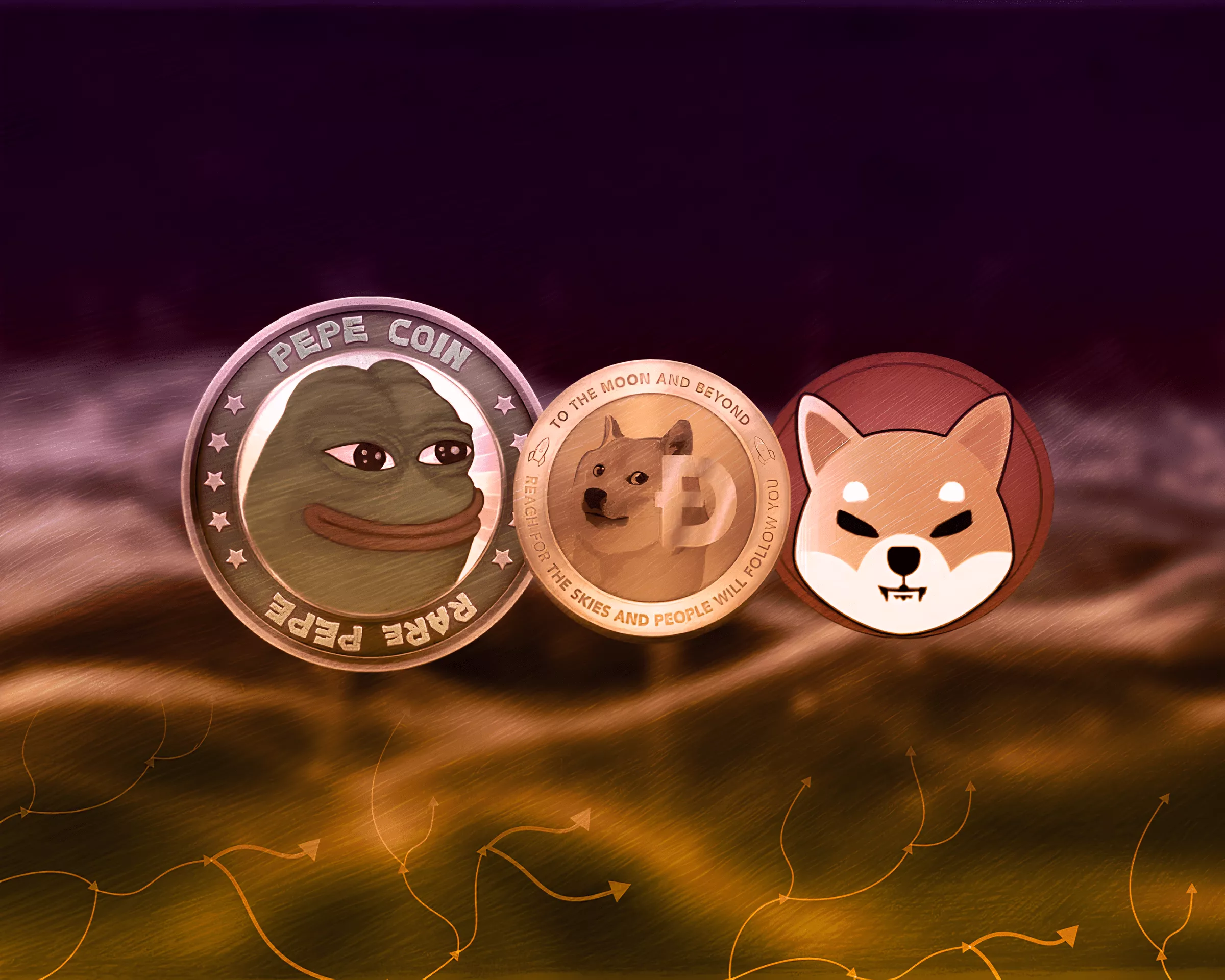
Memecoins are tokens with no practical utility at launch, chiefly riffing on internet humour, social narratives or events. Broadly, they are a tokenised version of network effects or public attention around a given phenomenon.
The first memecoin is generally regarded as Dogecoin. It was created back in 2013 as a joke about the rapidly growing number of cryptocurrencies.
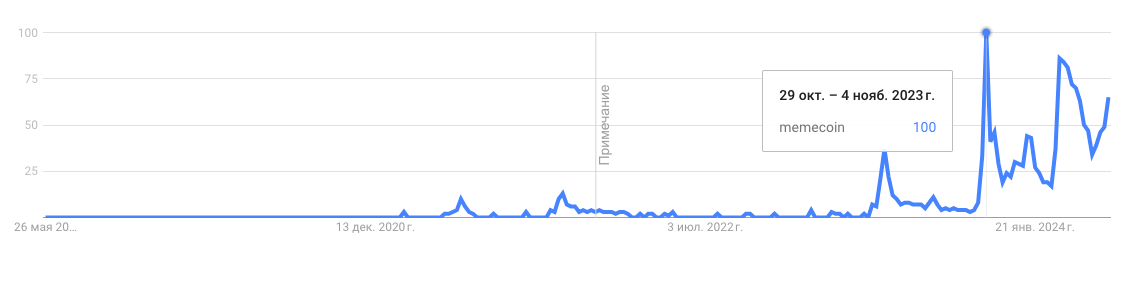
Since then, countless similar projects have appeared. Their popularity peaked in late 2023 and early 2024. According to Google Trends, peak interest in the term “memecoin” was recorded in November 2023.
By late May 2024, CoinMarketCap’s dashboard includes more than 2,300 tokens in the Memes category with a combined market capitalisation above $53bn. Yet the broader market of such tokens runs to tens of thousands across various networks that monitoring services do not track.
Why did memecoins catch on?
Analysts at Binance note that the economic appeal of memecoins lies chiefly in the fact that, for the vast majority of such assets, market capitalisation equals their FDV. This indicates that creators unlock and release all coins into circulation at once, with no further issuance—and therefore no dilution.
According to Ethereum’s founder Vitalik Buterin, there are three main reasons why mass-market users have become interested in such assets:
- their prices rise;
- they are open and democratic;
- they are fun.
Buterin also said such cryptocurrencies could become a new way to fund projects of public importance.
What is the social import of memecoins?
The memecoin market has attracted not only those seeking profit but also those keen to spend on social projects.
In 2021 Buterin directed more than $1bn in SHIB to the fight against coronavirus. Since 2014 the Dogecoin community has raised funds to send Jamaica’s bobsleigh team to the Sochi Olympics, drill two water wells in Kenya and help with flood relief in Kashmir.
That is only a small part of the initiatives rooted in memecoins. For instance, there are charities aiming to help pets. The main drivers of token adoption in this area are efficiency, accountability, accessibility, benefits and growth potential.
Celebrities such as Elon Musk, who backed Dogecoin in 2021, along with influencers and crypto funds, played no small role in popularising the trend. Many users see memes as a retail-trader response in a standoff with Wall Street that began in 2020 amid the surge in GameStop’s shares.
Andrew Kang, a noted crypto advocate and former MMA fighter from Mechanism Capital, has described memecoins as a qualitatively new asset class. In his view, they embody not only a jokey narrative but also other values, including identity, lifestyle and political beliefs.
Why are memecoins criticised?
Some analysts argue that the memecoin market resembles a risky casino and disguised gambling, akin to the ICO bubble of 2017. The popularity and ease of creating such assets could draw developers away from the industry.
The consequences could be more damaging than a bear market—at least according to Michael Dempsey, managing partner of Compound’s venture arm. a16z Crypto’s CTO Eddie Lazzarin echoed the view, saying memes are not very interesting from a technical standpoint.
Such tokens could also harm the industry’s reputation. The boom in outlandish experiments is changing how parts of the public, regulators and entrepreneurs look at cryptocurrencies.
In May 2024, for example, a schoolboy launched the LIVEMOM memecoin on Solana—and his mother bared her breasts on a livestream to draw attention to the project. Another case is the HANDS token, whose creator held a sheet under his chin reading “No hands — no rug pull” while users pumped the token. At the peak he “tricked” backers out of 7 SOL.
Extremely low financial and technological barriers to entry have spawned a huge number of coins. From early April to mid-May 2024 alone, more than 1m new tokens appeared on blockchains. According to Coinbase director Conor Grogan, this is twice as many as in the entire period from 2015 to 2023.
Who invests in memecoins?
Beyond the retail hordes flooding into memecoins, institutions are also leaning into the trend.
In mid-May 2024 MarketVector, a subsidiary of American asset-management giant VanEck, launched the Meme Coin Index, comprising Dogecoin (30.77%), Shiba Inu (28.34%), Pepe (14.51%), Dogwifhat (12.54%), Floki (7.14%) and BONK (6.7%). Over the past year the Meme Coin Index has risen by more than 280%.
The Open Network team (TON) in April 2024 launched Memelandia, a hub for memecoin developers. At the same time the BNB Chain team announced it was ready to allocate up to $1m to creators of native memecoins.
Other organisations are taking part, too. In late 2023 the Avalanche Foundation said it would direct funds from the Culture Catalyst programme to invest in memecoins on its eponymous blockchain.
Рассылки ForkLog: держите руку на пульсе биткоин-индустрии!