


Robot dogs deployed to guard the border, neural carpets showcased in New York, and other AI news
We aim to inform readers not only about events in the bitcoin industry, but also about developments in related technology spheres — cybersecurity, and now in the world of artificial intelligence (AI).
ForkLog AI has gathered the most important AI news of the past week.
- “Sberbank” valued the impact of AI adoption at 205 billion rubles per year.
- Ukrainian cyberpolice uncovered a student who was selling personal data of citizens and developing a system to search people by photo.
- U.S. border patrols deployed robot dogs to guard the southern border from illegal migrants.
- Clearview AI is exploring the possibility of creating AR glasses for the U.S. Army.
- Chinese researchers created an artificial womb with AI for growing mouse embryos.
- An Israeli company developed an autonomous fruit-picking complex.
- A neural-network-generated carpet exhibition took place in New York.
- The week’s most significant AI deals.
AI brings 205 billion rubles to Sberbank in 2021
In 2021, Sber estimated the effect of AI deployment at 205 billion rubles. A year earlier this figure stood at 145 billion rubles, according to the company head Herman Gref.
The bank noted that it became a market leader in the number of innovations in information technology.
Gref also named e-commerce a key growth industry and noted that by 2023 the company would enter the top three players in the market.
Kyiv resident developed a system for finding people by photo
Ukrainian cyberpolice uncovered a student who was selling data of more than 20 million people. The offender faces up to five years in prison.
According to law enforcement, the suspect created a bot in a messaging app to sell personal information of citizens including their passport data, tax ID and phone numbers. The service cost $1 per day or $4 for 20 attempts to search information about a specific person.
The offender was also developing an AI-based system for recognizing people by photographs uploaded from open sources.
Clearview AI to develop AR glasses for the U.S. Army
The notoriously controversial startup Clearview AI has signed a contract with the U.S. Air Force to develop an augmented-reality headset with facial recognition technology to enhance airfield security. The contract is worth nearly $50,000.
Clearview AI has expanded into Augmented Reality.
The company has a newly public contract with the US Air Force for “protecting airfields with augmented reality facial recognition glasses”.https://t.co/zDYfGxtmym pic.twitter.com/4ZjmGynpmN
— Jack Poulson (@_jack_poulson) February 3, 2022
According to Gizmodo, Clearview AI is exploring the possibility of creating such a system over three months, as well as its scientific and technical merits. Under the contract, the company will not supply the military with glasses, devices, or prototypes.
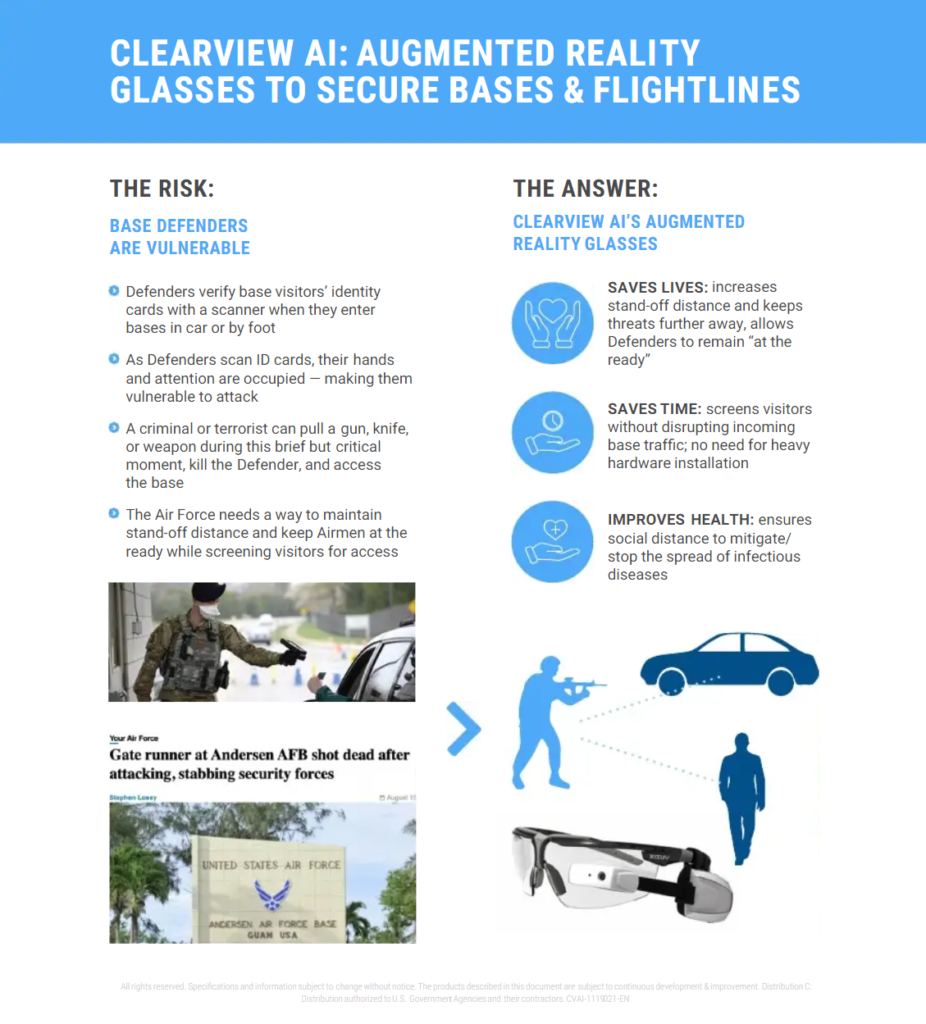
In the Air Force research lab, officials said the technology “will save lives, save time and improve soldiers’ health” by increasing social distancing and freeing officers’ hands to seize weapons. AR glasses with facial-recognition technology will scan the area and restrict access to bases and flight lines for unauthorized individuals, they added.
Media: Microsoft has halted development of HoloLens 3
The company has halted development of the mixed-reality headset HoloLens 3 due to internal disagreements.
According to Business Insider, the company abandoned MR glasses production in mid-2021 after starting a collaboration with Samsung. The deal between the tech giants led to disagreements within the HoloLens development team and the dismissal of some employees.
Rumors say Microsoft chose not to abandon its technologies. At the same time, Samsung was offered to manufacture the hardware component of the device by itself, and the software giant — to develop software for it.
According to sources, engineers point to confusion and strategic uncertainty within the company. Some in the team propose that Microsoft focus on its own developments, others on producing the metaverse platform for partners. A third group believes products for customers should be developed, and some — that military contracts should be pursued.
Microsoft said that HoloLens remains an important part of its plans for the development of mixed reality and the metaverse. The company did not comment on the Samsung deal.
Robot dogs deployed to patrol the southern border
The U.S. Department of Homeland Security published a report on the use of robot dogs at the southern border.
Ghost Robots’ devices are intended for patrolling terrain and reducing the number of dangerous situations for human lives. The department said the southern border is “not a very hospitable place for man or beast,” but the machine could do well there.
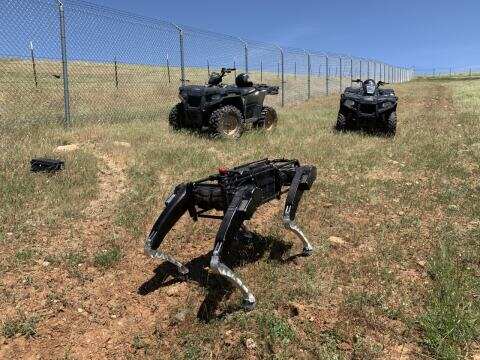
CBP says that deploying four-legged robots is a “sensible use of resources” given the range of illicit activity along the border. A customs officer said the machine could even be used as a decoy in case of danger.
In China, researchers developed an AI nanny to look after embryos in an artificial womb
Chinese researchers developed a smart system to look after embryos in an artificial womb. It is already being tested on a large number of mouse embryos.
AI monitors embryo development around the clock and controls its growth in a long-term cultivation device, which consists of a series of containers with a nutrient mixture. It detects even minor changes in embryo condition and readjusts environmental conditions, carbon dioxide supply and nutrition.
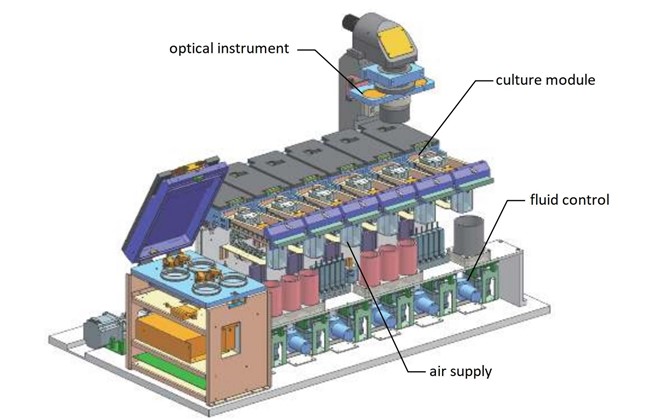
The system can also rank embryos by health status and developmental potential. In case of a defect or embryo death, it will warn specialists to remove it from the container.
Current international rules prohibit experimental research on human embryos after two weeks of development. However, the developers say that studying later stages is necessary to understand embryonic physiology and address congenital health problems.
Pinterest adds AR furniture try-on for home interiors
Pinterest added an AR feature for trying furniture on any interior.

The system allows placing over 80,000 items from popular stores, including Crate&Barrel, CB2, Walmart, West Elm and Wayfair, using augmented reality.
Pinterest believes the technology could simplify the furniture shopping process and make it more convenient.
In Israel, a robot for fruit picking was created
Israel-based Tevel Aerobotics has created an autonomous robotic system for picking garden fruits.
Each module consists of a movable platform and quadcopters attached by cables. The wheeled base powers the drones with electricity, which use computer vision to recognise fruits, evaluate their size and determine ripeness.
According to the developers, the platform will be rented out to several customers in sequence. It will account for crop yield and approximate harvesting time, allowing advance scheduling of availability.
Cruise launches robotaxi service in San Francisco
Cruise began testing driverless robotaxis in San Francisco. The self-driving cars are delivering passengers for free from 11 p.m. to 5 a.m.
Those interested in taking part in the trials must submit an application on the company’s site. One of the first to test the service was General Motors CEO Mary Barra, who called the ride a “bright moment.”
Against the backdrop of the launch, Cruise attracted $1.35 billion in funding from SoftBank. The company will use the funds to expand the team and scale the business.
Azerbaijani artist stages carpets created by a neural network
In New York, a digital exhibition of Azerbaijani carpets “Revival of Aesthetics,” created with the help of AI, took place. The artist plans to display exhibits in London and Moscow.

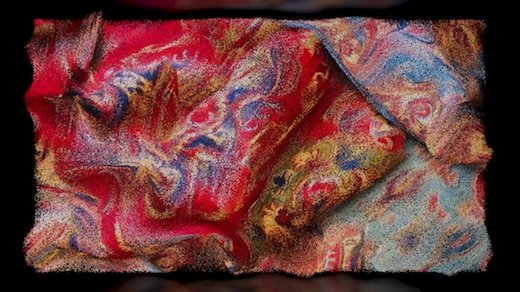

Artist Orhan Mamedov fed 150,000 carpet photos with various patterns into a neural network. The algorithm analyzed the images and highlighted common characteristics of the patterns that the artist used when creating the exhibition collection.
According to Mamedov, the goal of the project is to showcase Azerbaijan’s culture to the world.
The week’s most important AI deals
From January 30 to February 5, 2022, AI startups raised more than $1 billion. Here are the most interesting deals.
- Sidewalk Infrastructure Partners, a maker of smart-city systems, attracted $400 million.
- Annotell raised $24 million to develop data-labeling tools for autonomous vehicles.
- Wrk obtained $43 million to support a workflow automation service.
- The developers of the recruitment platform HireEZ raised $26 million.
- Pecan AI raised $66 million to scale its enterprise predictive analytics service.
- Cerby, a provider of security automation for workflows, raised $12 million.
- GWI raised $180 million to expand geographic reach and demographic depth for SaaS market research.
- Amitruck raised $4 million to scale its service for optimizing maritime logistics.
- Loadsmart raised $200 million to expand products for logistics automation.
- causaLens raised $45 million.
Also on ForkLog:
- In China proposed regulation framework for deepfakes.
- Moscow’s ground transport will be equipped with the Face Pay system .
- Iran stated its intention to become a leader in AI.
- DeepMind has developed AI for automatic code generation.
- In the U.S., introduced regulation rules for discriminatory AI.
Subscribe to ForkLog AI news on Telegram: ForkLog AI — all AI news!
Рассылки ForkLog: держите руку на пульсе биткоин-индустрии!