


Starlink as a panacea for blockades: can Elon Musk counter internet shutdowns
During Internet outages in Belarus, which lasted several days, its residents created a petition to connect the country to public testing of SpaceX’s Starlink satellite Internet.
“Please help end the injustice and restore our right to freedom of opinion and its free expression through the Internet,” the petition authors say.
With a similar request, Twitter users addressed the head of SpaceX Elon Musk directly, who asked what he could do to help Belarusian citizens in light of the situation in the country.
Elon, could you launch a network of your satellites in the coverage area of Belarus as a beta test? Now in Belarus there is a violent seizure and retention of power by the illegitimate Lukashenko, he has disabled the Internet throughout Belarus and has been physically
— ❌Richard Zorge❌ (@Richard_Sorge1) August 13, 2020
ForkLog spoke to experts to learn whether satellite Internet could be a panacea for Internet shutdowns.
Key takeaways
- Working the Starlink satellite network requires specialized ground equipment that can be confiscated or criminalized. High cost or import bans on such equipment could impede efforts against shutdowns.
- The emergence of satellite Internet will weaken the monopoly of telecom operators and their ability to enable shutdowns. However, Starlink’s effectiveness in countering total blockades remains in question.
- Regulators could require Starlink to comply with rules via an international body under the UN. In Russia, the project may not even launch.
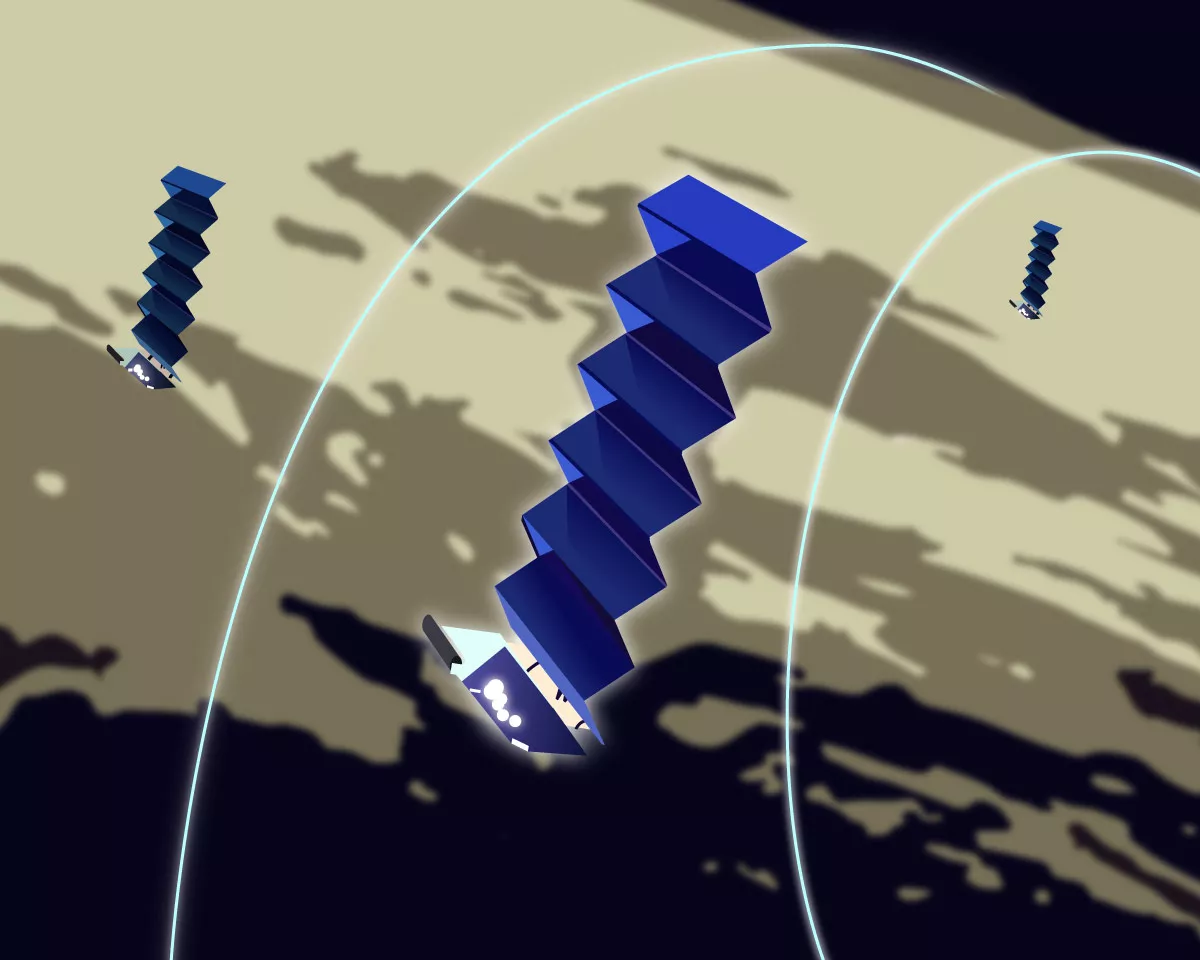
Starlink is a satellite system designed to provide “high-speed broadband access to the Internet in places where it has been unreliable, expensive or completely unavailable,” according to the official site.
Recently the company put 58 satellites into orbit. In total, 653 satellites have been launched successfully to date.
Deployment of 58 Starlink satellites confirmed pic.twitter.com/c8u2WqaD1J
— SpaceX (@SpaceX) August 18, 2020
Despite successful launches, the number of satellites remains small. SpaceX plans to deploy a minimum of 12,000 units.
Only in June 2020 did the company begin recruiting volunteers for Starlink beta testing, although the site states that global coverage of the entire Earth’s surface is expected as early as next year.
Accordingly, experts interviewed by ForkLog say it is still too early to speak about Starlink’s real potential to provide access during Internet shutdowns.
“At this stage, Starlink covers far from the entire surface of the Earth,” noted independent expert Alexander Isavin.
According to the technical director of RosKomSvoboda, Stanislav Shakirov, SpaceX’s satellite Internet will help counter possible Internet shutdowns, but \”its launch will not be tomorrow, but in several years\”.
Executive Director of the Internet Defense Society, Mikhail Klimarev, also notes that \”it’s not entirely clear whether Starlink will work\”:
\”There are a lot of ‘But’s — technical, economic and political in nature.\”
He drew attention to the equipment needed for such Internet.
\”You must understand from the outset that this will not be some free Wi‑Fi, and it will not be the quality we are used to,\” emphasized Klimarev.
In July, possible images of equipment for connecting to Starlink appeared on Twitter. Musk then explained that the device could be installed by oneself \”almost anywhere, provided there is a wide view of the sky\”.
Starlink terminal has motors to self-orient for optimal view angle. No expert installer required. Just plug in & give it a clear view of the sky. Can be in garden, on roof, table, pretty much anywhere, so long as it has a wide view of the sky.
— Elon Musk (@elonmusk) July 14, 2020
\”Satellite Internet does not entail delivering a signal from the satellite directly to a user device, such as a smartphone. Satellite Internet still requires ground infrastructure — ground stations or user terminals,\” said Maksim Burtikov, RIPE NCC’s Director of External Relations in Eastern Europe and Central Asia.
Such equipment is unlikely for everyone to purchase, as it could be quite expensive, Klimarev noted.
Alexander Isavin agrees with him:
\”Starlink will help foreign journalists, perhaps large corporations, but not everyone. Not every resident can have a Starlink terminal — it is quite expensive.\”
Moreover, authorities could monitor the presence of such ground equipment and hinder its installation or operation.
\”There remains always a vulnerable element in the form of a ground antenna that can be confiscated or criminalized,\” said Evgeny Lifshitz, head of the Cybersecurity Agency at ForkLog.
Maxim Burtikov notes that installation of the equipment is subject to regulation:
\”The installation is regulated by a regulator who issues permissions, grants the right to use the radio frequency spectrum, and licenses to operate and provide communications services. Therefore, the operator will be subject to applicable laws and oversight, just as for non-satellite providers.\”
Stanislav Shakirov of RosKomSvoboda regards the risks of banning the import of such equipment by authorities of countries prepared to carry out Internet shutdowns as quite real:
\”They will obstruct the import and sale of satellite Internet equipment in every possible way. It is quite likely we will be forced to smuggle it in from abroad.\”
Mikhail Klimarev agrees with him. At the same time he is convinced that even in the case of a direct ban on importing equipment, \”someone will still buy and use these terminals\”, though perhaps not legally.
In his view, even this could influence authorities’ policy:
\”It will be clear that you cannot block everything and information will find a way. Then authoritarian regimes will treat things somewhat differently and will not permit these shutdowns.\”
The emergence of an alternative to telecom operators will significantly reduce the ability to carry out Internet shutdowns, since monopolistic operators often provide them.
\”Any shutdowns are more difficult the more complex the network infrastructure is. The more participants and operators it has, and the higher the connectivity between them and international connectivity through channels, the more coordination and prolonged outages become practically infeasible,\” said Maxim Burtikov.
Beyond possible obstacles from government authorities, there could also be impediments within international treaties.
Spaceflight developer and space expert Ilya Kharlamov noted that regulation of international use of radio frequencies is handled by a UN body—the ITU. Satellite Internet operates through radio channels (10-30 GHz).
He stressed that using a country’s frequencies from space without its consent violates the organization’s norms — \”it’s almost the same as planes flying over a country’s territory\”.
Law 1194 of 14.11.2014:
\”Rules for the use of satellite communication networks on the territory of the Russian Federation under foreign jurisdiction\”Poka Musk ne dogovoritsya s Minsvyazom, Roskomnadzorom, Voyennymi, FSB i \”Russkim Loto\”, nikakogo Starlinka v RF ne budet pictwitter.com/hswNeNvHdH
— Ilya /Space/ Kharlamov (@ilyakharlamov) August 13, 2020
\”That is, technically you can broadcast a free-from-blocks Internet from space over another country. And legally — you cannot, restricted by the laws of both the country itself and UN law,\” Kharlamov concluded.
In his words, satellite Internet in Russia can be blocked with the push of a single button, just as wired Internet is blocked. He suggested Starlink will not be allowed to operate in Russia in the foreseeable future due to Musk’s recent space successes.
I think that because Musk brought Roscosmos down with his Crew Dragon, Starlink’s approval will not be granted under the current regime, just out of spite. So you can relax and not worry. It will never happen in Russia.
— Ilya /Space/ Kharlamov (@ilyakharlamov) August 13, 2020
***
Despite the nuances listed by the experts, all converge on the view that theoretically satellite Internet like Starlink could provide free access in the event of Internet blockades.
\”Undoubtedly, the launch of satellite Internet (especially when it is not one system but several) will usher humanity into a new era, when blockades like those now on ground infrastructure become an artifact of the past,\” Lifshitz summarized.
How long to wait for a full-scale launch of such systems, how many people will gain access, and how their use will be regulated under international treaties remains uncertain.
Earlier, experts told ForkLog how to bypass Internet blockades and protect the basic right to access the network.
Author: Alina Saganskaya.
Subscribe to ForkLog’s news on Telegram: ForkLog Feed — all the news feed, ForkLog — the most important news and polls.
Рассылки ForkLog: держите руку на пульсе биткоин-индустрии!