



Tesla unveils humanoid robot as drone cuts power in Australian city, and other AI news
We aim to inform readers not only about developments in the Bitcoin industry but also about what is happening in related technological fields—cybersecurity and the world of artificial intelligence (AI).
ForkLog AI has gathered the most important AI news from the past week.
- Elon Musk unveiled a humanoid robot.
- Zipline and Intermountain Healthcare launched drone delivery of medicines in the United States.
- Nvidia increased the performance of unreleased AI chips.
- AI can detect brain cancer from a drop of blood.
- A drone crashed into a power line in Australia, knocking out power to thousands of homes.
- Robodog trained to move autonomously in unfamiliar terrain.
- Bruce Willis’s agent refuted reports of selling the actor’s likeness to a deepfake company.
- The week’s most significant AI deals.
Elon Musk unveils humanoid robot
At AI Day 2022, Tesla unveiled the Optimus humanoid robot and the Dojo supercomputer. The company also shared progress in autonomous driving.
The humanoid robot is equipped with a multitude of sensors used in Tesla’s drones and can learn actions from humans. The android can carry boxes and water plants, and its movable fingers enable it to grasp small objects.
Elon Musk said the company intends to produce robots “in the millions” at a price below $20,000 each.
The Dojo supercomputer is expected to boost Tesla’s ability to train neural networks on video data. This is critical for computer vision technology, the foundation of the company’s drones.
According to Electrek, the latest version of Dojo was so powerful that it tripped the power grid in Palo Alto during the presentation.
At the event, Musk said that the beta version of the Full Self-Driving autonomous driving system is used by 160,000 people. The company also outlined a number of improvements, including the ability for FSD to make “human-like” decisions.
According to Musk, by the end of 2022 the technology would be ready for global deployment. He noted, however, that testing and regulatory approvals remain challenges.
GE Healthcare receives FDA clearance for AI-MRI
GE Healthcare received approval from the FDA to use AI software for MRI.
The AIR Recon DL system improves image quality using deep learning. The software reduces noise and preserves fine details, potentially eliminating the need for repeat scans for certain diagnoses.
US launches drone delivery of medicines
Zipline and Intermountain Healthcare launched drone delivery of medicines in Salt Lake City, Utah, USA.
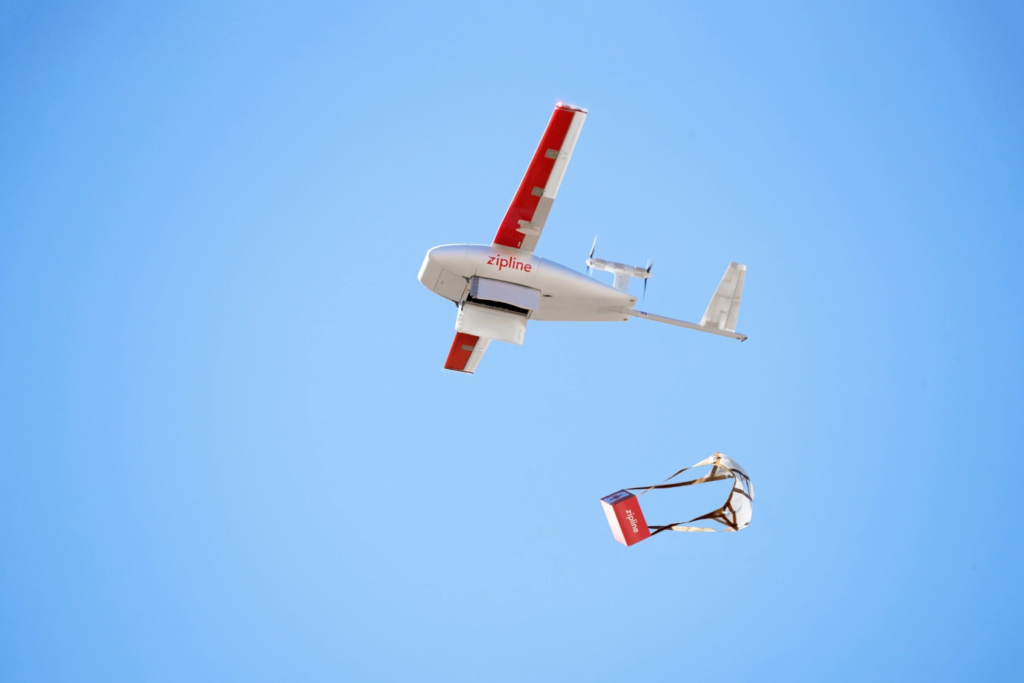
The drones, weighing about 20 kg, resemble small fixed-wing aircraft. They continuously collect environmental data, including wind speed and direction, to drop parcels within a target area roughly the size of a couple of parking spaces.
The drones operate autonomously, but can be remotely piloted if necessary.
Initially the companies will deploy five drones to deliver medications to patients’ homes. By 2027 Zipline plans to expand the drone fleet to serve more than 1 million customers.
Facebook lets users mark posts as interesting or uninteresting
The social network Facebook lets users choose posts they want to see more often.
Developers added “Show More” and “Show Less” buttons to posts from friends, groups and pages, as well as to recommended content. In the first case, users will boost the ranking of the post and similar ones in their feed for 60 days; in the second, they will lower it.

Initially the platform will “periodically” show these settings under some posts and Reels, but later they will be available for all content.
Facebook is also testing a feature to select how many posts to view from friends and family, groups, pages and public figures. Users will be able to set how often to show content in the feed for each item: the options are “normal”, “less” or “more”.
Meta says the feedback will help make the social network’s AI systems “smarter and more responsive.”
Nvidia boosts performance of unreleased AI chips
Nvidia increased the performance of H100 data-center accelerators based on the Hopper architecture. Shipments are set to begin in Q1 2023.
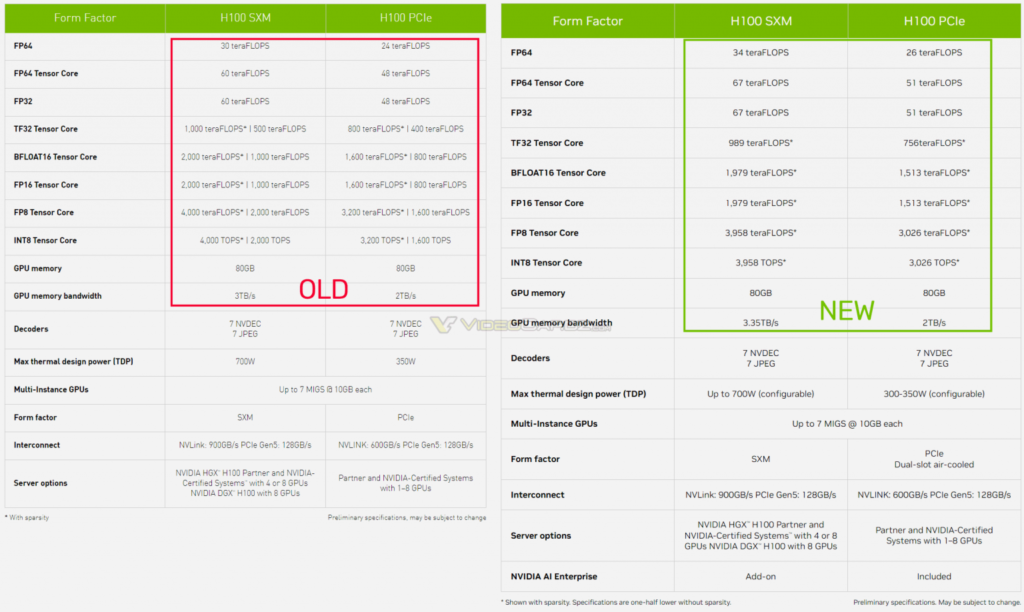
According to the developers, H100 SXM performance in double-precision operations rose from 30 to 34 TFLOPS, and in single-precision from 60 to 67 TFLOPS. This implies a GPU with 16,896 CUDA cores will achieve a higher clock than previously planned.
The company also updated performance figures for INT8, FP8, FP16 and BFLOT16 operations. The figures are slightly lower than the prior values.
First standard for smart homes presented
The Connectivity Standards Alliance unveiled the Matter 1.0 specification for smart-home systems. It also launched a product certification program.
The technology combines Wi‑Fi, Bluetooth LE and the Thread mesh network, and aims to simplify smart-device production. The standard enables interoperability across services and the use of voice assistants such as Amazon Alexa, Google Assistant, and Apple’s Siri.
Matter 1.0 is supported by a range of smart-home devices, including lighting, HVAC, sensors, door locks, and multimedia gadgets.
AI can detect brain cancer from a drop of blood
Canadian researchers have created a ultra-sensitive AI biosensor capable of detecting brain cancer from a drop of blood.
The device comprises nanoscale layers of nickel oxide and nickel on a nickel chip. Using five microliters of blood the biosensor can detect tumor-secreted nucleic acids, proteins and lipids, and generate a molecular fingerprint for each sample.
Subsequently a neural network analyzes these unique profiles to detect malignant growths and provide more detailed data.
During testing the biosensor distinguished brain tumors from breast, lung and colorectal cancers with 100% specificity and sensitivity. It also helped identify which of the nine brain regions housed the tumor, with 96% accuracy.
Thousands of Australians left without power after drone
A Wing drone, owned by Alphabet, knocked out power to homes of more than 2,000 residents in Browns Plains, Australia.
During delivery the drone collided with power lines, caught fire and fell to the ground. The company said it was a “precautionary controlled landing.”
As a result about 2,000 customers were without electricity for 45 minutes, and a further 300 for about three hours.
Energex said it did not find irreparable damage to the network, so Wing was not liable for repairs.
Robo-dog taught to move in unfamiliar terrain
A team of researchers led by the University of California, San Diego, developed a suite of algorithms enabling four-legged robots to move in the wild.
Equipped with the described program, devices can walk and run through rough terrain, avoiding static and moving obstacles. To achieve this the researchers combined computer vision with proprioception, including tactile sensing and the sense of movement, direction, speed and location.
Using the algorithms, the system uses depth-camera data mounted on the device’s head and sensors on its legs. The researchers say this is challenging because data from two different sensors do not always arrive at the same time.
During testing the system autonomously controlled the robodog and helped it quickly maneuver across sand, gravel, grass and rugged dirt hills covered with branches and fallen leaves, avoiding posts, trees, bushes, boulders, benches or people.
Bruce Willis’s spokesperson refuted reports of selling actor’s likeness to a deepfake company
Bruce Willis’s agent refuted reports of selling the rights to create a digital twin of the star to the AI startup Deepcake.
According to him, the actor had “no partnerships or agreements” with the company.
Deepcake said that “the rights to Bruce Willis’s face belong only to Bruce Willis.”
Earlier media reported that the actor had sold the rights to create his digital double to the American AI startup Deepcake.
The week’s most significant AI deals
From October 2 to October 8, 2022, AI startups attracted over $200 million. Here are the most interesting deals.
- Altana, developers of an AI platform for supply-chain transparency, received $100 million.
- Securiti raised $75 million to support its cloud-data protection service.
- Xembly raised $15 million to develop an AI assistant for corporate meetings.
- Gather AI raised $10 million to deploy drones for warehouse inventory scanning.
Also on ForkLog:
- Nvidia will close an office in Russia.
- In the United Kingdom the coroner blamed Instagram and Pinterest algorithms for a teenager’s death.
- Media: the United States will tighten export restrictions on AI chips to China.
- Google introduced a text-to-video generator based on Imagen.
- Boston Dynamics has refused to develop combat robots.
- DeepMind, using AI, accelerated matrix multiplication.
What to read this weekend:
Subscribe to ForkLog’s news on Telegram: ForkLog AI — all AI news!
Рассылки ForkLog: держите руку на пульсе биткоин-индустрии!