



The modern Internet has a number of drawbacks: centralized data storage makes possible theft of confidential information, restricted access to services, and outages in network operation due to problems on the provider side.
Together with KuCoin we discuss the next generation of the Internet and its role in the platform’s ecosystem.
What Web1, Web2, and Web3 Are
The Internet is continually evolving: developers are implementing new data-transfer protocols and ways of interacting with users.
Tim Berners-Lee, the inventor of the URL protocol and HTTP, in his book “Origins and the Future of the World Wide Web” highlighted two generations of the Internet, and later members of the WWW Consortium defined the third:
- Web1 — static-content websites: text, links, images. The content of pages changes only on reload;
- Web2 — interactive websites and web applications. Pages display personalized content created from data about visitors’ behavior and preferences;
- Web3 — decentralized sites and applications. Users own their digital data and private information.
With the popularisation of blockchain and cryptocurrencies, Web3 gained elements of a digital economy: payments without intermediaries, smart contracts in place of agreements, and monetisation of data through NFTs.
The KuCoin team is convinced that the Internet of the next generation should be decentralised and user-friendly:
“We share the vision of a Web3 Internet that belongs to the people and is built for the people,” said the KuCoin chief executive Johnny Lyu.
For this reason, KuCoin is integrating Web3 elements into existing and new products — the KuCoin Wallet, Windvane NFT marketplace, Wonderland gaming NFT platform, and other services across the ecosystem.
KuCoin Wallet
KuCoin Wallet — a cryptocurrency wallet for mobile devices. The app supports tokens and NFTs on the Ethereum, Polygon, BNB Chain, and KuCoin Community Chain networks.
Among Web3 features of KuCoin Wallet: creating a digital avatar, an integrated browser for interacting with DeFi services, and non-custodial storage of private keys solely on the user’s device.


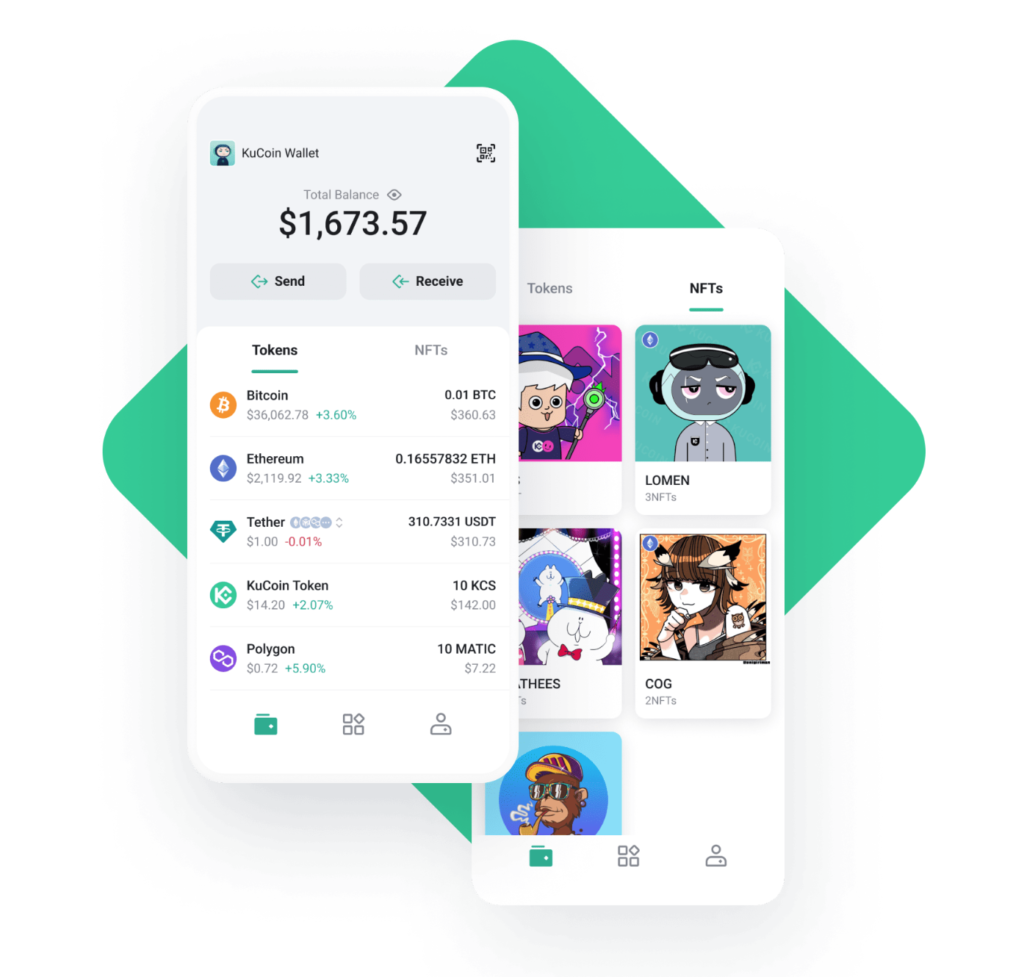
The wallet was released on June 28. Its security was tested beforehand by Hacken.
The developers’ plans include integrating KuCoin Wallet with the Windvane marketplace. After that, users will be able to create NFTs and trade them directly in the app.
Windvane
Windvane — a decentralized NFT marketplace from KuCoin. Users can mint non-fungible tokens, trade, issue collections and conduct INO (Initial NFT Offering).
The platform supports NFTs based on Ethereum, BNB Chain, and KuCoin Community Chain (KCC).
Windvane launched on May 30. To celebrate the launch, the platform released the Windvane Genesis NFT collection, consisting of 4,500 unique Lazy Roosters.


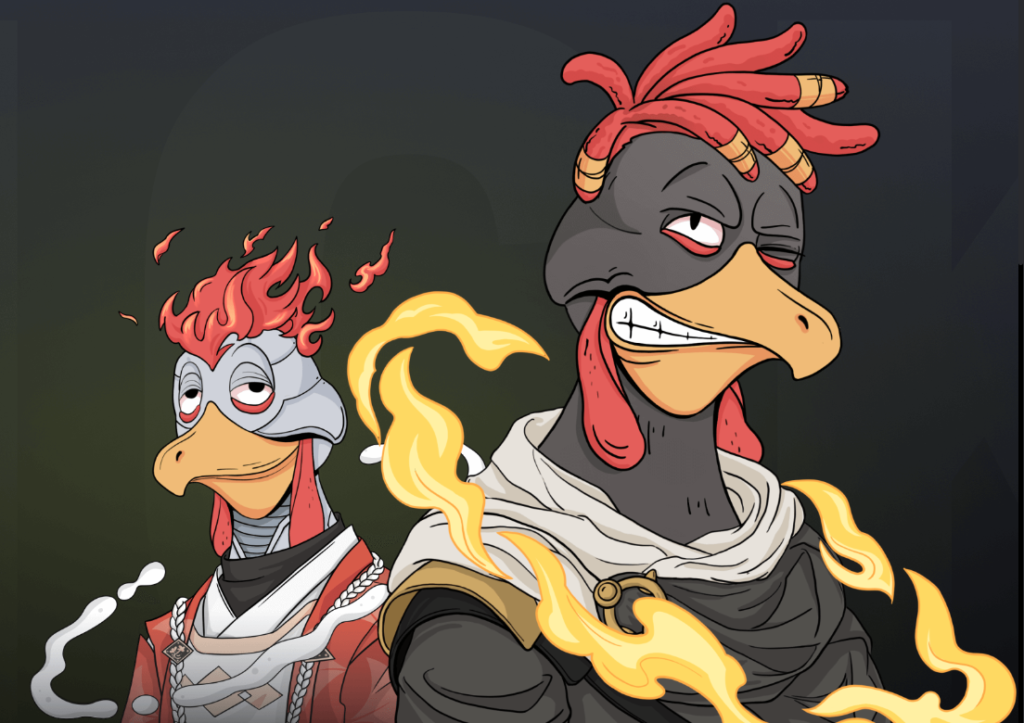
A hallmark Web3 feature of the marketplace is a distributed network (IPFS). External developers can create alternative apps to access Windvane and the tokens hosted there.
Additionally, KuCoin’s investment arm and Windvane launched the Creators Funds with $100 million in capital. The fund supports and promotes NFT creators across various themes: eSports, [simple_tooltip content=’Profile Picture — avatar of a user on social networks.’]PFP[/simple_tooltip] and GameFi.
Currently, Creators Funds is selecting artists who will share the $100 million and receive marketing support from KuCoin and Windvane. To participate in the competition, you need to fill out the Google form.
Wonderland
Wonderland — a platform for gaming NFTs. Its users can buy loot boxes, characters, skins, accessories, weapons, and other items, as well as sell and rent in-game assets.
The service provides access to NFTs for casual blockchain games of the Play-to-Earn format. Among them:
- Pikaster — a card battler platform. Players fight fictional creatures — Pikasters. Each Pikaster is an NFT that can be rented, bought or sold. In battle, players earn tokens for staking or additional profits;
- CEBG (Crypto Elite’s Battlegrounds) — anime-style battle multiplayer with [simple_tooltip content=’Player versus player — battles between two or more human-controlled characters’]PvP-[/simple_tooltip] and [simple_tooltip content=’Player versus environment — battles with computer-controlled enemies’]PvE-[/simple_tooltip] modes. Players receive a single NFT-hero for battles, and then can find new game characters and items;
- X Rush — a racing arcade with shooting across multiple metaverses. Players collect NFT racers, upgrade cars and compete with each other.
KuCoin Community Chain
KuCoin apps run on the public EVM-compatible blockchain KuCoin Community Chain (KCC) with a Proof-of-Staked-Authority (PoSA) consensus algorithm. When selecting a validator, the network takes into account its identifier and stake size.
KuCoin Token (KCS) — the native token of the ecosystem for paying transaction fees, which average about $0.00000002637. Holders of KCS receive a passive income, as well as discounts on transaction payments.


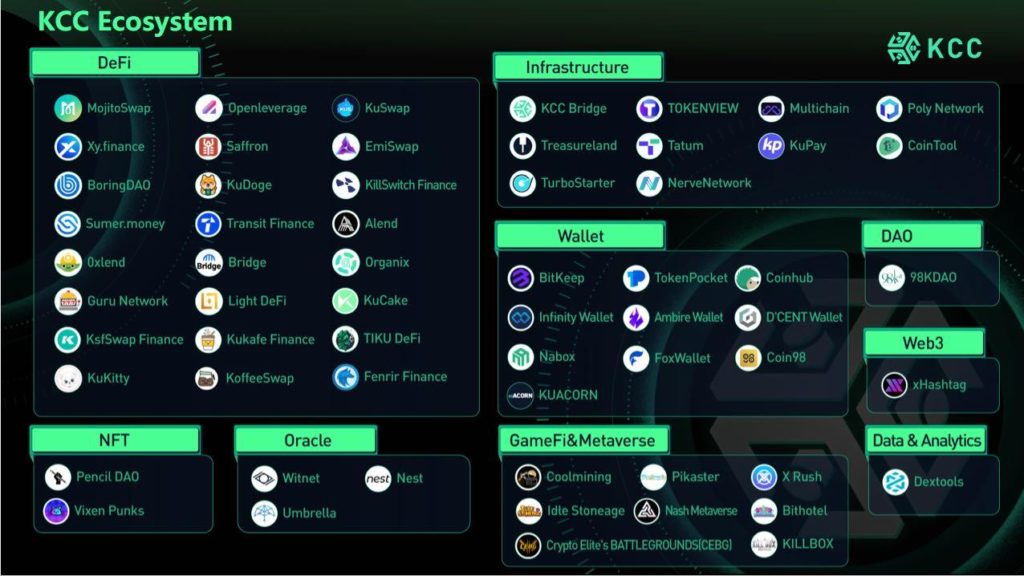
The platform is governed by a decentralized autonomous organization, GoDao. Holders of KCS control the network through a proposal and voting mechanism.
Conclusions
The Web3 concept is increasingly attracting the attention of major market players: Uniswap Labs, Pantera Capital, Dragonfly Capital, and other firms have already created venture arms focused on developing and funding next-generation applications.
The KuCoin team believes that the future of the Internet lies in the evolution and adoption of distributed technologies, and it is also actively developing the Web3 direction within its ecosystem.
Read ForkLog’s bitcoin news in our Telegram — cryptocurrency news, prices and analysis.