



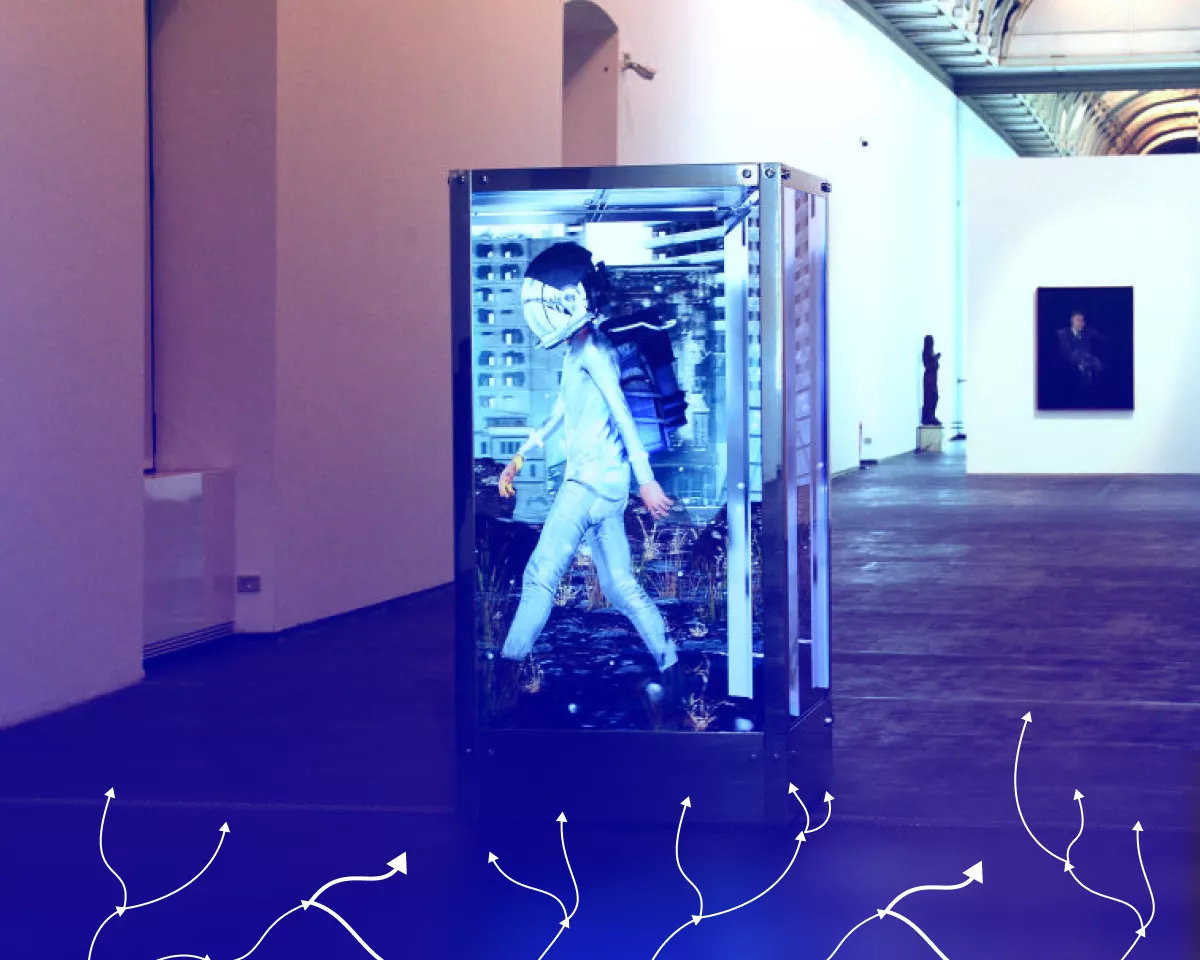
The term “phygital” burst onto prominence in the 2010s, when talk of phygital marketing—marketing that envisages interactive communication with audiences through a blend of digital tools with physical elements—took hold. It was then that discussions broadened to a new era of business development and to a qualitatively different epistemic paradigm, symbolising the ultimate intertwinement of reality and virtuality in our everyday experience. In this post-pandemic era, when longing for the analogue is especially acute and cutting-edge digital technologies are entering a new cycle of development, the phygital-world concept acquires additional culturally conditioned connotations. Philosopher Александра Танюшина analyses why digital companies began to speak more openly about our hybrid future and which technological trends of the coming year are meant to reinforce their arguments.


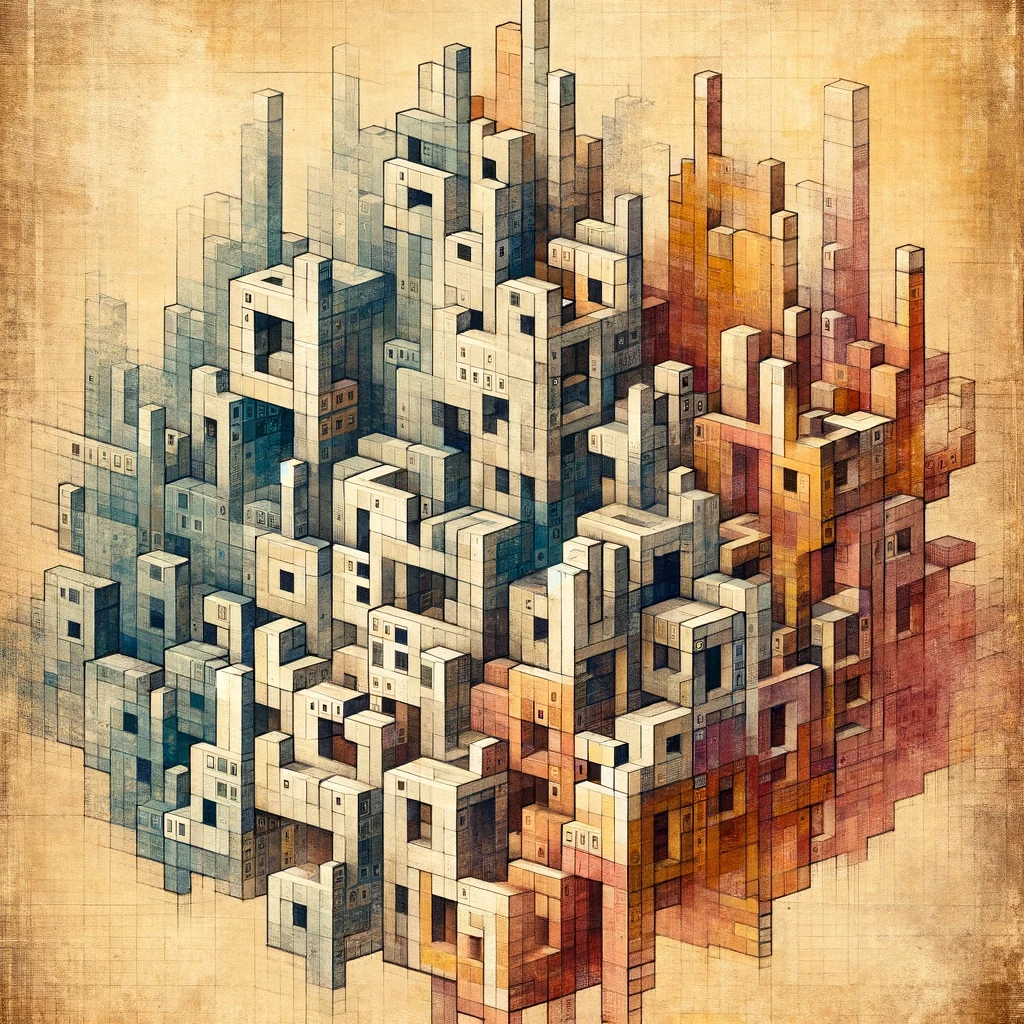
Although the concept phygital (physical + digital) was proposed in 2007 by the chief executive of the branding agency Momentum Worldwide, Kris Vail, the very idea of a hybrid material-virtual world is not new. In various interpretations it has periodically arisen among science fiction writers, among early theorists of cyberculture (for example, in the works of Элис Мэри Хилтон), and finally among researchers of network society. The latter asserted that we would live in a world in which the combination of social networks and media networks forms the primary way of organizing the most important social structures at all levels.
Strangely prophetic, these words turned out to be. Digitalisation indeed became ubiquitous; the information-computing layer now envelops literally every aspect of our life. However, the radical forecasts popular in the latter half of the last century did not come to pass: we do not live in virtual simulations, nor do we fly over cities in machines. And, most importantly, contemporary thinking is moving away from the binary opposition of “real” and “virtual,” replacing it with a pairing of “physical” and “virtual.” All this is because the information layer begins to accumulate real values and meanings, which, in the view of the proponent and populariser of Web 2.0 Tim O’Reilly, appeared in network projects of 2000–2010 through the growth of user involvement in developing online services and social platforms (blogs, wiki projects, social networks).
The emergence of a new internet culture coincided with the formation of a broad set of concepts united under the umbrella term “postpostmodernism.” All of them aim to provide a comprehensive and non-contradictory characteristic of the cultural logic of the present, serving as a peculiar alternative to postmodern theory. Although most of these concepts do not stand up to criticism, their diffusion affected mass culture, in which ideas of “new sincerity” and “new aesthetics” spread widely.
The movement of “new sincerity” became a response of the contemporary generation to the ironic scepticism of postmodernism with its ambiguous view of the future. It found expression in popular online media, literature, cinema and music and has over time become associated with any form of manifesting sensibility, seriousness and value-oriented worldview in mass culture.
Similar motifs were observed in digital art as well. “New aesthetics” (a term introduced by James Bridle in 2011) reinterprets the creative and expressive methods of digital art, which since the dawn of computer art were based on principles of dematerialisation, virtualisation and telepresence.
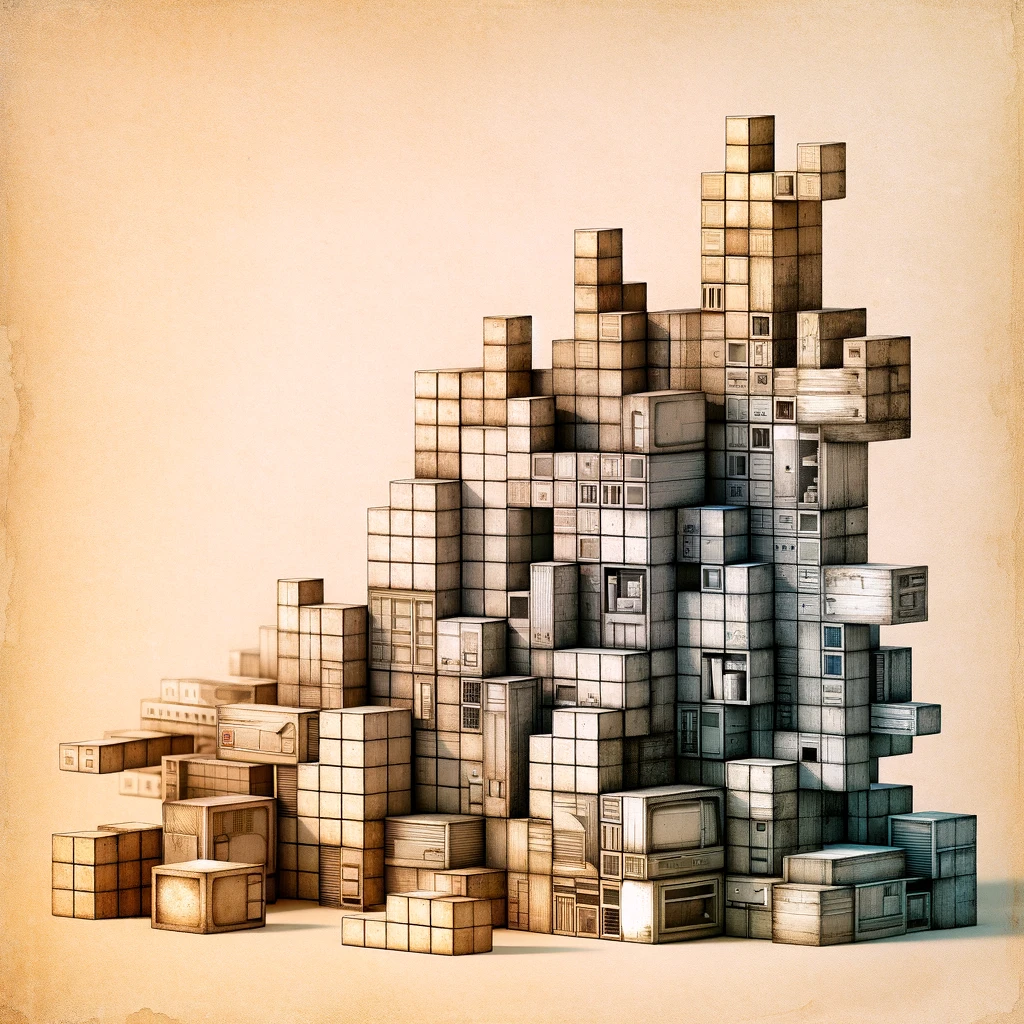
“New” or “post-digital” aesthetics is a reaction of the modern era to former calls for total digitisation, expressed in a partial return to physical and bodily experience, and in longing for the analogue world and the aura of original authorial works.
Indeed, in the work of a new generation of media artists in the 2010s a tendency toward materialisation of digital forms and images became apparent, which led art criticism of the time to stabilise the term пост-интернет искусство.
Thus it is unsurprising that the spread of the phygital trend in marketing began to be reflected in artistic forms as well. The term “phygital art” gradually came to denote 3D sculptures originally modelled in digital form, interactive digital installations, various practices of cyberperformance and so on. In crypto-art, the term “phygital” has come to denote physical assets composed of digital metadata (NFT) and physical objects meant to realise the digital value of tokens. As an example one can cite the CryptoPunk pendant collection — the result of a collaboration between Yuga Labs and the jeweller Tiffany.
Phygital Utopia Today
Early 2020s proved truly transformative: pandemic, geopolitical crises, metaverse hype, the AI revolution — all of this undeniably affected the mindsets of information consumers. The rise of digital literacy, linked on one hand to the widespread fixation with tech trends and the formation of the phenomenon of “techno-experts,” and on the other hand the rise of digital awareness, coincided with nostalgia for the analogue world, cultural retrofaction, ideas of new materialism and ecological thinking. All this has prompted major commercial corporations to abandon promoting the myth of total virtualization of all our communications, with the myth of physical-digital convergence taking its place. This myth largely rests on the idea of “extended reality” (extended reality), understood in the broadest sense: since humanity does not want to face a choice between the digital world and the physical, it should be provided with the ability to combine both.
This idea is being promoted both at the level of the tech market (we recall that in 2023 two major companies, Meta Quest 3 and Apple Vision Pro, announced the release of their mixed-reality headsets) and at the level of digital trend-setting: digital developers, marketing companies and representatives of the creative industries are clamouring about spatial computing, the embodied internet, WebAR, etc. The development of augmented and mixed reality technologies, and their active deployment in education, medicine, engineering and, of course, arts and entertainment, is on a formal-linguistic level also supported by design practices and video-content production based on a combination of analogue media images with digital ones (3D modelling, CGI, etc.).
In addition to physical and spatial data being augmented with information layers of varying levels, “expansion” will also occur through increasing agency of AI systems, and their integration into all sorts of digital applications and media platforms (from built-in voice assistants to fully-fledged virtual influencers), as well as into physical products (which may herald a rapid return of the “Internet of Things”). Finally, even now narratives of “augmented intelligence”—an idea that in the 1990s was developed by philosophers under the banner of the “extended mind” thesis—are taking shape.
Judging by annual reports of large companies, the idea of “extended reality” and phygital worldview will shape a new vision of the world in the coming decade. Yet a word of caution: such forecasts remain quite idealistic and to date seem nothing more than techno-utopian myths about a hybrid world. Even as mixed-reality technologies, in combination with AI, promise to become more accessible and inclusive, and phygital thinking largely responds to broad socio-cultural transformations, such solutions have not yet solved the problem of digital divergence. Information technology remains inaccessible to some social groups, so our reality will only broaden for a rather limited segment of the population.
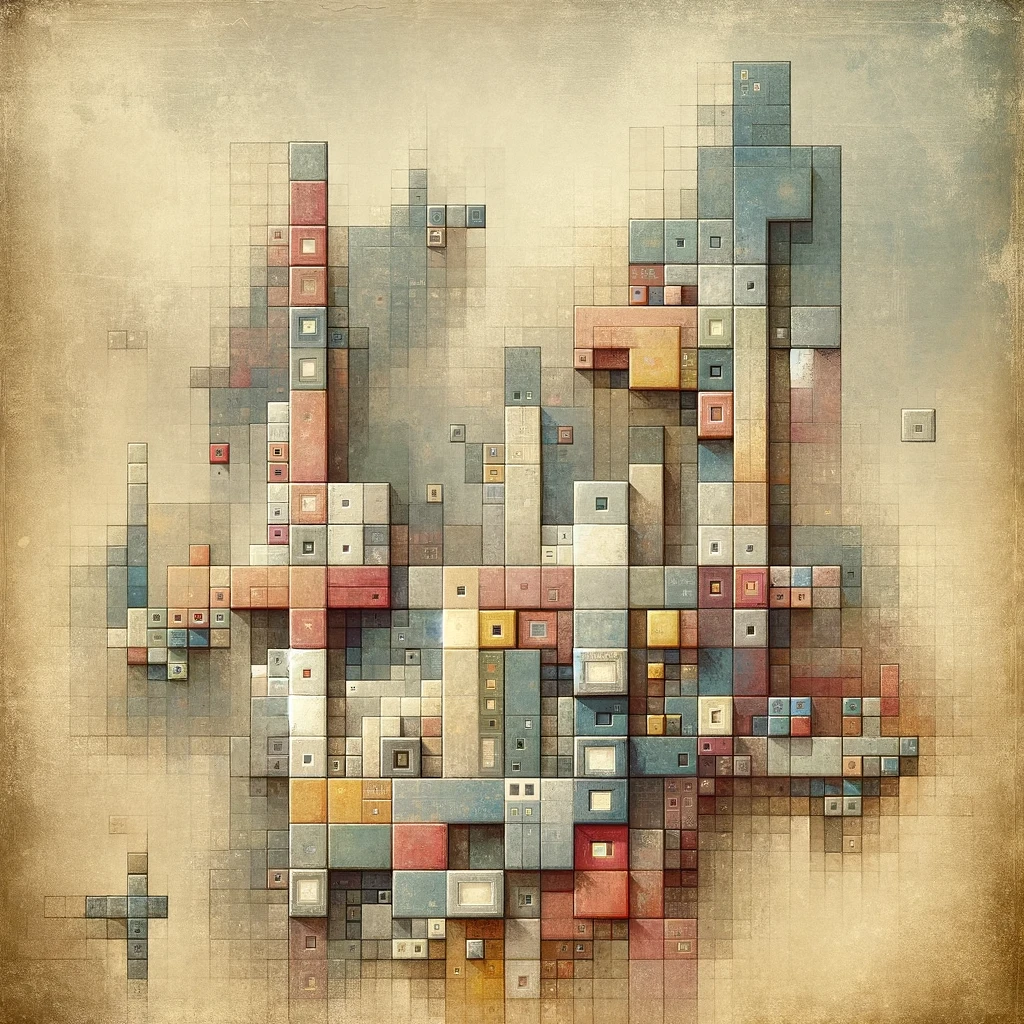
For this reason there is today talk of another new ideology of the twenty-first century — TESCREAL (transhumanism, extropianism, singularitarianism, rationalism, effective altruism and long-termism). Its core ideas are the expansion of reality, the enhancement of human intellect, the extension of life, and, of course, the development of superintelligent AGI. Timnit Gebru, founder of the Distributed AI Research Institute (DAIR), argues that TESCREAL ideas are being spread by the leading figures of Silicon Valley, from where they then enter popular media discourse. On the new myth also reflects philosopher Emil Torres:
«“TESCREALISM” rests on the belief that advanced technologies are our ticket to a world in which, as Sam Altman writes, “humanity thrives to a degree that probably none of us can yet fully imagine.” TESCREALISM is a worldview founded on a grand vision that grew out of intersecting movements and ideologies».
The philosopher adds that this concept evidently has dark sides too, accelerationalist and “doomer” aspects: the move to the ‘new world’ could be rapid, uncontrolled and imperceptible (and thus dangerous) precisely because “hybrid technologies” could become truly all-pervasive and erase all visible boundaries between physical reality and the digital.
For this reason the vision of our future “hybrid world” remains in a perpetual oscillation between utopian and dystopian extremes. The law of proportionality operates with punctilious precision, and for every phygital tale there will be many more phygital horrors. All that remains is to stock up on popcorn and watch what comes next. That is why British science-fiction writer Charles Stross, in one of his most recent articles on the current “embodied Sci‑Fi” situation, writes:
“The billionaires running tech companies at the wheel have taken instructive stories from old‑fashioned science fiction as a roadmap, and we all find ourselves trapped in the passenger seat. Let us hope that what lies ahead is not an abyss.”