




In early 2022 the bookmaker DraftKings became a validator on the Polygon network and, for a year, charged a 100% fee for staking of MATIC. This is evidenced by a CoinDesk investigation.
Start of the partnership
In March Polygon Labs announced that it had reached an “important milestone in implementing” its technology infrastructure, signing an agreement with DraftKings. Under the arrangements, the betting platform used one of its network validators, “marking the first time a large public company had taken an active role in managing the blockchain.”
However, at that time Polygon representatives did not disclose crucial information — they allocated millions of MATIC tokens to DraftKings for deployment.
According to on-chain data, in October 2021 after signing another “strategic blockchain agreement” the project’s treasury sent 2.5 million MATIC to an address linked to the bookmaker.
Thus DraftKings became one of more than 100 validators on Polygon. Most of them charged staking fees of 5-10% of the rewards, but the new protocol partner chose to take a different path.
Fee manipulation
DraftKings set a 100% fee for its validator services, meaning many small delegates did not receive a single token as a reward for their stake.
One ordinary user, Boris Mann, who provided the bookmaker with his coins, lost potential earnings of $800.
“The point was to lock [tokens] and forget about them,” he explained.
Over time the DraftKings validator became one of the largest in the network, and Polygon itself acted as its main delegator, collectively locking 60 million MATIC.


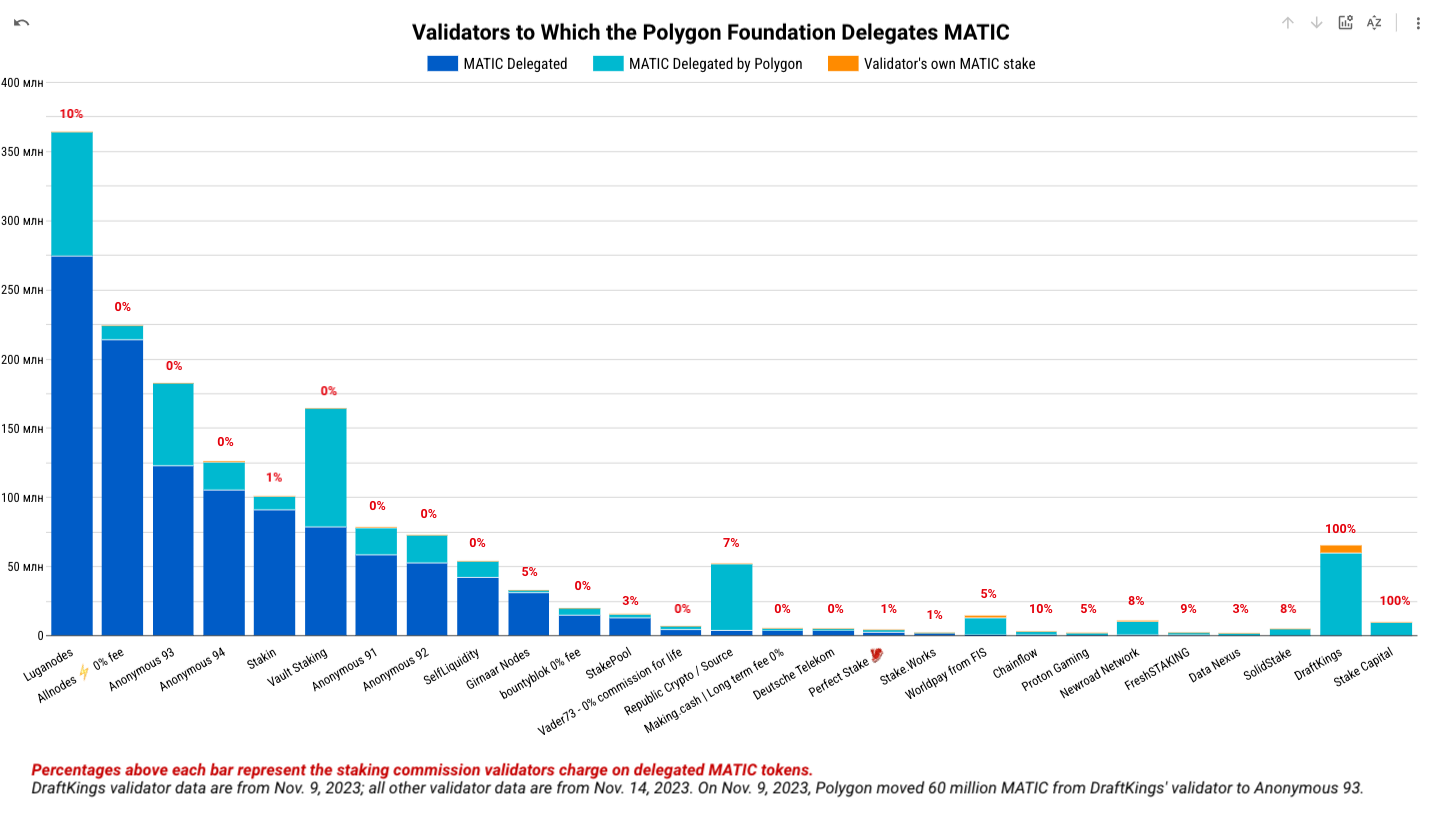
“Funds, naturally, hold large stores of native tokens for their blockchains. They need to bet on this and diversify assets, while caring about performance and decentralisation,” said Eduard Lavidal, co-founder of the staking platform Stakin.
However, it remains unclear what benefit Polygon gained from this one-sided cooperation.
Removal
From November 2022 until the validator was stopped in mid-October 2023, DraftKings withdrew a total of 3.2 million MATIC (about $2.4 million at the time of writing) as rewards. This figure far exceeds the earnings of other network participants for the same period.
At the same time, the bookmaker actively blocked its own tokens earned from commissions. According to validator.info, without the 60 million MATIC provided by Polygon, the company would have earned only about $128,000.
The shutdown of the validator also occurred for unknown reasons. In the summer it began to perform poorly in transaction validation and by September had already received several strikes from the blockchain.

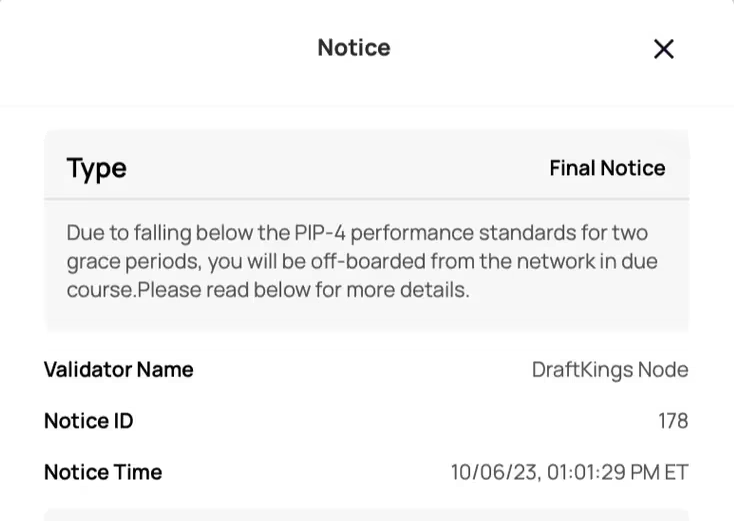
On October 19, Polygon excluded DraftKings from the list of validators and handed its slot to the crypto exchange Upbit. On November 9, the project fund withdrew its delegated tokens and sent them to an anonymous participant with zero fee.
“We are working with a third-party provider to restore our node on the Polygon network, following the standard procedures to which all validators must adhere. This will not affect our customers,” said a DraftKings employee.
As noted, on November 16 the gas price in the Polygon network jumped nearly 1000%, to around 5000 Gwei (~$0.1), as users began actively creating Ordinals-inspired POLS tokens.
Earlier, Polygon Labs disclosed the proposed Polygon 2.0 architecture.