


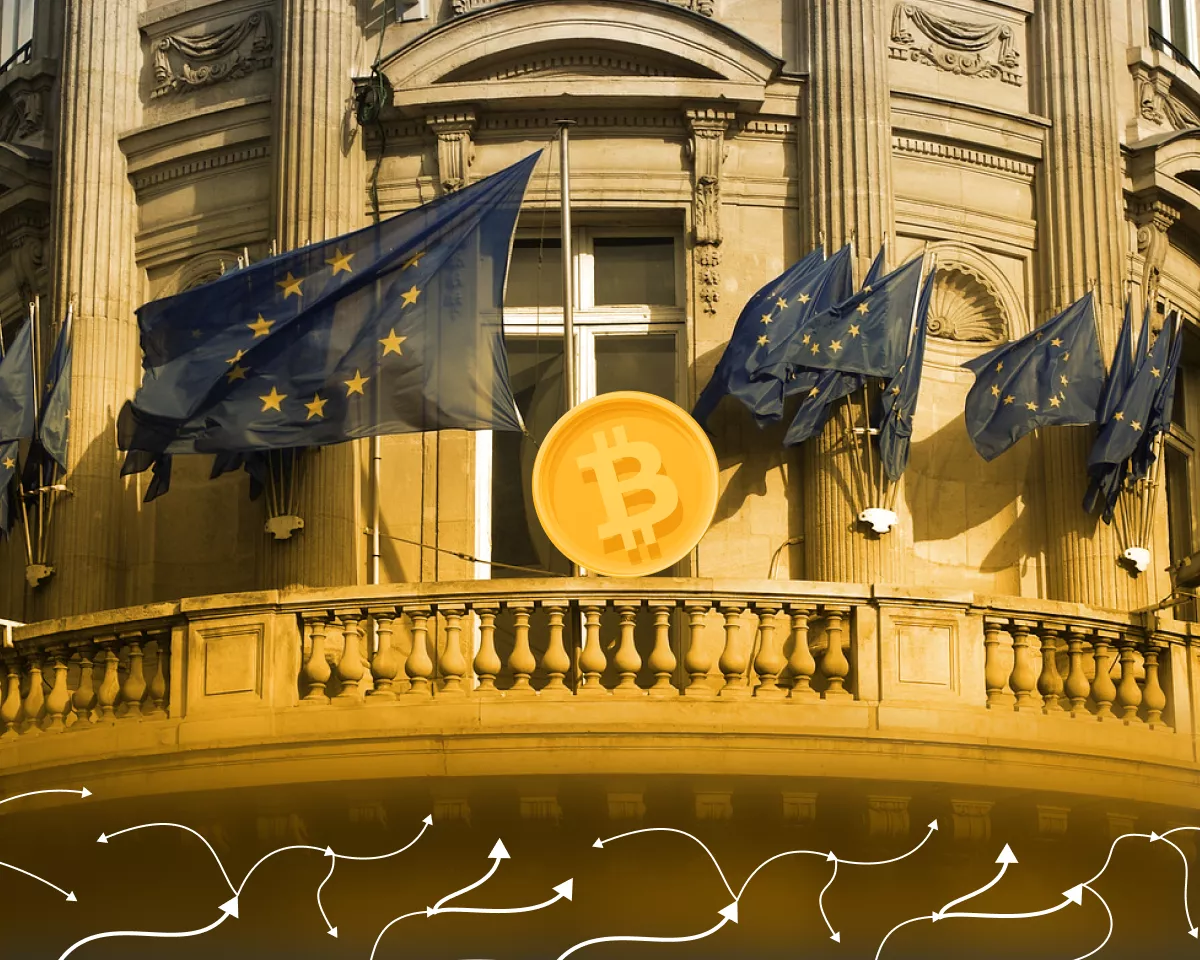
Unhealthy competition and rising costs: MiCA’s impact on the Bitcoin industry
The 20 апреля comprehensive regulation bill for the crypto industry MiCA will raise the region’s investment appeal, but at the same time could increase costs of regulatory compliance. This was stated by experts polled by ForkLog.
Key Provisions
MiCA was adopted after more than two years of discussions and revisions, making the EU the first major jurisdiction to implement a comprehensive crypto law. The main provisions will take effect 12 months after publication in the Official Journal of the European Union.
Senior lawyer Bogdan Popovchenko of Baseley & Partners highlighted the main components of the enacted document:
- key provisions for those who issue and trade crypto assets (including asset-backed tokens and electronic money tokens), concerning transparency, disclosure, authorisation and supervision of operations;
- stablecoin operators must obtain a license from the competent authority of their EU member state and comply with certain rules to ensure the stability of their tokens;
- anyone wishing to offer a crypto asset publicly must prepare an official document (white paper) disclosing information about it. This document must be approved by the competent authority of the EU member state;
- MiCA aims to protect consumers and investors, as well as to create transparency and stability in the industry.
According to Popovchenko, MiCA brings a number of positive changes for the European cryptocurrency market. In particular, it offers a unified approach to regulating digital assets, which will simplify interactions of specialised companies with regulators and reduce administrative costs.
A clear classification of crypto assets will facilitate their integration into traditional financial systems and increase institutional recognition.
The law introduces stringent rules aimed at protecting investors and consumers, including disclosure and compliance with AML/CFT standards, and tightens requirements for stablecoins, which must be backed by a dedicated reserve of assets.
A number of factors, according to the lawyer, could make the European jurisdiction more attractive to crypto companies after MiCA is enacted:
- the existence of a single license that will simplify the process of expanding into the market;
- increased investment appeal and trust in the industry due to strict regulatory oversight and protection of investors’ rights.
In turn, smaller projects or startups may face higher costs to comply with stringent regulatory requirements and standards, Popovchenko notes. As a result, they may opt for jurisdictions with more lenient regulation, such as Bermuda, the British Virgin Islands, or Singapore, to optimise their costs.
Nevertheless, the expert believes that the MiCA rules will be more of a plus than a minus for the industry.
Founder of Baseley & Partners and the LegalTech platform Tax Sketches, Tatiana-Eliza Vasilyeva, added that the new requirements could provoke an outflow of global projects operating outside the EU, but positively affect projects within the EU by creating a clear playing field.
Tough requirements and their consequences
Given the lack of analogues, the scope, the 27 member states and the market size — about 450 million solvent consumers — MiCA theoretically has the potential to become a benchmark for the global cryptocurrency market, notes the CLO CLO Crypto Neobank Trustee Plus Lyudmila Kuketu.
In her view, however, the new regulation could prove a serious challenge for participants in the European market, as it sets fairly stringent norms.
\”This includes a high minimum registered capital, increased requirements for governance bodies, a wide amount of information to disclose, compliance, strict licensing conditions, and additional requirements to provide financial guarantees to protect consumers’ interests,\” the lawyer described.
According to her, this will substantially increase administrative costs for companies and significantly complicate their operations.
Along with this, MiCA introduces passporting — uniform rules for the whole EU. This spares from the burdensome need to tailor the business model to the regulatory requirements of different member states.
\”Now with a license in one EU member state a company will be able to operate seamlessly in all the others,\” explained Kuketu.
The lawyer suggested that the EU may become an attractive jurisdiction for large companies with substantial resources to meet the burdensome Act requirements. However, small startups will not be able to compete with them and are likely to leave the market.
\”In practice, only large players with high reputations may remain in the EU market. On the one hand, this could positively affect sector stability and reduce skepticism toward cryptocurrencies. But on the other hand, the lack of healthy competition could be catastrophic,\” she warned.
Comparing global prospects for cryptocurrency regulation worldwide, the expert came to not encouraging conclusions.
On the one hand, consolidation of players and a significant drop in competition in the EU, which has pursued a path of harmonising legislation. On the other — the United States, requiring licenses separately in each state and with stricter disclosure requirements. For giants like Coinbase, this is no problem, but it will negatively affect small or medium startups.
\”Therefore, as a result of adopting MiCA and possible subsequent global processes, there could well be a situation in which ‘the rich get richer and the poor get poorer’. This, unfortunately, does not bode well for optimism,\” she noted.
Preventing Terra 2.0
In the near term, the market expects tighter regulation, said Andrey Velikiy, co-founder of Allbridge.io. In particular, it will affect crypto companies operating within the EU and their users.
In particular, he mentioned the need for officially registered exchanges to require mandatory reserves attestations from stablecoin issuers.
Velikiy added that MiCA does not yet affect DeFi services, though corresponding changes in the legislation are likely to be expected in the future.
\”On the one hand, this will help protect users from yet another Terra, but it will also create higher regulatory pressure on various crypto projects,\” he concluded.
Indefibank CEO Sergei Mendeleev noted that in the context of 100% backing for stablecoins, it is unclear what will happen to MakerDAO and the DAI stablecoin.
He added that the requirements for crypto operators to fully identify their customers also require clarification.
\”I find it hard to imagine how the same Metamask, for example, will do this. Permissions were needed before; the question is whether having a license from the UAE would suffice to operate in Europe, or if one will have to obtain it in one of the EU member states,\” the expert asks.
Mendeleev expressed hope that before MiCA comes into force, players will have answers to these questions.
Earlier, EU lawmakers discussed advantages and disadvantages of MiCA.
Рассылки ForkLog: держите руку на пульсе биткоин-индустрии!