




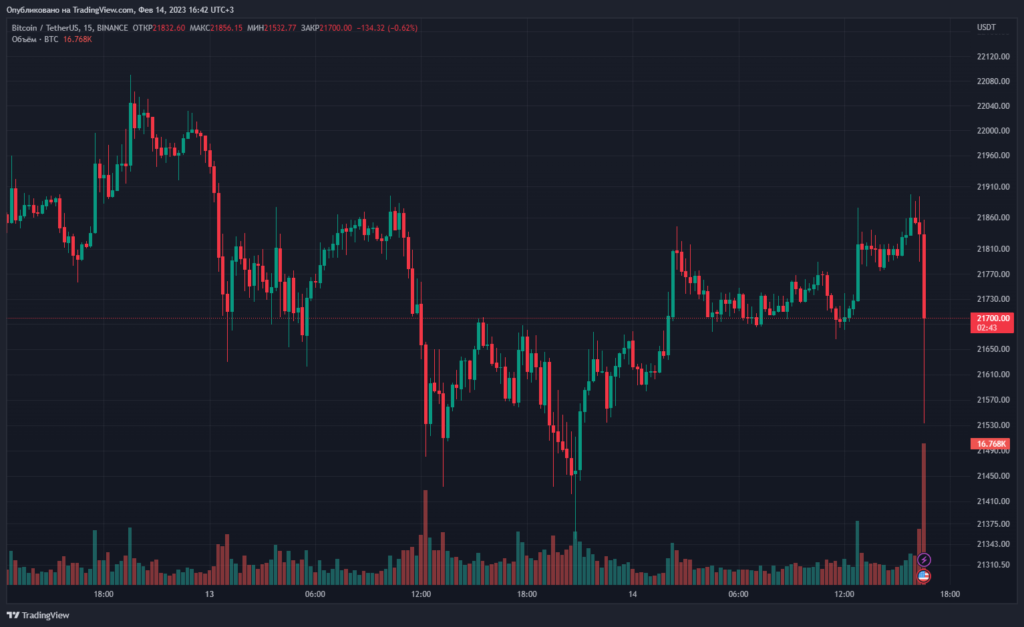
US consumer prices in January stood at 0.5% month-on-month and 6.4% year-on-year, with the core gauge up 0.4% and 5.6% respectively. The 12-month trend matched December’s readings and beat expectations. Bitcoin’s price, after a pause, began to slide.


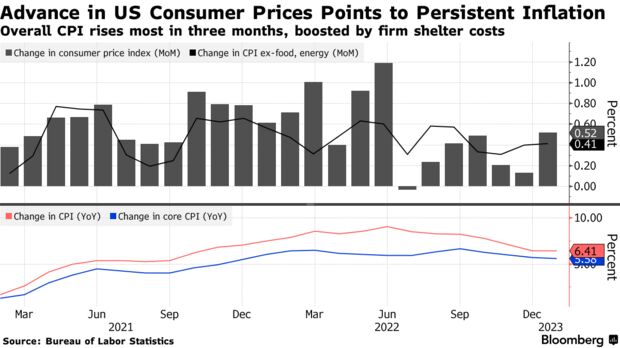


The data released confirmed the February 8 Fed chair’s thesis by Jerome Powell that disinflation in the services sector would take time.
Investors are convinced that monetary authorities do not yet have enough grounds for a pause in tightening policy.
In March the Fed could raise the target range by 25 basis points to 4.75%-5% per year. A 50 basis-point move is also possible. The probability of such a move stands at 6.3%, according to the CME FedWatch tool.
At the February meeting, the rate-setting committee emphasised that it was prepared to adjust plans for further tightening if risks arose that could derail the Fed’s objectives.
A sharp rise in payrolls in January surprised economists. It pointed to no cooling in the labor market, which could heighten inflation risks.
On February 15, data on US retail sales will be released. The consensus forecast expects a 1.2% gain.
A rebound after two months of sharply negative momentum could signal rising odds of a soft landing for the US economy, reinforcing the Fed’s view that the current policy stance is appropriate. A release that falls well short of expectations could spur speculation about a shift in Federal Reserve policy and support optimism in risk assets, including the cryptocurrency market.
Earlier, the employment report «spooked» investors in crypto funds, triggering the first outflow in five weeks, according to CoinShares.
Earlier, on the daily chart, the moving averages formed the «golden cross» — a precursor to a positive trend.
Prior to that, Glassnode stated a transition phase from a bear market to a bull market.