



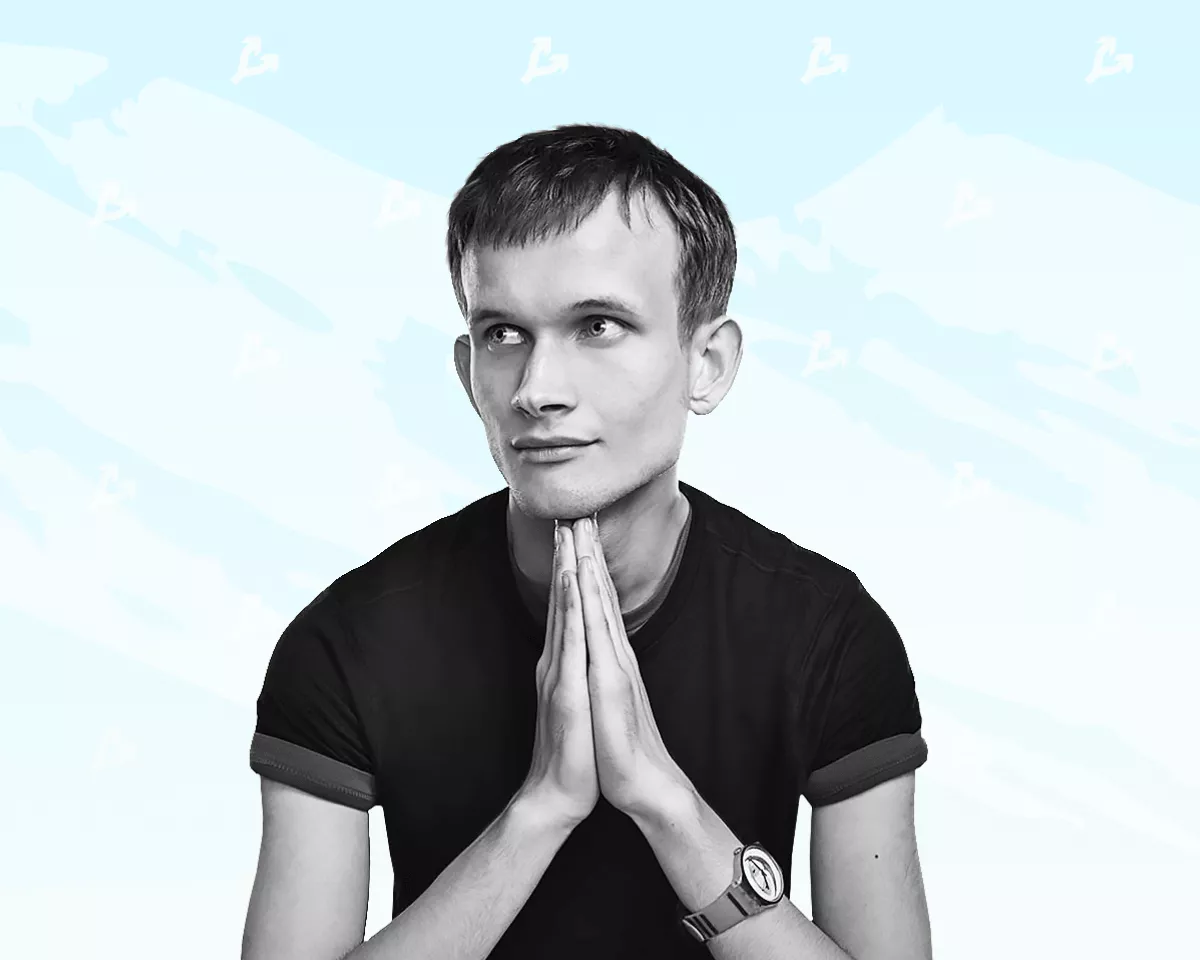
Ethereum founder Vitalik Buterin proposed using zk-SNARKs to verify data on the reserves of cryptocurrency exchanges. In his view, the technology would make the Proof-of-Reserve (PoR) procedure more efficient.
Having a safe CEX: proof of solvency and beyondhttps://t.co/AKEweYZfj2
Big thanks to @balajis and staff from @coinbase @binance @krakenfx for discussion!
— vitalik.eth (@VitalikButerin) November 19, 2022
“Every time a large centralised exchange collapses, the main question that arises is whether the problem can be solved using cryptographic methods. Rather than relying exclusively on fiat tools such as government licenses, audits, governance, and the biographies of those behind the platform, companies could create cryptographic proofs showing that the funds stored on the blockchain are sufficient to cover obligations to users,” he wrote.
In his view, ideally there would be a system that would prevent an exchange from operating client funds without their consent. He emphasised that the zk-SNARKs technology could help achieve this goal.
The Ethereum founder described the Merkle Tree Proof-of-Reserves procedure as “as good as any proof-of-liabilities scheme can be.” At the same time, he noted that this model has a number of confidentiality-related issues.
Under Merkle Tree Proof-of-Reserves, an exchange or an independent organization takes a snapshot of the platform’s wallets and combines them into a Merkle tree. For example, a similar method is planned to be used by Huobi and Binance.
According to Buterin, even in the simplest implementation, zk-SNARKs would render the PoR more confidential: a “branch” of the Merkle tree, handed to a specific user as proof of solvency, would not allow them to learn information about the balances of other anonymised clients.
He added that, if desired, the technology could be adapted to more complex conditions. As an example, the Ethereum founder cited a scenario in which, with zk-SNARKs, the platform shows users that, in margin trading, it does not give preferences to other participants.
Buterin stated that cryptographic methods allow the exchange’s reserves to be verified solely in digital assets:
“Platforms store not only cryptocurrencies but also fiat—as part of the banking system. […] The procedure will rely on traditional trust models: a lending institution will verify the balance, auditors will verify the balance, and so on. Given that fiat cannot be cryptographically verified, this is the best that can be done.”
In conclusion, Buterin noted that in the future there could be “cryptographically restricted” centralized exchanges. He said they would hold assets in specialized smart contracts that prevent unauthorized use of client funds.
He also allowed for the emergence of “semi-custodial” platforms, which would be trusted with fiat but not with cryptocurrencies.
Binance chief Changpeng Zhao drew attention to the Ethereum founder’s publication. He said the exchange’s team would implement the described verification algorithm and make it open to the industry.
I don’t understand all the equations in there either. Our team says we will implement it and make it open-source, for the industry.
— CZ 🔶 Binance (@cz_binance) November 19, 2022
Earlier, Buterin called zk-Rollups, a protocol based on zk-SNARKs, the priority tool for solving Ethereum’s scalability problem.
Earlier, the updated Ethereum road map envisages full integration of zero-knowledge proof technology.
Follow ForkLog’s bitcoin news on our Telegram — cryptocurrency news, rates and analysis.