


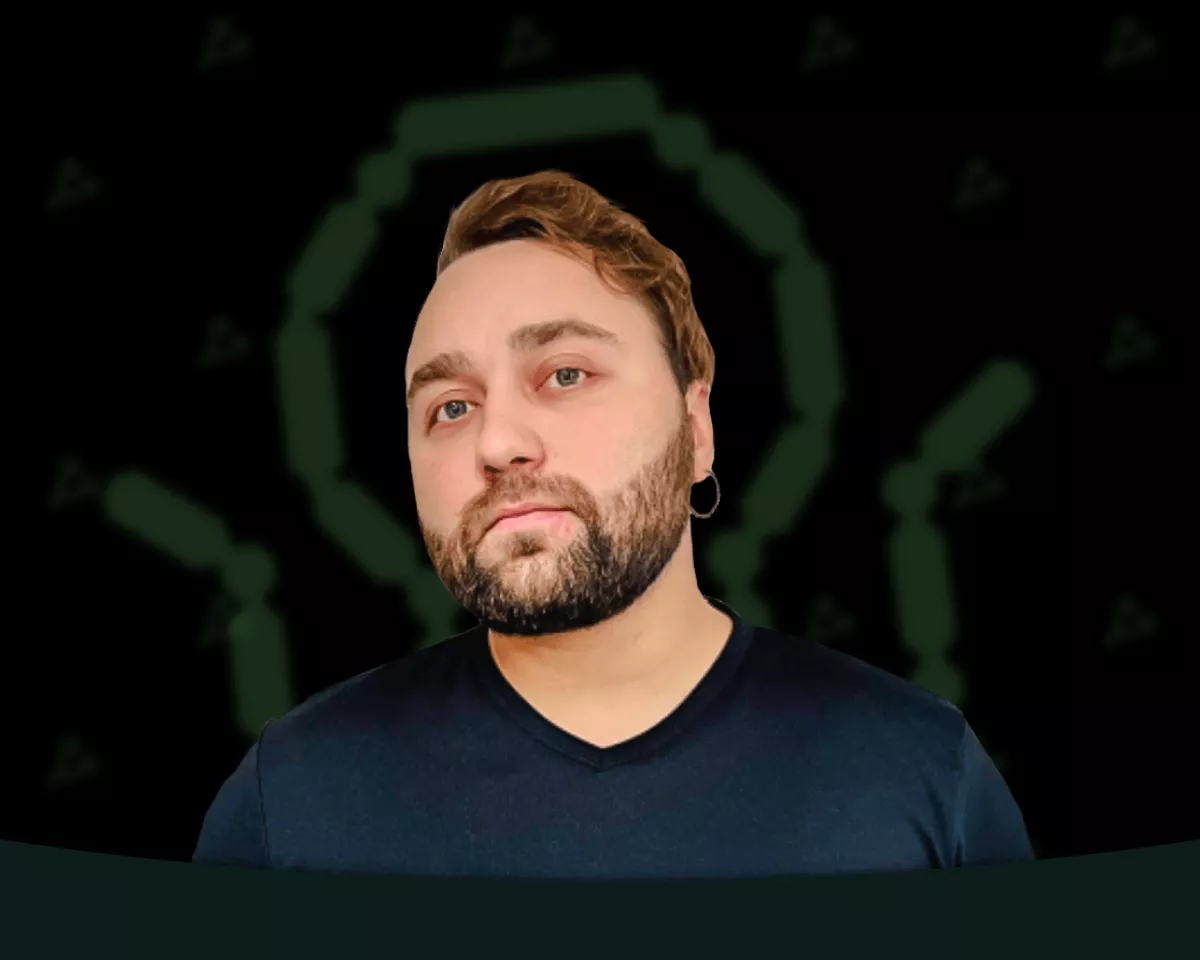
We are building a standard for cross-chain communication — Symbiosis Finance co-founder on the project’s development
In October, the cross-chain swap protocol Symbiosis Finance attracted investments totaling $2 million from Blockchain.com Ventures, Primitive Ventures, Avalanche and others.
The protocol is currently in beta testing, and the SIS token is already trading on OKEx, Bybit and Gate.io.
In December we spoke with the co-founder and Chief Marketing Officer of Symbiosis Finance Nick Avramov. He spoke about the project team, the features of Symbiosis Finance cross-chain swaps, and the upcoming protocol launch.
ForkLog: Hello, Nick! Tell us about yourself. How did you get into the crypto industry?
Nick Avramov: Hi! In 2016, when I was finishing my master’s at the Higher School of Management of Saint Petersburg State University. My professor suggested writing a master’s thesis on blockchain.
I remember reading the Bitcoin white paper for the first time and starting to understand how elliptic-curve cryptography works. Later I published part of my master’s thesis on Medium.
In 2017 I worked at a company that did traffic arbitrage on Facebook and Google. It was a year of ICOs. I started looking for marketing blockchain projects and joined one of them as a community manager.
After a few months I realized that the crypto industry was more interesting than advertising and fully immersed myself in this field: participated in roadshows for several cryptocurrency projects in China, and worked at the venture fund Digital Horizon.
ForkLog: When and how did the idea of Symbiosis Finance come about?
Nick Avramov: In September 2020, although there wasn’t a name yet — we were simply exploring the problem of liquidity fragmentation across blockchains. In January 2021 we started working on the project’s codebase, and in the summer — looking for investors.
ForkLog: How did you manage to secure support from Blockchain.com and other major market players early on?
Nick Avramov: We pursued the path of classic venture capital. In June 2021 we began writing cold emails on LinkedIn, gave presentations, showed repositories and plans for the project’s development to investors. We did what is taught in business school.
Blockchain.com played a major role in attracting investments. We received several positive responses, but it was the support of Peter Smith and Sam Harrison that proved decisive. We are very grateful to them for that.
ForkLog: Who is behind the “we”? Can you tell us about the Symbiosis Finance team?
Nick Avramov: The team is truly stellar. The core developers of the protocol have known each other for almost five years. Among them are alumni of Zerion and several other projects.
The security is handled by a former Yandex team lead and the head of the Japanese conglomerate Rakuten. The head of the relay-network development team previously led open-source projects in IBM’s Russian division.
ForkLog: What are you working on now?
Nick Avramov: The main priority is launching the mainnet in January 2022. We recently released a mobile SDK, and in the near future we will start pilot integrations with wallets.
ForkLog: How does Symbiosis Finance differ from ThorChain?
Nick Avramov: Unlike ThorChain, we use the classic model [simple_tooltip content=’Automated Market Maker’]AMM[/simple_tooltip]-pools. This approach eliminates the need to stake the native token, as in ThorChain’s RUNE. Liquidity providers Symbiosis Finance assess the risks of price volatility of pairs in the pool themselves.
We are focused on transferring tokens across networks with growing DeFi ecosystems, whereas ThorChain focuses on transfers of native tokens of blockchains.
ForkLog: Does Symbiosis Finance work with non-EVM-compatible blockchains?
Nick Avramov: The protocol supports blockchains with smart contracts that allow generating keys EdDSA/ECDSA, for example Solana and Near. The integration complexity depends on the virtual machines of such blockchains.
In networks like Bitcoin, you cannot execute AMM logic. However, if they support Hashed Timelock Contracts (HTLC), Symbiosis Finance creates cross-chain bridges for exchanging native assets.
ForkLog: Tell us about the features of the protocol’s liquidity pools.
Nick Avramov: Symbiosis Finance uses pools with stablecoins: for swaps between PancakeSwap and Uniswap — BUSD and USDC.
The protocol seeks the most advantageous trade path on decentralized exchanges — via the 1inch liquidity aggregator in EVM networks and its own solution in non-EVM blockchains.
With this approach, you don’t need to install special software. The swap can be done in one click via MetaMask.
ForkLog: How do you address the problem of uneven swaps that cause the balance of one asset to rise in one network while falling in another?
Nick Avramov: We rebalance pools and incentivize arbitrageurs to equalize prices when there is high demand for a particular direction of swap.
For example, if users frequently swap Tether from Ethereum to Binance Smart Chain, arbitrageurs take opposite actions with a premium.
ForkLog: Tell us about the relay network. How to launch a node in it?
Nick Avramov: This is a separate network, whose nodes monitor events in blockchains, and then sign and relay users’ transactions to Symbiosis Finance.
We will launch it in several stages. In the early version there will be 15 nodes, which synchronize with the help of a smart contract in the Ethereum network. Then we will gradually increase the number of nodes and move the logic of the relay network to a sidechain.
To launch a node you need to stake SIS tokens. The collateral size depends on the stake of other participants, but it cannot fall below 50 000 SIS.
ForkLog: Do you plan to hand the protocol over to a DAO?
Nick Avramov: Yes, but not right now: such a transition would complicate the decision-making process for protocol updates. It is more of a long-term goal.
Everything has its price, including decentralization. At the moment, Symbiosis Finance must grow and move very quickly: the market is very active and competition is only growing.
ForkLog: What do you see as the future of Symbiosis Finance?
Nick Avramov: We want to make Symbiosis Finance the standard for cross-chain communication. One could say it’s the team’s cherished dream.
I hope that in the future external projects will adopt our work and build additional services on top of the protocol.
Follow ForkLog’s Bitcoin news in our Telegram — cryptocurrency news, rates and analytics.
Рассылки ForkLog: держите руку на пульсе биткоин-индустрии!