



Week in Review: Bitcoin Retests $60,000 as Bloomberg Hosts Warn of ‘Coldest’ Crypto Winter
Bitcoin retests $60k; Bloomberg warns of 'coldest' crypto winter; Buterin's new model.
The first cryptocurrency pierced $60,000, Bloomberg hosts predicted the “coldest” crypto winter, Vitalik Buterin proposed a model for resilient synthetic assets, and more from the week.
Bitcoin rebounded from $60,000
The largest cryptocurrency began the week with a break of the $70,000 level. Key pressures included an escalation of tensions between the US and Iran and a partial reserve sale by Strategy.
Prices extended their decline and on the evening of June 5 slid below $60,000.
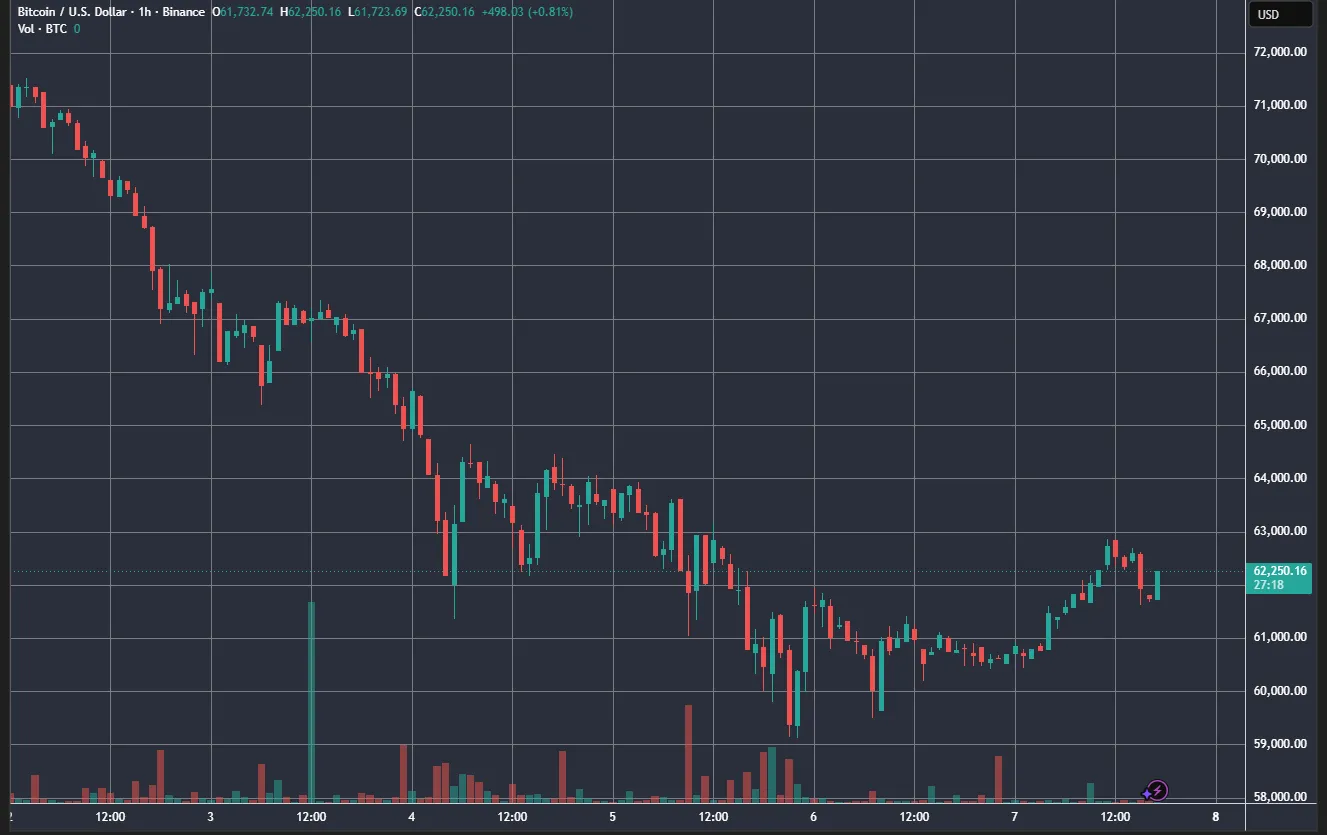
A subsequent bounce took the rate back above $62,000, where it’s trying to hold.
Bitcoin fell 15.4% over the week.
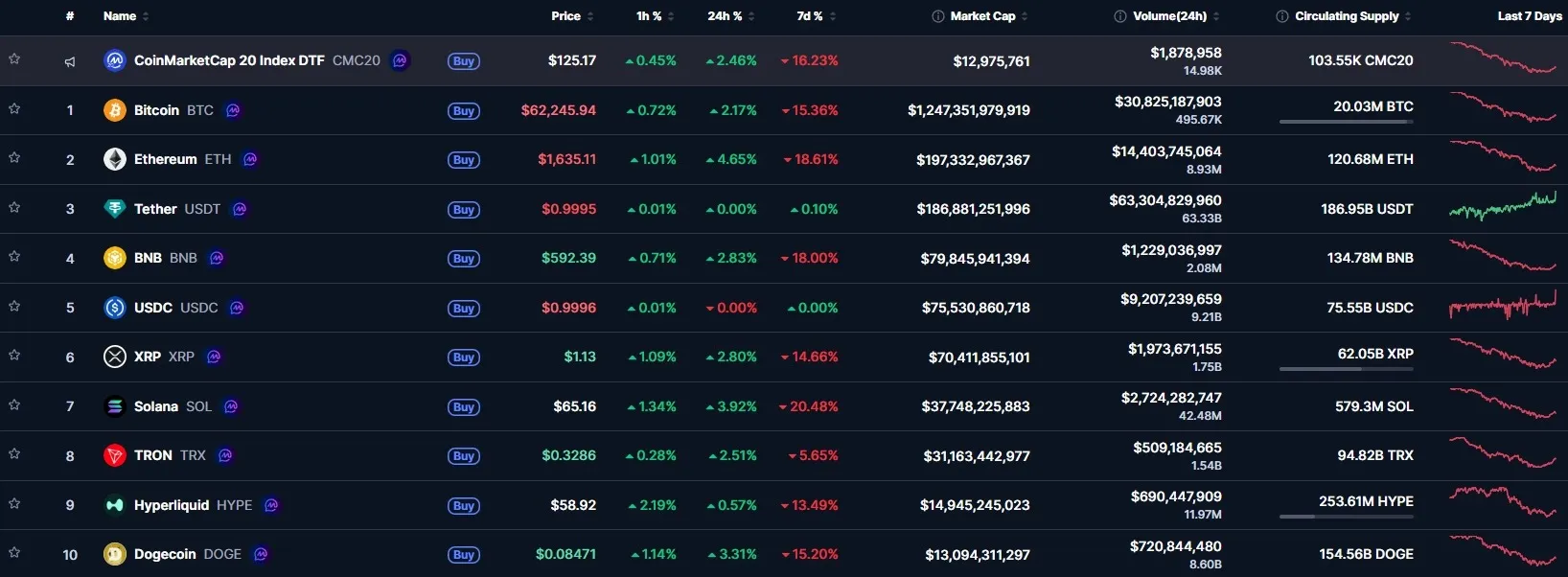
Some major altcoins dropped even more. Solana declined 20.5%, Ethereum fell 18.6%, and BNB lost 18%. The Hyperliquid token ended its rally and slid 13.5% for the period, but held ninth by market cap as Dogecoin fell 15.2%.
Spot bitcoin-ETF products continued to see outflows for a fourth straight week. The tally reached $1.72 billion.
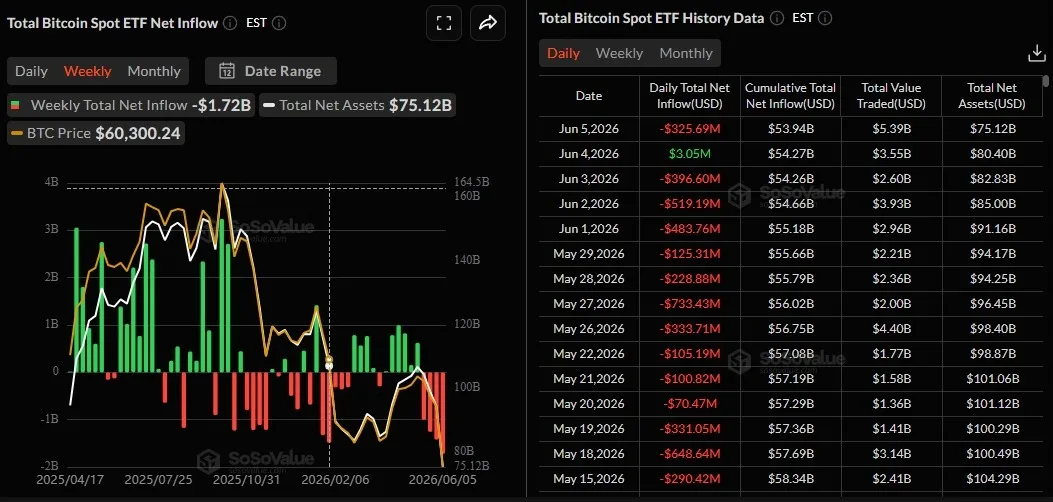
In the prior three weeks, outflows steadily increased: $1 billion, $1.26 billion and $1.42 billion, respectively.
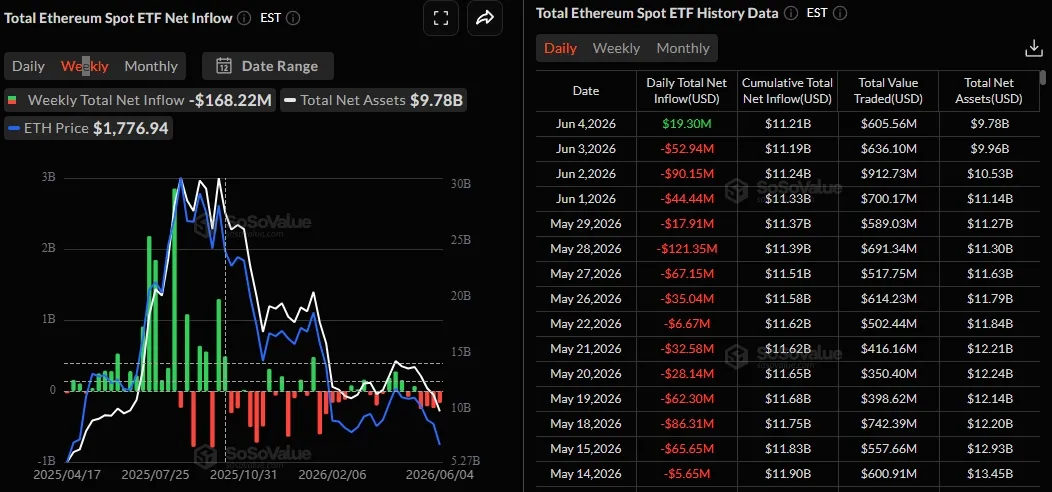
Ethereum funds also turned negative, losing $168.2 million. However, the pace of outflows isn’t accelerating: the previous weeks saw $255 million, $216 million and $241.4 million.
The crypto Fear and Greed Index predictably plunged from 28 to 12, deep in “extreme fear.”
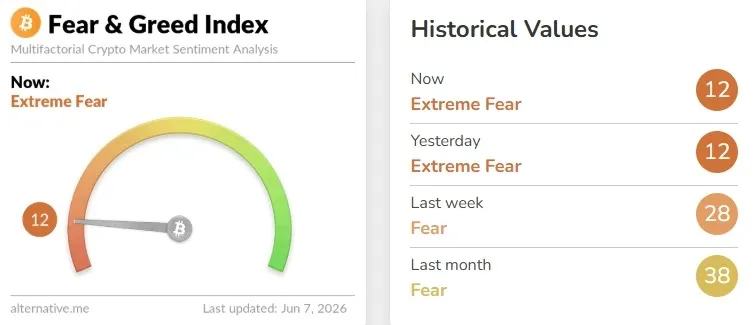
Total market capitalization fell to $2.14 trillion — roughly 17%. Bitcoin dominance slipped from 59.3% to 58%. Ethereum’s share fell to 9.2%.
Bloomberg hosts forecast the “coldest” crypto winter on record
The digital-asset industry is experiencing its toughest downturn in aggregate. According to Bloomberg Odd Lots hosts Joe Weisenthal and Tracy Alloway, the current period is defined not just by falling prices but by a “loss of faith” and a systemic crisis of ideas.
Weisenthal noted that Bitcoin has seen deeper drawdowns before, but the present environment is marked by investor demoralization. Among the key reasons, they cited:
- collapse of defensive narratives: the top cryptocurrency failed to confirm its role as an inflation hedge — amid dollar instability, investors preferred gold;
- competition from AI: the artificial-intelligence sector is soaking up capital, engineering talent and investor attention. Miners also have to compete with AI data centers for electricity;
- institutionalization challenges: the launch of spot ETFs and mainstreaming deprived the market of its “early-stage” pitch. Meanwhile, Wall Street interest has shifted from trading activity to stablecoins and tokenization;
- technological risks: they flagged the threat that quantum computing poses to cryptographic security and the potential selling pressure from corporate holders.
The situation is compounded by an “identity crisis” amid a lack of fresh growth drivers. Even the launches of powerful models like Claude 4.6 from Anthropic and GPT-5.3 from OpenAI are grabbing the spotlight, leaving crypto in the shadow of broader tech progress.
What to discuss with friends?
- Zcash fell 48% after a critical network vulnerability was fixed.
- Sui developers cited the reasons behind three network halts.
- Russian capital on foreign crypto exchanges fell to 720 billion rubles.
- Toncoin jumped 19.5% in a day after a rebranding announcement.
Bank of Russia will allow non-qualified investors access only to BTC, ETH and USDT
The Bank of Russia doesn’t plan to expand the list of cryptocurrencies available to non-qualified investors or raise investment limits after new rules take effect, First Deputy Governor Vladimir Chistyukhin said.
At the initial stage, only three of the most liquid assets will be available to non-qualified investors: Bitcoin, Ethereum and USDT, he said.
He noted that an amendment for the second reading gives the central bank the right to expand the list, but the regulator doesn’t intend to use that option at first.
The central bank still considers cryptocurrencies high-risk — with high volatility and a risk of being blocked. Under such conditions, Chistyukhin stressed, investments in crypto by non-qualified investors “should not be a priority.” The limit for this category will also remain unchanged — 300,000 rubles via a single professional intermediary.
Vitalik Buterin outlined a crash-resilient synthetic-assets model
Ethereum co-founder Vitalik Buterin unveiled a concept for recreating synthetic assets using options instead of traditional debt positions.
He argues the approach removes forced liquidations and reduces reliance on high-speed oracles.
The developer said current DeFi models are vulnerable during sharp market drawdowns. Using collateralized debt leads to cascading liquidations that exert excessive stress on the network and prices.
The proposed scheme relies on a pair of assets (P and N) with a strike price S and maturity date M. They are issued by splitting 1 ETH and can be redeemed at any time. At expiration, an oracle records the index value and funds are allocated between P and N holders.
To maintain a stable exposure (for example, a dollar peg), Buterin suggested using deep in-the-money options with regular automatic rebalancing via a DAO or local scripts.
Also on ForkLog:
- Microsoft unveiled the Majorana 2 quantum chip.
- An expert gave a timeline for a 50-logical-qubit quantum computer.
- Aave tightened listings after the $293 million rsETH incident.
- Citi forecast tokenization to reach $5.5 trillion.
White-hat hacker unlocked $2 million from a 2016 smart contract
Nearly nine years after the failed ICO of HongCoin, a white-hat hacker using the pseudonym Florent unlocked 1,003.62 ETH (about $2 million).
The funds were stuck in the HONG smart contract deployed on August 29, 2016. The sale didn’t meet its minimum target, so investors were supposed to be refunded automatically. But a critical bug in the refund function froze the coins.
The mechanism rejected user requests if their balance exceeded the value of a global counter.
Florent found a vulnerability in an administrative function of the contract, written in Solidity v0.3.5. Older versions of the language lacked protection against integer overflow. The hacker discovered that a specific function call could zero out an address balance, allowing the check to pass.
Because admin access was gated by the HongCoin team’s multisig, the researcher contacted the developers. Together they executed 41 transactions to unlock addresses for 48 investors.
What else to read?
We examined why, with digital transformation and AI development, the internet is ceasing to be a space for people — and whether the “cozy” Web 1.0 can be a form of resistance.
We explored the surge in popularity of perpetual contracts and answered why these instruments can turn the market into a casino.
We looked at Cuba, where more than 10 million people live under financial isolation, and the authorities have begun legalizing cryptocurrencies for foreign trade.
We compiled our traditional weekly digest of the most notable security events.
Рассылки ForkLog: держите руку на пульсе биткоин-индустрии!