



What is tokenised gold?
Gold has long served as a dependable store of value, especially in periods of economic turbulence. Yet owning physical metal comes with hassles: it must be stored securely, is cumbersome to transport, and the price of a whole bar puts the asset out of reach for many investors.
Integration with blockchains and the rise of real-world assets (RWA) offer a neat solution. Tokenised gold is a digital representation of physical bars or coins. The segment is booming because such instruments blend the stability of the precious metal with the absence of custody overheads.
Technically, it is a token that confers ownership rights to real gold. These assets function much like stablecoins, but their peg tracks the market price of the metal rather than fiat currencies.
Typically, one token is backed by a fixed weight of gold — for example, one gram or a troy ounce. The physical reserves sit in certified vaults under the supervision of custodians.
Issuing such assets on networks like Ethereum lets investors transfer them freely, trade on exchanges and use them in DeFi protocols alongside conventional cryptocurrencies.
How does gold tokenisation work?
The process usually comprises three stages:
Storage
The issuer buys physical metal (bars or coins) and places it in a secure, insured vault. This underpins future tokens with real assets.
Issuance
Using smart contracts, the company mints tokens on a blockchain. The circulating supply must strictly match the reserves — for example, 100 tokens for 100 ounces of gold.
Audit
To bolster credibility, projects engage independent auditors to verify that the assets in storage match the tokens in circulation. Some also deploy networks of oracles such as Chainlink to publish Proof-of-Reserve data and ensure transparency.
Users can sell tokens on exchanges or redeem them for physical metal via the issuer’s platform, paying the applicable fees. In a direct redemption, the digital asset is burned and removed from circulation to preserve the 1:1 backing.
What are the advantages of tokenised gold?
Consider the properties that make this relatively new asset attractive.
Accessibility and divisibility
Physical gold bars cost thousands of dollars, limiting the buyer base. Tokenisation solves this by allowing purchases in tiny fractions (for example, 0.01 of a token). That puts gold within reach of almost any smartphone owner.
24/7 liquidity
Traditional bullion markets keep office hours and settlement can take days. Tokenised assets trade around the clock on crypto exchanges, with near-instant settlement, 24/7.
Transparency and security
Blockchains immutably record ownership. Combined with regular audits and Proof-of-Reserve mechanisms, it is far easier for investors to verify backing than with “paper gold” instruments.
DeFi integration
Unlike bars in a vault, tokenised metal can serve as working capital. It fits neatly into liquidity pools or as collateral for loans in DeFi—the “financial Lego” enables a broad range of use cases.
What are the pitfalls?
Despite the benefits, tokenised gold carries risks that merit attention:
Regulatory uncertainty
The legal framework for RWA assets and stablecoins is still taking shape. New rules could complicate issuance or trading.
Custodial risk
Unlike bitcoin’s trustless design, tokenised gold depends on an issuer. Investors must trust that the platform holds the metal and will honour redemptions. Bankruptcy or mismanagement of reserves could render the token worthless.
Low liquidity
Even as the sector grows, liquidity on crypto exchanges still lags the traditional spot bullion market.
Costs and fees
Trading strategies must account for on-chain transaction fees and any issuer charges for storage and reserve management.
Who leads the tokenised-gold market?
Two large projects dominate tokenised gold:
Tether Gold (XAUT)
The issuer is the creator of USDT. Each token tracks one troy ounce in Good Delivery bars. Physical reserves are held in Swiss vaults.


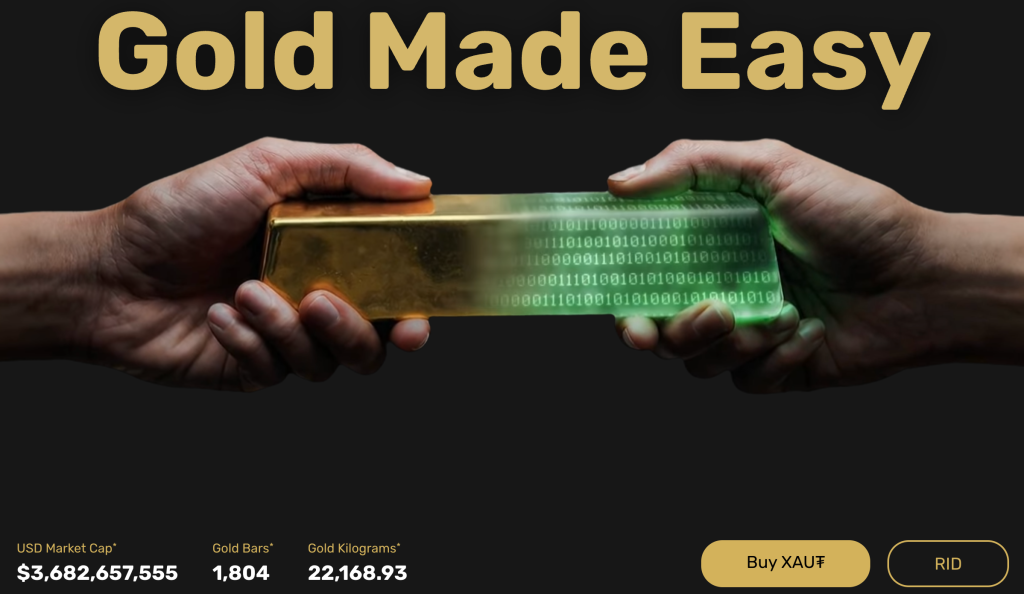
In late January XAUT entered the top ten perpetual futures pairs on Binance.


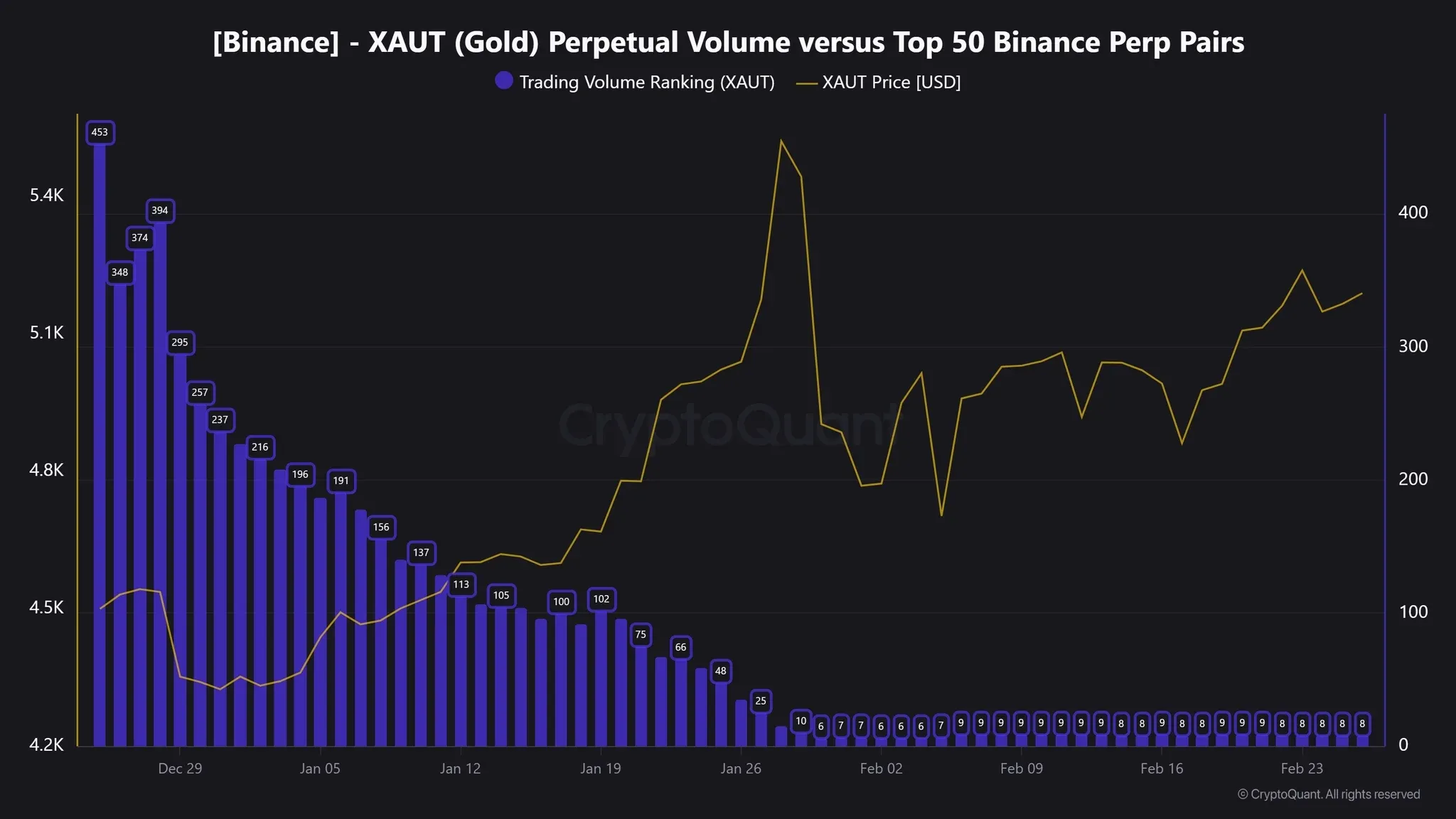
“Gold-backed tokens are no longer a niche hedging tool. They now compete directly with leading crypto derivatives,” said the CryptoQuant researcher known as maartunn.
Paxos Gold (PAXG)
The issuer is Paxos Trust, regulated by New York State authorities. One token is linked to one ounce of physical gold from LBMA vaults in London.

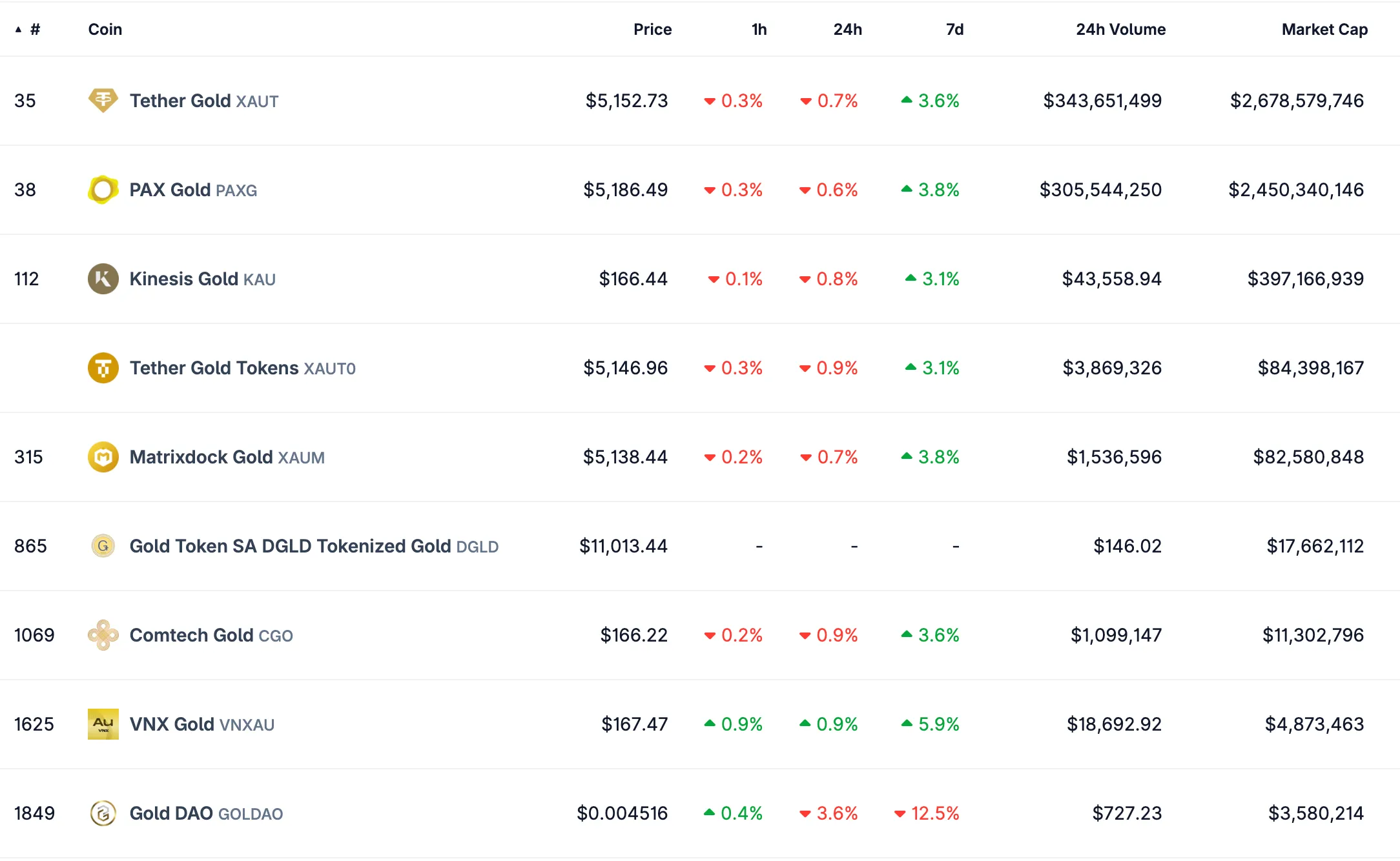
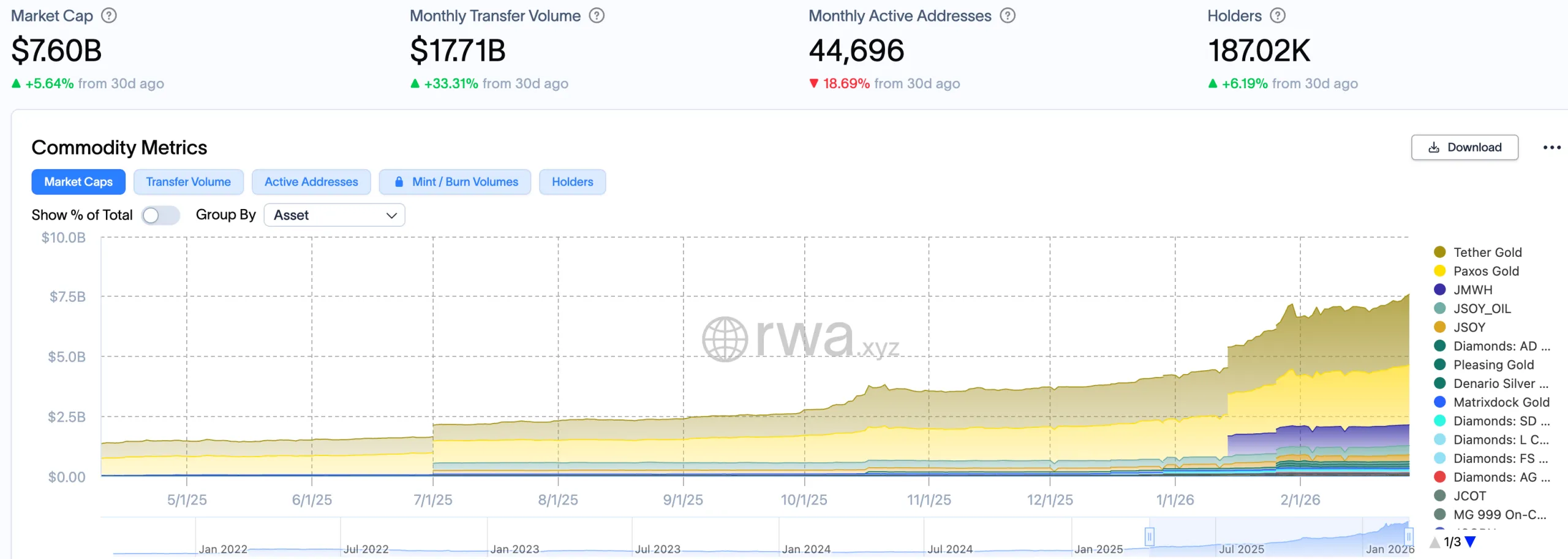
XAUT and PAXG dominate the tokenised-asset segment. Their nearest competitor by capitalisation — JWMH from Justoken — is a digital asset “backed by megawatt-hours of electricity”.

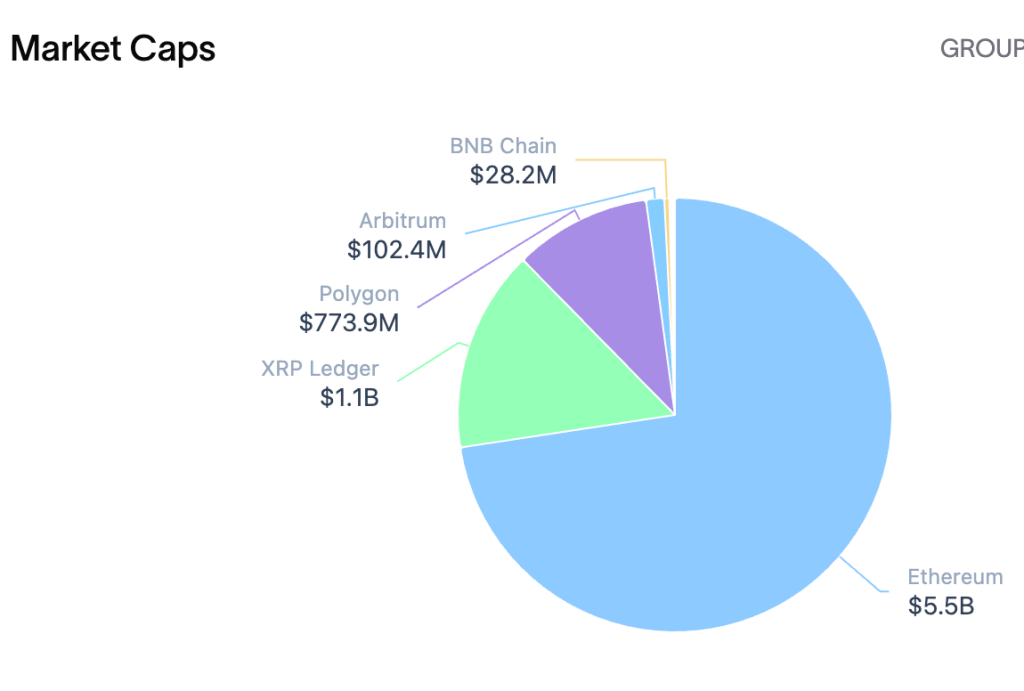
The lion’s share of RWA-token value sits on Ethereum:


What are the prospects for tokenised precious metals?
Interest in RWA assets is rising amid macroeconomic instability and the gradual the clearing up of regulatory uncertainty in the US and other jurisdictions.
Better infrastructure and more user-friendly trading tools are also drawing capital, including from retail investors.
In February the exchange Kraken launched round-the-clock trading in perpetual futures on tokenised assets: gold, indices and Big Tech shares.
That same month, Canada’s Elemental Royalty Corporation became the first listed firm in the sector to offered shareholders the option to receive dividends in digital assets backed by gold. It uses XAUT for the payouts.
Institutional clients of the market maker Wintermute recently gained access to instruments backed by physical gold. OTC settlement is available in cryptocurrencies, stablecoins and fiat.
On 3 September 2025 the World Gold Council (WGC) launched a pilot to tokenise the metal. The initiative aims to expand OTC trading in gold and its use as collateral in financial markets.
In an interview with the Financial Times, WGC head David Tait said the new format would, for the first time, let market participants transfer the asset digitally within the ecosystem to secure obligations.
This is another step in the digitisation of a traditional reserve asset. Interest in the technology is growing amid discussions of the possible monetisation of the Fed’s holdings, opening new avenues for the metal’s use.