



Cryptocurrencies are showing the worst performance among all asset classes, despite favourable macroeconomic events. Analysts at Wintermute attribute this to the redistribution of cash flows into other segments.
— Wintermute (@wintermute_t) November 4, 2025
According to them, global liquidity continues to expand against the backdrop of the Federal Reserve’s rate cuts and the end of quantitative tightening.
The only negative aspect was Federal Reserve Chairman Jerome Powell’s uncertainty regarding further monetary policy easing. The likelihood of another rate cut in December fell from 95% to 68%, prompting investors to shift to defensive strategies.
“The sell-off was not panic-driven but rather technical, resembling portfolio rebalancing. However, while the stock market quickly recovered, the cryptocurrency segment continued to move sideways,” the experts noted.
The primary factor in the current market dynamics, they said, is the distribution of liquidity. Of the three key sources of inflow — ETFs, stablecoins, and DAT — only “stable coins” are functioning, with their volume increasing by $100 billion since the beginning of the year.
What Next?
Wintermute specialists emphasized that the market structure remains healthy — leverage has decreased, and volatility is under control.
“Bitcoin remains an anchor with steady inflows into ETFs and limited supply on exchanges, while Ethereum and certain L1/L2 tokens show early signs of relative strength,” they stated.
In the past 24 hours, the price of the leading cryptocurrency dropped nearly 3% to approximately $101,400. Ethereum fell by 5.5%, trading at around $3,300 at the time of writing.


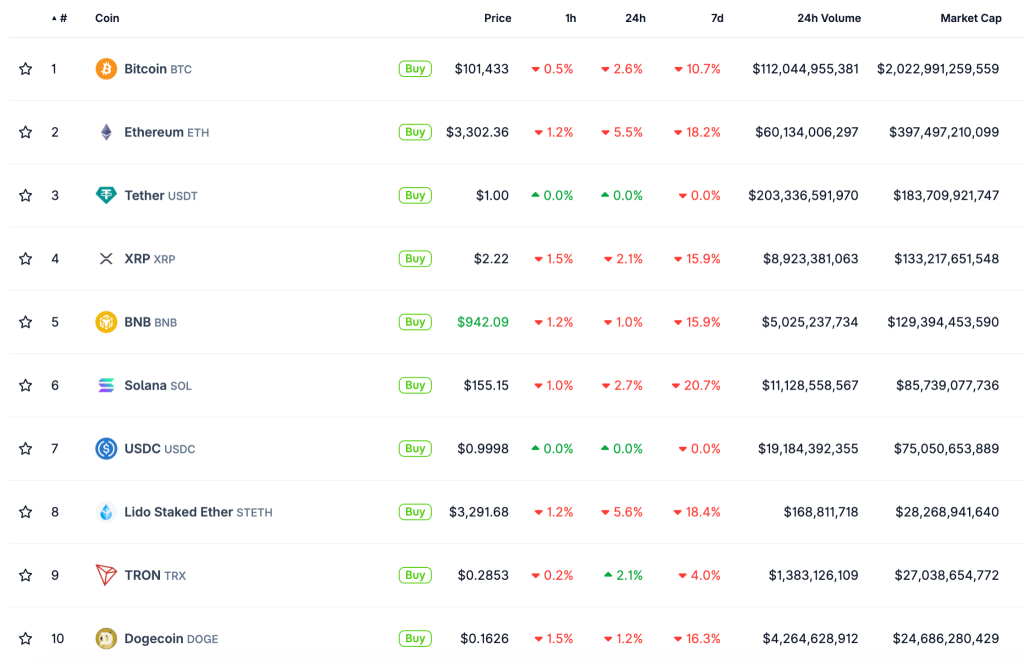
Defying the overall trend, coins of decentralized exchanges for trading perpetual futures, such as Hyperliquid (+6.6% in 24 hours) and Aster (+16.9%), rose. Anonymous coins also continue to grow — Monero’s prices increased by 7.8% over the past 24 hours.
To resume the upward momentum of major cryptocurrencies, increased inflows into exchange-traded funds and purchases by crypto treasuries are necessary, experts noted.


“The concept of the four-year cycle has lost its relevance. The mechanics that previously drove it — miner supply and halvings — have lost significance in a mature market. Now it is defined by liquidity,” explained Wintermute.
Earlier in October, K33 analysts declared the “death” of the Bitcoin cycle.
Investment Director of Bitwise Matt Hougan and CEO of CryptoQuant Ki Young Ju share a similar view.