


Who Is Charles Hoskinson and Why Is He Constantly in Conflict with Vitalik Buterin?
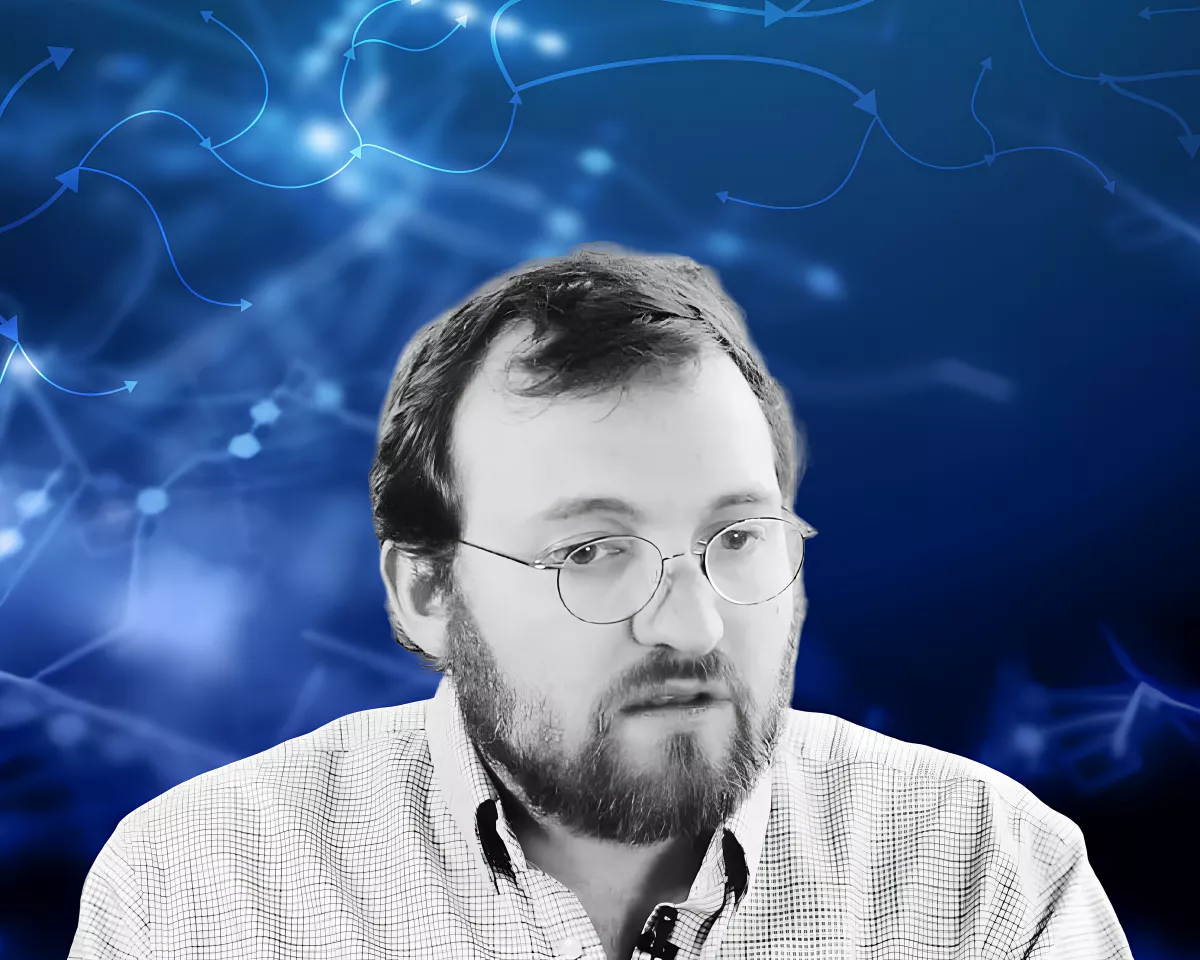
Early years and introduction to cryptocurrencies
Charles Hoskinson was born on November 5, 1987, in Hawaii to a family of doctors and grew up in Colorado. As a child he planned to become a surgeon, but his ambitions shifted after he discovered information technology. He would spend hours at a computer, enthralled by its possibilities.
After school, the future crypto entrepreneur studied at MSU in Denver and at the University of Colorado Boulder, where he attended lectures on mathematics and analytic number theory, but he did not earn a degree. Even so, Hoskinson is an admirer of rigorous academic methods, a preference reflected in the architecture of Cardano.
In a comment to ForkLog, journalist Laura Shin questioned the accuracy of the businessman’s official biography.
“To many interviewers he said he dropped out of a PhD program at a university. I checked all such claims and contacted the institutions he mentioned: one did not have any PhD programs at all, at the other he was enrolled as an undergraduate. I reached out to him for comment; we even scheduled a call to discuss all these questions, but no one showed up,” Shin asserts.
In 2007 Hoskinson joined the presidential campaign of Republican Ron Paul. He was drawn to the candidate’s views—a supporter of the Austrian school of economics and a theory of money that holds that a system based on fiat currencies is inherently unstable.
“When bitcoin appeared, its technology became the spiritual successor to what Ron Paul was talking about,” Hoskinson would later say.
After the election he continued his career at a consulting firm. At the same time Hoskinson delved deeper into blockchain technology. So intrigued was he by the potential of digital currencies that he quit and set about building his own crypto business.
First steps: from BitShares to the Ethereum Foundation
In June 2013, entrepreneur and future EOS creator Dan Larimer presented a concept for exchanging bitcoin for fiat. He shared the idea with Charles Hoskinson, who helped refine it and draft a business plan.
By July the company Invictus Innovations had been formed. In October, at a bitcoin conference in Atlanta, its co-founders presented one of the first DEXes—BitShares. The platform launched in the summer of 2014.
Hoskinson quickly lost interest in the exchange and focused on his own creation, the Bitcoin Education Project. Launched in 2013, the educational effort promoted knowledge about the potential of the first cryptocurrency. While working on it, the businessman met Vitalik Buterin.
Their conversations soon turned into collaboration, and Hoskinson became one of Ethereum’s eight co-founders. In December 2013 he was appointed CEO of the Ethereum Foundation and given a leading role in creating the Swiss foundation and its legal structure.
But in 2014 he left the company over disagreements with other co-founders, including Buterin, about the project’s commercial direction.
Founding IOHK and Cardano
After stepping down as CEO of the Ethereum Foundation, Hoskinson moved to Hong Kong, where in March 2015 he and fellow Ethereum alumnus Jeremy Wood founded the engineering and technology company Input Output Hong Kong (IOHK).
IOHK proposed using peer-to-peer P2P technologies to deliver financial services. The idea was to build cryptocurrencies and blockchains for corporations, government agencies and academic institutions—with greater scalability and security than Ethereum.
According to the company’s website, IOHK is a global organisation with a remote team of at least 400 people across more than 50 countries.
On February 7, 2017, IOHK developers presented the white paper for the Ouroboros blockchain protocol. It became the first PoS algorithm with mathematically proven resistance to attacks.
In October 2023 Hoskinson accused Ethereum of plagiarism. The trigger was one of Buterin’s articles on decentralisation proposals. In Hoskinson’s view, Ethereum developers “literally admitted” they needed to copy Ouroboros, Cardano’s consensus protocol.
The startup raised a hefty $62 million in an ICO in early 2017. The official launch took place on September 29, 2017. Trading in ADA tokens began on October 1, 2017.
The project is named after the 16th-century Italian polymath Gerolamo Cardano. The blockchain aims to create a flexible, interoperable kind of money, programmable with scientific methods grounded in mathematical proofs and game theory.
One of Cardano’s main distinctions is a large research community. The authors propose solutions to the project’s challenges in peer-reviewed publications.
Hoskinson argues that Cardano improves on first- and second-generation blockchains—bitcoin and Ethereum, respectively. He says the platform is more thoroughly tested and provides greater security and scalability than its competitors.
On September 2, 2024, the Chang hard fork took place, the biggest upgrade since Vasil in September 2022.
Chang introduced a governance and community-interaction framework, enabling consensus and allowing ADA holders to use their tokens for voting. The update envisages a system of Delegate Representatives and a “Cardano constitution”.
The second expected hard fork will involve the introduction of Ouroboros Leios, a new version of the consensus mechanism designed to increase throughput, scalability and transaction speed while preserving the current level of decentralisation.
Clashes—and other pursuits
Hoskinson is known for sharp remarks and a taste for argument. He rarely misses a chance to stress Cardano’s rigorous, methodical development in contrast to Ethereum, which in his view is captured by “Buterin’s dictatorship”.
“In general I do not have good relations with projects where there are competitive reasons for conflicts, for example with Ethereum or EOS,” he admitted to Decrypt.
He often criticises Ethereum but dislikes discussing his early role in it. He says community resentment towards him stemmed from his promotion of Ethereum Classic, the cryptocurrency that emerged after The DAO hack.
“Many in the Ethereum ecosystem hate me. They say I am a monster, that the only reason I got involved was to harm Ethereum. They even claim that I am that very hacker,” the businessman complained.
Charles Hoskinson’s biography is full of curious and unusual facts.
In June 2023 the Cardano founder used his private plane to fly a group of scientists led by Harvard astronomer Avi Loeb to the Pacific Ocean. Their mission was to retrieve fragments of alleged alien technology that crashed in 2014.
Loeb said that an interstellar meteor the size of a watermelon that fell near the coast of Papua New Guinea in 2014 might have been “launched a billion years ago by a distant civilisation,” given its “extremely rare material strength”. Hoskinson put up $1.5 million to fund the expedition. There were no statements of success.
The Cardano founder, who owns a private plane, a Blackhawk helicopter and estimates his net worth at roughly $1.2 billion, is known as a patron of unusual projects.
For instance, he likes to muse about bison. Hoskinson owns a ranch in Wyoming of about 44 sq km, home to up to 600 animals.
He is also fascinated by glow-in-the-dark plants.
“If you want to solve the problem of global warming or improve the environment, it makes sense to do genetic engineering of plants,” the entrepreneur told DL News.
According to him, specially created plants can produce organic lighting, bind carbon, remove toxic substances and deliver other environmental benefits. His team uses CRISPR, a modern gene-editing technique using enzymes.
Charles Hoskinson supports philanthropy; he has repeatedly funded educational institutions. In 2017 the businessman opened two laboratories for blockchain research.
In March 2020, at the height of the pandemic, the crypto entrepreneur declared the death of the world economic order:
“What we are witnessing now is the destruction of the 20th-century economic order. Those who had certain assumptions about how power should work, how money should work, how credit should work, how finance should work, how information should flow—lost.”
Рассылки ForkLog: держите руку на пульсе биткоин-индустрии!