


Who is Adam Back and how is he linked to bitcoin’s creation?

Becoming a cypherpunk
Adam Back was born in London in July 1970. In his youth he taught himself the Basic programming language; his hobbies included reverse-engineering video games and finding decryption keys in software bundles.
In 1996 Back earned a PhD in computer science in distributed systems. While studying at Britain’s University of Exeter he worked on compilers for semi-automatic parallel use of computers, took an interest in PGP encryption, electronic money and remailers.
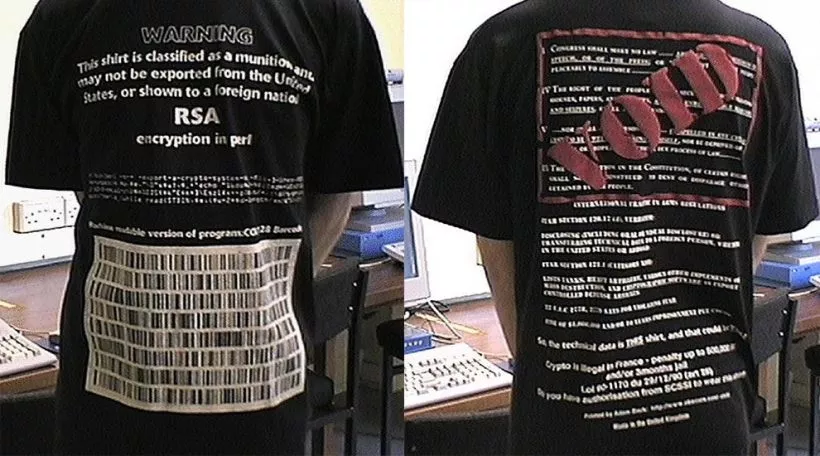
In those years Back printed and sold T-shirts lampooning US government decisions on the legal classification of PGP. Formally, leaving the United States wearing a T-shirt with an encryption-protocol print was deemed an “export of munitions and armaments”.
After graduating Back worked as a consultant to start-ups and large companies in applied cryptography, wrote cryptographic libraries, and designed, audited and broke encryption protocols.
Is Adam Back bitcoin’s creator?
As the internet spread, email became a tool not only for communication but for intrusive marketing. When spam flooded the network, users had continually to filter and delete unwanted messages.
In 1992 the first anti-spam ideas emerged from an IBM working group. A software paper by Cynthia Dwork and Moni Naor described a system in which each sender had to attach data proving a mathematical problem had been solved. In the authors’ design, every message would carry unique data such as puzzles based on cryptography and electronic signatures.
A typical computer could perform the required computation in a few seconds, thus proving that it had done work. In essence this laid the foundations of the Proof-of-Work (PoW) algorithm. For hackers and spammers, the cost of mass mailshots was meant to become uneconomic.
After receiving his doctorate in 1996, the 26-year-old Adam Back became an active participant in a fast-growing mailing list. The cypherpunks list united libertarians and free-speech advocates interested in cryptography. When its membership exceeded a thousand, there arose a need to filter unwanted messages.
In 1997, unaware of the IBM team’s work, Back proposed his own anti-spam technology—Hashcash. In a note addressed to fellow cypherpunks, he set out an early implementation of a “system for sending messages based on a partial collision in a hash function”, a kind of postage stamp for the electronic realm.
The discovery, like the work of Dwork and Naor, did not cause a stir. After the Hashcash white paper was released in 2002, only a few firms adopted the technology: Apache (SpamAssassin) and Microsoft.
The first known attempt to realise digital money was DigiCash by Dr David Chaum. In the early 1980s he developed a number of cryptographic protocols, including blind signatures. Chaum could not escape the centralised nature of eCash issuance and in the late 1990s DigiCash went bankrupt. The problem remained unsolved until the first cryptocurrency appeared.
A cypherpunk, Nick Szabo, came close to a distributed design with Bit Gold. The solution, which used Adam Back’s PoW algorithm, was never implemented, but it inspired Satoshi Nakamoto, the creator of bitcoin.
“Bitcoin is an implementation of Wei Dai’s b-money and Nick Szabo’s Bit Gold,” — wrote he in 2010 on the Bitcointalk.org forum.
The PoW algorithm Hashcash was the first concept based on virtual scarcity and the absence of centralisation. Unlike the cryptographic puzzles proposed by Dwork and Naor, it worked on hashing. The model tied digital data to real, limited computing power.
Scarcity became a premise for creating decentralised money. Adam Back drew an analogy between his technology and DigiCash on the cypherpunks list.
“Hashcash can serve as an interim solution until DigiCash becomes used everywhere. Hashcash is absolutely free; your PC only has to execute a sequence of instructions. That fully accords with the concept of free discourse, within which people with limited financial means can compete with millionaires on equal terms. Hashcash can be a backup option for controlling spam if DigiCash is deemed illegal or requires users to provide personal data,” Back wrote.
Hashcash could not become money proper because it had no value to the recipient — it could not be spent again. The scheme was also prone to hyperinflation because issuance was unlimited.
In 2008 Satoshi Nakamoto mentioned Adam Back in bitcoin’s white paper as the originator of PoW consensus.
What does Blockstream do?
With the invention of Hashcash, Adam Back became a notable figure in the blockchain industry and a sought-after expert in network architecture, security and cryptography. He championed decentralisation and privacy, spoke at conferences and published papers.
In 2014 Adam Back founded Blockstream, which promotes bitcoin and offers digital gold to the commercial sector. When in 2016 he took the CEO role, a period of intense work began on infrastructure and scaling solutions for the first cryptocurrency.
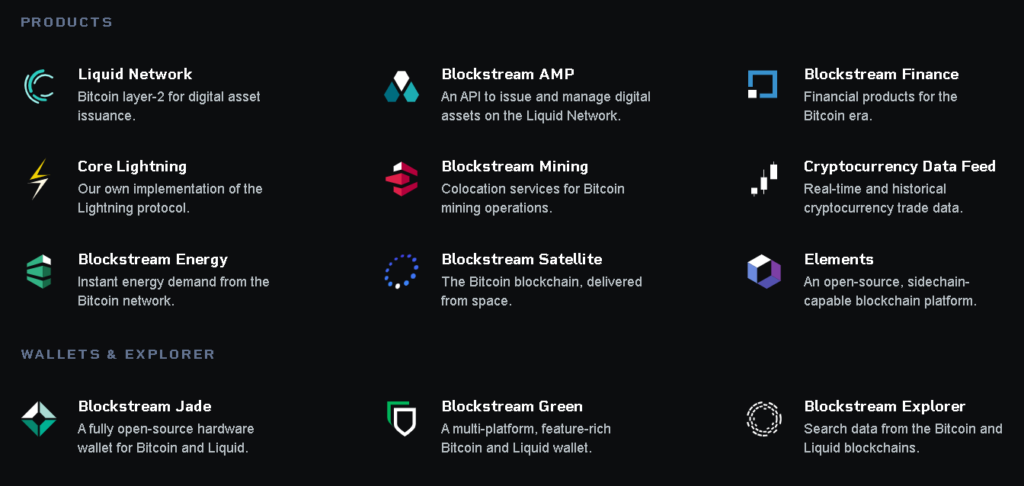
In 2017 a programme was launched to place geostationary satellites that broadcast bitcoin nodes from space to Earth — Blockstream Satellite. That same year the team provided its implementation of the Lightning Network micropayments protocol — Core Lightning.
In October 2018 the federated sidechain Liquid Network was released. The protocol enables fast, secure and confidential transactions based on bitcoin. The L2 solution relies on a federation of about 60 members who create new blocks. Its native coin, Liquid Bitcoin (L-BTC), is a “wrapped” version of bitcoin.
According to analytics service Bitcoin Layers, as of 28 October 2024 Liquid Network ranks fifth by coins locked, at roughly 3,800 BTC.
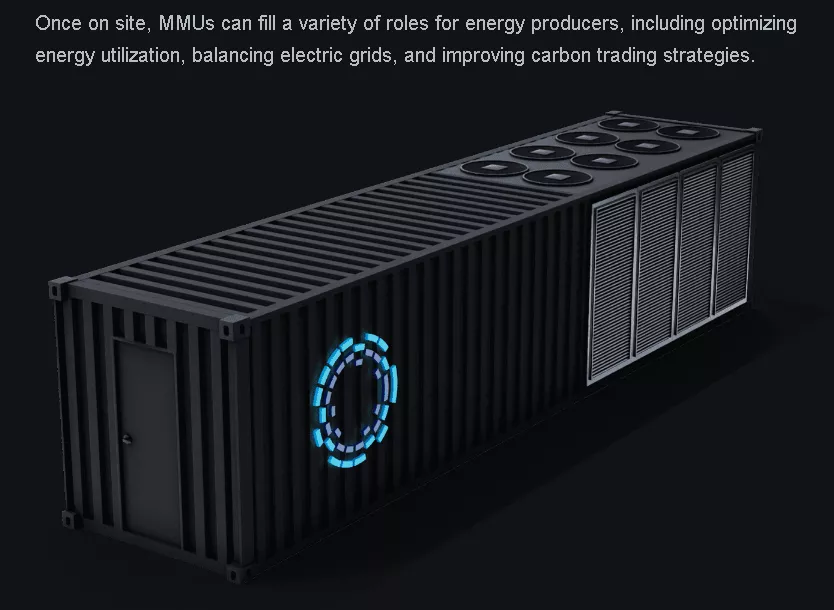
Since 2019 Blockstream has pursued an active bitcoin-mining campaign and built a financial ecosystem, establishing mining centres, releasing ASIC miners and modular BlockstreamEnergy units the size of a shipping container to help redistribute excess electricity.
In 2021 Blockstream issued the BMN token, backed by bitcoin hash rate, and attained unicorn status with a $3.2bn valuation. In summer 2024 BMN2 launched, and on 15 October 2024 the company raised another $210m.
What does bitcoin mean to Adam Back?
In early 2020 Adam Back ventured that bitcoin could reach $10m:
“Modern monetary theory justifies high inflation. So today’s $1 will be worth 10 cents in a decade or two in this monetary madness. Then $10m in bitcoin will be the same as $1m in bitcoin by today’s standards,” Back explained.
At the end of 2023 the Blockstream CEO predicted that the digital gold would reach $100,000 before the halving and surpass $1m as early as 2026.
In a 2020 interview with 48show, Adam shared his view of the first cryptocurrency:
“Bitcoin has no central decision-making authority — that is crucial. Let’s imagine bitcoin became unavailable because it went down for maintenance. Of course that’s impossible, but it’s a thought experiment. So — you need to make a transaction. If, without a second thought, you would use a card or cash, then payments are not the most important use of bitcoin. Otherwise you would wait until the network is back online. There are many uses of bitcoin with which banks mostly cannot compete. The absence of a centre makes it exceptional. Being a universal and globally accessible savings vehicle is already a secondary benefit. It is a non-correlated asset, and its issuance is apolitical.”
Owing to his early involvement in bitcoin’s development, Adam Back has repeatedly been called Satoshi Nakamoto. Each time he has denied such speculation.
The makers of the HBO documentary Money Electric: The Bitcoin Mystery promised to reveal the identity of the creator of the first cryptocurrency. On 9 October 2024, after the film’s release, they named the cypherpunk Peter Todd. The film took three years to make, and Adam Back is one of its protagonists.
A few days after the release he expressed the view that the founder’s anonymity only benefits the industry.
Рассылки ForkLog: держите руку на пульсе биткоин-индустрии!