


Who Is Pavel Durov? Telegram, TON, and the Defiant Journey of Russia’s Exiled Tech Titan
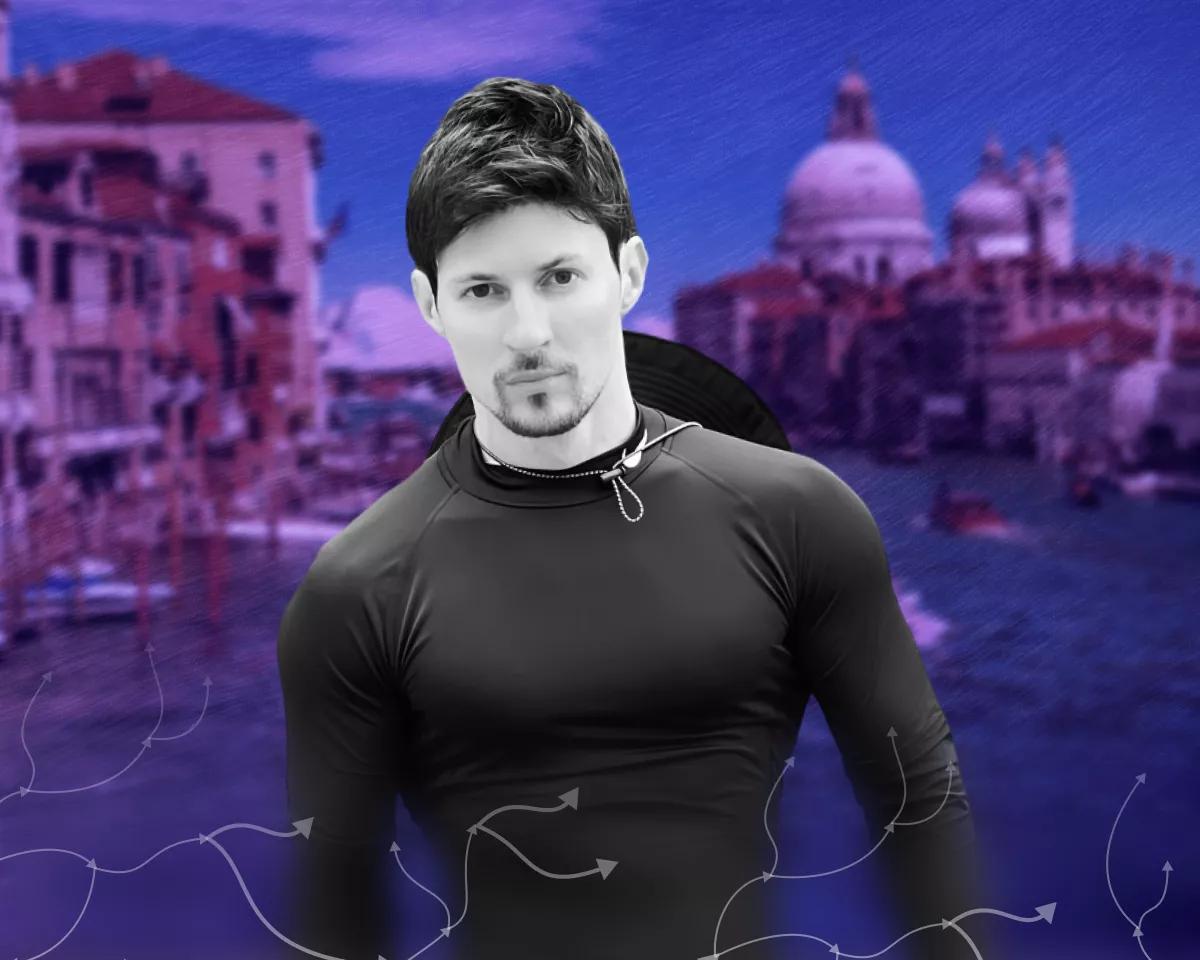
Early years and VKontakte
Pavel Valeryevich Durov was born on October 10, 1984, in Leningrad. His father headed the department of classical philology at St Petersburg State University; his mother had two university degrees.
In 1990 he attended primary school in Turin (Italy). After the family returned to St Petersburg, he entered a local school and later a gymnasium, where he was introduced to programming.
In 2001 Durov chose to follow his father into philology and enrolled at the Faculty of Philology at St Petersburg State University. His first public online project was Durov.com—an electronic library for students.

After graduating, Durov became set on creating a platform for live online communication—his student projects lacked openness and social features. In 2006 he and his older brother, Nikolai Durov, founded VKontakte LLC and launched the eponymous site.
The social network rapidly gained popularity across the CIS despite criticism of its resemblance to Facebook. By 2011 Durov ranked 350th among Russia’s richest, with a fortune of 7.9bn roubles.
The FSB and emigration
In December 2011, after protest rallies in Russia, Durov said that the FSB demanded he block several opposition groups on VKontakte. After he refused, he was summoned to the prosecutor’s office to give testimony.
In April 2014 Durov again reported demands from law enforcement, which this time sought the personal data of the organisers of “Euromaidan” groups, but were refused.
A week later Durov left Russia and told TechCrunch he did not intend to return:
“Unfortunately, it is impossible to run an internet business in this country. I’m afraid there is no way back for me. Especially after I publicly refused to cooperate with the authorities.”
During the interview Durov also said he was working on a new mobile social network—it would become known as Telegram.
Meanwhile, the issue of the VKontakte shareholding was resolved, with control passing to Mail.ru Group.
Building Telegram
In 2024 Durov, in an interview with American journalist Tucker Carlson, said the idea for Telegram came when he was still living in Russia and found himself in “a very stressful situation”. After his first confrontation with local law enforcement, he began to think about the need for a secure messenger.
The first version of Telegram was presented in August 2013, before Durov officially left VKontakte. The developer, Digital Fortress, was registered in the United States.

The MTProto message-encryption technology was created by Nikolai Durov.
In its early years the app had to compete with giants such as Viber and WhatsApp. With its emphasis on privacy, Telegram was seen by many as a tool for illegal activity.
The situation shifted as authorities toughened their stance on popular messengers. According to Kommersant, in 2013 concerns about government surveillance prompted more than 1m users of South Korea’s KakaoTalk to register with Telegram.

About 20m people moved to Telegram after Viber was blocked in Iran in 2014, and a two-day WhatsApp outage in Brazil in 2015 added a further 1.5m users.
Even during its blockade in Russia from 2018 to 2020, imposed after Durov refused to provide the FSB with encryption keys, the messenger continued to gain popularity.
Telegram reached its first 100m monthly active users in February 2016. The figure exceeded 200m by March 2018.
In July 2024 Durov said the number exceeded 950m people. That same month Telegram began a global integration with the crypto sector, launching a Web3 browser and app store, as well as an internal currency, Telegram Stars. Among the latest updates, NFT gifts were announced.
Yet Telegram’s and Durov’s path into blockchain began much earlier—and it was not the most successful.
TON and a clash with the SEC
News of the blockchain network TON (initially Telegram Open Network, later The Open Network) emerged at the end of 2017, though the messenger effectively confirmed its role only in autumn 2019.
Nikolai Durov described the solution as “a huge distributed supercomputer or superserver” for a multitude of services. TON also envisaged a native currency, Gram (GRM).
According to official data, in two rounds of private ICO in February and March 2018, TON raised $1.7bn from 175 investors in the United States and beyond. Backers included companies controlled by billionaire Roman Abramovich and minister Mikhail Abyzov, and, reportedly, the widow of Apple co-founder Steve Jobs, Laurene Powell Jobs.
However, the US Securities and Exchange Commission (SEC) deemed the initial distribution of GRM an unregistered securities offering.
In October 2019 the regulator obtained a temporary court order barring the distribution of tokens, and the launch of TON was repeatedly postponed. At that time Durov struck an initial deal with investors and set a deadline of April 30, 2020.
In March 2020 the court extended the injunction indefinitely. On May 12 Durov said his team was ceasing work on Telegram Open Network. Experts viewed this as “a key condition for resolving the conflict with the SEC”, so the messenger declined to appeal the ban on distributing Gram and agreed to pay a fine of $18.5m.
After this, US investors were denied further participation in the project and received a 72% refund. Others were offered to convert their investments in TON into a loan at 52.77% per annum, to aim for a 110% repayment in 2021.
In May the community of developers, validators and enthusiasts announced the continuation of work on the project, temporarily renaming it NewTON. It used the original testnet2 network as a base, from which several other “pseudo-forks” such as Everscale emerged.
In 2021 network developers established the non-profit TON Foundation and launched mainnet under the name The Open Network, followed by the native token, Toncoin (TON).
In June of the same year representatives of Telegram transferred the ton.org domain and the GitHub account to the new team.
On December 23 Pavel Durov published a post about TON on his page in the messenger and supported the developers. He wished them success, but stressed that he had nothing to do with the project.
“Unlike the original TON, Toncoin is independent of Telegram. But I wish its team the same success. In combination with the right go-to-market strategy, they have everything necessary to create something epic,” he wrote.
From that point, the development of Telegram and TON proceeded relatively separately.
Durov and Telegram today
By 2024 Durov had gone from “the Russian Mark Zuckerberg” to a global celebrity and, for some, a symbol of independence from the authorities. He cultivated the image of a billionaire who has “unlocked the secret of being” and leads a fairly ascetic life, rarely appearing in public.

Pavel Durov holds citizenship of Russia, the UAE, France, and Saint Kitts and Nevis.
Until late summer 2024 the entrepreneur only occasionally shared updates on his projects, posted personal photos with lifestyle advice, and gave interviews. However, events took an unexpected turn after his visit to Paris.
On August 24 Durov was detained at Le Bourget airport as part of an investigation opened on July 8 into “an unidentified person” on 12 counts. According to Politico, local authorities issued an arrest warrant back on March 25 for Pavel and his brother Nikolai for ignoring law-enforcement requests.
After questioning, the businessman was placed under judicial supervision with €5m bail and an obligation to appear at a police station twice a week. He was barred from leaving France until March 2025 and charged with six offences related to administering an online platform with the aim of enabling illegal transactions and aiding other crimes.
The detention of the Telegram founder sparked an outcry in the community. Analysts at Galaxy Research suggested Durov’s case is unlikely to be the last major arrest of a company head “for failing to adequately control their platform”.
His first post after release was published on September 5, announcing strengthened moderation on Telegram. He thanked the community for its support and expressed surprise that he should bear personal responsibility for unlawful acts by third parties.
In a subsequent post on September 23 the billionaire said the messenger had updated its terms of service to provide authorities with the IP addresses and phone numbers of those who violate the platform’s rules. He later shared statistics on disclosures and noted that Telegram has had a similar policy since 2018.
Amid the French scandal Durov made front pages worldwide, which as usual spawned numerous rumours and conjectures, for instance about his illegitimate children and domestic violence.
To avoid spreading gossip while waiting for reliable information on the case, the ForkLog editorial team recommends reading our primer on conspiracy thinking using the Telegram founder as an example.
Рассылки ForkLog: держите руку на пульсе биткоин-индустрии!