




Discussions about the environmental sustainability of cryptocurrency mining have been ongoing for several years. In recent years the topic has reached government-level discussions, and many large miners have begun to take a more responsible approach to the issue of carbon emissions.
However the situation with “Satoshi’s Skull” showed that not all participants in the industry share concerns about their role in climate change, as even the creator of the ominous symbol admitted the error. ForkLog and industry representatives discuss the development of ‘green’ mining and its real prospects.
Risk assessment
It is natural that as cryptocurrencies on the Proof-of-Work (PoW) consensus algorithm grew in popularity, the number of miners increased. They, in turn, continued to scale up compute power, demanding enormous amounts of electricity.
Bitcoin mining has long left the era of “home enthusiasts,” and is now dominated by multibillion-dollar corporations that build entire manufacturing facilities. Such a transition could not fail to have environmental implications.
“Mining PoW cryptocurrencies, such as Bitcoin, still poses an ecological threat. Statistics show that the electricity consumption of mining installations continues to rise. Today, in annual terms Bitcoin consumes more electricity than many countries, such as Ukraine and Sweden,” said Roman Nekrasov, co-founder of ENCRY Foundation.
Meanwhile, the Bitcoin network’s efficiency уступает to the metrics of payment systems like Visa. Their energy consumption is significantly lower, and thus ecological harm is lower, Nekrasov added.


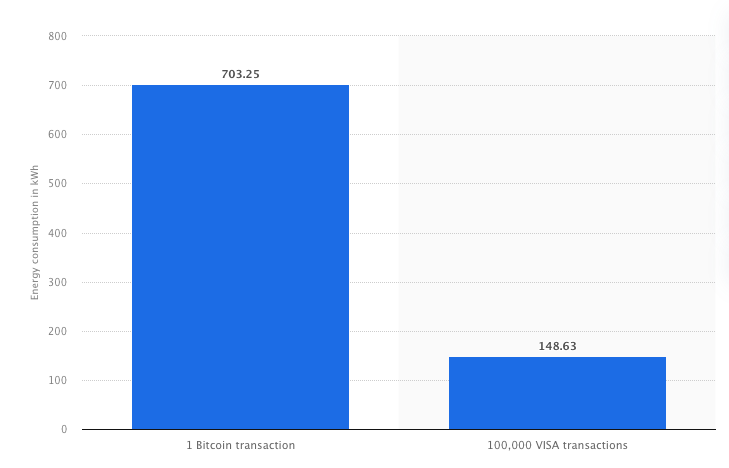
The biggest problem of PoW algorithms is not the enormous energy consumption, but the use of fossil fuels by companies, which leaves a carbon footprint.
According to Digiconomist’s study, the annual CO2 emissions from Bitcoin mining reach 76.79 million tonnes.
Greenpeace regards these figures as sufficient grounds for calling for a complete code shift of the protocol for the first cryptocurrency. Yet not all participants in the industry share such a radical stance, and some do not see a problem at all.
“If we talk about PoW, the threat is absent. There is a threat from the mining of gold, oil and other fossil fuels, but the extraction of native tokens does not cause harm. There are examples of positive effects, such as flaring of associated gas and, as a consequence, a reduction in greenhouse gas emissions,” said Dmitry Zuev, co-founder of Next Generation Energy Farm.
However, with the emergence of a large number of studies, ignoring mining’s harm becomes at least socially difficult. In late 2022, American lawmakers introduced a bill requiring the Environmental Protection Agency to analyse the industry’s environmental impact.
Because of the growing focus on the sector, more companies have begun to adapt to new eco-standards, implementing technologies to reduce the negative impact of cryptocurrency mining.
Green methods
Mining data centres have roughly the same environmental impact as other large-scale manufacturing. They contribute to deforestation, noise pollution, and the poisoning of air, water and soil.
Emissions arising from digital asset mining are divided into several classes:
- emissions category 1 — arising from the use of diesel fuel;
- emissions category 2 — arising from electricity generation;
- emissions category 3 — arising in the supply chain.
Evgeny Kitkin, CEO of mining pool emcd, says some crypto companies have recognised the importance of the problem and strive to reduce their carbon footprint. Yet he noted the initiative is in its early stages, so many firms are only beginning to retool to meet current environmental standards.
Among the most common methods of reducing CO2 emissions, Kitkin cited the use of ‘green’ energy sources, that is, renewable energy. They include time-tested technologies such as solar, wind or hydro, as well as experimental — geothermal energy and ocean thermal energy extraction.
Thus, the small Himalayan kingdom of Bhutan with a population under 800,000 mines Bitcoin with the help of hydropower since the asset’s price was $5,000.
According to the head of the mining pool, some firms resort to re-purposing associated gas used for mining, which previously “just burned and noticeably spoiled the environment.” Kitkin cited a joint Gazprom-Bitriver project to convert associated gas into electricity.
The third possible way to reduce harm, the emcd representative said, is the drafting of “carbon reports.” Typically, the document contains a CO2 emissions estimate for the company, after which it receives a “sustainability certificate.”
One such index — Green Proofs for Bitcoin — was developed by Energy Web. The initiative is supported by major players, including Argo Blockchain, Cowa, Digital Mining Group, Hive Blockchain Technologies and Gryphon Digital Mining.
“The main step toward greener mining is the switch to ‘green’ energy sources. According to analysts’ calculations, moving in that direction helps reduce the carbon footprint by a couple of tens of percent per year. The aggregate of available data indicates that miners’ solutions are working,” said the co-founder of ENCRY Foundation.
With the development of the green mining idea, its interpretation has taken many forms. For example, the American company Nodal Power attracted $13 million to develop “waste mining”: the firm plans to recycle methane emitted at landfills into renewable energy.
Stronghold Digital Mining requested from the US Environmental Protection Agency permission for mining based on heat generated by burning tires. The company had planned to produce about 15% of its capacity this way but faced criticism from eco-activists.
In August 2023, American Genesis Digital Assets rolled out three new facilities in eastern South Carolina for renewable-energy Bitcoin mining. At the end of the same month the firm launched a “green” data center in Sweden.
The development of eco-mining and its real benefits
According to Bitcoin analyst Jamie Coutts, in September the share of “green” mining exceeded 50%.
Sustainable Energy Sources Rise >50%
?Falling emissions plus a dramatically rising hash rate can only mean one thing; Bitcoin mining is consuming more sustainable energy in its mix. pic.twitter.com/AGXrKWDWuI— Jamie Coutts CMT (@Jamie1Coutts) September 14, 2023
Researchers at MMR, in 2022, valued the sector at $11.1 billion. Their forecast suggests this could rise to $18.5 billion by 2029.

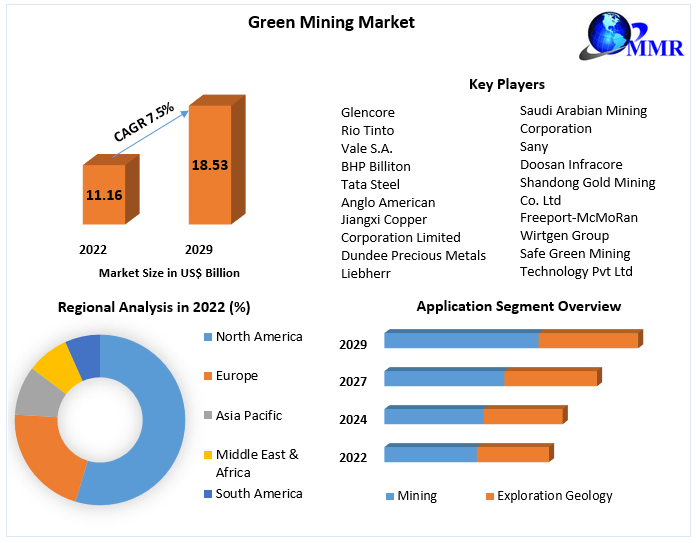
Roman Nekrasov argues that miners have several incentives to shift equipment to eco-friendly energy sources. The first is to align with regulatory requirements.
“In the history of the crypto industry there have been several cases related to regulator complaints about environmental harm. Regulators are not deterred by the fact that ecological damage from cryptocurrency mining is lower than in many other socially approved sectors, including aviation and data-centers,” he noted.
As another incentive, ENCRY Foundation co-founder named supporting the spread of cryptocurrencies. For example, Elon Musk promised to resume accepting Bitcoin as payment for Tesla vehicles when 50% of miners become ‘green’.
According to Iris Energy co-founder Daniel Roberts, Bitcoin mining stimulates “decarbonisation of energy markets and eliminates trading imbalances.” He said his company will focus on producing 100% renewable energy for mining.
“Modern “green” energy sources do not lag behind their traditional counterparts in efficiency, and in some cases even surpass them. Therefore, in the realities of 2023, transitioning mining to eco-friendly rails does not affect productivity. In some cases, changes may even reduce costs, and thus increase profitability,” Nekrasov stressed.
In particular, the emcd CEO stressed that using eco-technologies helps reduce electricity costs and raise the energy efficiency of mining operations. The rapid growth of blockchain also encourages the development of more productive equipment with lower energy consumption, the expert added.
Additionally, with rising interest in the environmental agenda, investors may be more likely to favour “green” projects, which would open up additional sources of funding.
“Note that a transition to eco-technologies may require upfront investments and infrastructure changes. This will temporarily affect financial performance, but in the long run the efforts may pay off through lower operating costs and greater business resilience,” Kitkin said.
It is evident that the mining industry has matured, acknowledged the problems, and begun addressing them. Some questions, such as regulation, remain open, but given the pace of development, they seem solvable in the near future.
Moreover, the rising popularity of artificial intelligence appears to be shifting the climate-threat spotlight onto itself. According to Heatbit founder Alex Busarov, in the long run training AI models will require more energy than mining the first cryptocurrency.