



The decentralised finance (DeFi) sector continues to attract heightened attention from cryptocurrency investors. ForkLog has compiled the most important events and news of the past weeks in a digest.
Key metrics for the DeFi sector
The total value locked (TVL) in DeFi protocols rose to $261.14 billion. The leader by this metric remains Curve Finance ($20.8 billion). MakerDAO holds second place ($18.58 billion), with Aave ($15.84 billion) in third.


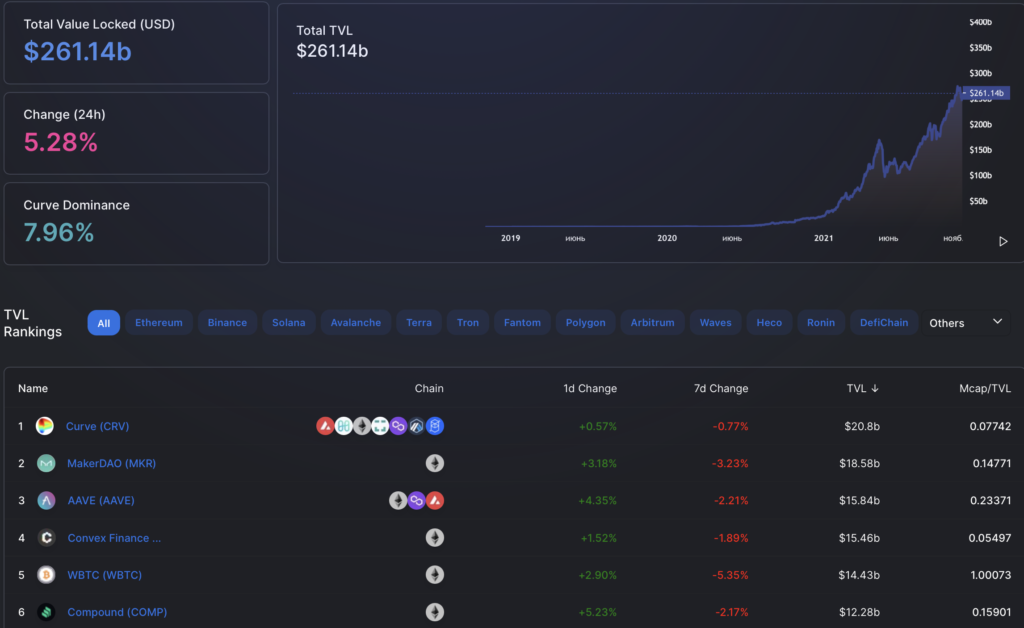
DeFi Llama includes in the final value a group of tokenised bitcoins. WBTC with $14.43 billion takes fifth place in the ranking. hBTC with $2.34 billion sits in 19th place.
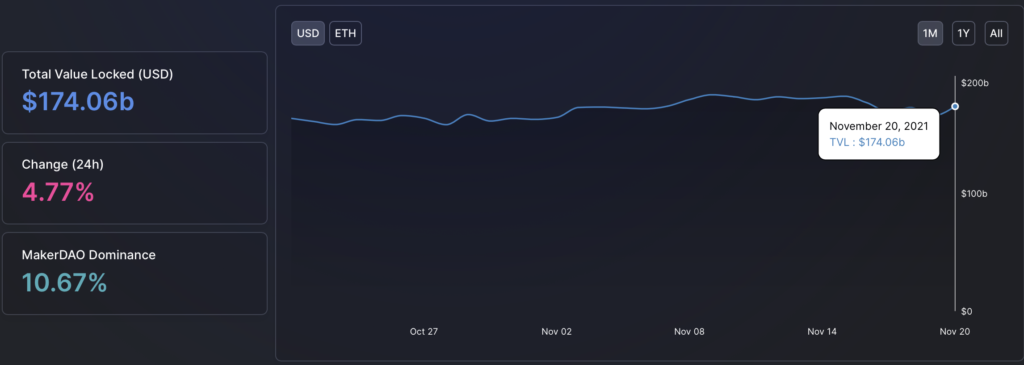
TVL in Ethereum applications rose to $174.06 billion. Over the last 30 days the metric rose by 6%.


Volume of trades on decentralised exchanges (DEX) over the last 30 days amounted to $108.3 billion.
76.2% of the total non-custodial exchange turnover goes through Uniswap. The second DEX by trade volume is SushiSwap (11.8%).
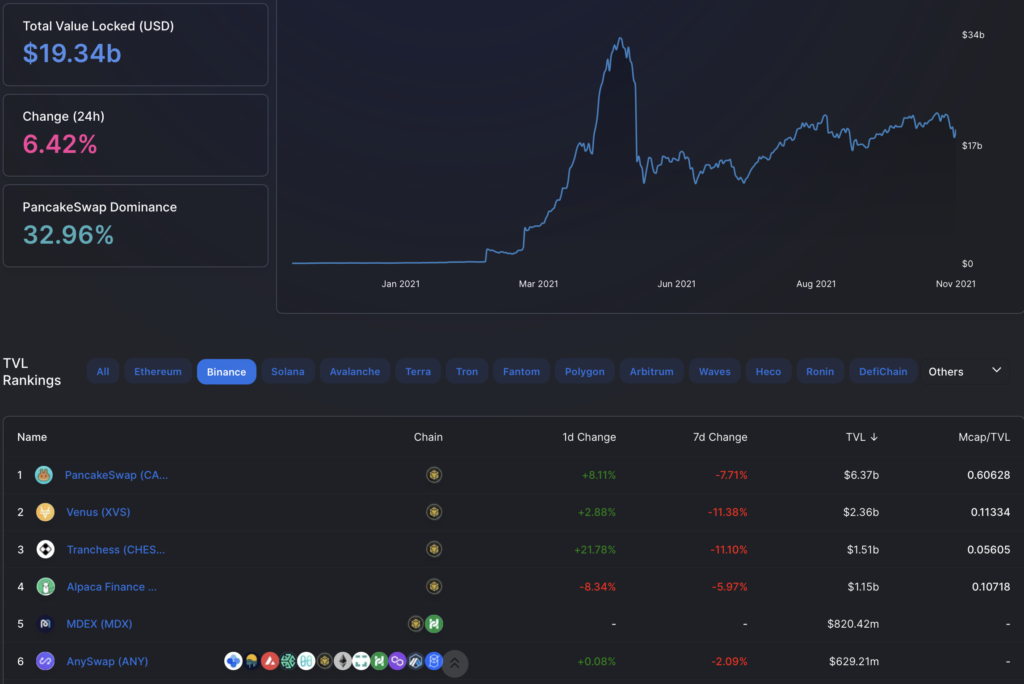
TVL of projects on Binance Smart Chain (BSC) stood at $19.34 billion.


Chainlink executive predicts mass institutional influx into the DeFi sector in 2022
Co-founder of the cryptocurrency project Chainlink Sergei Nazarov stated that in 2022 the DeFi space will continue to grow thanks to the emergence of traditional banks.
The expert predicted an expansion of on-chain collateral types, which would create prerequisites for new decentralised insurance products.
«In 2022 the world will realise that there is a large market called DeFi. If PayPal began to work with cryptocurrencies, then consider why your users might not want to interact with custody, DeFi, and so on?», he said.
According to the expert, regulatory obstacles remain. Because of rapid growth in the DeFi sector took note of SEC.
Agreeing with Nazarov’s position was Anton Bukov, co-founder of the DeFi project 1inch Network. He predicted that the industry would continue to grow rapidly over the next three to five years.
According to the expert, for this to happen, DEXs must operate 100 times faster than now, and users must be able to learn the underlying concept more quickly and easily.
ParaSwap launches governance token airdrop
The liquidity aggregator from decentralised exchanges ParaSwap launched the PSP governance token and kicked off a 150 million token airdrop to build a community.
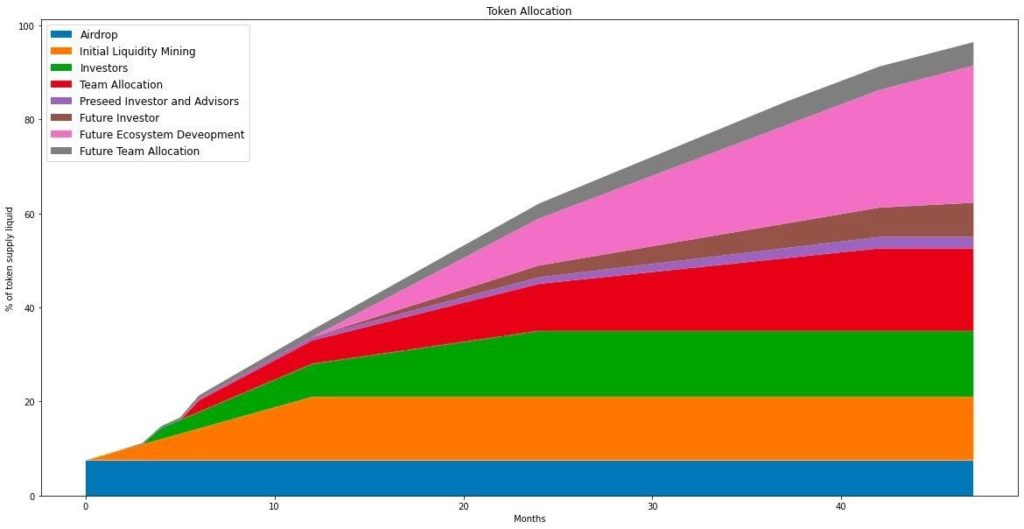
The total PSP supply will be 2 billion tokens; 7.5% of the supply is allocated to around 20,000 early platform accounts.
Owners can stake them to earn additional yields, or vote on governance matters.
«More than half of the PSP supply is intended to develop the ecosystem and community through initial distribution, incentives and funding for future project development», the blog says.


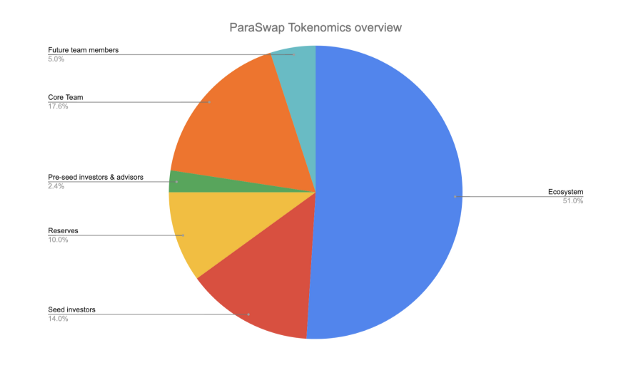
Except for tokens awarded in the airdrop, a two-to-three-and-a-half-year lock-up period was set for all other asset holders.


In the blog, the ParaSwap team warned that making transactions with PSP is prohibited for residents of certain jurisdictions, including the United States and the PRC.
Larry Chermak, vice president for research at the American publication, complained that he did not receive tokens in the airdrop, and suggested the reason was not the prohibition:
«Sore losers basically crossed out those who carried out a Sybil attack (like me), who made one swap and expected the airdrop. Damn, someone finally did this right!».
ParaSwap founder Munir Benchemled confirmed that the team resisted attempts to obtain an outsized share of governance tokens by opening multiple accounts. Over two years the protocol interacted with 1.3 million addresses.
«The vast majority of them are farming participants, including quite experienced ones. They use bots, sending tokens to thousands of wallets, and even tens of thousands. But they are not real active users», he explained.
For the airdrop, the team selected only 0.015% of all addresses according to their criteria.
The team initially refused to filter users by transaction volume and count — the weight of these factors was “minimal”, ParaSwap clarified. Wrapped asset exchanges — ETH to WETH, BNB to WBNB, and vice versa — were not considered.
Preferences were given to engagement, filtering users step by step:
- the first and largest group included those who used the DEX regularly since the protocol’s founding in 2019;
- the second category included those whose wallets had a history of transactions on ParaSwap, on-chain activity with other projects/blockchains, and a non-zero wallet balance. Here, too, developers excluded the path original address-ParaSwap-origin address.
- the third group accounted for swaps with partner projects that had integrated ParaSwap.
Ultimately from 1.3 million users 26,000 were selected, representing 80% of trading volume during the snapshot (taken on October 8). After final adjustments the sample was reduced to 20,000. Users who met several parameters were assigned points influencing the final airdrop.
ParaSwap noted that during distribution they received “not quite ordinary traffic”, which caused problems with token receipt for the selected addresses. The team urged to approach issues “with understanding”.
DeFi user losses in 2021 reached $10.5 billion
According to Elliptic, since 2020 users suffered losses totaling more than $12 billion due to fraud and theft on DeFi platforms, with the majority of losses — $10.5 billion — occurring in 2021.
According to experts, only $721 million of the amount was subsequently reimbursed. The most common targets of cybercriminals were Ethereum and Binance Smart Chain blockchains.
Main causes of attacks on decentralised projects, according to Elliptic, are coding errors and architectural flaws. They account for $5.5 billion and $5.3 billion respectively.
Large liquidity pools enable hackers to launder proceeds from crime with little trace. Fraud in the sector is also commonplace.
Losses related to administrator keys amount to $1 billion, while exit scams account for $18 million. The latter figure could be higher, since this type of fraud is harder to detect than exploits.
Among dapps, 34% of total losses were on lending services, 17.1% on DEX, 16.4% on asset-management applications, and 13.5% on cross‑chain bridges.
Cream Finance token price collapsed after reimbursement announcement
Cream Finance token price fell by more than 45% after the developers announced a reimbursement program for users affected by October’s hacking attack.
Among those affected, more than 1.45 million CREAM will be distributed. The treasury assets and tokens allocated to developers will be used. The latter will no longer receive allocations.
Users who managed to obtain reimbursements through Nexus Mutual and Bridge Mutual are not participating in the program. Cream Finance noted that staking participants will continue to receive rewards — including long-term CREAM pools.
The project team will focus on the Iron Bank protocol (Cream Finance’s version 2). Developers tightened the token-listing strategy and set collateralization limits for all markets, and began implementing “additional monitoring and alerting solutions”.
At the time of writing CREAM trades around $48 — on November 13 the price was above $86. Before the attack the asset traded above $155.
The decline in price is linked to an increase in supply — assets previously held by the treasury and developers will enter the market.
Investments in DeFi
The liquidity-staking solution pSTAKE by the Persistence initiative raised $10 million in a strategic round led by Three Arrows Capital, Sequoia Capital India, Galaxy Digital and DeFiance Capital Invest.
Funds were also provided by Coinbase Ventures, Tendermint Ventures, Kraken Ventures, Alameda Research, Sino Global Capital, Spartan Group, validators Stake.fish, Figment Fund, Everstake, Chorus One and Cosmostation, as well as some angel investors.
pSTAKE enables the “unlocking” of liquidity for staked tokens.
The raised capital will go toward accelerating institutional access to DeFi. In September the startup signed a partnership with BridgeTower Capital. The agreement entails integrating pSTAKE into client staking operations of the latter.
The team behind the decentralized platform Alex on the Stacks blockchain raised $5.8 million in a funding round led by White Star Capital.
The round also included venture firms Cultur3, GBIC and OK Blockchain Capital. The project will use the funds to expand the development team.
Hacks and scams
On 5 November, the developers of the DeFi platform bZx acknowledged the loss of funds as a result of a hack. They said the private key controlling deployment of the project on Polygon and Binance Smart Chain was compromised.
In a thread, audit firm SlowMist indicated that the damage amounted to $55 million. The funds are on seven addresses allegedly controlled by the hacker.
Following an initial investigation, the project team described the incident as a “phishing attack on the bZx developer.” Platform representatives stated that the hacker “emptied the BSC and Polygon protocols” and then updated the contract to withdraw tokens. The amount of damage is yet to be determined.
Also on ForkLog:
- 1inch announced a full transition to a DAO.
- Research: Governance tokens are rarely used for their intended purposes.
- Media: Coinbase will consider the possibility of integrating with DeFi platforms.
Read ForkLog’s Bitcoin news in our Telegram — cryptocurrency news, rates and analysis.