


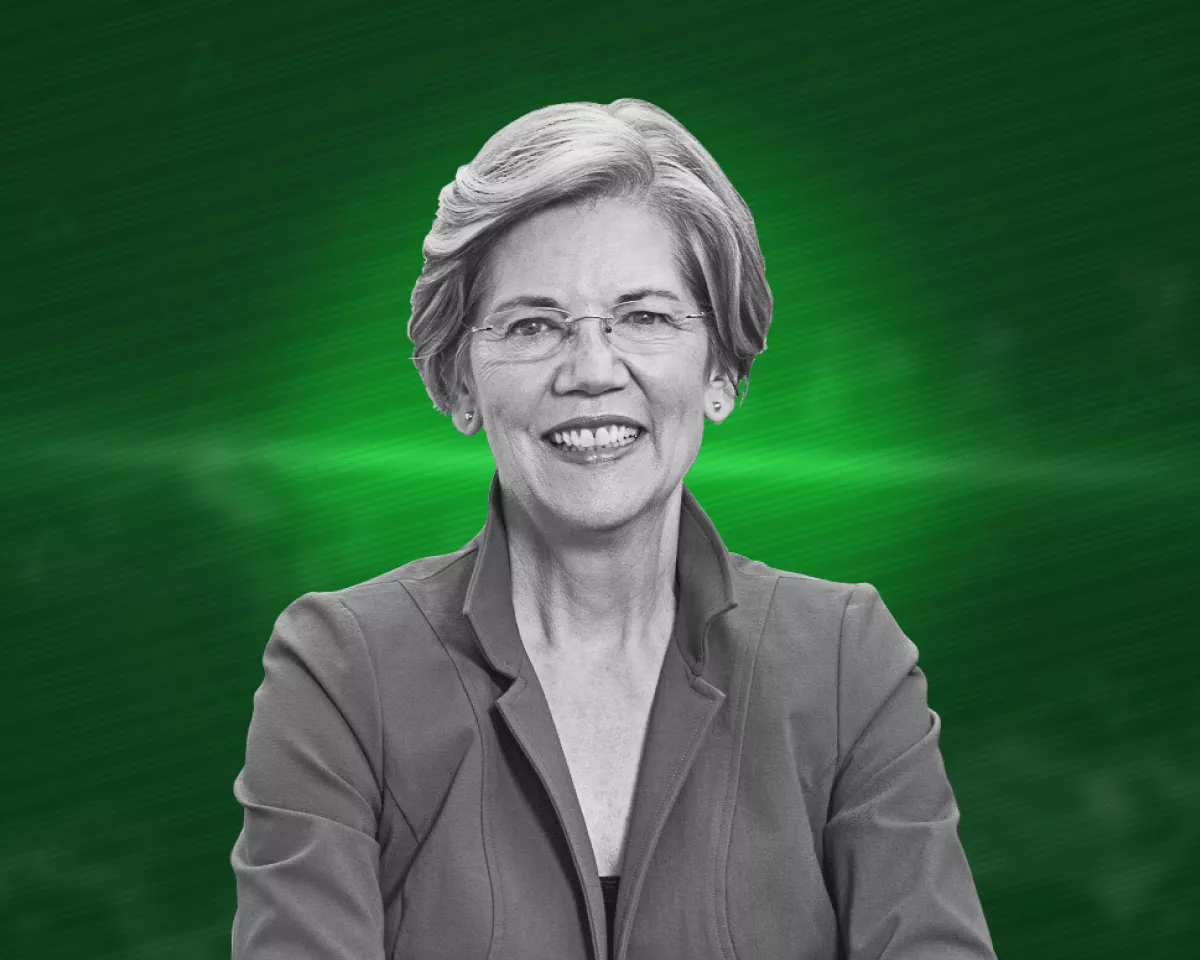
Elizabeth Warren Criticizes Foreign Miners in the US
Foreign-owned mining enterprises in the United States pose a potential danger and threaten national security, according to Senator Elizabeth Warren. She expressed this view.
During Senate Banking Committee hearings, she described mining enterprises as an environmental “disaster.”
“They are noisy, hot, and consume a lot of electricity, which can disrupt our energy system,” stated the Democratic politician.
For this reason, Warren believes that “many countries” have banned mining, forcing foreign companies in the industry to relocate to the United States. According to her data, a third of the crypto farms in the country are owned by Chinese citizens, including individuals “with direct ties to the Chinese government.”
The MineOne Case as a Point of Criticism
In a question to Paul Rosen, Deputy Secretary for Investment Security at the Treasury, who participated in the hearings, she brought up the MineOne case. In May, US President Joe Biden signed an order prohibiting a mining firm controlled by Chinese investors from owning property near an Air Force base in Wyoming.
The data center was located a mile from the base of Minuteman III strategic missiles. Rosen represents the Committee on Foreign Investment in the United States (CFIUS), which recommended the president issue the ban due to espionage concerns.
The official agreed with Warren’s concerns about potential intelligence activities using equipment placed at mining enterprises.
“This is an obvious national security risk, but not the only one. Foreign-owned crypto farms also threaten the energy grid,” Warren noted.
She cited data from the NYT, according to which the energy consumption of Bitcoin mining enterprises owned by Chinese citizens in the US is equivalent to 1.5 million households. National security experts warned that such a connection to the national energy system puts the country in a vulnerable position for targeted blackouts and cyberattacks, the senator emphasized.
Rosen also agreed with her opinion that foreigners’ purchase of Bitcoin farms with cryptocurrency allows funds to be transferred into the country, bypassing the banking system and anti-money laundering rules. Warren referred to a similar secret acquisition of a mining enterprise in Texas by a Chinese investor for $6 million.
She pointed out that transactions through digital assets allow American companies to transfer “millions of dollars” to China without control.
In CFIUS, addressing President Biden regarding MineOne, they noted that they learned about the facility from open sources. After the president’s order, it was revealed that the enterprise was in the process of being sold to CleanSpark from the US.
“Last year, the Treasury requested additional tools from Congress to prevent China, Iran, Russia, and other foreign countries from using cryptocurrencies to evade sanctions and launder dirty money. It’s time to pass the necessary laws,” Warren concluded.
Support for Warren’s Cryptocurrency Regulation Bill Wavers
In December 2022, Warren and Republican Roger Wayne Marshall introduced a bipartisan bill in the Senate aimed at tightening anti-money laundering measures using digital assets.
According to the provisions of the Digital Asset Anti Money Laundering Act, KYC procedures apply to wallet providers, miners, validators, and other network participants. Financial institutions are prohibited from interacting with transaction mixing services.
“The crypto industry should follow common-sense rules like banks, brokers, or Western Union. This legislative initiative will ensure the application of the same standards to such financial operations,” Warren commented at the time.
In July 2023, the document was submitted to the Banking Committee, and Lindsey Graham and Joe Manchin joined as co-authors.
The initiative faced widespread criticism from industry participants, who saw it as a direct attack on technological progress and a rejection of liberal values. However, support for the document in the Senate gradually grew throughout 2023. In September, nine members of the chamber joined the coalition, and in December, five more.
However, on July 24, 2024, the original co-author of the document, Marshall, withdrew from it.

At the time of writing, 18 senators support the bill, including one Republican, Lindsey Graham. The chamber consists of 100 members, with the current majority of 51 seats belonging to Democrats.
In recent months, Republican presidential candidate Donald Trump has made support for cryptocurrencies and criticism of the Biden administration’s industry regulation a campaign issue.
Bloomberg noted the industry’s hopes for a Trump victory.
But after Biden exited the presidential race, Mark Cuban stated that Vice President Kamala Harris, who is likely to become the Democratic candidate, could be “much more open” to technological innovations and cryptocurrencies. The billionaire reported that close advisors to the politician have already reached out to him for consultations on digital assets.
In June, Kraken co-founder Jesse Powell and Gemini founders Tyler and Cameron Winklevoss donated $1 million each in cryptocurrencies to Trump’s campaign. Some of the funds were returned due to exceeding the $844,600 limit.
In July, the brothers contributed 8 BTC each (~$500,000 at the time) to the fund of Warren’s upcoming Senate election opponent, well-known industry lawyer John Deaton.
Рассылки ForkLog: держите руку на пульсе биткоин-индустрии!