




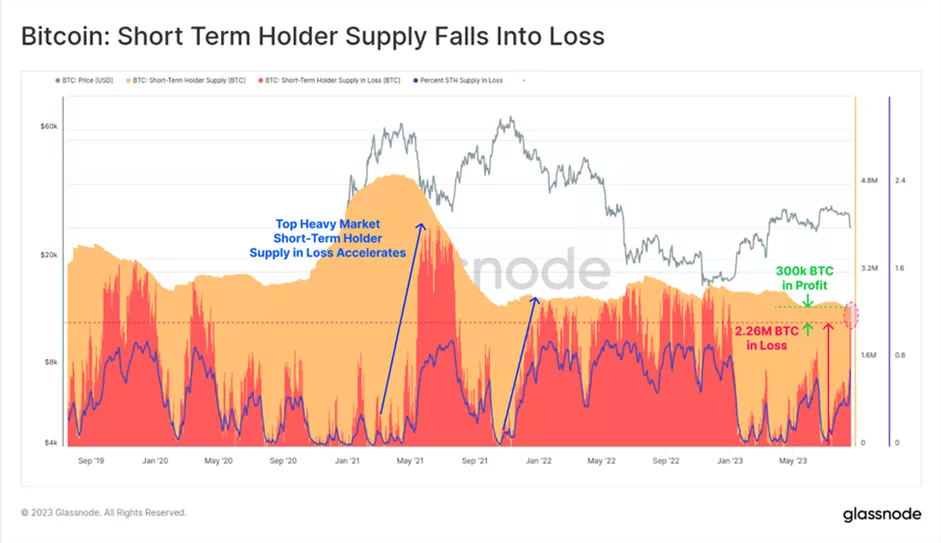
The largest Bitcoin drop (7.2%) increased the share of “loss-making” coins among short-term investors to 88.3%. Analysts at Glassnode.
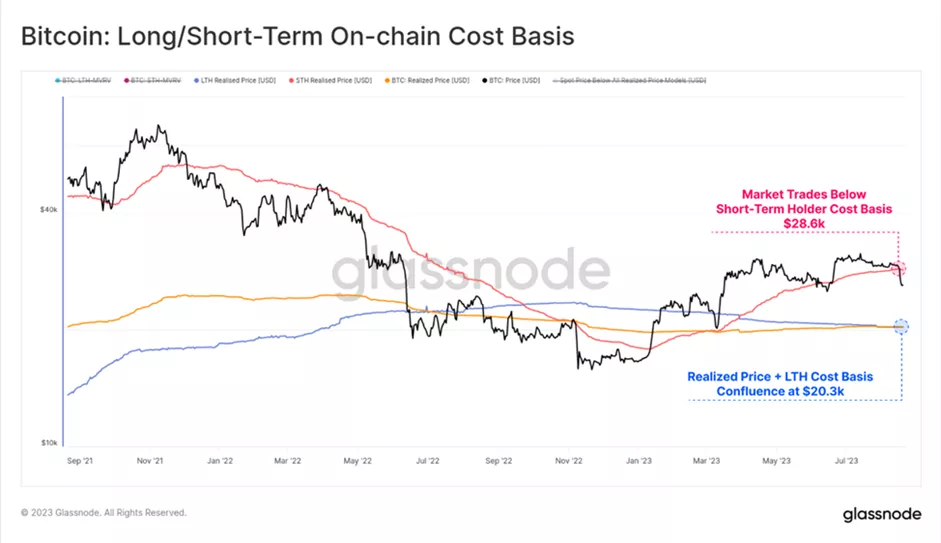
The sell-off pushed the price below the average purchase price of coins by speculators ($28,600). Historically this level provided support during sustained phases of growth.
According to experts, the market has entered a psychologically unstable position, given the proximity of the realized price and the hodlers’ average purchase price ($20,300).


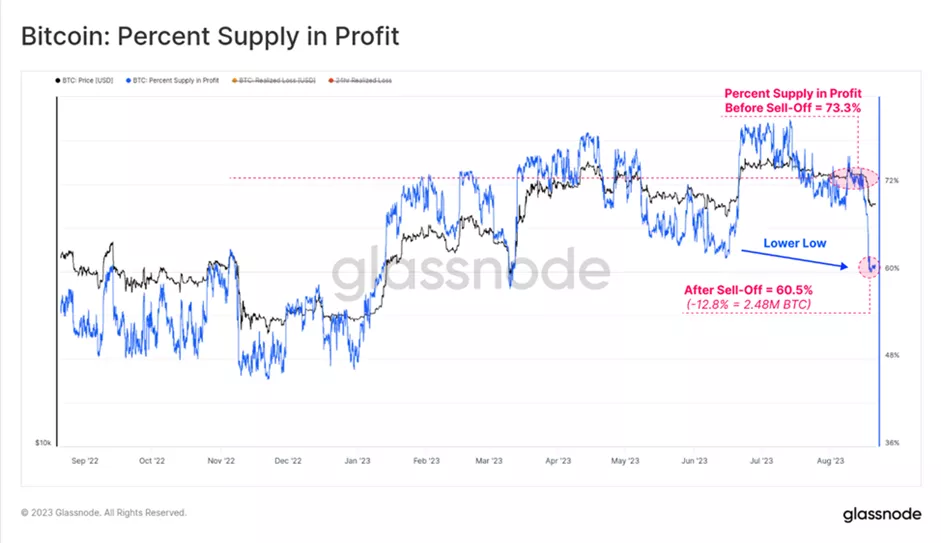
The share of coins with unrealized profit fell from 73.3% to 60.5% — the lowest since March. 2.48 million BTC moved into the status of “loss.”
Long-term investors did not react to the intensification of price fluctuations — the volume of bitcoins under their control reached an all-time high ATH.
Supply on the wallets of speculators fell to multi-year lows. The number of coins with unrealized profit declined by 300,000 BTC, while losses jumped to 2.26 million BTC.
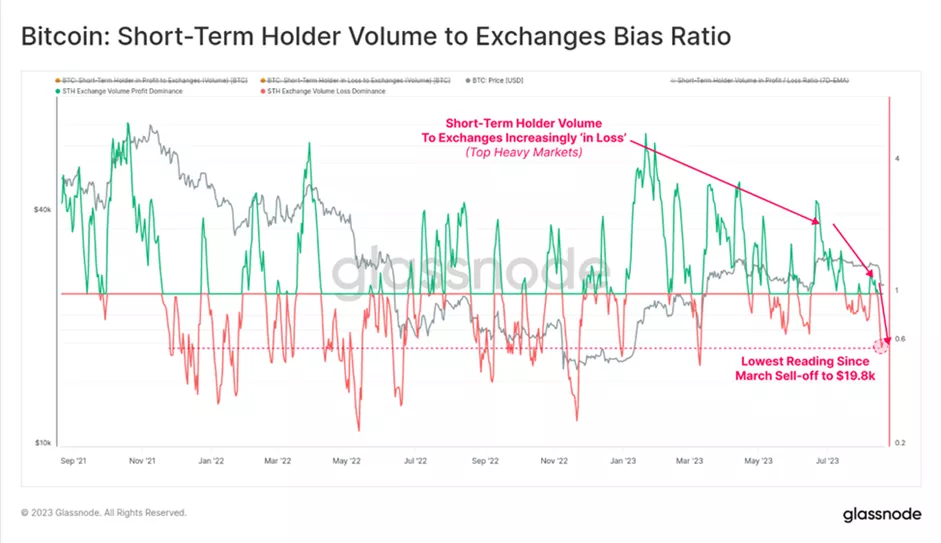
In the flow of Bitcoin toward exchanges, speculators’ share of losses rose. The corresponding metric returned to March’s selling levels.
“This category of market participants has become more sensitive to price changes,” the experts explained.
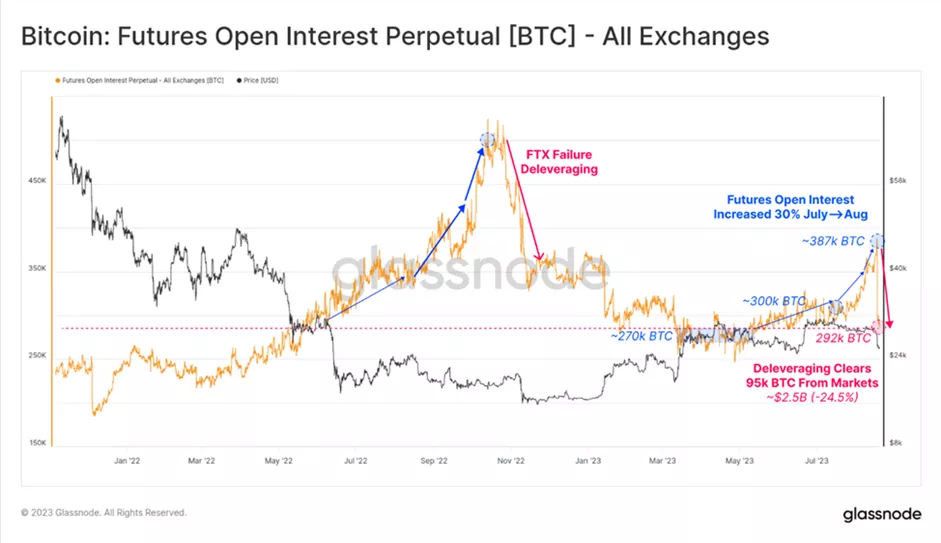
As a driver of the sharp drop, specialists cited $2.5 billion in liquidations on the Bitcoin futures market. In this respect they pointed to similarities with FTX crash. As a result, the period of historically low volatility observed since July ended.
The $2.5 billion worth of liquidations represented almost a quarter of open interest at the time. This means the complete unwinding of leverage built up in July-August, the experts explained.
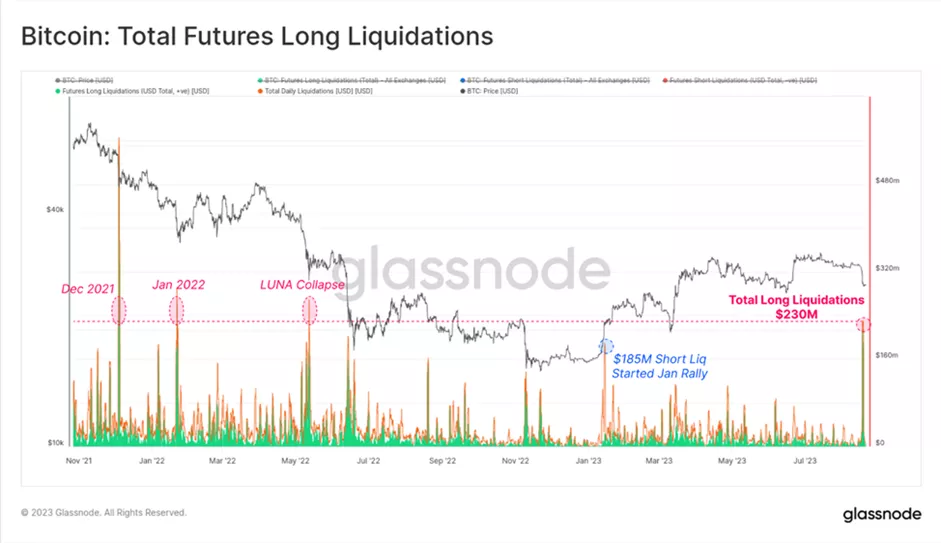
The volume of forcibly closed long positions over a few hours stood at $230 million. The last time such large figures were recorded was during the Terra collapse in May 2022.
The liquidation event proved larger than the short squeeze in June, which had prompted expectations of the bear trend ending.
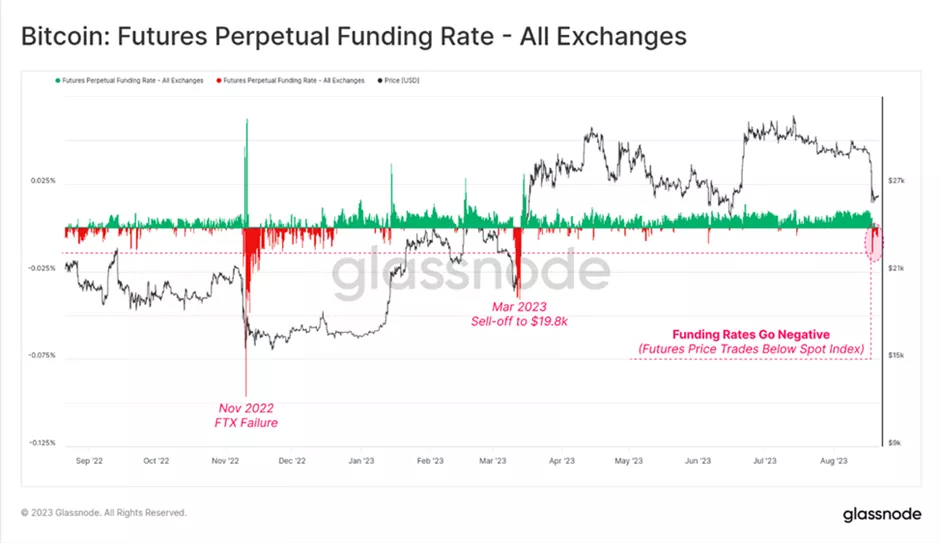
The market for perpetual contracts also faced long-position liquidations. As a result, the funding rate moved into negative territory. The last time such low values were observed was during the March sell-off, when the price fell below $20,000.
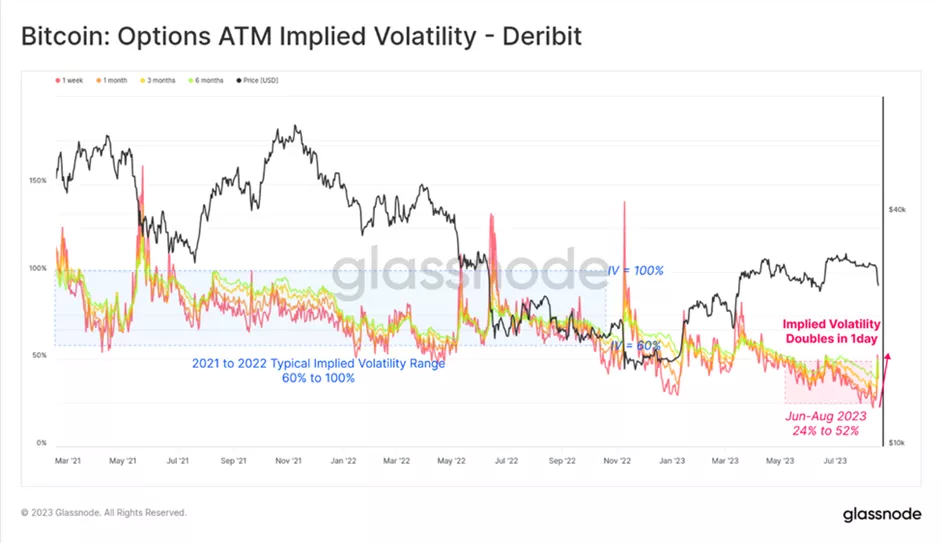
The options market also experienced turbulence. Before last week’s events, implied volatility reached record lows, trading about 50% below the long-term baseline of 2021-2022. Subsequently, the metric for contracts expiring at the end of September more than doubled. Put options were the most sharply repriced.
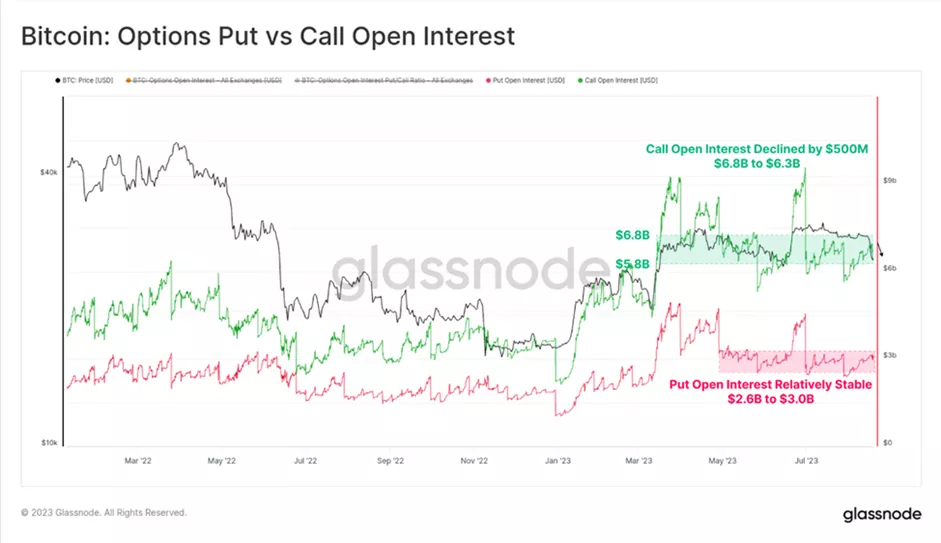
Against such a price shock, analysts noted the absence of deleveraging in the options market — open interest for both calls and puts changed only modestly.
Analysts linked the deterioration in the outlook to a possible sale of part or all of Bitcoin by Elon Musk’s SpaceX worth $373 million. They also cited the recent rise in government bond yields and concerns about the stability of the Chinese real estate market.
Experts from CoinShares explained that selling was driven by the SEC’s decision on launching a Bitcoin-ETF from ARK Invest and 21Shares.