




The cessation of operations by Silvergate Bank, SVB and SBNY triggered a period of turbulence in stablecoins and underscored the significance of Satoshi Nakamoto‘s decision to create Bitcoin. Glassnode reports.
After an extremely consequential week, the digital asset industry finds itself short three crypto friendly banks in the US.
Investors appear to be seeking safety in the most trustless major assets #Bitcoin and #Ethereum
Read more in our latest analysis?https://t.co/ULZot2InKD
— glassnode (@glassnode) March 13, 2023
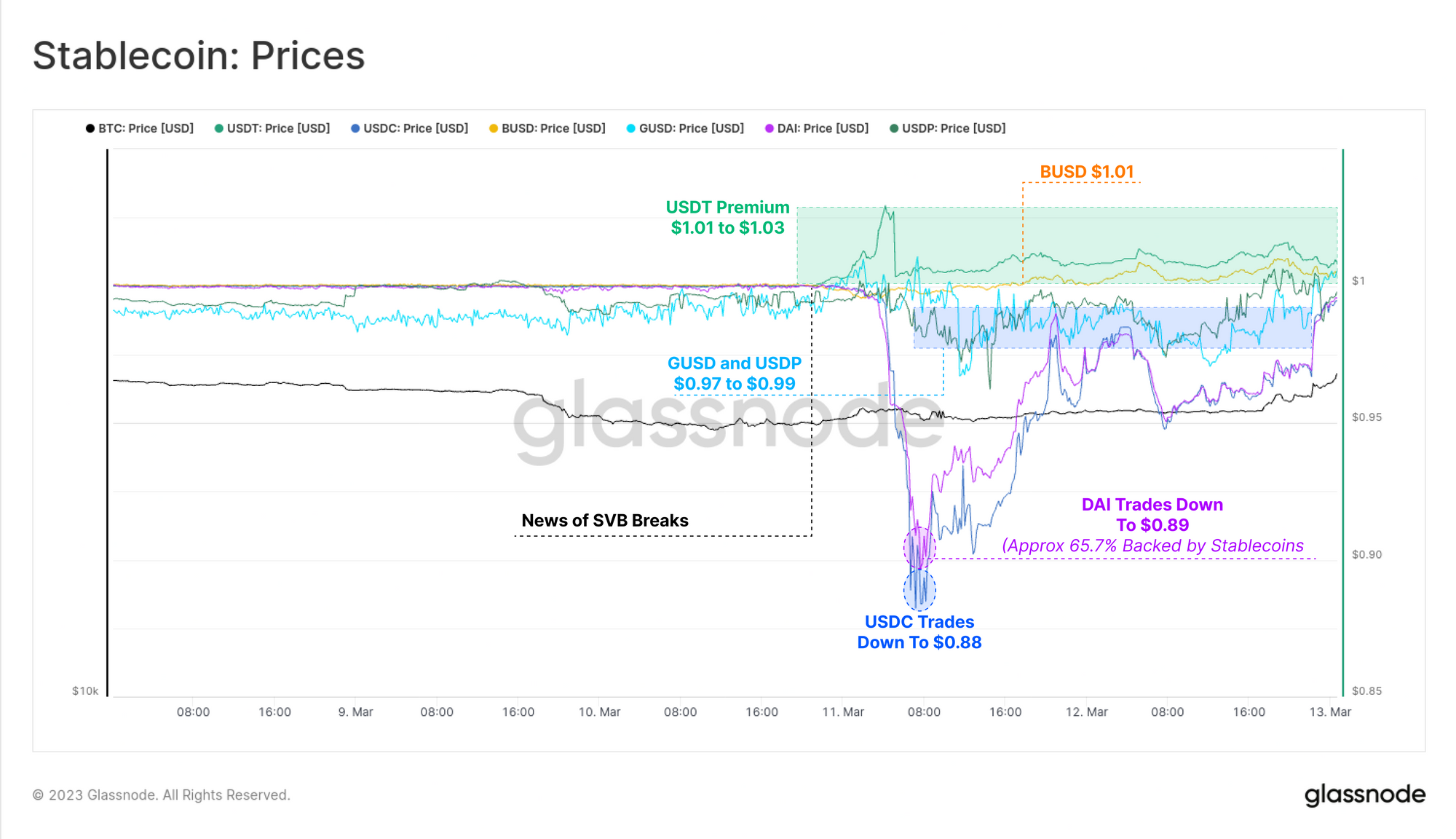
Prior to news of the FDIC’s rescue of depositors at the aforementioned institutions, stablecoins in the segment on March 11-12 showed a material deviation from parity with the US dollar in USDC, DAI, FRAX, USDP, USDD and GUSD.
Circle, together with Coinbase, is part of the Centre consortium, the issuer of USDC. On March 11 the company announced that it holds in SVB part of the asset’s reserve ($3.3 billion).
Depeg was observed for the first time since the collapse of UST in 2022. USDC and DAI traded down to $0.88 and $0.89, while BUSD and USDT traded at a premium to parity of 1% and 3% respectively.


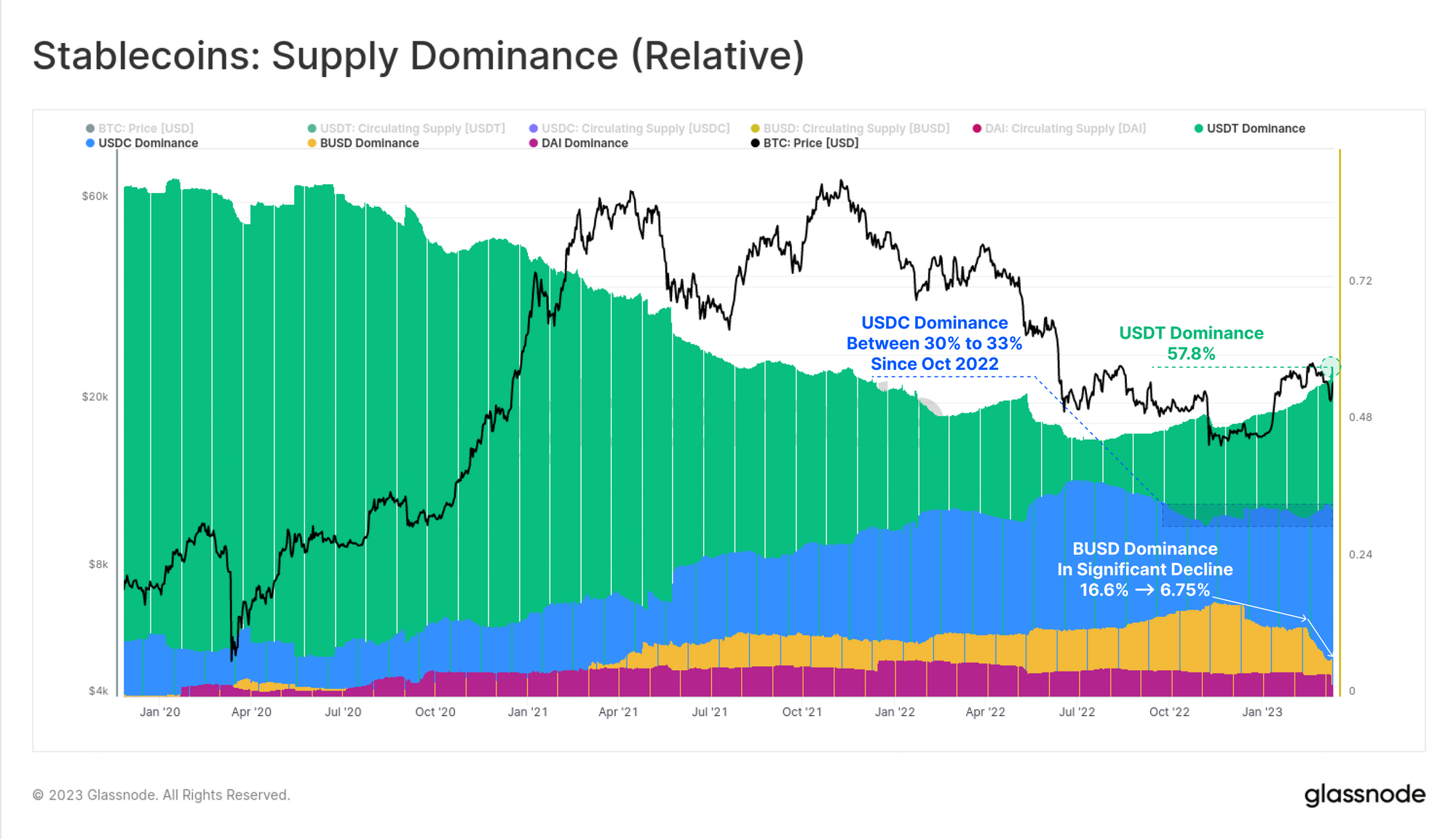
Analysts noted that since October 2022 USDC has supported a market share in the 30-33% range. The resumption from March 13 of the ability to convert the stablecoin into fiat will allow assessing the resilience of these levels.
Experts also pointed to a contraction in BUSD’s share from 16.6% to the current 6.8% amid regulatory pressure on the Paxos partner of Binance for the issuing of a stablecoin. USDT’s share rose to 57.8%.
“The irony is that Tether has come to be seen as a safe-haven asset amid concerns about contagion spreading among stablecoins. The latter stems from a tightly regulated US banking sector,” — analysts concluded.
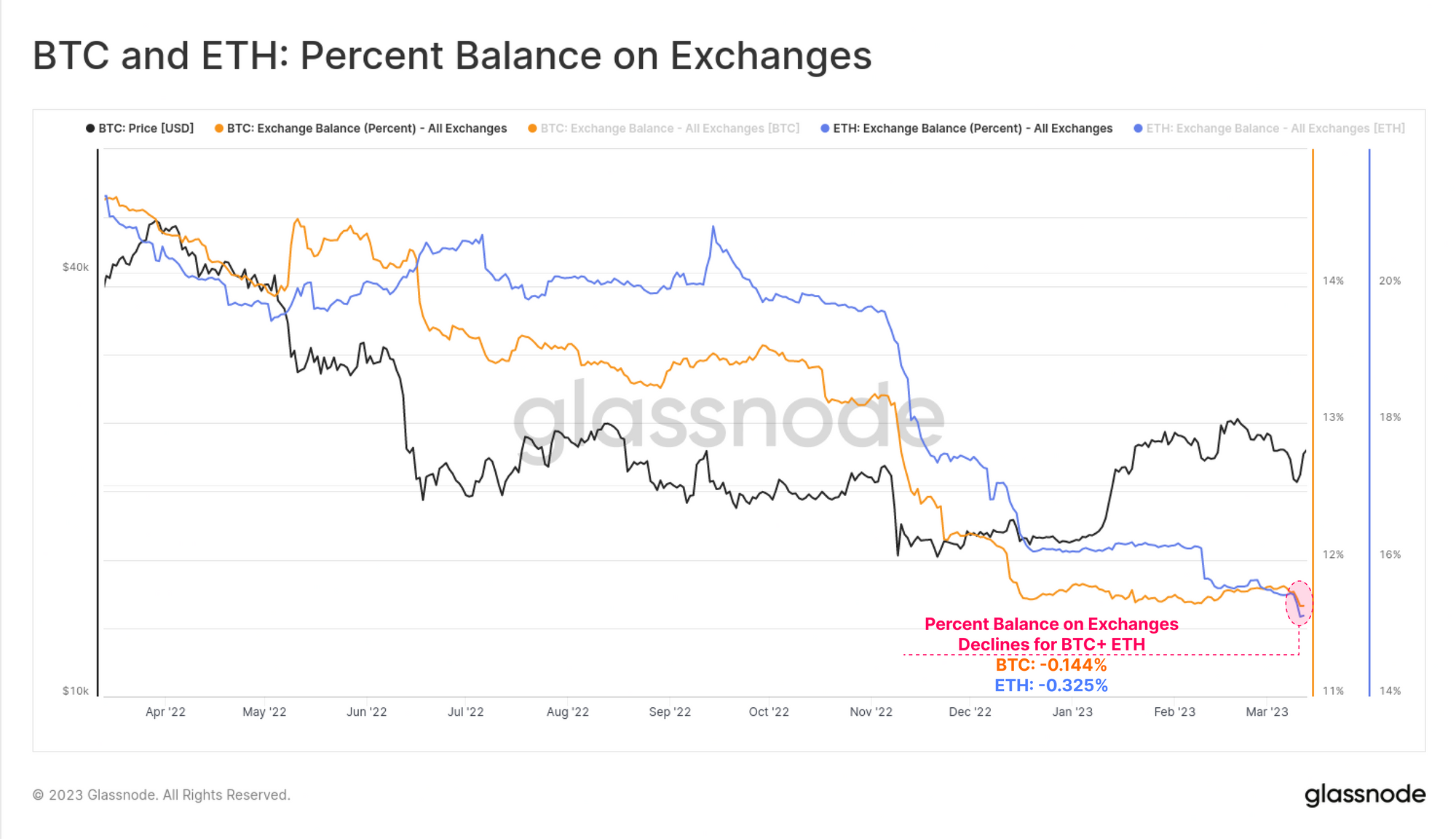
In the wake of SVB’s collapse, demand for Bitcoin and Ethereum surged. This was accompanied by withdrawals of coins from centralized platforms, repeating the pattern seen during the FTX collapse.
Over the past days, exchange balances of the first and second-largest cryptocurrencies declined by 0.144% and 0.325% of their available supply, respectively. The total outflow rate stood at $5.9 billion on a monthly basis.
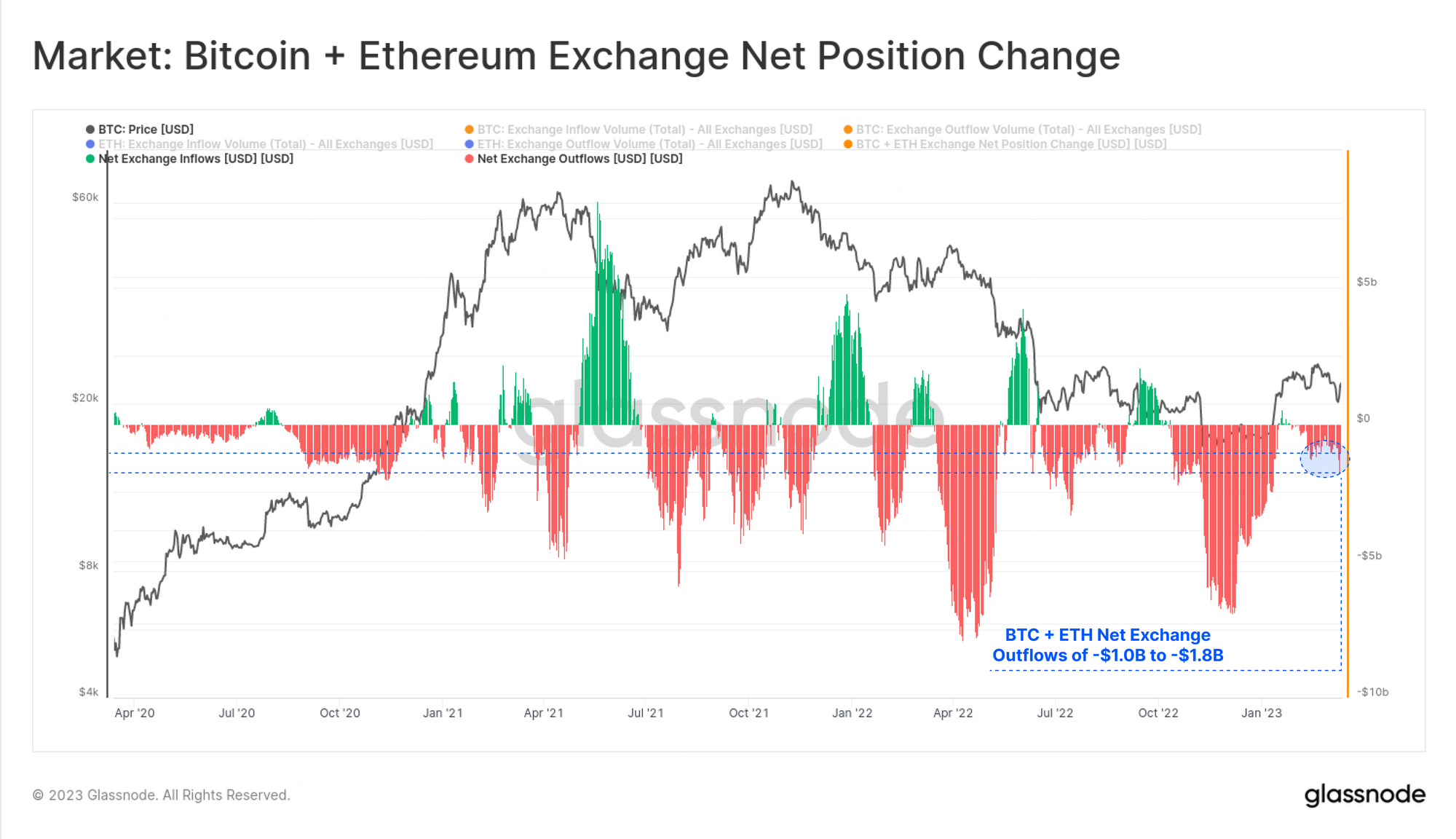
In dollar terms, investors pulled out Bitcoin and Ethereum to $1.8 billion. Relative to similar episodes in the past, the amount was modest, a sign of confidence among market participants, say analysts.
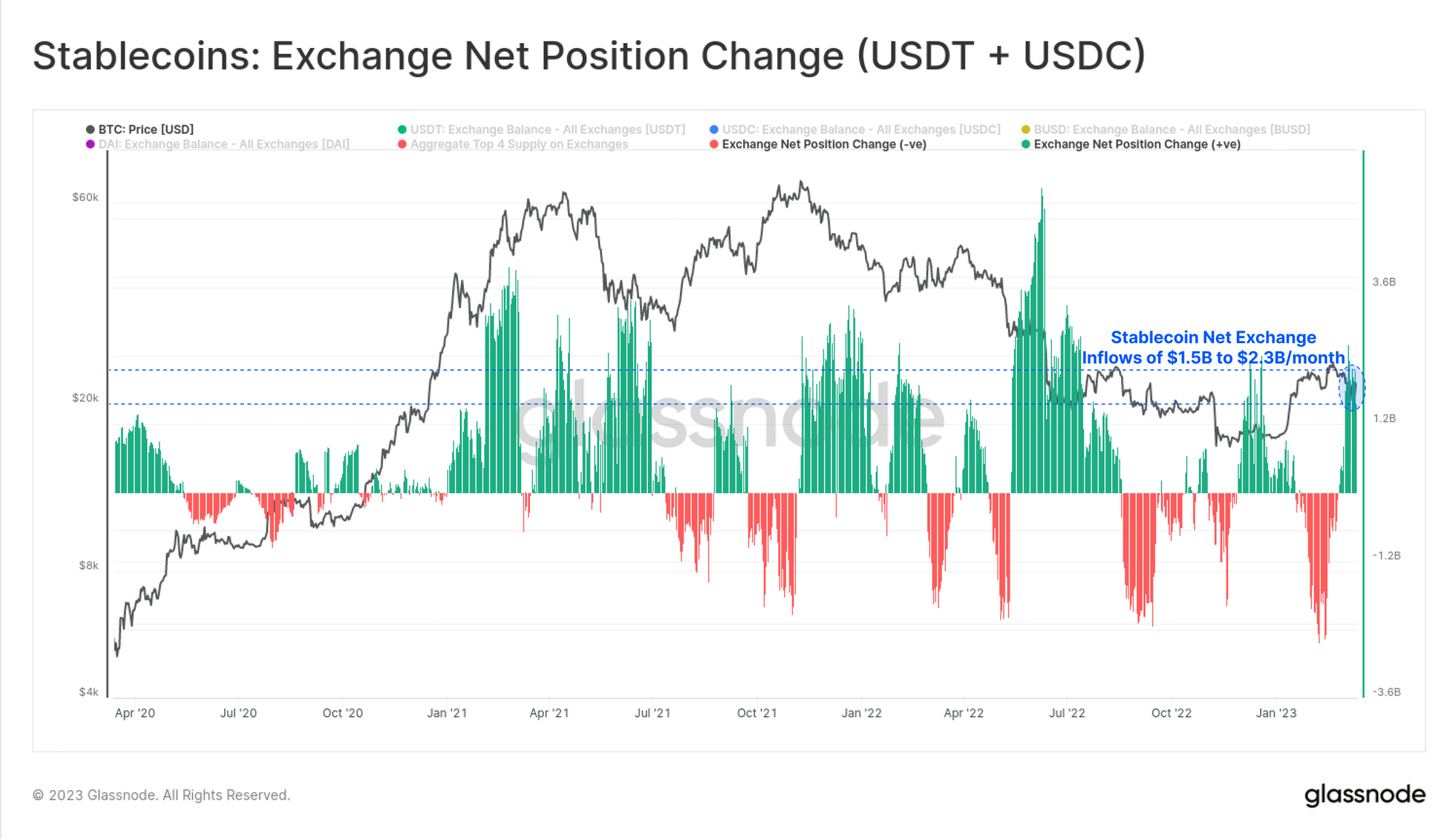
Analysts also recorded inflows of USDT and USDC to exchanges at a monthly pace of $1.5 billion to $2.3 billion. That is below the outflow of BUSD (around $6.8 billion), suggesting a shift into stablecoins.
“The market appears to have reacted to the influx of stablecoins and the withdrawal of Bitcoin and Ethereum from exchanges. This reflects investors’ high regard for non-custodial, trustless storage of cryptocurrencies,” — the researchers concluded.
By the evening of March 13, Bitcoin had risen above $24,000.
Earlier, CoinShares analysts recorded a record outflow of funds from crypto funds.