



Elliptic: 13% of Bitcoin crime proceeds laundered through anonymous wallets
Malicious actors have increasingly used anonymity-focused cryptocurrency wallets to launder bitcoins obtained through criminal activity. This finding is stated in the study by Elliptic.
Experts analysed more than 35 typologies of financial crimes involving the use of digital assets. They estimate that between 2012 and 2016 criminals preferred mixing services to launder money, but since 2017 they switched to anonymous wallets.
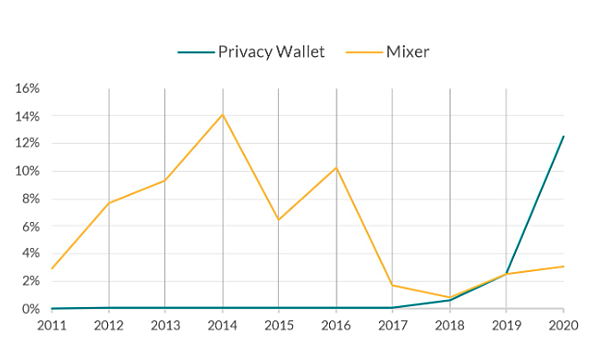
Data: Elliptic.
Analysts attributed the shift in preference to the CoinJoin mixing technology implemented in wallets. It bundles cryptocurrencies into a single transaction, making their provenance harder to trace. As an example, the Wasabi Wallet was cited.
What is CoinJoin? What is ZeroLink? What is STONEWALL?
Elliptic estimates that in 2020 around 13% of proceeds, or more than $160 million in Bitcoin obtained through criminal activity, were laundered through anonymous wallets.
“There are perfectly legitimate reasons for using mixers or private wallets, and financial privacy is the cornerstone of any open society. But blockchain analysis shows that criminals have quickly mastered the new tool,” the report says.
Earlier, Elliptic said that the Twitter hackers who breached the platform laundered the 2.89 BTC, or 22% of the funds, through Wasabi.
As reported, the same wallet was used by the attacker who hacked the KuCoin cryptocurrency exchange.
Follow ForkLog news on Twitter!
Рассылки ForkLog: держите руку на пульсе биткоин-индустрии!