




About 86% of FTX’s (FTT) utility tokens were initially controlled by the exchange itself and by Alameda Research, which is affiliated with Sam Bankman-Fried. Those findings appear in a study by Nansen.
Using on-chain data, analysts identified a group of wallets that pointed to Alameda Research as one of the first liquidity providers for FTX in May 2019.
Of the initial 350 million FTT issued, 280 million were controlled by the exchange itself.
27 million of the 59.3 million FTT issued in private and seed rounds apparently ended up on Alameda’s wallet within FTX.
All the exchange’s tokens, including most of the unsold ones, were deposited into an address with a three-year vesting for the trading firm as the sole beneficiary.


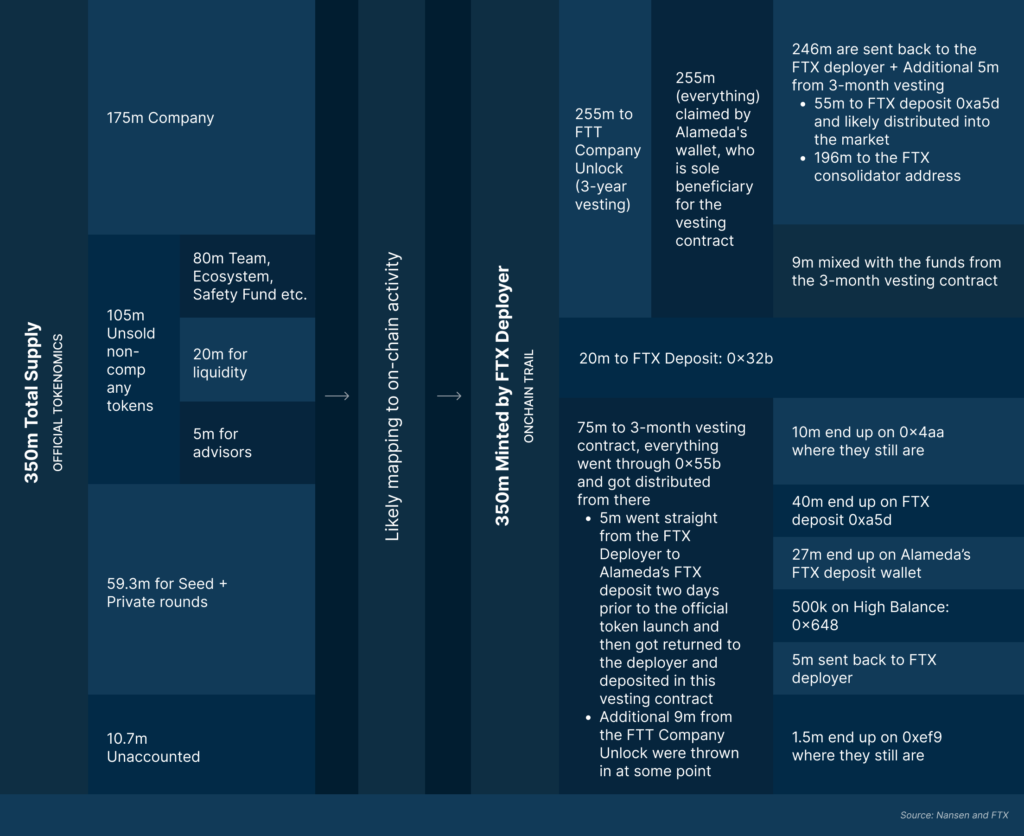
Analysts say this led to restricted liquidity of the tokens, making them susceptible to manipulation.
During the 2021 bull market, when the price of FTT rose from $0.10 to $84, affiliated entities chose not to sell into the market but to use the tokens as collateral for borrowings. In September of that year, Alameda Research used FTT valued at $1.6 billion in a deal with Genesis Global Capital.
The trading firm directed the proceeds to pump the utility token and, as a result, raise leverage.


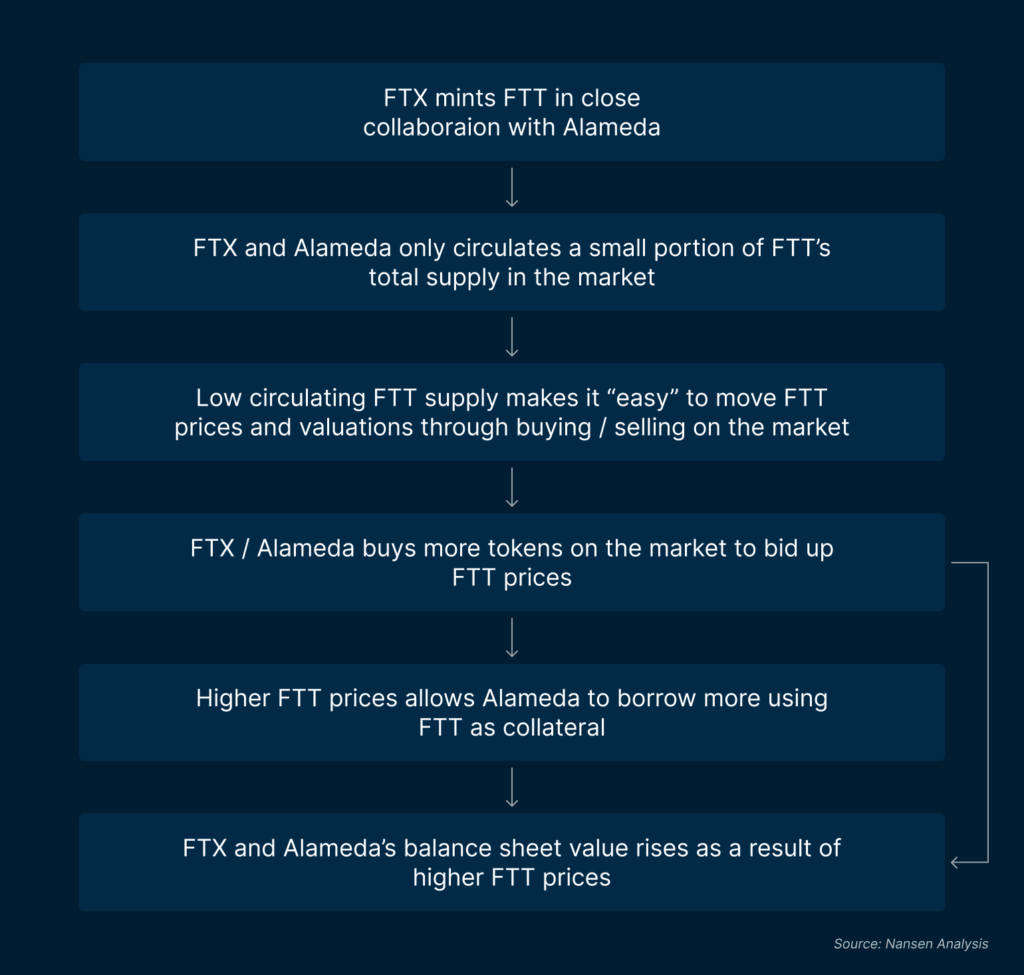
This scheme operated up to the Terra collapse in June 2022.
With the shutdown of firms such as Three Arrows Capital and Celsius, which were tied to Genesis Global Capital, Alameda likely faced deleveraging and a liquidity crisis, according to experts.
The problems could have been solved by selling FTT for cash. A side effect would have been a drop in the asset’s price and the contagion of FTX.
On-chain data showed transfers of tokens from Alameda to the exchange wallet in May–June totaling about $4 billion, with a subsequent possible borrowing of a similar amount, which confirmed by informed sources.
Experts suggested that the emergency financing obtained by the trading firm could have consisted of customer funds from FTX.
The issues came to light on November 6, when Binance CEO Changpeng Zhao decided to dump FTT. The assets together with BUSD totaled around $2.1 billion as a result of the company’s exit from its stake in FTX. A possible trigger was CoinDesk’s investigation, which cited Alameda Research’s reports showing a high FTT share in the balance.
The move frightened investors and, at the same time, precipitated the exchange’s bankruptcy and heavy selling pressure on the utility token, according to Nansen. Investors soon realised that FTX lacked sufficient liquidity.
11 November, the exchange, Alameda Research and roughly 130 affiliated firms filed for bankruptcy.
Earlier, Glassnode analysts drew attention to the coincidence of the start of the decline in Bitcoin reserves for FTX with the Terra ecosystem collapse.
Coin Metrics experts suggested that a possible cause of the exchange’s collapse could be the “large financial aid” that it provided to Alameda Research in Q2 2022.
In September, Bloomberg pointed to a potential conflict of interest between FTX and the trading firm based on network-data analysis.
The U.S. Congress has begun examining Binance‘s role in the sudden collapse of its rival. Hearings on this matter are scheduled for December.
On November 16, Genesis Global Capital froze withdrawals and the issuance of new loans.
Read ForkLog’s bitcoin news in our Telegram — cryptocurrency news, prices and analytics.