




It is already safe to say that 2024 has brought two defining trends to the market: Tap-to-Earn and prediction markets. Mass interest in the former arose on the back of the success of “tappers” that grafted crypto elements onto rudimentary casual games; the latter owe their popularity to the presidential race in the United States.
For all their differences, these two trends share something in common: a drive to extreme simplification of the user experience and the promise of easy money. Oleg Cash Coin shares his view with ForkLog readers on why, at this moment, the crypto market increasingly resembles an ordinary casino.
Kings of the game
The first prompt to embrace simplification was the reaction of Binance co-founder and head of Binance Labs Yi He to complaints about the listing process.
“We strive to offer projects that are popular, in demand and relatively reliable. But that does not mean the value of all of these projects will increase,” said the exchange’s co-founder.
Part of the crypto community accused Binance of lowering standards after listing the memecoin Neiro, whose market capitalisation at the time was about $15m. In less than two weeks the figure rose 30-fold to $450m.
Listing such assets—and the subsequent vertical surge—is nothing new in crypto, as are allegations of insider trading. The point is Binance’s stance.
In response to criticism, Yi He published a lengthy article. In it she said the exchange is forced to operate this way simply because clients demand it, and that the era of selling serious projects’ tokens at low prices is ending as the market grows and matures.
“The [Bianance] product must serve the majority to have a chance to become the financial infrastructure of the future world,” noted Yi He.
Thus Binance merely follows the crowd, clipping a margin from social fads. It is a viable strategy, as the exchange’s standing in cryptoland attests.
For the same reasons the market is ravenous for new cheap and fast ways to make money: the era of one-day gaming tokens and apps with no roadmap or future plans is dawning.
User-acquisition mechanics increasingly resemble online casinos and casual mobile games, with ultra-simple rules and no need for special skills or time to learn. Come, tap and collect.
This is expressed most vividly in Tap-to-Earn apps such as Notcoin and Hamster Kombat, where user attention is hoovered up for small rewards with a view to reselling it to advertisers.
Greed and the urge to conjure value out of nothing give the new trends the hallmarks of mass gambling addiction. One unpleasant feature of this disorder is an often illusory belief that one can improve the odds of winning through strenuous analysis. That may be partly true, but it is worth recalling: “the odds to find a successful memecoin on the PumpFun platform for profitable investing turned out to be lower than placing a winning bet in a casino.”
In the memecoin and “tapper” markets, the principles embedded in ordinary slot machines are merely made more elaborate, with crypto bolted on. But there is a more telling example of a “casino” in crypto—prediction markets.
Prediction markets of “red or black”
Classic roulette offers just two basic bets: black and red (plus zero, which helps the house). Every casino-goer understands that it is a game of chance—but at least it leaves participants a choice.
Binary “prediction” markets with a clear yes-or-no stake are arranged somewhat differently. The trend went mainstream ahead of America’s elections: in 2024, trading volumes on Polymarket have already exceeded $1bn.
The trouble is that binary prediction markets are promoted as an expression of the unquestionable “wisdom of the crowd” that nudges participants towards rational behaviour. Unfortunately, this highly debatable concept enjoys fervent support from leaders of the crypto industry.
Thus, Ethereum founder Vitalik Buterin is convinced that Polymarket is labelled gambling only by those who do not understand the essence of the project. In his view, such platforms reflect reality more objectively than the mass media and social networks.
No analysis
The problem is that the existing binary, stake-based prediction format has nothing “under the hood”. To see this, simply compare prediction markets with the probability tool at the Chicago Mercantile Exchange (CME).
For example, a “bet” on a decision by the the Fed collected almost $60m in liquidity on Polymarket, where participants were simply asked to indicate by how much the interest rate would be cut. The resulting figures on that platform create the illusion that they reflect the probability of something.


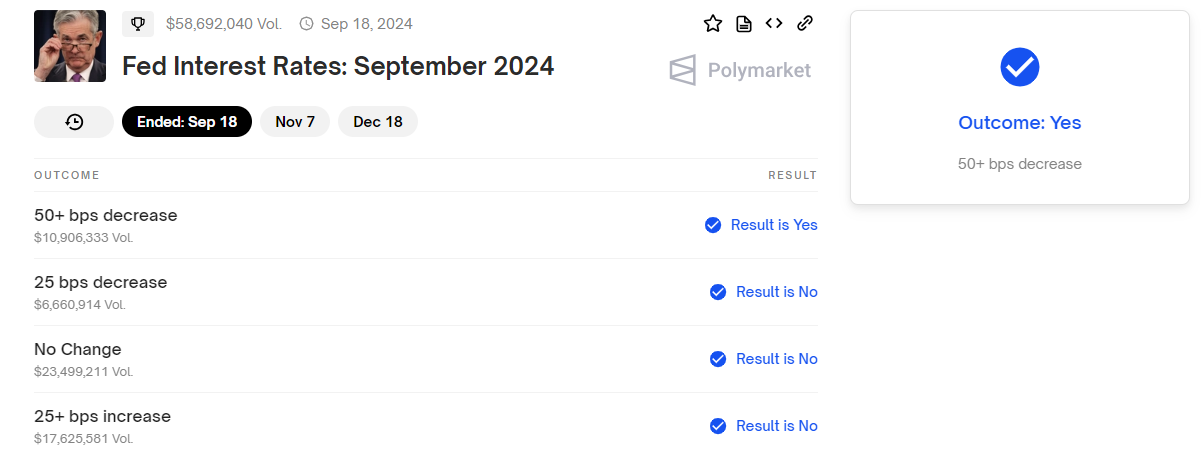
This is fundamentally wrong and distorts the entire methodology used at the Chicago Mercantile Exchange, which is based on real futures pricing and complex weighted calculations.
On Polymarket people simply vote for the option they prefer, whereas at the CME probability is derived from actual rates in the interbank lending market.
The exchange takes data from a real market where insurance companies, banks and U.S. financial institutions hedge risks and transact. If the CME estimates the probability of a Fed rate cut at 51.3%, that reflects the real situation in the banking sector, not the opinion of a crowd.

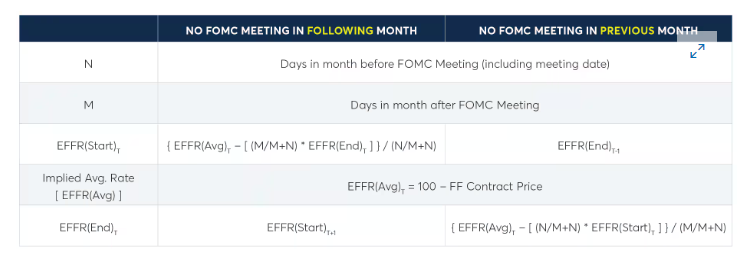
When the policy-rate meeting begins, financial institutions have already carried out all the necessary actions in the futures market. The only thing the “wise crowd” can do is visit the CME website and look up the current probability—it has no other instruments.
Binary prediction markets, therefore, offer a radically simplified picture of the world, in which crucial decisions are made almost at random rather than through a multitude of operations.
Conclusions
One of 2024’s main trends is the drive to simplify probability markets and to minimise the importance of real analytical work in investing.
Sadly, users themselves willingly feed the markets for memecoins and binary forecasts, and large platforms follow the crowd of newly minted crypto investors to keep business running.
Investing in and supporting large high-tech projects has become less attractive for the small speculator who is not prepared to wait months or years for a financial return. Moreover, succeeding in today’s market is not the same as in bitcoin’s early years. There are simply not as many opportunities as early crypto investors had.