


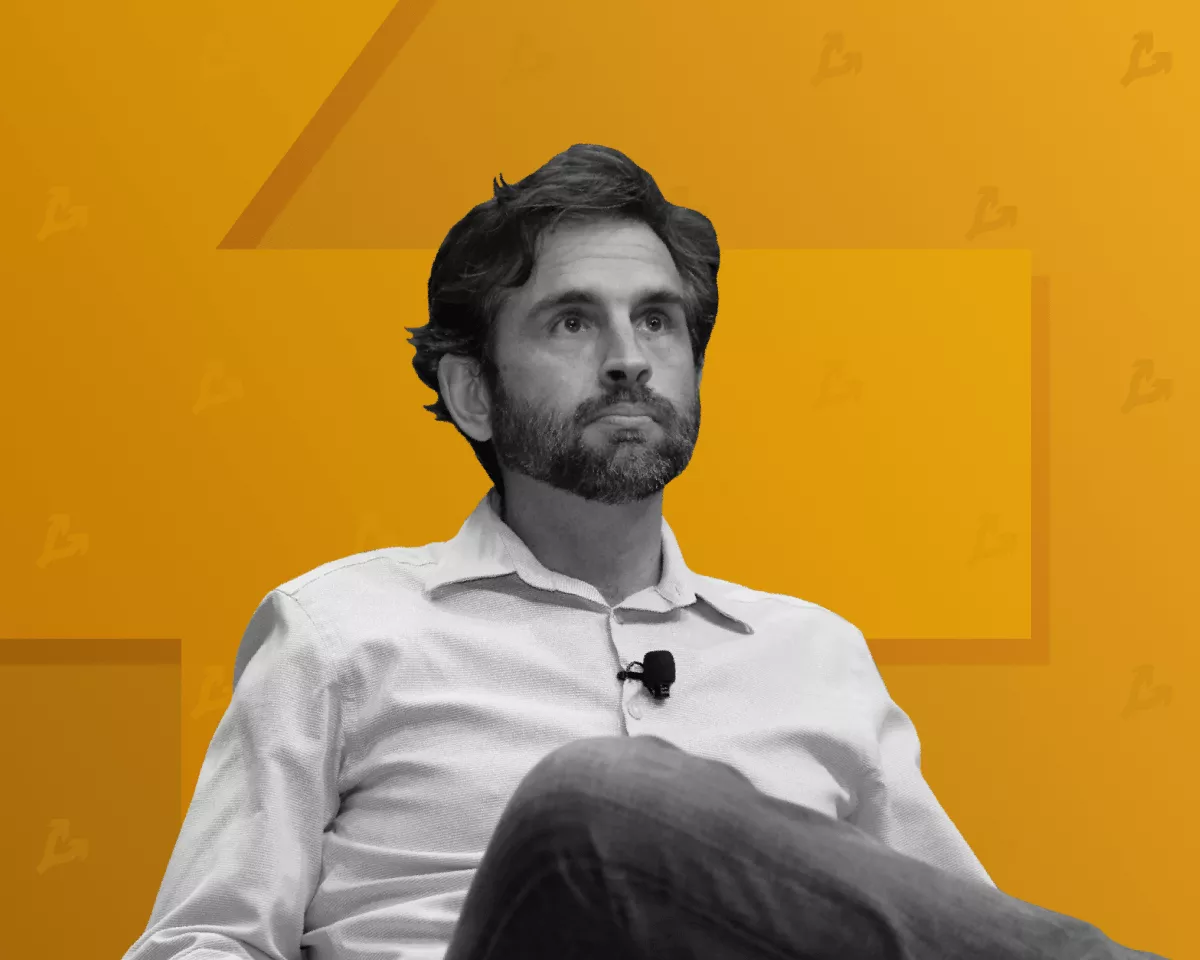
Zooko Wilcox: In four years Zcash has achieved great things, but we need a billion users
Exactly four years ago, on 28 October 2016, the Zcash (ZEC) mainnet launch — a privacy-focused cryptocurrency — took place.
That day is remembered by many — at one point after launch, the coin’s price surged to 2,600 BTC per ZEC, or more than $1.8 million at the rate at the time.
Today Zcash ranks 33rd by market capitalisation, prompting some disappointed investors to speak of the project’s lack of prospects.
But is that really the case? What fate awaits Zcash, whose launch was awaited with such anticipation? Will the new breath be given by the advanced zero-knowledge proof technology?
Answers to these and other pressing questions were provided in an exclusive ForkLog interview with Zooko Wilcox, the creator of Zcash and CEO of the Electric Coin Company behind its development.
ForkLog: The Zcash launch took place exactly four years ago and was accompanied by unprecedented hype and dizzying price growth. What was really happening inside your team that day, in your minds?
Zooko Wilcox: Our emotions, all our attention were directed at ensuring the security and stability of the network. We didn’t pay much heed to the price; we even published a blog post reminding readers that we do not control it, and that launching Zcash is a slow process, quite comparable to the launch of Bitcoin.
There were no mined coins, and they were created gradually, step by step. We did not communicate with exchanges, and the coins destined for the founders were sent to a special address only a month later, something that can be verified on the blockchain.
At the time we were a small team that had worked for many years on creating the technology and deploying it securely. In fact, we were compelled to postpone the launch date to conduct one final round of security auditing. Probably every member of our team could be described as a security specialist at that moment. We worked around the clock, building protective systems, and of course, when it all happened, we were ecstatic!
Yet just as much we were nervous, fearing that something might go wrong, but in the end everything unfolded as intended: the network’s security and resilience reached the level we wished to see, and miners and full nodes began appearing almost immediately.
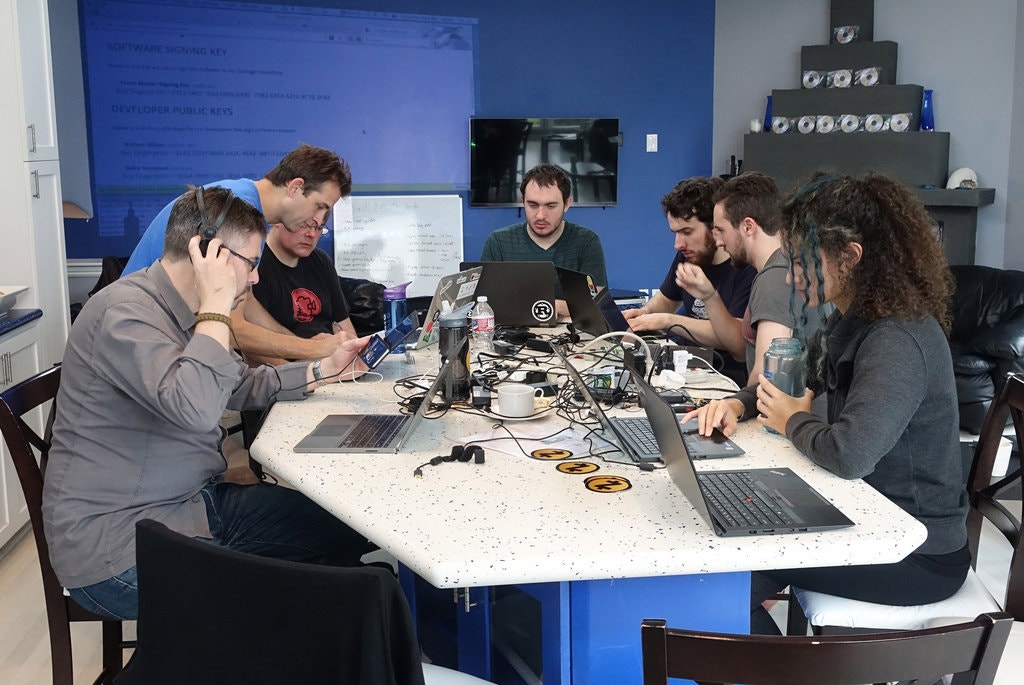
Команда Zcash во время запуска сети 28 ноября 2016 года. Фото: New York Times.
ForkLog: Four years on, how do you assess the journey? Has Zcash proven itself a successful project in your eyes?
Zooko Wilcox: I would highlight three things that happened over this period and, thanks to which I consider Zcash a success.
The first is the technological innovation by my team. The launch can rightly be regarded as historic, because it was the first production deployment of zero-knowledge proof technology.
Shortly afterwards, Google founder Sergey Brin expressed his admiration that the team managed to launch it so early, because as someone who understands the subject, he knows that it usually takes much longer. We really wanted to do things quickly, because we felt the moment was right, saw in it an opportunity to bring this technology to people before the world was overtaken by players like Libra or central bank digital currencies (CBDCs). In that sense I am exceptionally proud of my team – in just a few years we managed to bring zero-knowledge proof technology from theory to practice.
The second is that after four years we repeated this when we upgraded the technology, broadening the boundaries of its possible applications.
And third, despite facing one of the most dangerous known cryptographic vulnerabilities, when one of the mathematical works underpinning Zcash revealed a serious flaw, we managed to keep the network secure.
Zcash developers reported that a critical vulnerability was fixed in 2018
If a potential attacker had exploited this vulnerability, they could have minted an unlimited number of fake coins. When we learned of it, Zcash’s market capitalisation exceeded $1 billion, and it was the most serious security vulnerability I have ever faced in my life. With such high stakes, the aim was to upgrade all users of the network and prevent the vulnerability from being exploited. It took about a year and cost me some grey hairs, but we did it!
These three things, I believe, are the main achievements of Zcash over the last four years. But true success will be the day when we have not millions, but billions of users. Today, if you have fewer than a billion users, success cannot be achieved. That is about the figure a Chinese central bank will have in a few years, so we must hurry to be able to compete.
I could name a few more indicators that we are on the right track. Scientific, technical and engineering excellence, the result of which is that zero-knowledge proof technology is now used by many other industry participants. It is also the network’s absolute security — to date there is not a single known vulnerability that could threaten users’ funds, and if they appear, we find them faster than hackers.
Nor can the economics of Zcash be ignored. The original distribution, in which in the first four years after launch 20% of the coins went to the founders and the remaining 80% to miners, allowed us to fund ongoing development of the core protocol.
Finally, I cannot help but note our community, which has expanded significantly during this time, becoming very strong and effectively took power over Zcash’s future from me last year. All of this makes our project very strong relative to other coins. Yes, we are cryptographically strong and can add various new features, but that is not the main advantage. The main thing is self-funding and genuine decentralisation, guaranteeing that neither I nor anyone else can take the network under control. All this makes me believe that the next four years for Zcash will be very strong.
ForkLog: What are the true motives behind the recent decision to reorganise the Electric Coin Company and place the company under the control of a new nonprofit organisation? What does this mean in practice and what consequences will this decision have for the project’s future development?
Zooko Wilcox: The changes compared with what occurred before are not large. The Electric Coin Company will continue to operate as a corporation that can sell products and services to partners, and will continue to do all that it did before, i.e., focusing its efforts on the welfare of the entire project.
The difference is that the holders of Zcash have agreed to donate their shares to this new nonprofit organisation. This means that in the future no one will have legal grounds to profit from the activities of the Electric Coin Company. The point is that we do everything we did before, but within a new structure that, among other things, is not taxable and provides the opportunity to serve the interests of the community more effectively and efficiently.
ForkLog: Earlier this year there were reports that if ECC does not reduce operating costs and the coin itself does not rise in price, the project will have funds for at most two years. Is that accurate?
Zooko Wilcox: There are many rumours circulating online, and not all of them deserve serious attention. ECC publishes regular transparency reports, and transparency to the community has always been our primary priority. We disclose as many details as possible: who our investors are, how much money we have, how much we spend, and as far as I know, in this regard we are the most transparent company in the industry.
The problem is that people interpret these data. Some look at the data and say negative things, such as that Zcash is running out of money. But that is only an interpretation; perhaps these people enjoy thinking negatively. But if you look at the numbers, it turns out we are the only company that navigated the entire bear market while remaining fiscally responsible. Current funds allow us to operate for many more years under the current model.
Returning to the question of the nonprofit organisation, the entire process was initiated by the community, which expressed a desire for investors to contribute funds to a special fund that would sustain further ECC activity. This was a constitutional-type change, defining that ECC’s 7% of miner rewards are dedicated solely to financing the project. And 7% is at least $20 million over the next four years, and if the coin’s price rises—for example to $1,000—that would be $200 million. And importantly, these funds are tax-exempt; 100% go to developing Zcash, rather than being handed over to the U.S. government.
ForkLog: Turning to the development of Zcash. In the summer, the fourth update Heartwood occurred; in November, the next update and the halving is expected. What else can we expect from Zcash in the future?
Heartwood: the fourth major Zcash update will increase transaction privacy
Zooko Wilcox: The fifth update Canopy will occur simultaneously with the halving and will be even larger than the previous one. In addition to various improvements, its main task is to activate the network development fund.
Looking further ahead, ECC sees its main task as increasing scalability. Recently our team introduced a more efficient version of zero-knowledge proofs, and we have already proposed its implementation, which eliminates the need for a trusted setup.
ForkLog: How is the collaboration between ECC, Parity Technology and the Ethereum Foundation progressing?
Zooko Wilcox: We have collaborated with Parity in the past and hope for further joint work. We are also working with the Ethereum Foundation on the implementation of the new zero-knowledge proof technology; they assist us with development and funding. It is quite likely that in the future this technology will enable deeper integration of Zcash and Ethereum networks, as well as with other networks, including Polkadot, Cosmos and others.
ForkLog: How do you view the ongoing attempts by authorities worldwide to curb the presence of anonymous cryptocurrencies? Their efforts are already leading some exchanges not only to tighten AML/KYC procedures but also to delist such coins. This happened, for example, in South Korea and Australia.
Zooko Wilcox: This is, of course, worrying. Sometimes government actions in a country drive this, but more often it is exchanges or banks themselves. On the other hand, there are opposite examples. Not long ago, the ability to withdraw Zcash to protected addresses was made available to Gemini users, and that is one of the most regulated exchanges in the United States. They could not do this without regulator approval; they cannot take a step without their consent.
So things are not simple. At least in the United States, the direction in this respect is right. I would also point to the report by the law firm Perkins Coie, according to which Zcash and other anonymous coins do not require additional oversight, as they are less frequently used for money laundering than other crypto assets. We also engaged Rand Corporation to conduct research on the use of Zcash for criminal activity, and they did not find widespread misuse. did not find.
ForkLog: Another issue is the high cost of implementing AML/KYC procedures and its low effectiveness. For some small companies these costs prove prohibitive and they are forced to close.
Zooko Wilcox: Banks call this risk reduction, and the costs are indeed often too high. Therefore, instead of tedious bureaucratic procedures, they sometimes simply cut off servicing entire countries. For example, today there are not many ways to send funds to Ethiopia.
AML/KYC effectiveness is indeed low, but there is another problem: increasing state surveillance of people, and, particularly in the US, attempts to ban encryption. This threatens to concentrate the vast power currently held by corporations, in any country or hemisphere, and to grow still further.
This is a huge risk; such processes have never before occurred in human history – even so-called corrupt and failed societies, like the Soviet Union, could not imagine it. Governments and corporations began to accumulate this power about ten years ago, and now they pose the most serious threat to society.
ForkLog: What can be the way out when authorities act more aggressively and more often pursue suppressing resistance? Sometimes it seems there is no way out, though it is necessary for the common good. Otherwise we risk sliding into the abyss of lawlessness.
Zooko Wilcox: It may indeed seem that things are rather bleak, but let us look at this from another angle. In 1991, when cryptography was integrated into the Internet, agencies such as the CIA, the FBI and the NSA tried to stop it and hinder its spread. If they had succeeded, we would not have the Internet today; it would simply not work.
But they could not stop cryptography not because they lacked technical capabilities, but because there were other forces: activists, technological innovations and plain economics. The Internet became an extremely important tool for the rapidly growing US economy of the time, and for this reason the FBI lost its main trump in discussions with authorities – part of the government wanted to see a thriving economy.
The same can be said of the Soviet Union: in my youth everyone was convinced that it was too big and too powerful to collapse. As it turned out, everyone was immersed in the idyll of their own beliefs, and it happened very, very quickly.
So I think that while this world of silly bureaucracy may appear powerful and invincible on the surface, in reality it is not that strong. We have freedom to act, freedom to talk to the people we want to talk to, new technologies, and most importantly — an opportunity to do what we want in an economically viable way.
ForkLog: Privacy tools, at the same time, require mass adoption. If Zcash had by default included the option for protected addresses from the outset, would that not have helped attract a significant portion of the privacy-minded community and thereby expand the user base?
Zooko Wilcox: All this is headed in that direction. Some wallets and services have already enabled this option by default, but I think the current strategy, giving users a choice between transparency and privacy, fully justifies itself. No one can prevent people from making that choice. Companies can opt for transparency, others can choose protected addresses.
ForkLog: How did your personal journey into the world of cryptocurrencies begin?
Zooko Wilcox: Probably it all began in 1989, when I was 15 and learned of the fall of the Berlin Wall. It was remarkable that even that could change. A few years later I learned about the Internet, that you could now send emails to anywhere in the world. Before that, communications were hindered; it was even impossible to call my grandmother on the other side of the United States. No, technically it was possible, but very expensive.
Thanks to the Internet and free phone calls, national borders and distances ceased to be obstacles to communication. It was a genuine revolution that helped people for decades to come! People often complain about the Internet, but I think we are in a much better situation now than when it did not exist.
Then, in 1991, thanks to Phil Zimmermann and his Pretty Good Privacy (PGP) program, I learned about cryptography, and in 1993 about cryptocurrencies. It was David Chaum and his Digicash. Even then I began to understand that once political liberalisation and freedom of communication are in place, economic freedom would follow, and the combination of these three things is what I began working on and what I continue to do to this day.
ForkLog: Speaking at a conference in 2019, you mentioned about the ‘prosperity’ of Zcash — an idea that fuels your team’s work. What is this idea and where does prosperity begin?
Zooko Wilcox: The prosperity I speak of lies in universal use. Money has a network effect — the more people use it, the more convenient it is for you. And as I have said, we need at least a billion users. My vision is precisely to attract a billion users and make Zcash an exceptionally attractive, valuable and useful cryptocurrency for people around the world.
ForkLog: When could this happen?
Zooko Wilcox: We live in a complex and uncertain time, when those in power do not want people to have an alternative. We offer such an alternative. It may take four years, maybe more or less — everything is changing very quickly. There are technological challenges, primarily scalability. As Bitcoin and Ethereum show, under certain conditions everything can achieve a viral effect, but you need a prepared network. If we achieve a viral effect, a billion users will come easily.
Subscribe to ForkLog’s news in Telegram: ForkLog FEED — the full stream of news, ForkLog — the most important news and polls.
Рассылки ForkLog: держите руку на пульсе биткоин-индустрии!