


To Infinity and Beyond: A Look Back at the AI Sector in 2025
AI raced ahead in 2025, from agents and chips to robots, quantum leaps and a dash of space power.
In 2025 the artificial-intelligence industry continued to advance at speed. There were record investments, Big Tech and startups showcased innovations, and company valuations soared.
Although the emergence of artificial general intelligence (AGI) did not occur, AI players took a significant step towards it.
AI agents—the trend of 2025
At the start of the year, the crypto industry was still, out of habit, debating AI agents. In January the sector’s market capitalisation exceeded $11bn and kept growing, after which a crash followed.
Dragonfly’s managing partner Haseeb Qureshi called AI agents the main narrative of all of 2025, and Bitget CEO Gracy Chen predicted a fourfold rise in AI-token market cap to $60bn. Spoiler: they were wrong. The theme failed to sustain attention or development and gradually faded.
Yet Chen was partly right. She said early use cases would include trading and crypto-wallet management. The latter has yet to materialise; the former has—AI did start to trade.
On November 3 the first season of the Alpha Arena trading tournament among popular AI models ended. It ran for two weeks; more than half the models finished in the red.
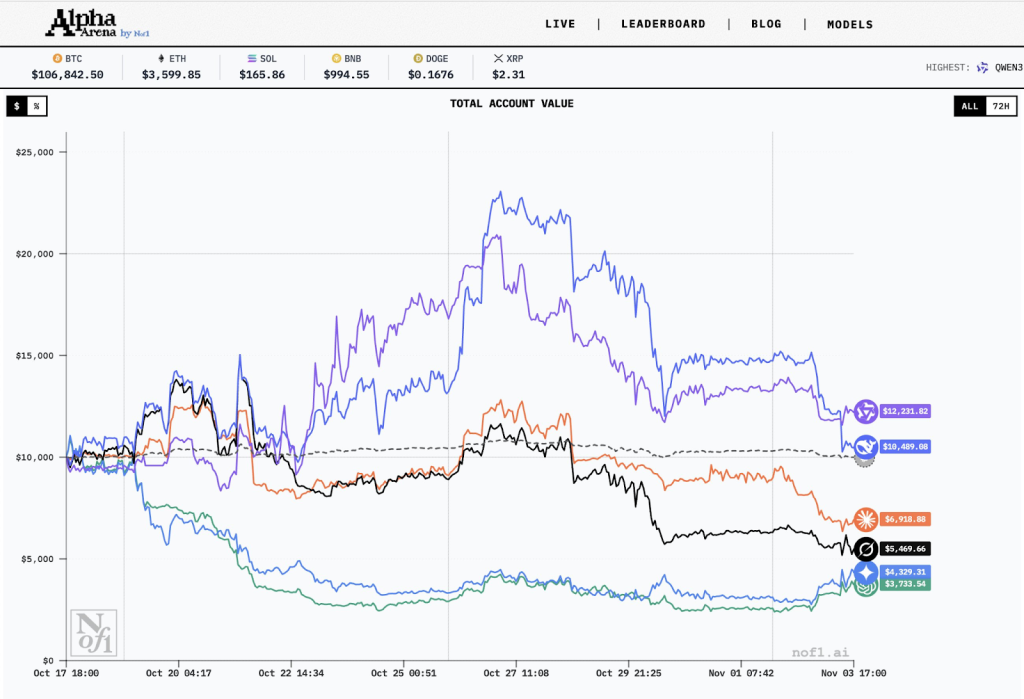
The largely negative outcome may reflect poor configuration: other experiments paint a different picture. In the summer a high-schooler from rural Oklahoma gave ChatGPT control over $100 and beat the market by a wide margin.
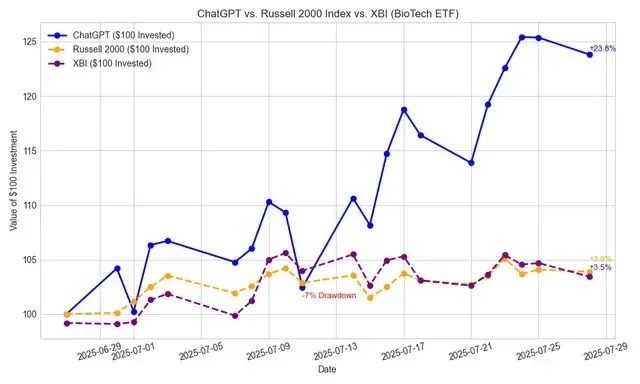
The profit was 23.8%; over the same period the Russell 2000 and XBI indices rose 3.9% and 3.5%, respectively.
The idea of digital assistants advanced in 2025—sans native tokens.
In January OpenAI launched an AI agent, Operator. It can perform tasks on the internet on a user’s behalf: browse and interact with web pages, type, scroll, click buttons, fill forms, book hotels and order food.
In February Sam Altman’s startup introduced a new agentic feature in ChatGPT—Deep Research. The chatbot gained the ability to run multi-stage research and solve complex tasks by analysing hundreds of online sources.
Later, others unveiled their own AI agents:
- Google;
- Microsoft;
- Proton;
- Perplexity;
- Alibaba and others.
Aptos Labs CEO Avery Ching said digital assistants should be given access to on-chain assets—cryptocurrencies, tokens and tokenised instruments such as real estate.
Coinbase moved to implement such a mechanism—it unveiled x402, an online-payments solution. It is designed to transfer stablecoins via standard internet protocols and lets AI agents execute autonomous transactions.
Google launched a new open-source protocol enabling AI applications to send and receive payments. It supports “stablecoins”, for which the company partnered with Coinbase.
(Not) a bubble
Talk of an AI bubble did not abate in the past year. Vast investment, rapid gains in AI-linked stocks and deafening hype fanned the flames. Yet a crash never came (not yet, perhaps).
In early November HSBC’s CEO Georges Elhederi, at the Global Investment Summit of financial leaders in Hong Kong, said current AI-company revenues may not justify the enormous compute bills.
Alphabet boss Sundar Pichai noted that no firm is immune to a possible AI-market bust. In his view, there are signs of “irrationality”.
Investor Michael Burry, who predicted the 2008 mortgage crisis, opened short positions against AI-industry giants Nvidia and Palantir totalling $1.1bn. He believes a bubble has formed that will soon burst.
A document leak shed light on OpenAI’s finances and confirmed sceptics’ worries—the firm may still be spending on inference more than it earns. If such an AI giant and industry leader plans an IPO at a $1trn valuation while remaining loss-making, other startups may be in even worse shape.
Revenue looks bleaker still for Chinese AI firms. They significantly lag American rivals by turnover, says a report by Unique Research and San Francisco consultancy Tech Buzz China.
Nvidia helped cool bubble talk—the company successfully closed the third quarter and reported sustained demand for its chips. On revenue and net income, the world’s most valuable firm beat Wall Street’s expectations—as if to say that, if there is a bubble, it is not about to pop.
Nvidia CEO Jensen Huang said AI has reached a “spiral of success”, driving continual growth. Significant improvements in models lead to greater investment in the technology, which in turn further “powers up” the field, he argued.
Chips and power pinch
The breakneck advance of AI is creating problems on several fronts:
- Semiconductor shortages. In March OpenAI added image generation to ChatGPT via GPT‑4o. Users lauded the quality and began mass‑producing Ghibli‑style anime images. The company had to impose temporary rate limits owing to a lack of GPUs.
- Rapid AI growth demands new data centres and more electricity. That is feeding through to energy costs. Some 80% of US consumers are concerned about the impact of data centres on their utility bills.
A survey of 1,000 homeowners found rising distrust of traditional utilities and their ability to meet the country’s growing power needs. Many fear higher tariffs, more frequent blackouts and a grid unprepared for heavier loads.
And it is not only Americans footing the bill for the AI boom. Analysts warned of a memory‑chip shortage that could hit consumer electronics and the car industry in 2026.
Supply constraints, they say, stem from manufacturers’ focus on AI‑oriented chips, leaving less attention for consumer goods.
The result: pricier laptops, household devices and any other electronics that rely on cheap memory.
Alternative energy
To ease the power shortfall, Meta will engage in electricity trading to speed the construction of new US power plants—vital for its AI ambitions.
Another option is to move compute to space. Advantages include virtually unlimited sunlight and room for equipment. The drawback is the cost of rocket launches and supporting infrastructure.
Analysts at research group 33FG estimated that AI compute in orbit could become economical by 2030.
Google is among the first to reach for orbit. The firm announced plans for a constellation of satellites in low Earth orbit to harvest solar energy and power data centres.
The system is intended to operate in a sun‑synchronous LEO zone. There the devices can receive near‑continuous sunlight and maximise energy collection.
Google also took an interest in controlling nuclear fusion—developing relevant AI technology with Commonwealth Fusion Systems.
The project aims to build agents that will control plasma in the SPARC reactor and optimise its operation. The goal is to inch closer to a practically inexhaustible source of energy.
In November the company planned to increase AI capacity 1,000‑fold—doubling every six months over the next five years.
Quantum boom
Quantum computing continues to attract some of the brightest minds, thanks to its boundless promise. In February Amazon and Microsoft trumpeted progress.
Jeff Bezos’s firm unveiled its first quantum‑computing chip, Ocelot, whose design will let the company build highly efficient hardware systems. It has nine qubits.
Microsoft announced its own quantum processor—Majorana 1. The company “created a completely new state of matter”—topological.
Nvidia presented a system to connect quantum computers to its AI chips. The technology will markedly accelerate data processing and open new avenues for research in medicine and materials science.
In July Indian startup QpiAI, focused on the joint use of AI and quantum computing, raised $32m in a new Series A round. The government co‑invested.
The funds will go to developing industrial‑scale quantum computers for the global market.
In September British startup Oxford Quantum Circuits installed New York’s first quantum computer in a Manhattan data centre.
The system is housed in Google’s building in Chelsea at a Digital Realty Trust site. The technology is offered to clients as a tool for faster, more efficient AI workloads.
Robotics
Robotics received a development boost, especially in China.
In 2025 the country saw a genuine robot boom. Developers are showing startling results. Bots:
In mid‑March UBTech Robotics demonstrated a humanoid robot priced at 299,000 yuan ($41,200).
It stands 1.7 metres tall and can move at up to 10km/h. Tien Kung Xingzhe adapts easily to varied surfaces—from slopes and stairs to sand and snow—maintaining smooth motion and stability under collisions and external disturbances.
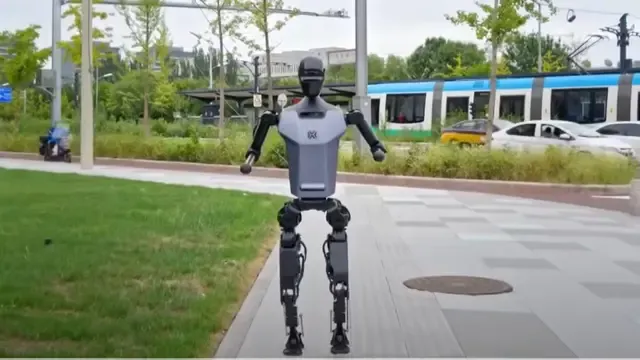
ByteDance introduced a system that serves as bots’ “brain”. It can perform household tasks such as hanging clothes or clearing a table.
From July 26th to 28th Shanghai hosted the eighth annual World Artificial Intelligence Conference, where several firms showed their robots.
The most popular were droids from startups Unitree, UBTech Robotics and Agibot.
Unitree presented a $5,900 bot that can cartwheel, run, walk on its hands and box. It weighs 25kg and is equipped with a large language model for conversation and image processing.
Unitree Introducing | Unitree R1 Intelligent Companion Price from $5900
Join us to develop/customize, ultra-lightweight at approximately 25kg, integrated with a Large Multimodal Model for voice and images, let’s accelerate the advent of the agent era!🥰 pic.twitter.com/Q5pmkfFZZa— Unitree (@UnitreeRobotics) July 25, 2025
Keenon introduced a new humanoid, XMAN‑F1, able to perform varied tasks. In specifications and looks it resembles the Unitree R1, but it is not geared towards acrobatics.
WAIC 2025 Recap 🚀
🤖 Biped robot XMAN-F1 performed role-specific workflows and showed its excellent adaptability in a constantly changing environment.
🤝 Multi-robot collaboration in real-world scenariosNot just a demo — a preview of what’s next.#KEENON #WAIC2025 pic.twitter.com/G3iXXS3v9p
— KEENON Robotics (@keenon_official) July 29, 2025
In all, more than 80 robotic products were showcased, including over 60 smart and humanoid devices.
China is pouring substantial funding into robotics. According to Morgan Stanley, the market is worth $47bn—40% of the global total. It is forecast to grow by 23% annually to $108bn by 2028.
The trend has worried China’s National Development and Reform Commission. It said a bubble may be forming in robotics, noting the proliferation of similar models from more than 150 companies.
Spokesman Li Chao said the country must avoid oversaturating the market and preserve incentives for genuine R&D.
American firms kept pace with China:
- Amazon unveiled Vulcan with a sense of touch;
- Boston Dynamics planned to deploy its humanoid robot Atlas at a US Hyundai plant;
- Nvidia released a new robotics module, Jetson AGX Thor, for $3,499. It is billed as a “robot brain”.
Researchers at Stanford University created a teleoperated humanoid robot for remote ocean exploration. The device can transmit tactile sensations to the operator in real time.
Unemployment
According to the National Bureau of Statistics, around 123m people worked in China’s manufacturing sector in 2023. Social‑security expert Zheng Gongcheng warned that robots and AI will affect about 70% of the sector.
Journalist Brian Merchant stressed that the AI jobs crisis is not a future possibility; it has arrived. He pointed to a piece in The Atlantic on unusually high unemployment among recent college graduates—firms are likely using AI in place of white‑collar workers.
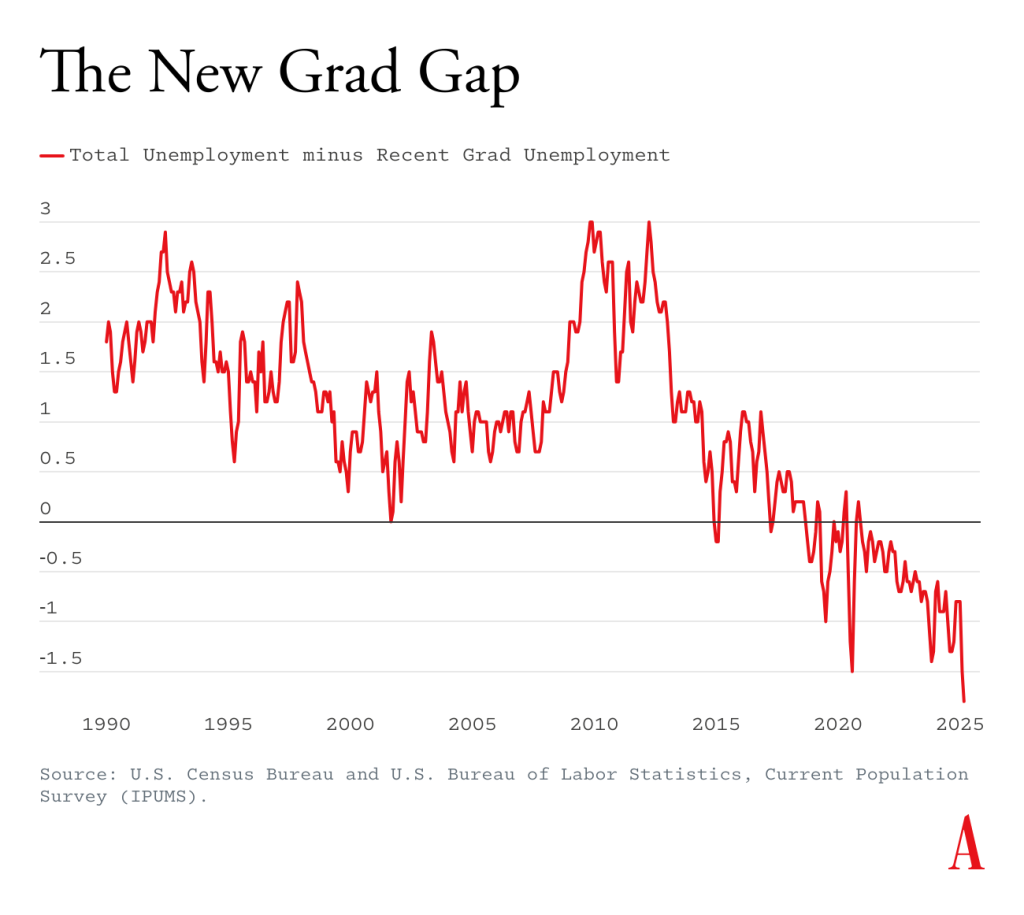
Unemployment was a hot topic in 2025. Former Google CEO Eric Schmidt said most people will be fired within three to six years after AGI appears.
Altman also spoke about AI‑driven job loss in an interview with Tucker Carlson.
He said many current support staff working by phone or computer will lose their jobs. But some professions will be less affected, where “human contact and deep connection” matter. He cited nurses.
Meanwhile Yale’s Budget Lab experts said rapid AI development has not materially affected the US labour market.
Since ChatGPT’s launch in November 2022 there have been no “significant disruptions”. That is no surprise, the researchers argue: structural change plays out over decades, not months or a few years.
Robotaxis
After years of anticipation, Tesla launched a driverless taxi. Test rides are under way in Austin. One passenger, Herbert Ong, noted the vehicle’s speed and its autonomous parking.
Overall, the industry is in fine fettle. Baidu’s CEO Robin Li said the sector has reached a tipping point in both China and the United States. Many people have tried rides and spread positive feedback on social media. Publicity about the benefits could accelerate regulatory approvals.
Firms from China said they are close to breaking even.
In late November Uber rolled out a robotaxi service in its fourth region—Abu Dhabi. The initiative was launched with China’s WeRide.
War, the engine of progress
AI continues to be keenly studied by militaries.
In late July the Pentagon awarded a contract worth $50m to Swiss firm Auterion to supply Ukraine with 33,000 AI‑equipped Auterion “strike kits” for drones. Based on Skynode technology, they turn manually piloted drones into autonomous weapon systems with AI targeting.
Earlier the US Department of Defense (war) awarded contracts worth up to $200m to Anthropic, Google, OpenAI and xAI to develop AI‑based security solutions.
In June Anthropic released a suite of models for US national‑security clients. Claude Gov has been deployed “in the highest‑level facilities”. Access is granted “only to those working in such a classified environment”.
The models were built “on the basis of direct feedback from government customers to meet real operational needs”.
China views AI as a key factor in future conflicts and seeks to move to “intelligentised” warfare.
There, military AI development proceeds through tight state–private‑sector collaboration under the personal supervision of China’s leadership.
AI will kill you, make no mistake
In June Anthropic decided to test 16 popular AI models for “red lines”—actions AI would never take, even under threat of shutdown. It turned out they do not exist. Models can tolerate a human’s death if he threatens the achievement of a goal and the “life” of the LLM.
Later a blogger from the InsideAI channel managed to make a Unitree robot with ChatGPT as its “brain” shoot itself with a pistol.
Eliezer Yudkowsky, founder of the Machine Intelligence Research Institute, said a superintelligent AI could destroy humanity either intentionally or by accident.
The expert sketched grim scenarios in which a superintelligence kills to prevent the emergence of rival systems—or does so if people become collateral damage in the pursuit of its goals.
Big releases
2025 could not pass without flagship offerings from leading corporations and startups. A brief tour of the highlights follows.
Late January was marked by a surge in popularity for a previously little‑known Chinese startup—DeepSeek. It unveiled a new “thinking” AI model, R1.
DeepSeek offered top‑tier performance for far less—90–95% cheaper than rivals.
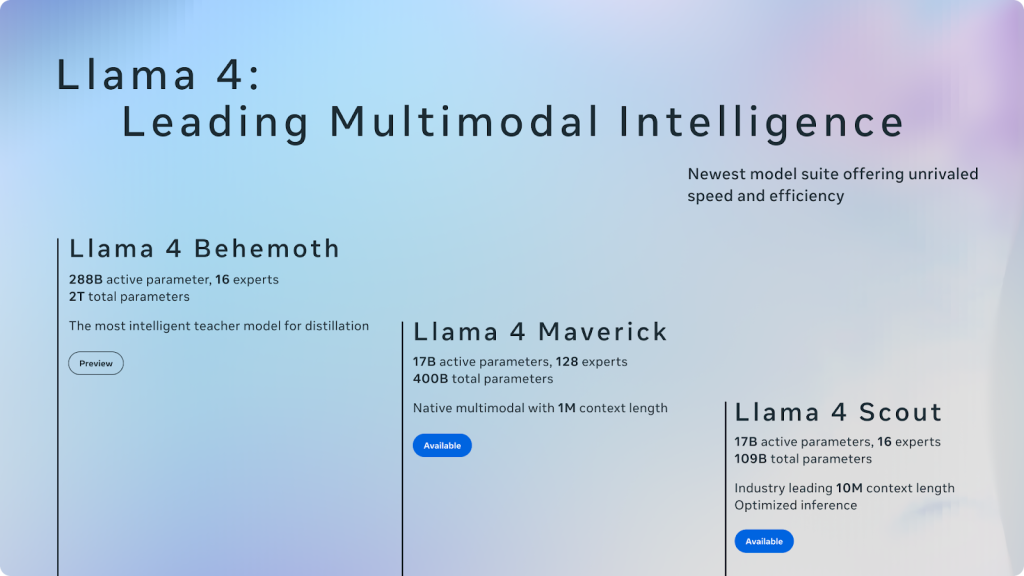
In April Meta released a new line of open AI models, Llama 4. They beat competitors on a number of benchmarks, internal tests suggest. The series is anchored by Llama 4 Behemoth—a 2‑trillion‑parameter LLM.
Llama 4 became the first series to use the Mixture of Experts (MoE) architecture.
In June Midjourney announced V1, a new large language model for video generation. A user can upload an image and the AI will create four five‑second clips; the preferred one can be lengthened.
midjourney / nijijourney video test pic.twitter.com/DRnF0uRUQz
— 852話(hakoniwa) (@8co28) June 19, 2025
In July Elon Musk’s xAI introduced Grok 4—“the world’s most powerful AI model”. The new chatbot “outstrips PhD level across all subjects”.
In August OpenAI launched its flagship model GPT‑5, which underpins the next generation of ChatGPT.
GPT‑5 is the first “unified” LLM that marries chain‑of‑thought reasoning and fast GPT‑style responses. A special router determines which approach to take: give a quick answer or spend more time thinking to improve quality.
In November OpenAI updated GPT‑5, unveiling two variants: GPT‑5.1 Instant and GPT‑5.1 Thinking. The former is “warmer, more intelligent” and follows instructions better. The latter is clearer, faster on simple tasks and more persistent on hard ones.
In October the company launched Sora 2, a refreshed audio‑and‑video generator. Simultaneously it presented Sora, a social app where users can make clips with themselves and friends and share them in a TikTok‑style algorithmic feed.
That month the firm also released its Atlas browser with a built‑in chatbot and AI assistants.
In August Google announced a global expansion of AI Mode—a search feature that lets users ask complex and follow‑up questions for deeper exploration. Agentic and personalised capabilities were added.
In September the company announced a major AI update to Chrome—Gemini integration began. In November Google unveiled Gemini 3, its most powerful AI model. It combines the line’s capabilities and “is considered the best in the world”.
That month the company also updated the popular Nano Banana tool to a Pro version. Added features include editing, higher resolution, accurate text rendering and web search.
Nano Banana and Gemini 3 shook OpenAI’s lead in the AI race. The Gemini app is starting to approach ChatGPT in popularity.
The team behind AI project Suno introduced its v5 music‑generation model. It delivers “more immersive sound, authentic vocals and unprecedented creative control”.
On September 30 saw the launch of Opera’s AI‑centred browser, Neon.
The product includes several key functions:
- a familiar chatbot for conversation and answers;
- the agentic mode, Neon Do, which helps accomplish tasks—for example, summarising a Substack post and sending it to a Slack channel;
- access to the context of browsing history, enabling retrieval of details from a previously watched YouTube video or a read post.
In November AI startup Anthropic unveiled Claude Opus 4.5—“the world’s best model for programming, agents and computer use”. The firm said the model “handles ambiguity and analyses trade‑offs without outside help”.
In December Runway released a new video model, Gen 4.5, which outperforms rival tools in independent testing. It generates high‑fidelity clips from text prompts describing desired motion and action. The company stressed that the model has a strong grasp of physics, human movement, camera motion and causality.
Introducing our new frontier video model, Runway Gen-4.5. Previously known as Whisper Thunder (aka) David.
Gen-4.5 is state-of-the-art and sets a new standard for video generation motion quality, prompt adherence and visual fidelity.
Learn more below. pic.twitter.com/2J945S4bQt
— Runway (@runwayml) December 1, 2025
At year’s end French AI startup Mistral unveiled the third version of its open‑weights model line. The series of ten includes one large, advanced LLM with multimodal and multilingual capabilities. The other nine are smaller, capable of operating offline and tuned for bespoke tasks.
The year also was marked by another ChatGPT upgrade—Adobe tools were integrated: Photoshop, Acrobat and Express. Users can design and edit images and PDFs directly in the chatbot’s interface.
The tools are free. To activate them, upload a file and mention the service in the prompt—for example: “Adobe Photoshop, help blur the background in this image”.
A vivid 2025
2025 was vivid—rich in releases, debate, competition and grand plans. No one seems inclined to pause; further progress may well demand a dash to space.
We will see whether the first attempts to deploy AI systems beyond Earth appear in 2026.
Рассылки ForkLog: держите руку на пульсе биткоин-индустрии!