



Not Just Cookies: The Pros and Cons of Working at a Blockchain Company
Against the backdrop of tenfold rise in Bitcoin’s price over the past year, the stunning success of DeFi projects such as Polkadot and Aave, and the hype around NFTs, demand for blockchain developers has risen.
In February, the Amazon Digital and Emerging Payments division posted job advertisements for developers and engineers to build a digital payments product.
In March, 56 blockchain-related vacancies were opened by the financial holding JPMorgan.
In April, the American retailer GameStop announced that it was seeking a security analyst with expertise in blockchain, cryptocurrencies and NFTs.
For ForkLog, the founder of the cryptocurrency Telegram channel «Що біткоїться», Denis Andrushchenko examined whether programmers should look at Web 3.0 projects, and highlighted the main pros and cons of working in blockchain-companies.
Types of Blockchain Jobs
- Blockchain Developer
Arguably the most common request among programmers. Many companies specify in blockchain job postings a Computer Science degree, or at least expect candidates to complete additional courses related to decentralized technologies.
Anton Romankov, backend engineer at level01.io, in the industry since 2016:
“All the companies I worked for were startups at different stages. For me, crypto is first and foremost about innovation; you value the product more. I also enjoy being in the flow of DeFi projects.”
He notes no particular technical differences compared with other sectors: “the same problems, the same hotfixes, which don’t last more than a year.”
“Another feature of blockchain projects is that they must adapt to market changes much faster, as the space is young. Because of this, the product concept can change several times a year — requiring redesigns and architectural adaptations,” the developer added.
Before entering the industry, senior blockchain developer Vladyslav Batyrenko worked on websites, games and desktop applications. The blockchain space is unique due to its multifunctionality:
“You can work on smart contracts, decentralized applications that interact with them, or participate in developing the platform itself, its protocols and more. Blockchain offers many diverse and interesting tasks, requires constant learning, and keeps knowledge up to date in topics traditionally considered essential for programmers: this includes algorithms, data structures, mathematics and, of course, cryptography.”
Batyrenko adds that while these disciplines are taught in universities as part of software engineering, developers do not always encounter problems that require applying this knowledge in practice. Blockchain is no exception, but here this knowledge can be useful more often. For example, the basics of elliptic cryptography won’t go to waste.
“Compared with other sectors, blockchain is a fairly young industry: on one hand, tooling isn’t very developed yet, and on the other—there is plenty of space for innovation;” he says.

Unstoppable Domains office in coworking Lift99, Kyiv. Data: Unstoppable Domains.
- Ethereum Developer
If the previous description fits most blockchain roles, then an Ethereum developer must master working with the platform itself. Tasks may include developing solutions to improve the Ethereum network and creating decentralized applications (dapps).
What experience is required? Sufficient ability to develop a simple blockchain, an understanding of the Ethereum ecosystem, and knowledge of Solidity. The diagram below shows that even traditional knowledge is enough to break into the industry.
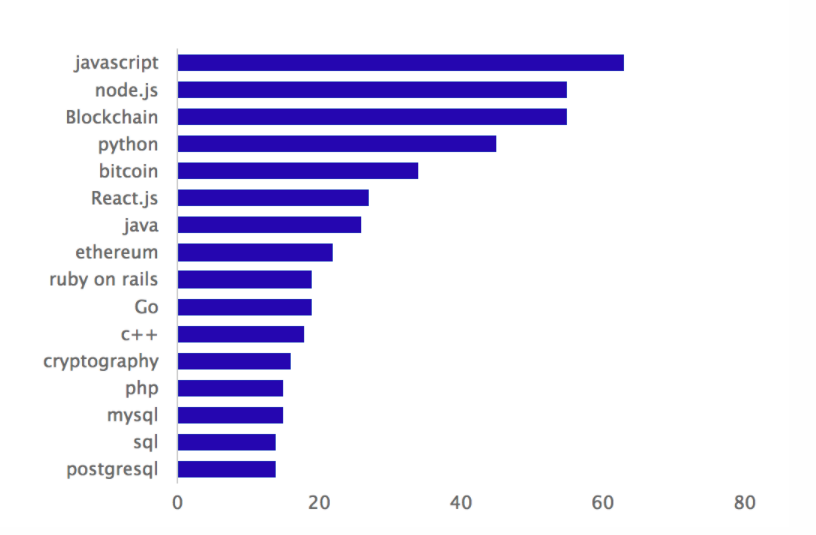
Most in-demand skills for a versatile blockchain developer. Data: Angel.co.
- Project Manager
Blockchain companies highly need flexible managers with an analytical mindset, as they must translate complex technical concepts into plain language. English is both a challenge, because it must be spoken fluently, and an opportunity: blockchain startups from Latin America to China communicate in English.
Unstoppable Domains’ Chief Operating Officer Kateryna Furtak describes how the firm traditionally hires professionals with experience launching products that reach million‑strong audiences. Recently, hires from Google, Wix and Twitter joined the team.
“Unstoppable Domains is an adult startup, founded by very experienced people with successful projects behind them. We are only two years old, but because we are profit‑driven we achieved self‑sustainability long ago and continue to grow,” the executive said.
The role also features competitive pay; the Ukrainian unit sits in the top tier of the market. The team occupies a separate office in a Kyiv coworking space, with the option to work remotely.
“From day one you understand you work for a company that not only wants to but also knows how to grow into a unicorn. We really plan for it, not just dream about it. There is full trust from the top management. You are given a task or problem and can solve it in your own style, but help is always available,” added Kateryna Furtak.
The project manager typically oversees the progress of all team tasks and deadlines. Yet deep knowledge of cryptocurrencies and blockchain remains critical in this field.
Project manager and business analyst at 4irelabs, Sergei, notes that the blockchain industry is markedly different from traditional sectors.
“Assertive, young, and a bit wild in this space are an order of magnitude more flexible than in other sectors. I have worked in blockchain since 2017, left for a year, and the experience before entering this industry, and outside it, showed how much bolder and ultimately more interesting this field is compared with others.”
Sergey works with the NEAR protocol, writes in Rust, and admires the Polkadot project.
“A combination of layer‑two protocols, Proof‑of‑Stake and similar things inspire confidence in the sector’s development. Ease of use for users, network scalability, and the promised features are very encouraging. Personally I care less about market capitalization and tokenomics than the technology itself. I’m sure there is a future behind this—not only in the world of crypto assets,” he says.
- Data Scientist
There is room in blockchain for creative technical roles such as a data scientist who helps build algorithms to forecast the price of a given token and the market as a whole.
Exchanges and DeFi projects in decentralized finance (DeFi) are willing to pay from $100,000 a year to specialists in this field.
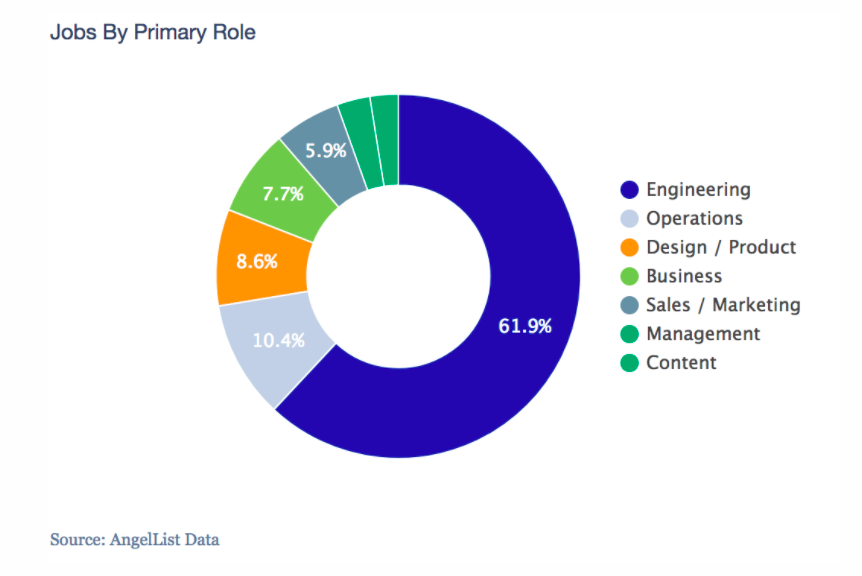
Types of blockchain vacancies. Data: Angel.co.
There are other related roles in blockchain, but let us look at how such companies are structured.
A Blockchain Startup Is the Same Kind of Startup
If you apply to a blockchain startup, you can expect the same as with ordinary young firms:
- many things will change along the way, including the business model and the technology stack;
- salary delays may occur at companies that rely on investment;
- the potential for career advancement and financial rewards is incomparable with working in a stable business.
What does the social package look like:
- Some large crypto startups pay employees in Bitcoin.
- There are workers who receive 100% of their salary in digital currency, although most take a smaller share and receive most of their pay in traditional form.
- A common way to use Bitcoin as employee compensation is as retirement savings, akin to an IRA or a 401(k) in the United States or to a private pension fund in the CIS.

Data: Ant Rozetsky/Unsplash.
Pros of Working in the Blockchain Industry
- High salaries
Compensation in blockchain startups is 10–20% higher than in traditional companies. Services like BitWage and ETCH allow employees to receive weekly advances or even daily pay without delays or extra charges.
According to Glassdoor, blockchain developers in the United States earn the most—average annual pay above $100,000. In Europe, blockchain specialists are generally offered around $70,000, and in Asia about $96,000 a year.
- Flexibility
On average, crypto firms are about 20% more likely to offer remote work than others. Decentralised teams were already common in this industry before COVID-19. Today, it seems to have become the norm, with giants such as Coinbase allowing remote work.
Unstoppable Domains says remote work is the default, while going to the Kyiv office is a nice option. It’s a place to chat with the team, play table football together, soak up the working atmosphere and avoid home distractions.
- Bonuses and liquidity
If in a regular startup you might be promised stock options, in a blockchain project tokens are often shared, which can be sold much faster later. Since the ICO boom of 2017–2018, the process has sped up, as profits can be earned via DeFi tools and tokens can be lent, not sold.
- The brightest people
Blockchain attracts contrasts—the best technologists and Wall Street financiers, talented managers and perceptive business analysts. All together they are building DeFi and the Internet 3.0.
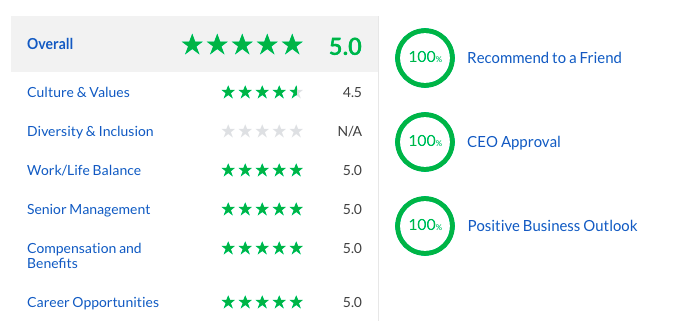
Unstoppable Domains rating – currently only 2 reviews, but 32 vacancies. Data: Glassdoor.
Take, for example, Blockchain.com, founded in 2011, a platform for storing and trading crypto assets. The company employs more than a hundred staff who share “a passion for programming and building an open, accessible and fair financial future.” But that is not just a mission—it is evidenced by practice, according to reviews.
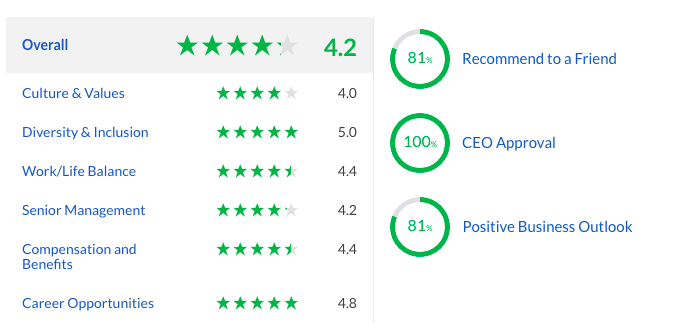
Blockchain.com rating, 71 reviews. Data: Glassdoor.
You often hear about “unrealistic deadlines” and overtime. Yet this is driven by intense market competition.
Cons of Working in the Blockchain Industry
The following are problems blockchain developers face in some companies.
- Pay in cryptocurrencies
Your salary may decrease proportional to the rate: if you are paid in stablecoins, your purchasing power rises as Bitcoin’s price falls, and if you are paid in Bitcoin, you lose when the price declines. Some projects pay only in tokens—risking token-sale cancellation and low liquidity of the new asset.
- Frenzied pace
The industry is evolving rapidly, so every employee is expected to give 100% to stay ahead. This job is not for those who are used to 9-to-5. Global companies sometimes imply meetings outside working hours, delays in responses, but this is inevitable for distributed teams across time zones.
Unstoppable Domains said their developers do not burn out. The biggest challenge is solving complex technical problems that no one has tackled yet.
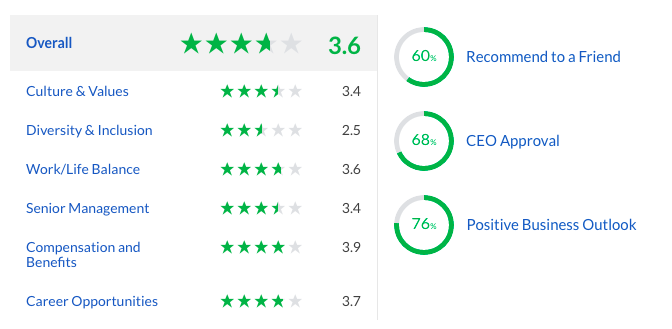
Coinbase rating, 156 reviews. Data: Glassdoor.
- Staff turnover
Not everyone is prepared for the frenetic pace, hence people stay only for short periods.
“If this is a startup that has grown into a large company and is approaching an IPO, you should expect disappointment,” say the developers.
A Coinbase employee who asked to remain anonymous added that the blockchain industry suits those who come to it for money.
“I learned here about startup business models and who it is good for. I earned fairly well, had a wonderful view of the city, met a few cool people from the industry in the Bay Area in San Francisco. In short, all that I no longer consider important for a good life.”
Traditional Businesses with a Blockchain Arm
Now is the time to see what is happening in traditional businesses that have added a pinch of blockchain.
Here is an incomplete list of such companies: Overstock.com (Medici Ventures), Diem from Facebook (formerly Libra), Uber, IBM, Oracle, PwC, EY, Walmart, Amazon, JPMorgan, Capital One, Visa, Accenture, eBay and even Sberbank. The latter, by the way, created a blockchain platform for trading I-REC certificates.
Today, large corporations have seriously begun exploring the possibilities of blockchain. The illustration below shows the scale and opportunities for blockchain engineers.
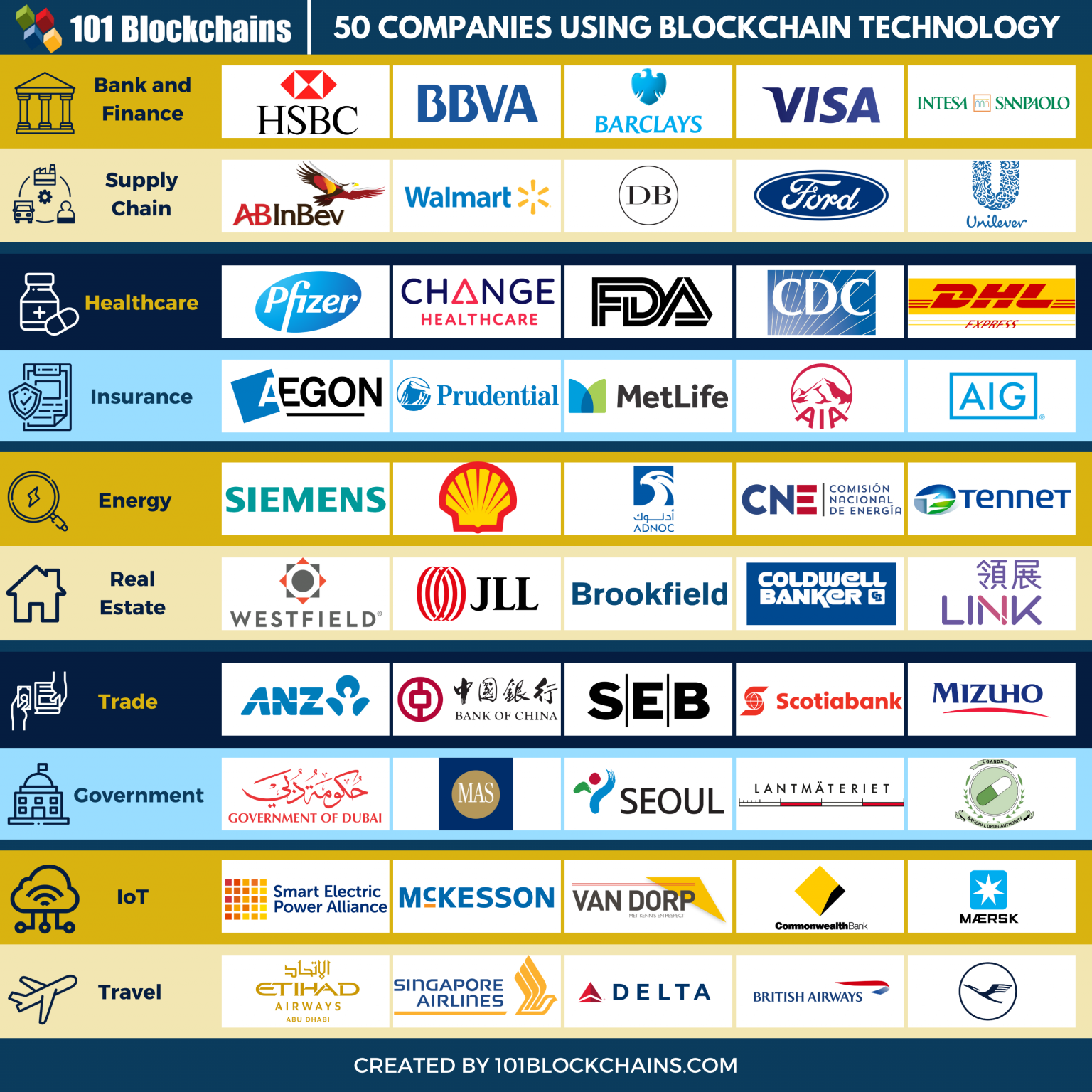
Top 50 companies that opened blockchain developer vacancies. Data: 101Blockchains.
Here is what interns say about working in such departments:
Pros: Extremely flexible working hours. A group of very open-minded people who are always more than willing to hear your thoughts.
Cons: There is a lack of proper coordination of interns and event organisation.
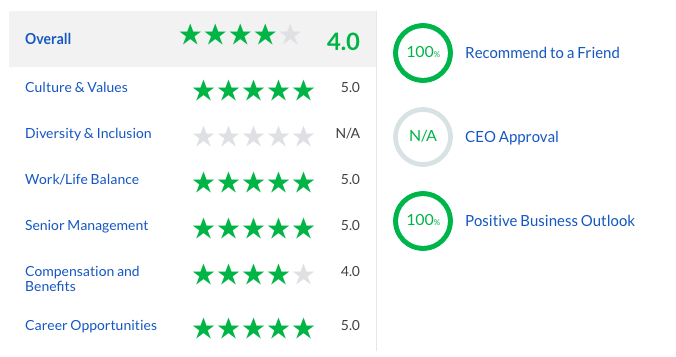
IBM Blockchain rating (USA), 1 review. Data: Glassdoor.
Subscribe to ForkLog news on Telegram: ForkLog Feed — all the news, ForkLog — the most important news, infographics and opinions.
Рассылки ForkLog: держите руку на пульсе биткоин-индустрии!