




Bitcoin swung on a drop in US inflation and a rate rise in Japan; Solana endured a major DDoS attack; the Ethereum team outlined details of a new upgrade; and other events of the week.
US inflation and Japan’s rate
Over the past seven days bitcoin fully surrendered the momentum gained after the rate cut by the Fed on 10 December. The coin was choppy as other macro data arrived.
On Monday the leading cryptocurrency started with a drop, sliding from $89,000 to $85,000.


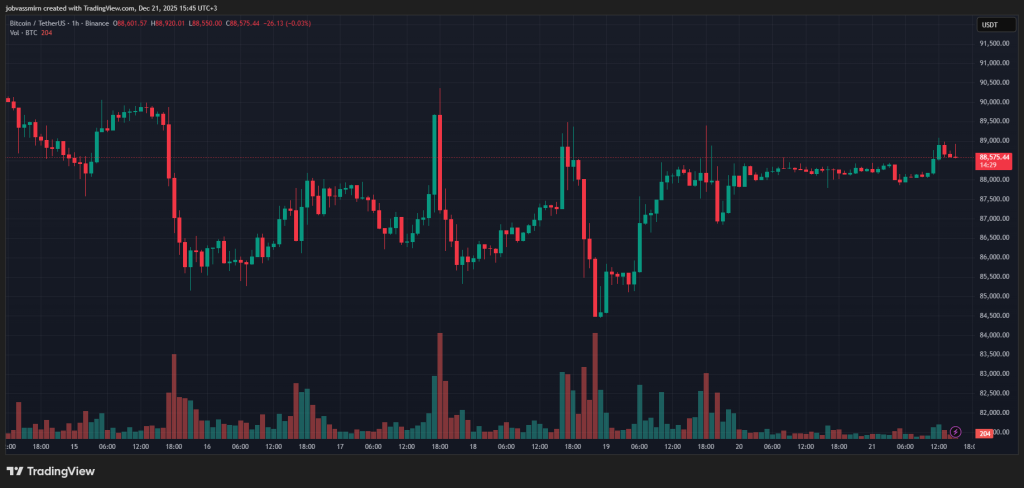
Over the next few days the asset recovered, and on Wednesday tried to break resistance around $90,000. It failed and fell back to $85,000.
On Thursday, 18 December, sentiment was lifted by the the release of the US Consumer Price Index (CPI). The gauge decreased by 0.3% and, on an unadjusted annual basis, reached 2.7% (3% in October).
The figures undershot forecasts: analysts had expected 3.1%.
Lower inflation again pushed bitcoin towards $90,000, but not for long. That evening the asset slipped below $85,000.
On 19 December the digital gold returned to an uptrend on news from the Bank of Japan. The regulator announced a rise in the benchmark rate to a 30-year high.
The market’s reaction surprised many participants. Most analysts had expected a proportional response by cryptoassets to the negative news from Japan, yet prices rose.
Even so, the coin ended the week in the red, down roughly 1.5%.
Most top-10 coins by market capitalisation followed bitcoin. The exception was XRP, which added 2.7%.


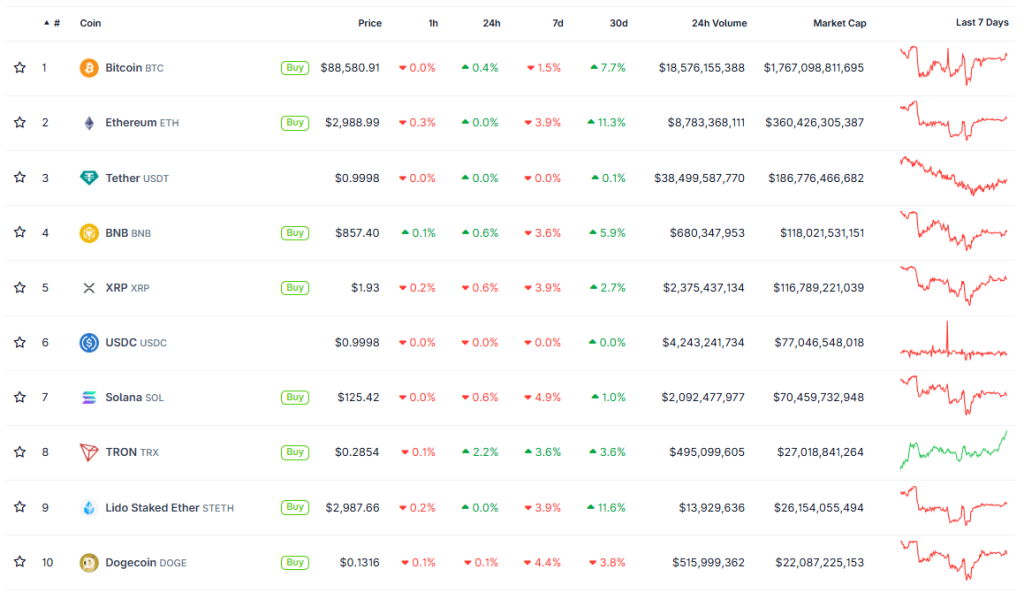
SOL (-4.9%) and DOGE (-4.4%) fell the most.
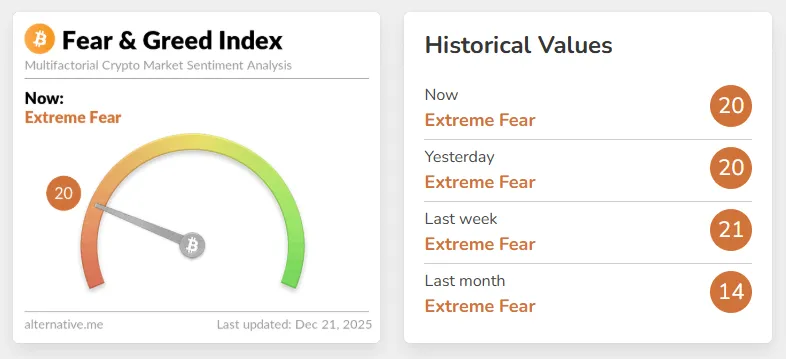
Crypto Fear and Greed Index remains in the “extreme fear” zone at 20.


Total crypto market capitalisation stands at $3.08 trillion. Bitcoin’s dominance is 57.3%; Ethereum’s is 11.7%.
A DDoS attack on Solana
The Solana blockchain weathered the fourth-largest DDoS attack in its history. Attackers tried to overload the network for roughly seven days, but developers managed to repel the interference.

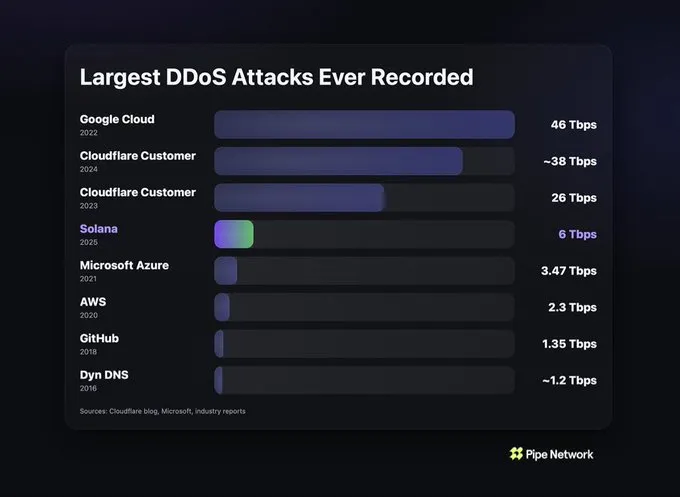
Malicious traffic peaked at 6 Tbps. In terms of sheer volume, the incident was on a par with attacks on the infrastructure of Google Cloud, Cloudflare and AWS. Despite the pressure, the blockchain continued processing transactions as normal.
Pipe Network noted that average transaction confirmation time on Solana stayed around ~450 ms, with the p90 metric below 700 ms.
Solana founder Anatoly Yakovenko called both the episode and the chain’s response a “bullish” factor.
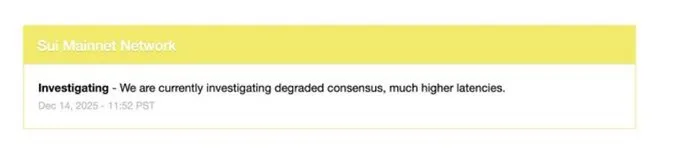
On 14 December the L1 network Sui also came under a DDoS attack. In its case the incident caused delays in block production.

During the week the Solana Foundation also entered into a partnership with Project Eleven to prepare the network for potential threats from quantum computers. Specialists assessed the blockchain’s risks and created a testnet prototype using post-quantum digital signatures.
“Our responsibility is to ensure the blockchain’s security not only today, but for decades ahead. The Solana ecosystem’s culture of rapidly implementing innovation will continue with the release of a second client and a cutting-edge consensus mechanism this year,” said Solana Foundation vice-president of technology Matt Sorg.
What to discuss with friends?
- Faster than the Fed: prediction markets have become a leading indicator for macro data.
- Bhutan allocated 10,000 BTC to build a “city of mindfulness”.
- “The word of 2025” is slop — digital trash.
- Nvidia’s shares proved more volatile than bitcoin.
The hashrate drop
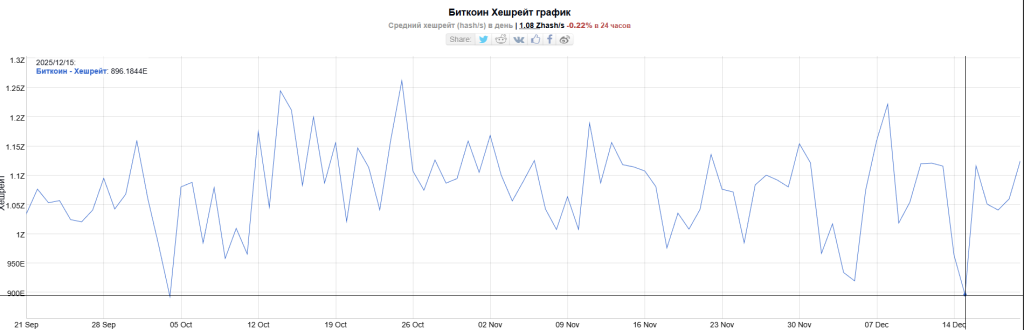
From 14 to 15 December the bitcoin network’s hashrate fell by 8% — roughly 100 EH/s. A week earlier the metric had slumped by 17%.
Although the hashrate has now recovered to 1,080 EH/s, at the local low it dipped to 890 EH/s.


According to Nano Labs founder Jack Kong, the sharp dip may have been caused by the shutdown of mining farms in Xinjiang, China. Journalist Kuai Dong expressed a similar view.
Local mining community sources said Chinese authorities confiscated or disconnected 200,000 to 400,000 bitcoin-mining devices.
Some specialists cited a Reuters report published at the end of November. The agency said the mining sector in China is undergoing a “quiet revival” — the country’s share of global hashrate has risen to 14%.
However, MinerMag journalists noted that the drop in hashrate was unrelated to China and was temporary.
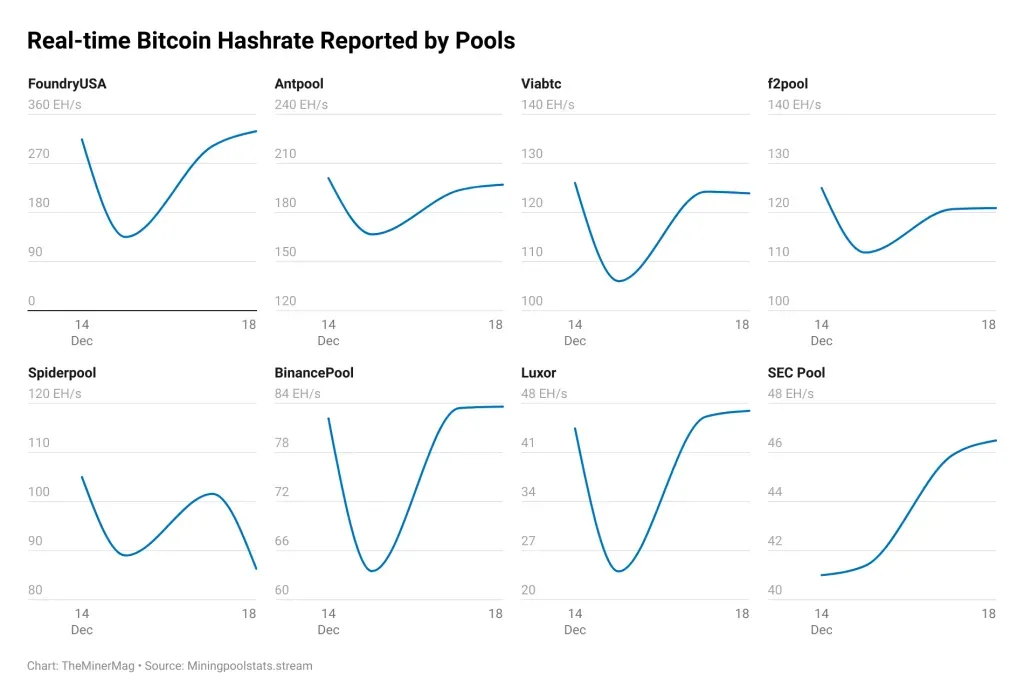
Indeed, the output of large pools of Chinese origin — Antpool, F2Pool, ViaBTC, SpiderPool and Binance Pool — fell by 100 EH/s. Many of them are located outside the PRC, so some may have suffered from problems beyond the country.
By 17 December most participants had almost fully recovered capacity.

“At the same time, it is quite likely that some miners in Xinjiang could have voluntarily switched off at the weekend so as not to attract attention during inspections, and then quietly returned to the network when the pressure eased,” MinerMag added.
Details of Ethereum’s next hard fork
Ethereum developers revealed the name of the second upgrade planned for 2026. The hard fork was dubbed Hegota — after the city of Bogotá (the site of Devcon) and the star Heze.
The main improvement proposal for the upgrade will be chosen no earlier than February. The leading candidate is the introduction of Verkle trees — an algorithm for structuring data in the protocol, similar to Merkle trees.
Attention will be given to history and state expiry mechanisms, as well as further execution-layer optimisations. The ‘network bloat’ problem is becoming increasingly acute for node operators.
Alongside the new details, the team fixed a stable cadence of two hard forks a year. Before Hegota comes Glamsterdam. The latter may include:
- ePBS — splitting proposers and builders at the protocol level to reduce centralisation;
- access lists — optimising access to the network state;
- gas repricing — adjusting operation costs in the EVM.
Also on ForkLog:
- MetaMask added bitcoin support.
- Pressure from Trump accelerated crypto adoption in Venezuela.
- Tether unveiled a password manager without cloud storage.
- Jump Trading was accused of directly aiding Terra’s collapse.
USDC for banks
Payments giant Visa launched USDC settlement in the United States for issuing and acquiring banks. Financial institutions can now transact directly in the stablecoin via the company’s infrastructure.
The initiative runs on the Solana blockchain. The first participants are Cross River Bank and Lead Bank.
The key change is a shift to daily settlement, speeding up transactions and simplifying liquidity management. Financial institutions will be able to move funds seven days a week, abandoning the traditional five-day schedule.
Circle representatives noted that the integration will help banks modernise treasury operations while maintaining transparency and security.
Visa also became a design partner of Arc, a new layer-1 blockchain from the USDC issuer, which is in public testnet. After mainnet launch the payments giant will deploy its own validator node.
The company added that as of 30 November the annual volume of “stablecoin” settlements via the Visa network exceeded $3.5 billion.
What else to read?
On the current state of crypto lending and the issues facing lending platforms — in a new ForkLog article.