




By the end of the “brutal” 2022, Bitcoin volatility and trading volumes fell to multi-year lows. With the exodus of speculators, the number of coins held by hodlers reached a record, analysts at Glassnode noted.
The final edition of The Week On-chain for 2022 is live!
We cover:
— Volatility, derivatives, and leverage.
— Severity of realized losses.
— #Bitcoin on-chain supply concentrations.
— #Ethereum post-Merge supply dynamics.
— Shifting stablecoin dominancehttps://t.co/Xd44YFqa0u— glassnode (@glassnode) December 12, 2022
From May, as the bear market intensified, which drove Bitcoin down 75% from its ATH, broad deleveraging occurred. By early December, realized volatility had fallen to its lowest levels since October 2020.
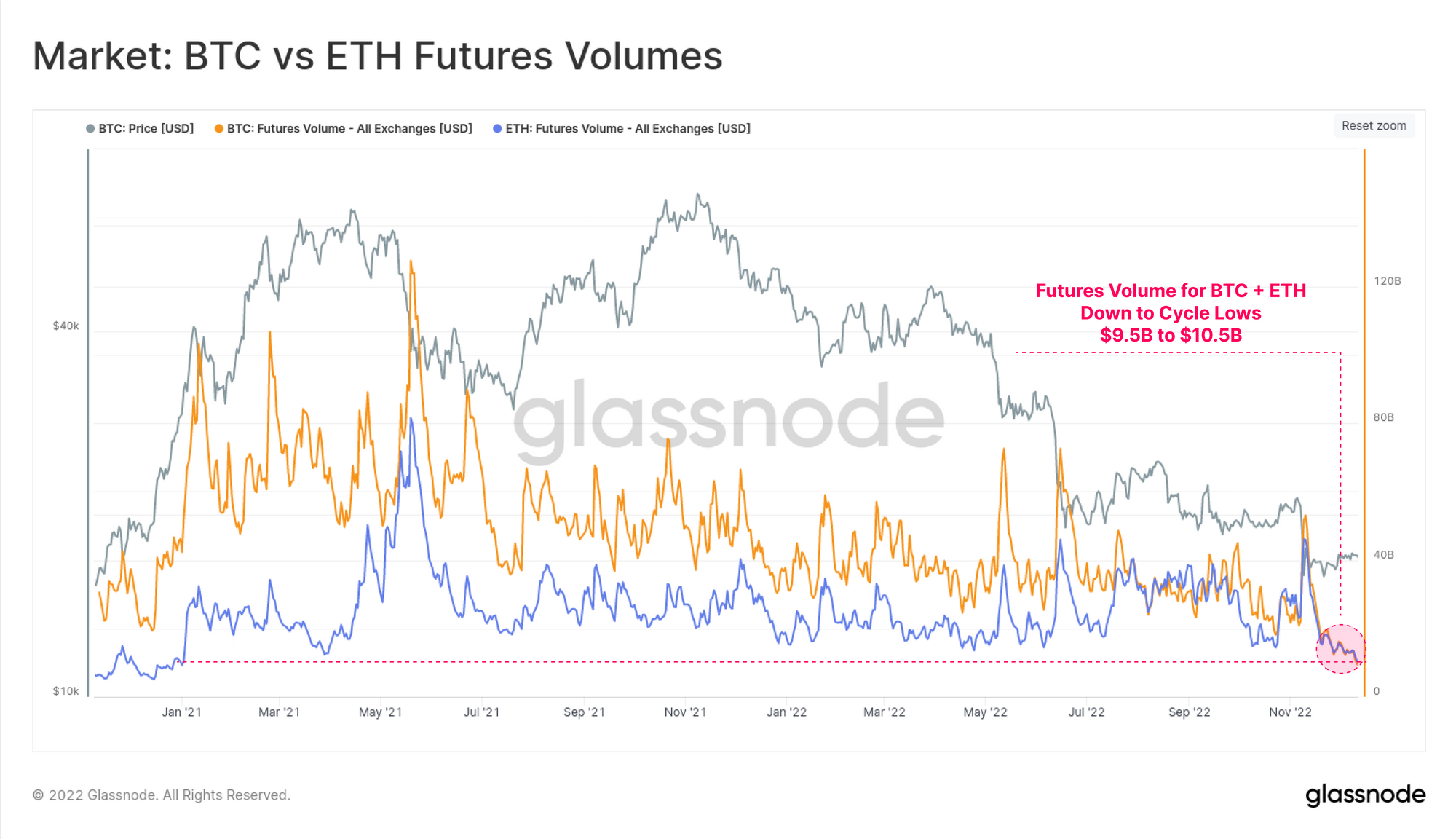
A similar trend is also evident in the futures market. Daily trading volumes of derivatives based on Bitcoin and Ethereum fell to a range of $9.5–10.5 billion. In addition to a reduction in borrowed funds, this reflected the problems of many market makers and crypto-lending platforms.


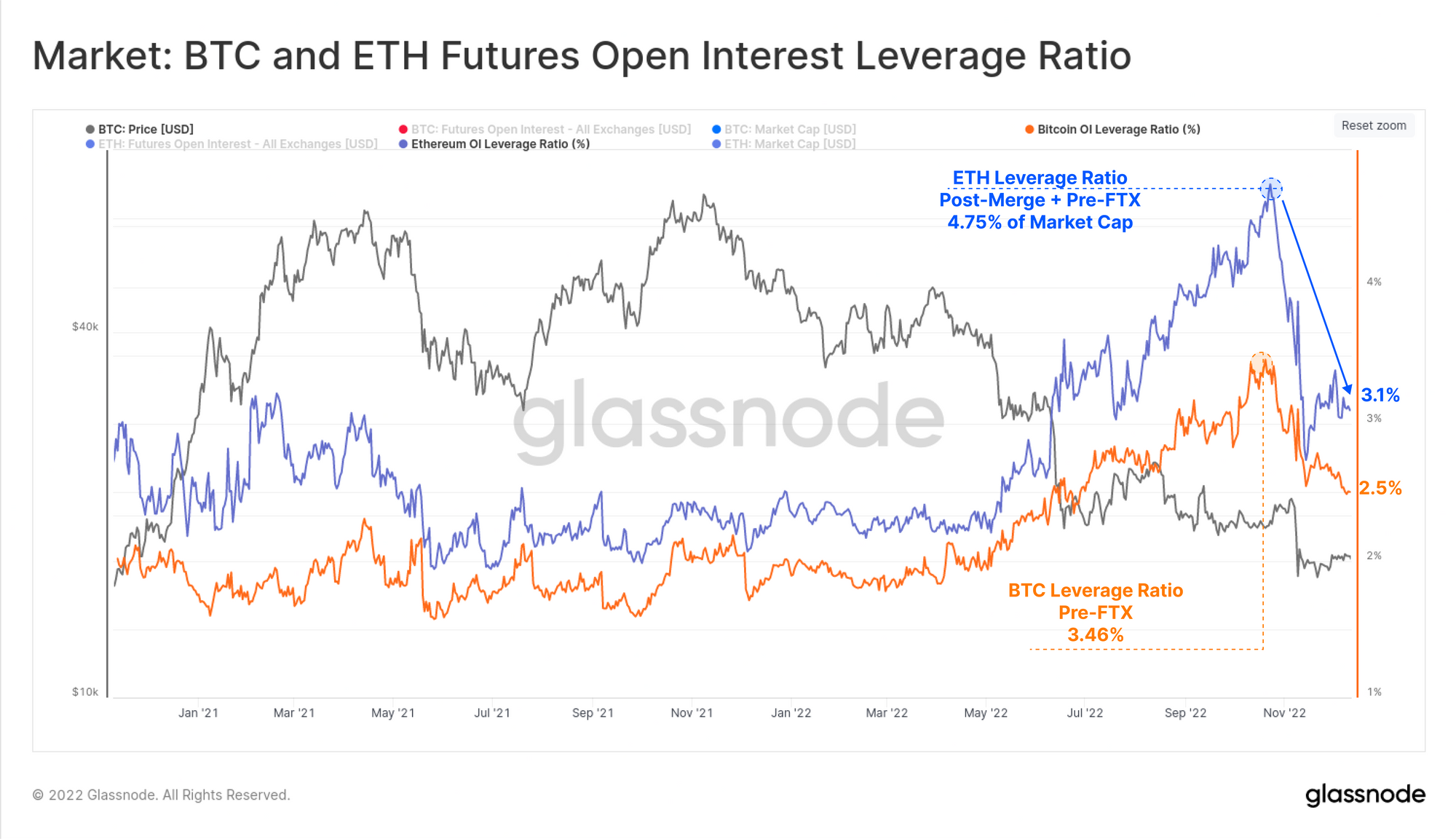
Following the FTX collapse, open interest collapsed sharply. For Ethereum, the decline proved more dramatic, as the unwind of positions in the wake of the The Merge amplified the effect.
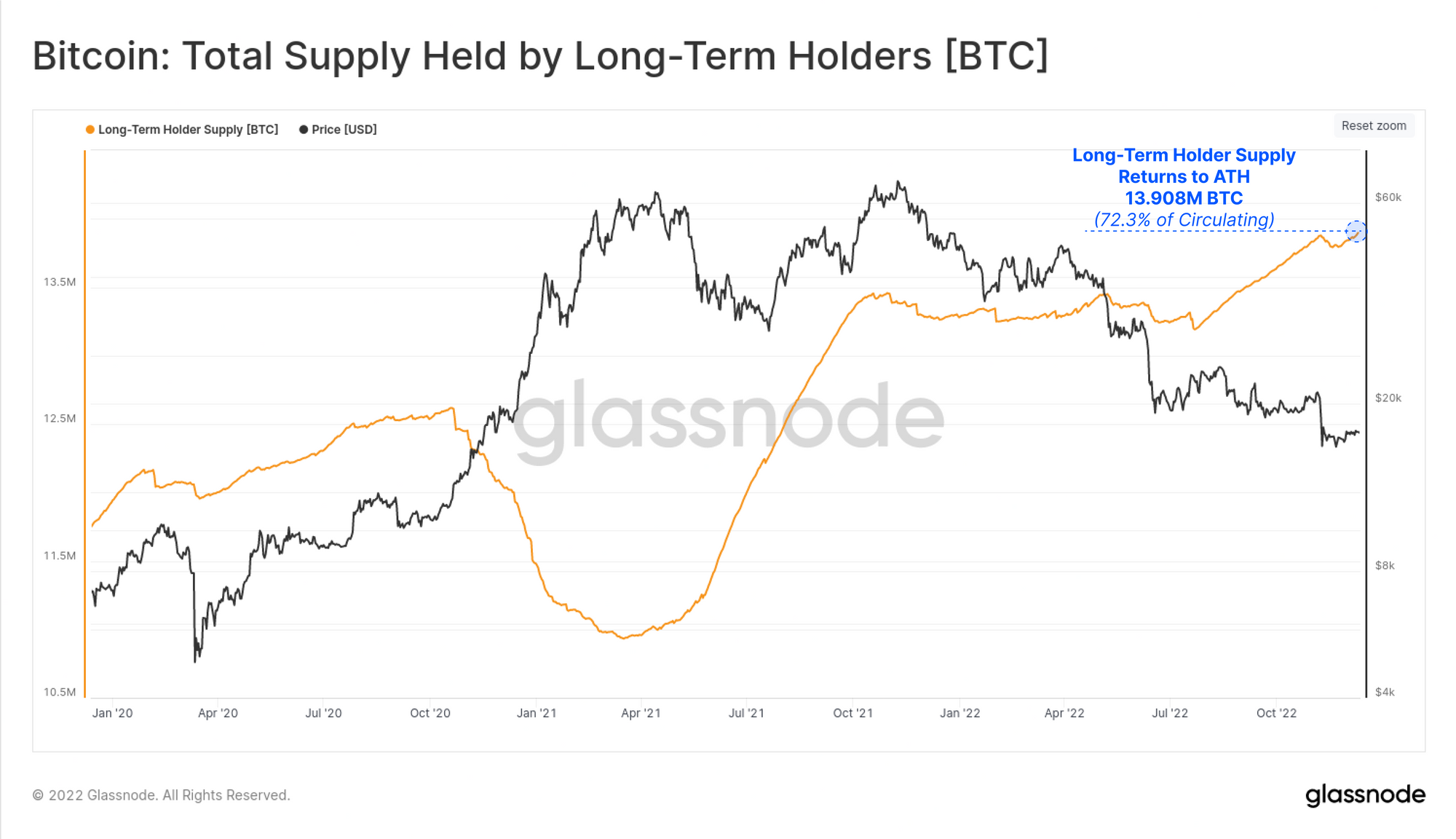
Despite the sizable losses, the age of held coins continued to rise. The number of bitcoins in the hands of hodlers surpassed pre-FTX collapse figures and reached a new ATH of 13.908 million BTC (72.3% of the total in circulation). Previously, there was a nearly linear upward trend after the Three Arrows Capital collapse.
Three Arrows Capital collapse was followed by a notable shift in hash economics, with the next phase showing the stress intensifying in the sector.
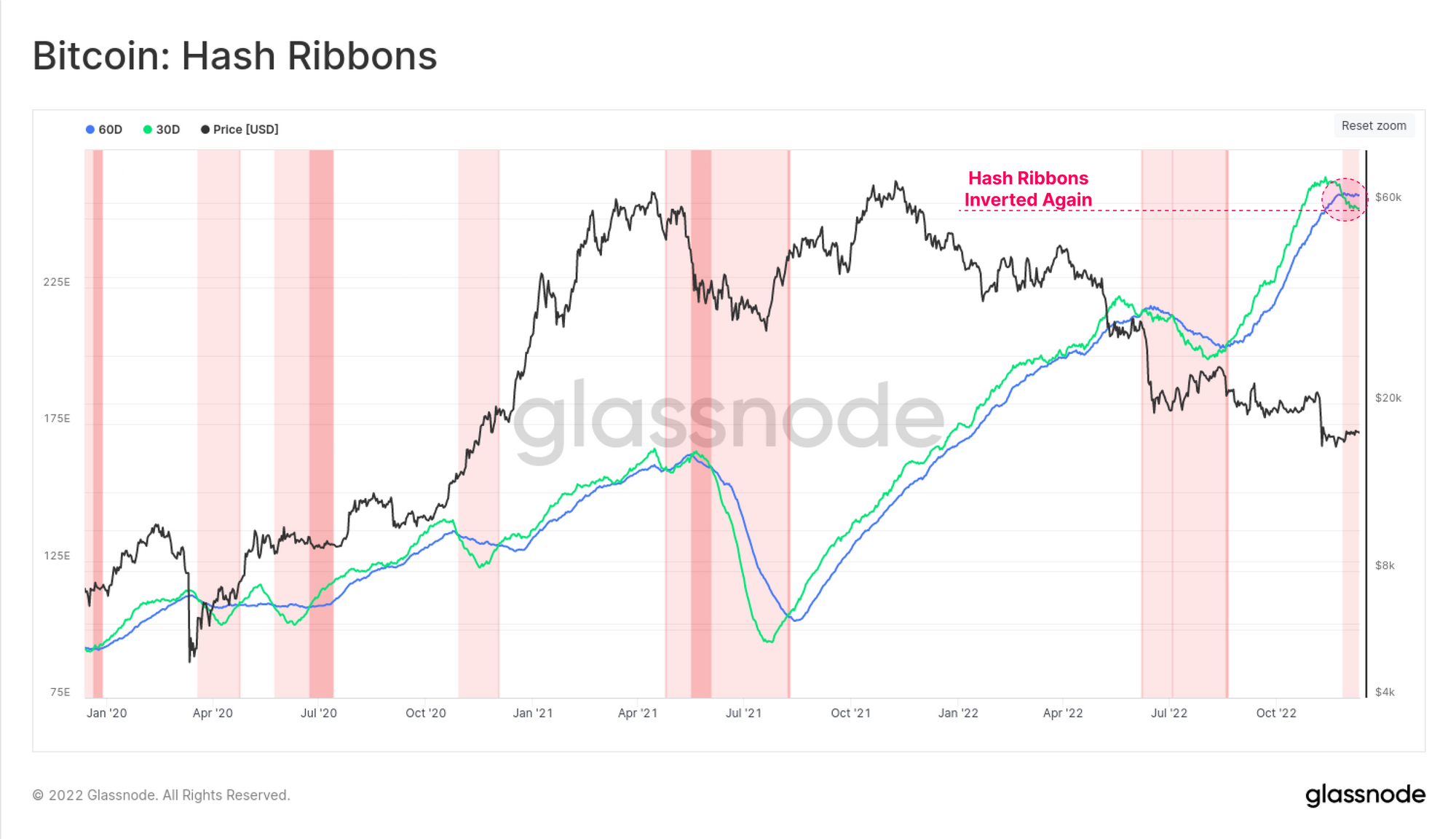
Great Chinese Miner Migration marked the largest drop in difficulty (down 7.32%), pointing to mounting stress among miners. In the Hash Ribbons indicator, the 30-day moving average crossed below the 90-day moving average in November. As a rule, this reflects revenues slipping below operating costs, forcing miners to power down ASICs.
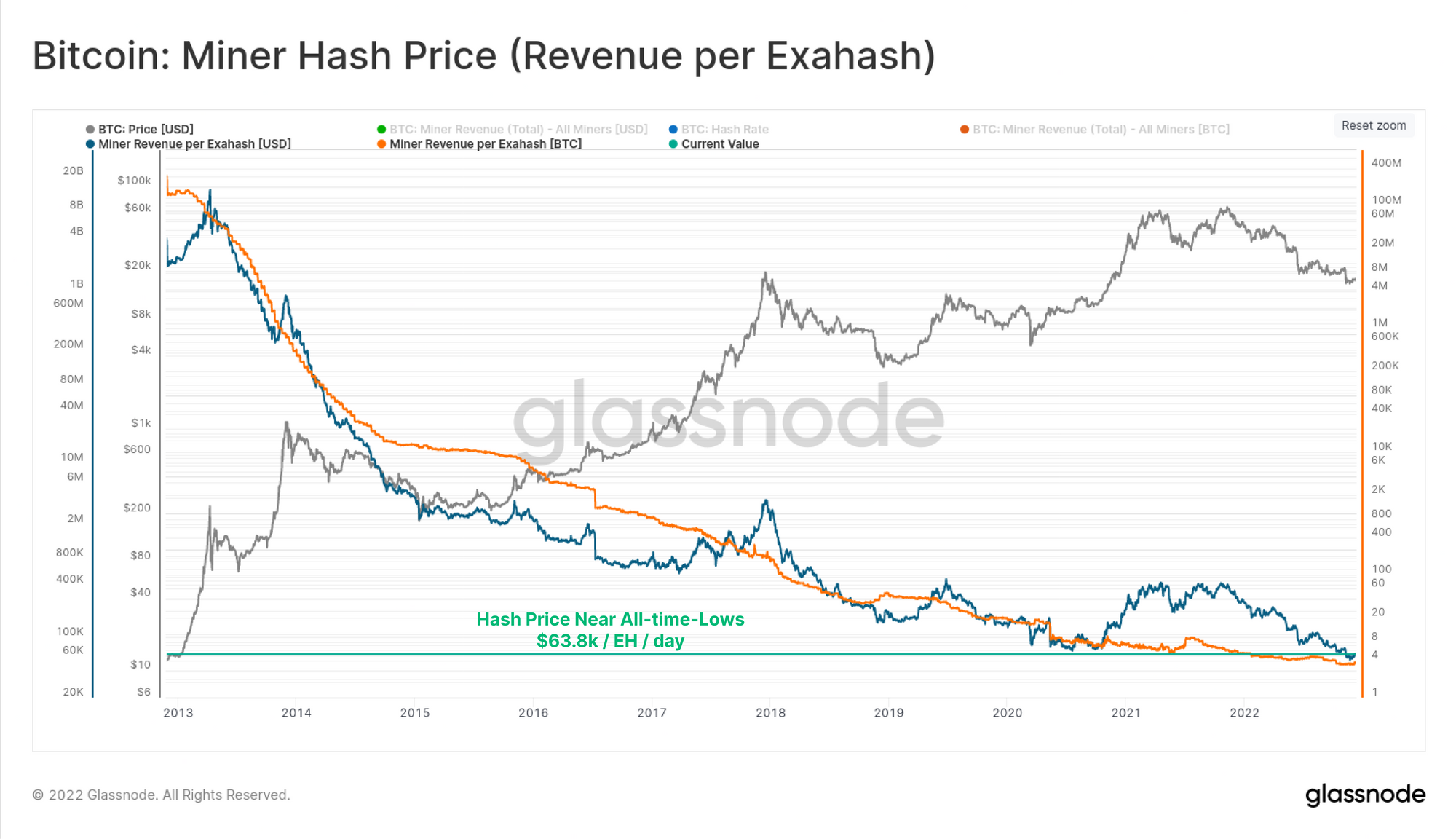
Hashprice has almost reached the ATL. Although Bitcoin’s price is roughly 70% higher than in October 2020 ($10,000), the computing power, over this period, increased by about the same magnitude.
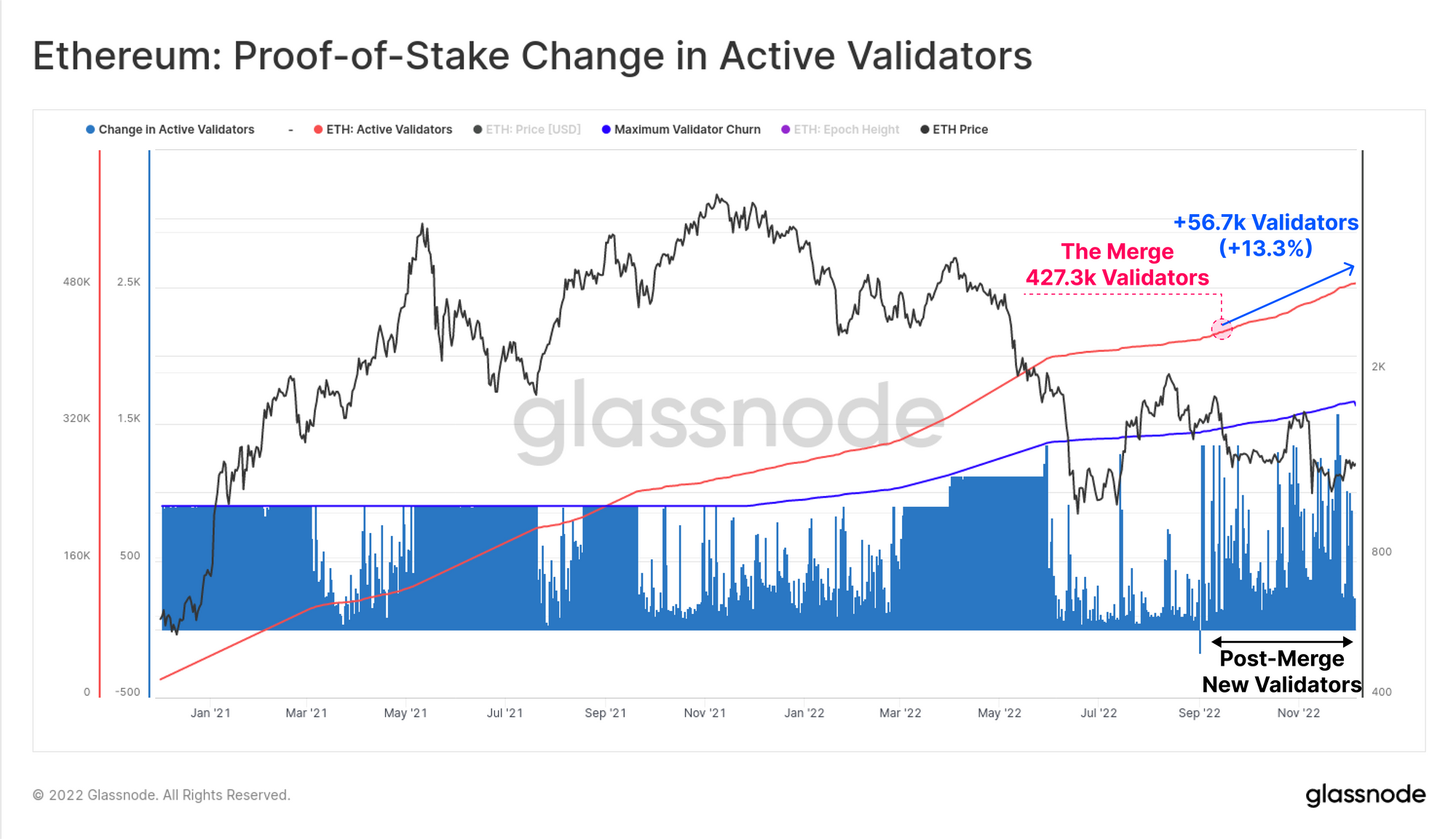
In the Ethereum network since The Merge, the number of active validators rose by 13.3%, to 484,000. The amount locked in staking in Beacon Chain ETH rose to 15.618 million ETH, equivalent to 12.89% of the supply.
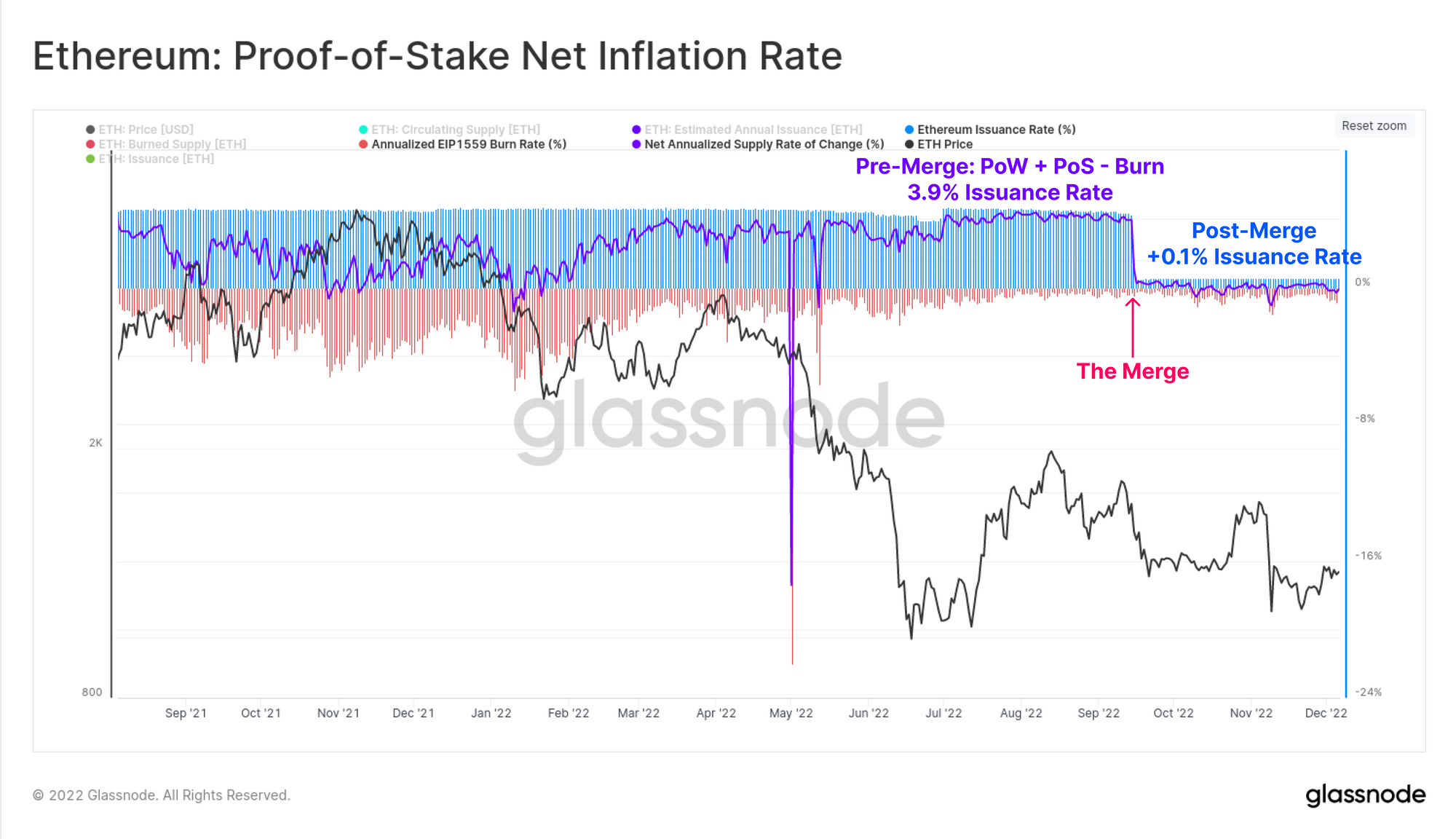
After The Merge and taking into account the factor EIP-1559, the emission pace fell to 0.1% per year (the nominal rate dropped from 3.9% to 0.5%). Considering the entire period since the network switched to the Proof-of-Stake consensus, the ETH supply decreased by 242 ETH. By contrast, the metric could have risen by 1.044 million ETH had mining continued under Proof-of-Work.
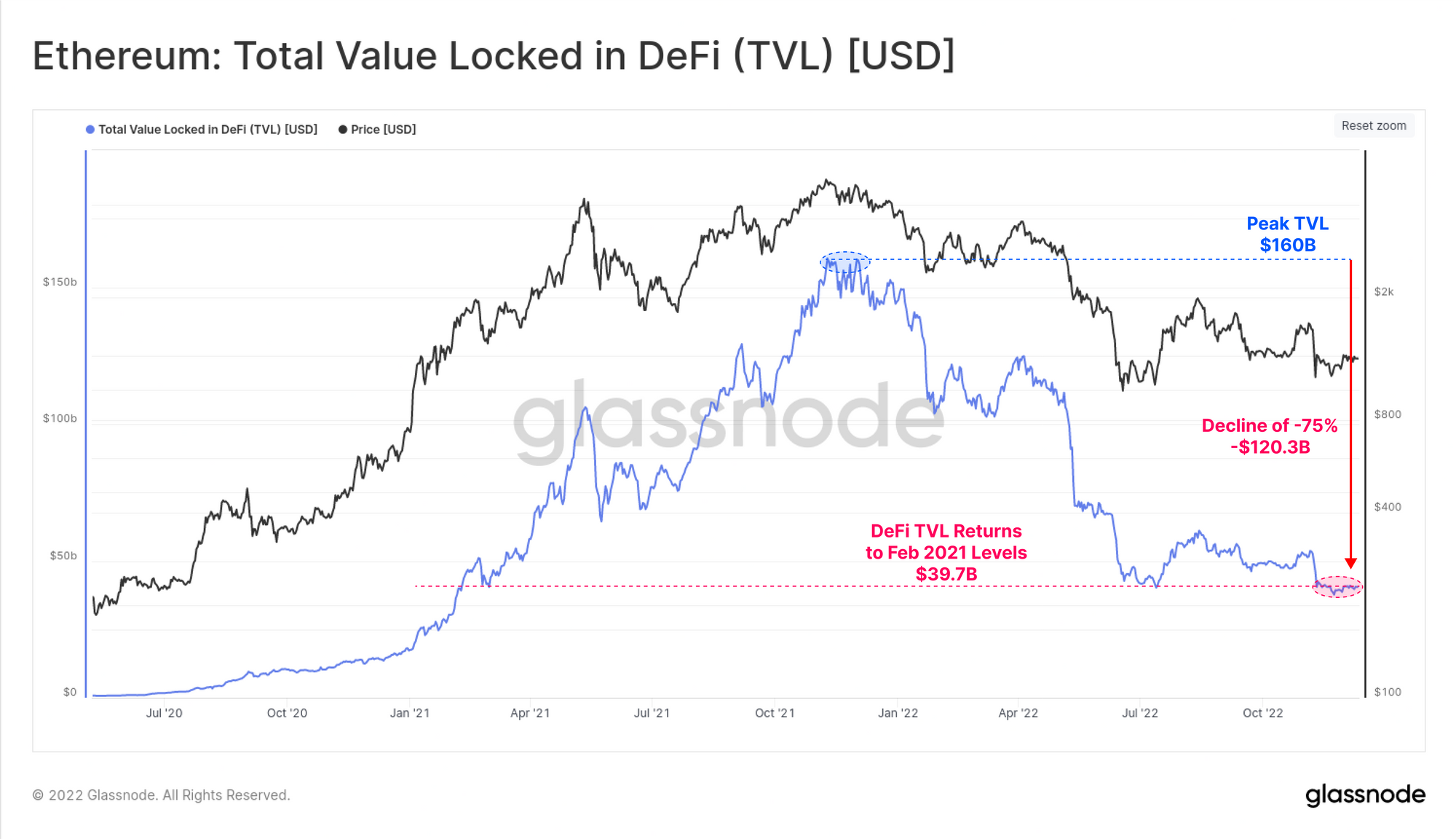
Against price volatility and liquidity compression, TVL fell by 75%, from $120.35 billion in November 2021 to $39.7 billion. Such levels had not been seen since February 2021.
Стейблкоины укрепили статус значимого звена экосистемы. USDT, USDC, BUSD вошли в топ-6 криптовалют по капитализации. Их суммарная рыночная стоимость в марте 2022 года достигла рекордных $161,5 млрд. С тех пор объемы конвертации в фиат составили $14,3 млрд.
Monthly inflows rose to $4–8 billion. A large portion of the capital remains in digital-dollar form, the analysts noted.
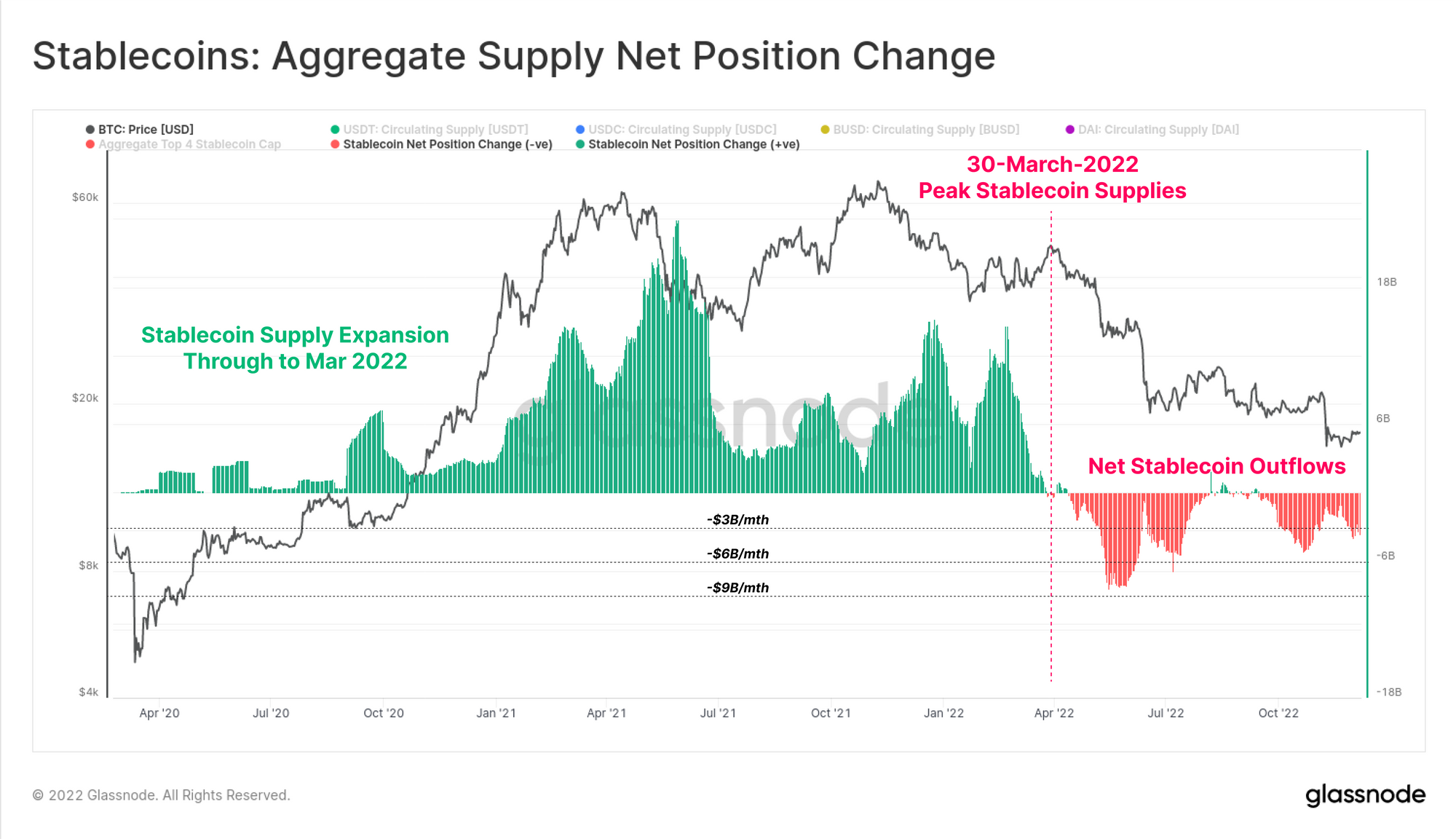
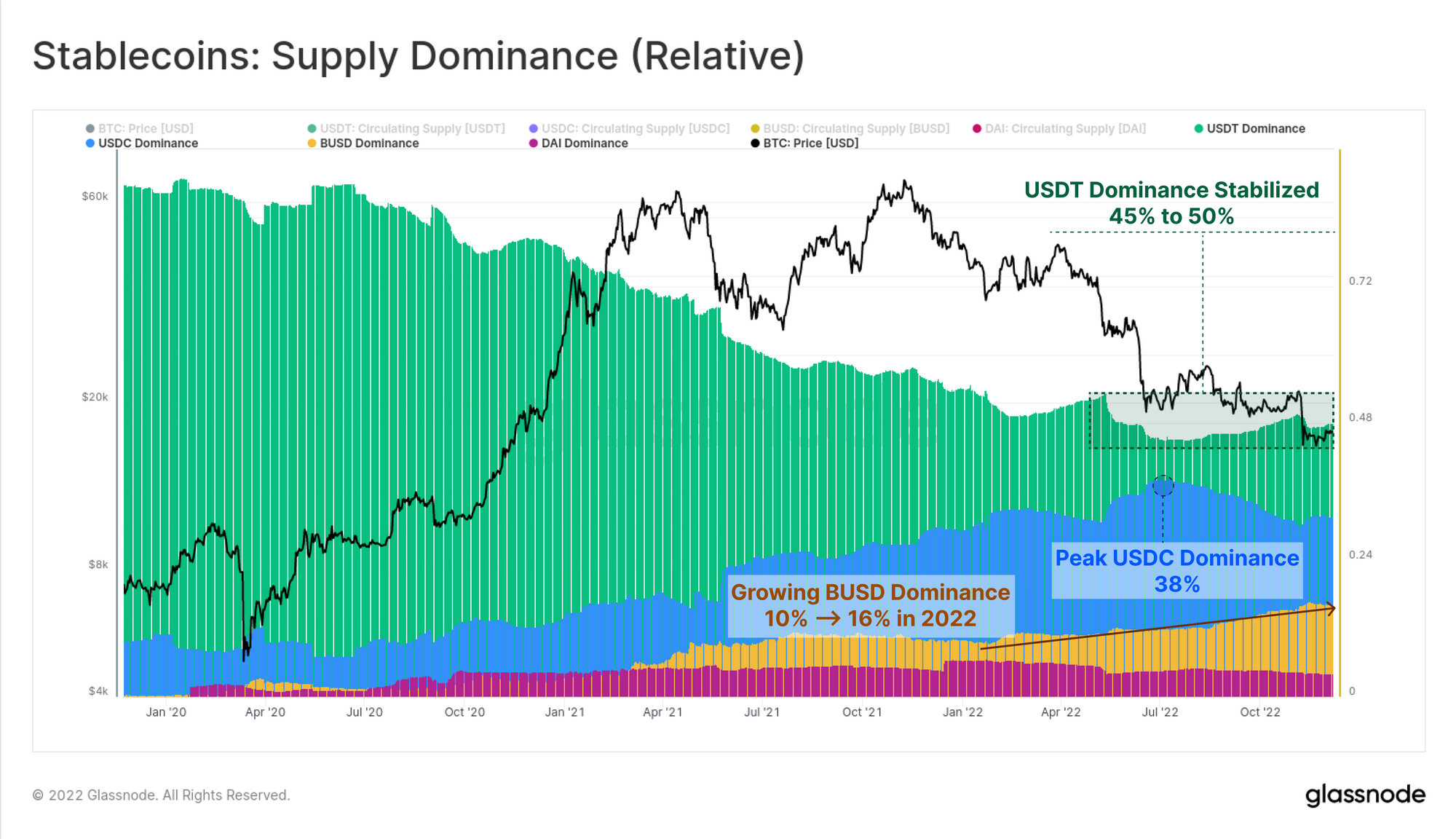
In the structure of the sector, BUSD increased its market share from 10% to 16%. Tether’s share remained in the 45–50% range, despite outflows of $18.42 billion since May. The share of USDC rose to 38% by June, but subsequently fell to 31.3%.
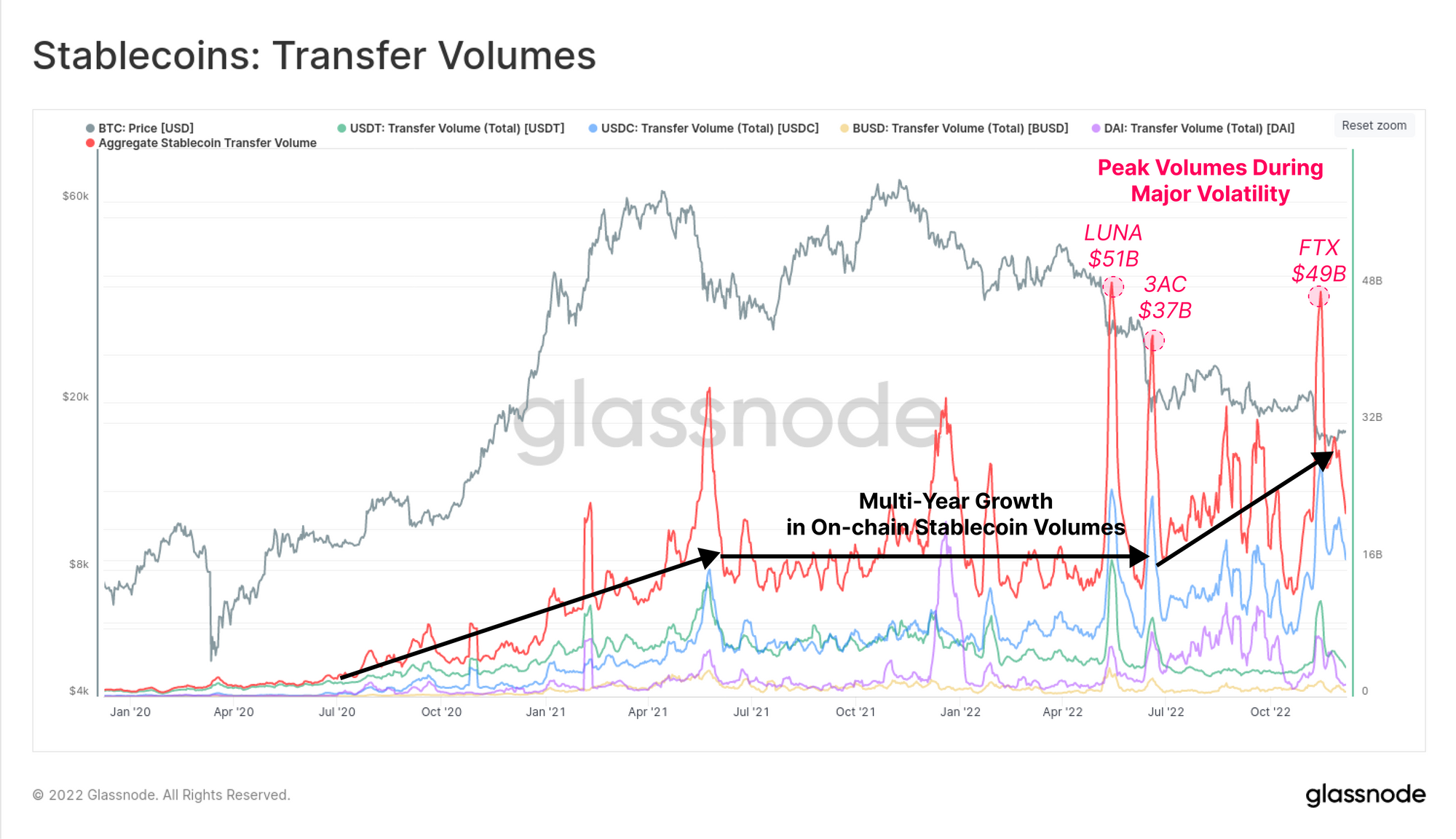
Daily transfers of stablecoins on the Ethereum network steadily increased through the second half of the year—to $20–30 billion, from $16 billion in 2021 through the first half of 2022.
During the collapses of Terra, Three Arrows Capital and FTX, the metric reached extreme levels of $37–51 billion, reflecting unprecedented demand for US dollar liquidity during deleveraging periods.
«After all the challenges of 2022, the digital assets industry continues to operate, lessons have been learned, new blocks are forming in the networks. Whatever happens in 2023, we believe the sector will weather the test of time», — the specialists concluded.
Earlier, Glassnode analysts noted that the momentum of realized losses had declined, and on-chain activity showed a positive shift.
As ForkLog reported, network indicators at the end of November signaled investor panic and miner capitulation, and did not confirm that the crypto market had bottomed. This is according to the analytical report ForkLog.
Read ForkLog’s Bitcoin news in our Telegram — cryptocurrency news, prices and analysis.