May 2021 in figures: Bitcoin crash, Dogecoin clone attack, and Polygon’s explosive growth
ForkLog
Key highlights
May 2021 was one of the worst months for Bitcoin investors. The price fell by 35%. Shares of cryptocurrency companies also dropped sharply.
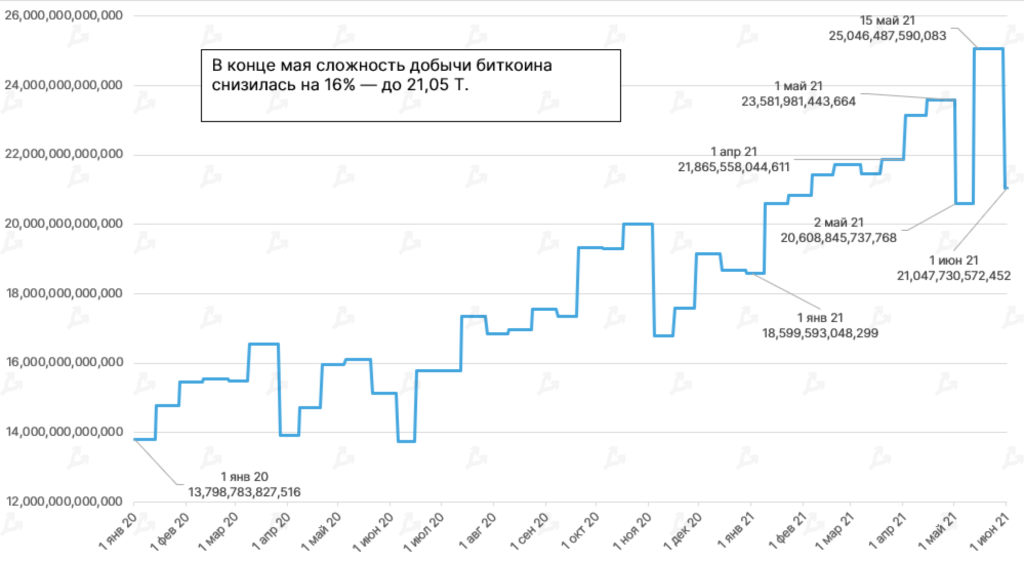
Bitcoin’s hash rate for May fell by 6.1%. At the end of last month, difficulty declined by 16%.
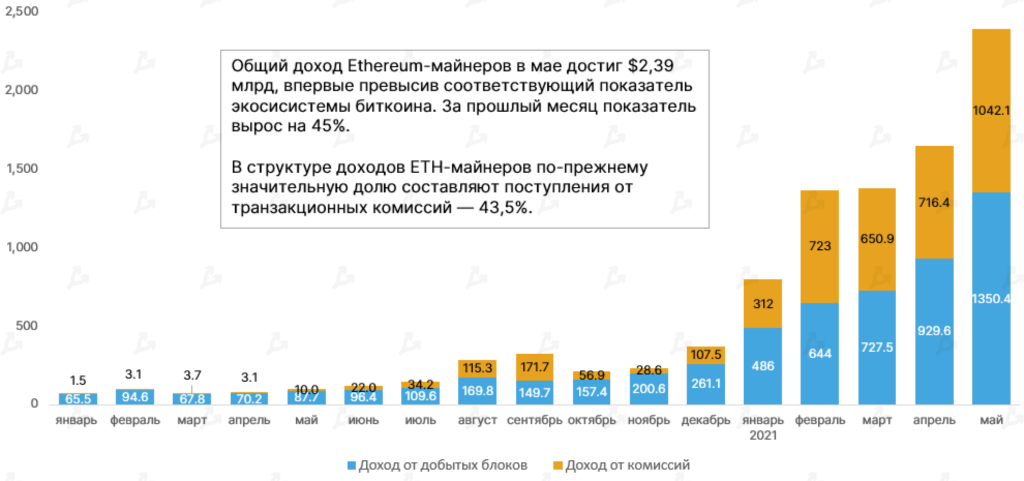
Ethereum miners’ revenues surpassed Bitcoin miners’ by $910 million.
The issue of environmental risks became one of the key themes in the information space.
Trading volume on cryptocurrency exchanges reached an all-time high of $2.6 trillion.
DEX PancakeSwap overtook Uniswap in TVL, and Polygon neared the top-10 by market capitalisation.
The Internet Computer (ICP) token from Dfinity burst into the top ranks.
There were several large venture rounds in May: Circle raised $440 million, and the Bitso exchange $250 million.
Dynamics of leading assets
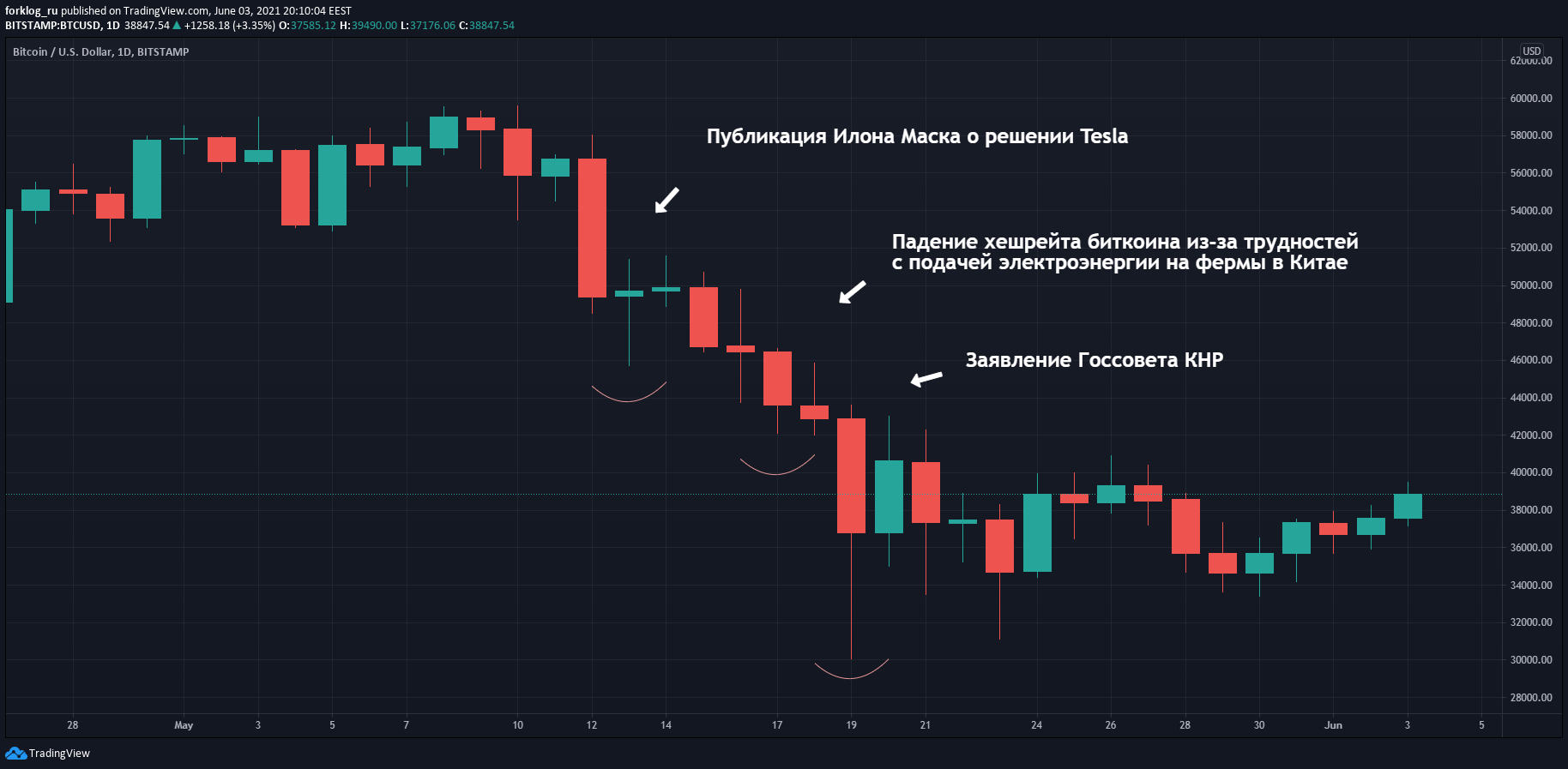
BTC/USD daily chart on Bitstamp. Data: TradingView.
In the first half of May, Bitcoin managed to regain lost ground and approach the $60,000 level, but then followed the largest correction since 2018 amid unfavourable news headlines.
The first drop began with Elon Musk’s statement that Tesla would stop accepting Bitcoin for its products due to concerns about the environmental impact of mining. As a result, the price fell from $55,000 to $46,000.
The issue of environmental risks of mining is being discussed more and is becoming a real market factor. It is also linked to a great deal of misinformation. We discussed the problem in more detail in the piece.
The second significant driver of the decline was power-supply problems at mining farms in Sichuan.
The third and key factor was the State Council of China’s statement on measures to curb Bitcoin trading and mining. The price crashed to $30,000, and on derivatives platforms — even lower.
Over the month, Bitcoin fell 35% (closing at $37,450) — the worst May on record.
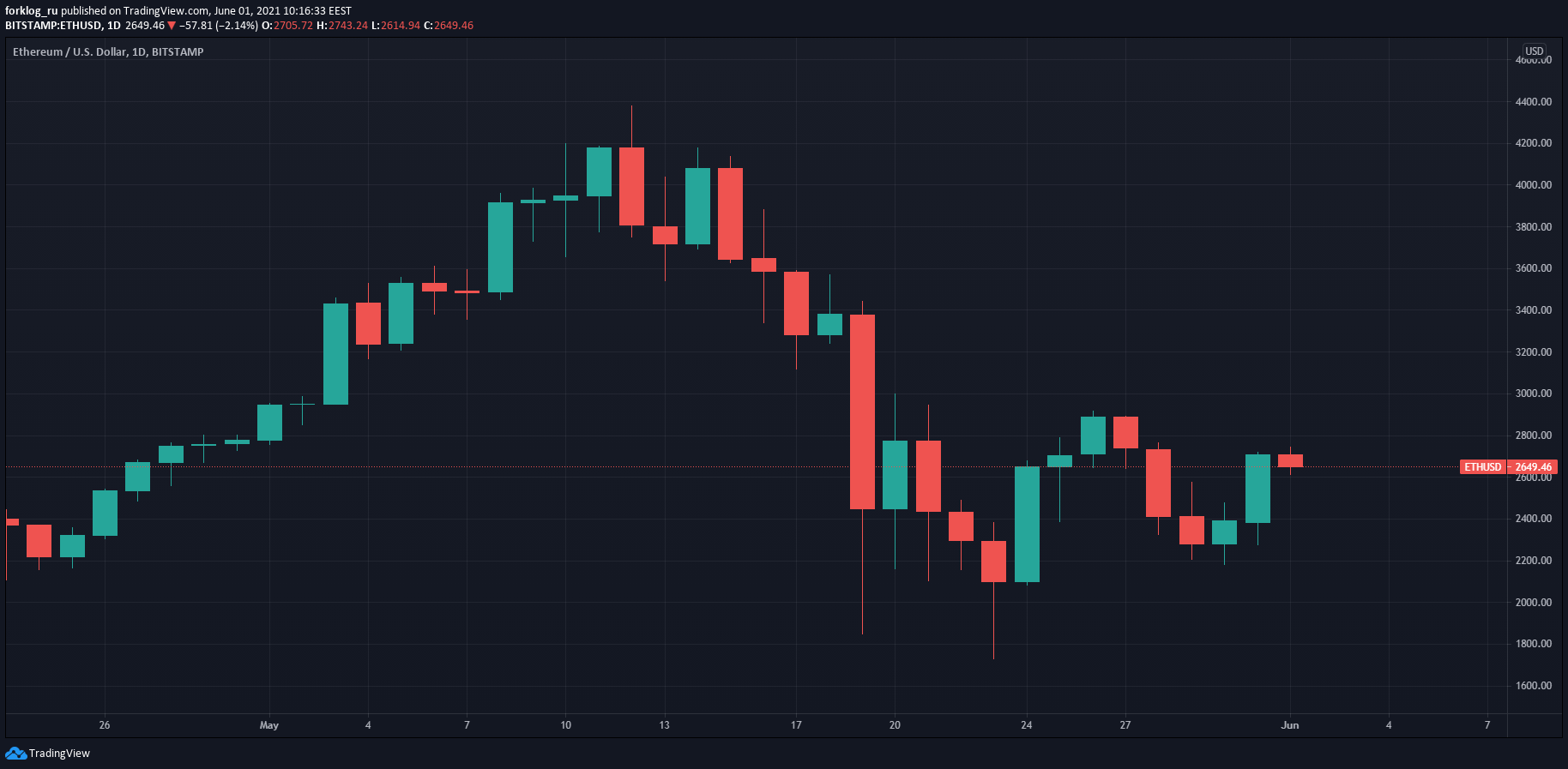
ETH/USD daily chart on Bitstamp. Data: TradingView.
Beginning the month at $2,775, Ethereum hit a peak at $4,380.
The subsequent correction pulled the market down — Ethereum fell to a local low of $1,730, closing the month at $2,707 (a monthly drop of 2%).
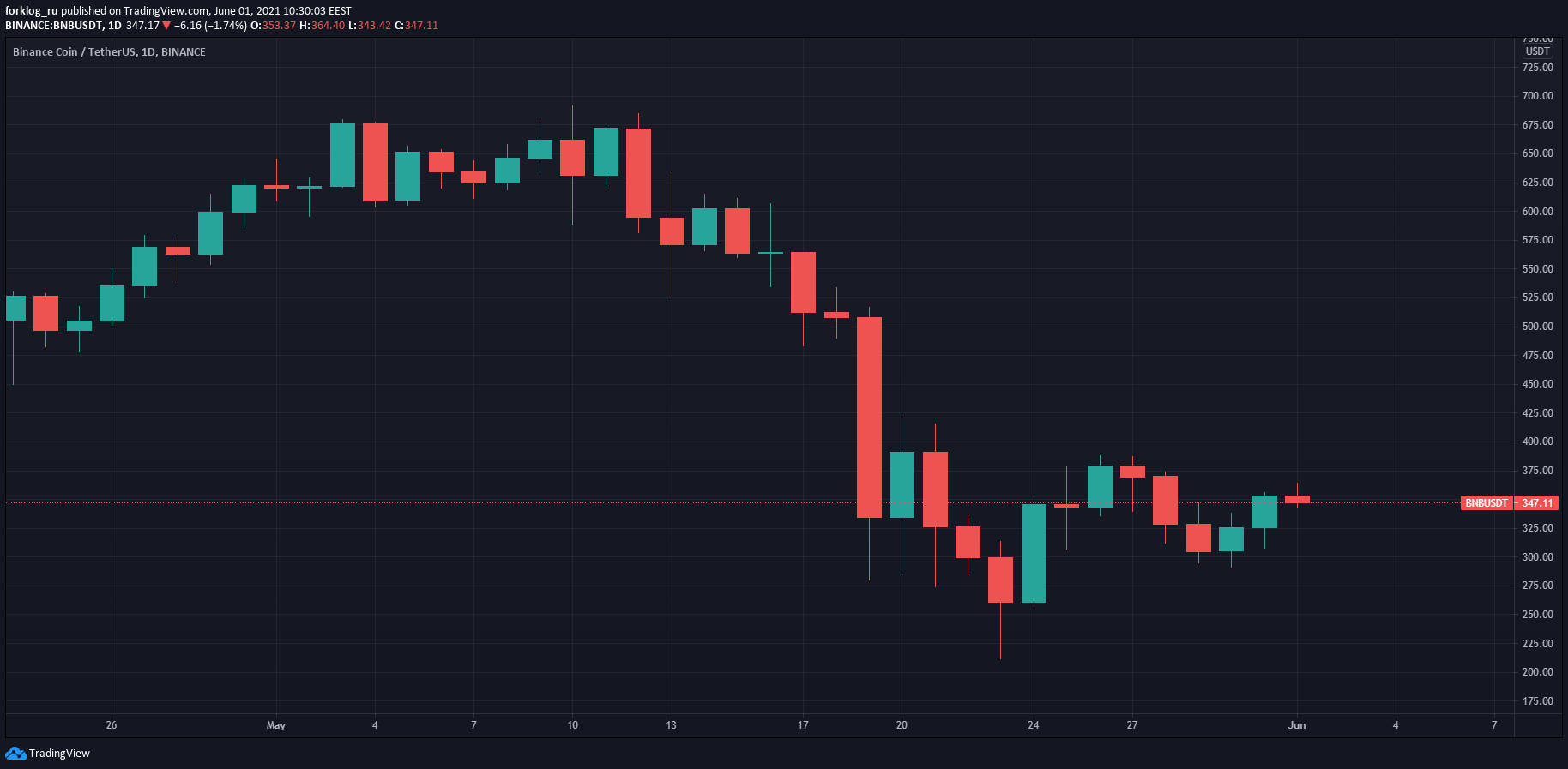
BTC/USDT daily chart on Binance. Data: TradingView.
Binance Coin (BNB) lost ground in May. Starting the month at $622, it rose to a high of $691, then collapsed to $211. By month-end, BNB was down 43% to $353.
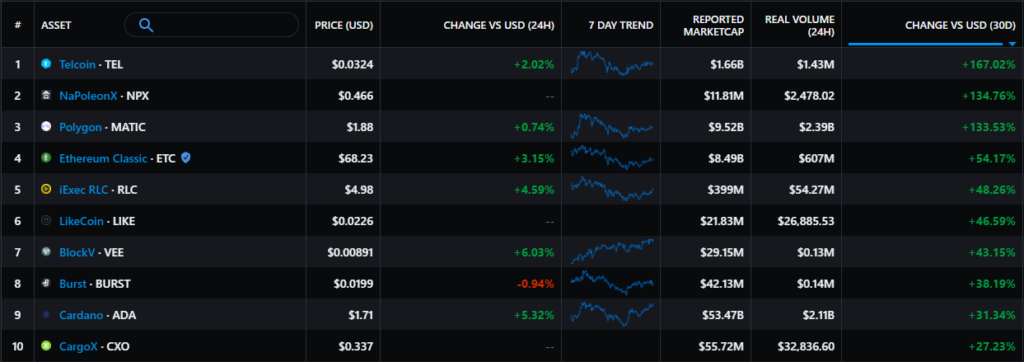
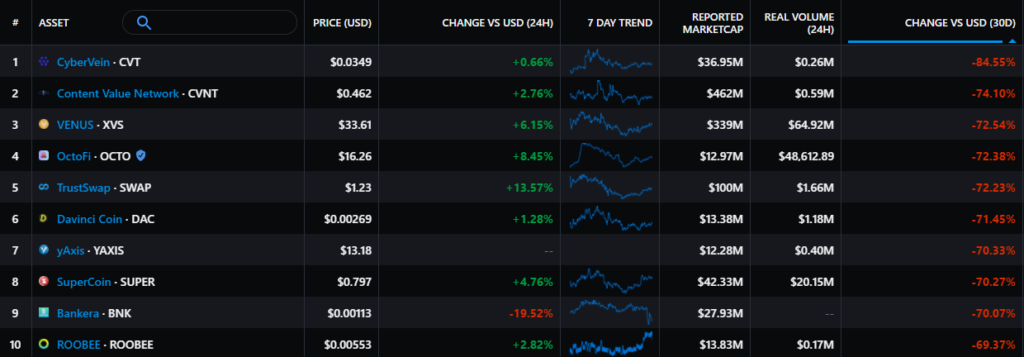
Gainers & Losers of the month. Data: Messari.
Altseason, marked by the decline in Bitcoin’s dominance, positively affected the performance of some coins, with Polygon (MATIC) standing out, utilising second-layer scaling solutions.
During the month, MATIC rose 130%, bringing it close to the top-10 projects by market cap. It also ranked fourth in DeFi TVL by volume ($7.6 billion).
Among other well-known altcoins, Ethereum Classic (ETC) rose above $175 in May, and Cardano (ADA) hit a new high of $2.47.
Negative momentum in May was seen in crypto-related equities:
Coinbase (COIN): -22%;
MicroStrategy (MSTR): -30%;
Galaxy Digital (GLXY): -40%.
Bitcoin miners’ producer stocks fared worse in May: Canaan fell 36%. In the same period, Ebang declined 24%, and Riot Blockchain by 32%. It is clear and unsurprising that mining stocks closely correlate with Bitcoin’s price.
Market mood, correlations, user activity
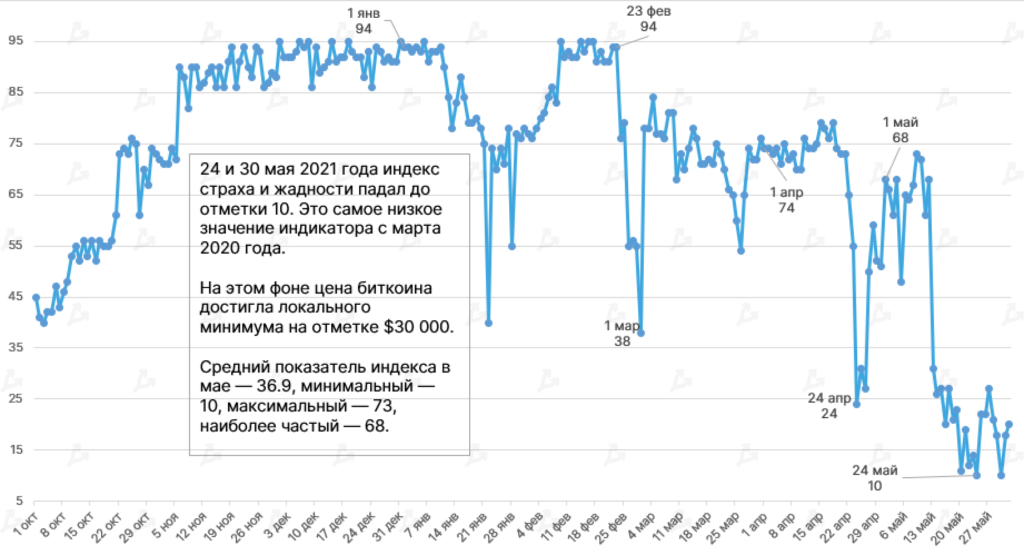
Fear & Greed Index dynamics. Data: alternative.me.
Against Bitcoin’s decline, the Fear & Greed index hit 10, the lowest since March 2020. For most of May, fear dominated the market. The average index for May was 36.9 (April 66).
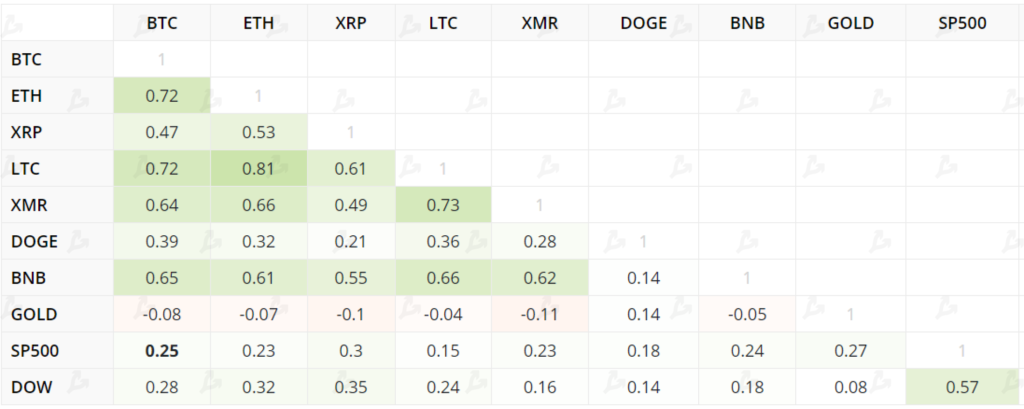
Bitcoin’s correlation with Ethereum, Litecoin and other crypto assets remains high. The correlation with the US S&P 500 fell from 0.28 to 0.25. The correlation of Bitcoin with gold remains close to zero, as in the prior month.
Trading activity
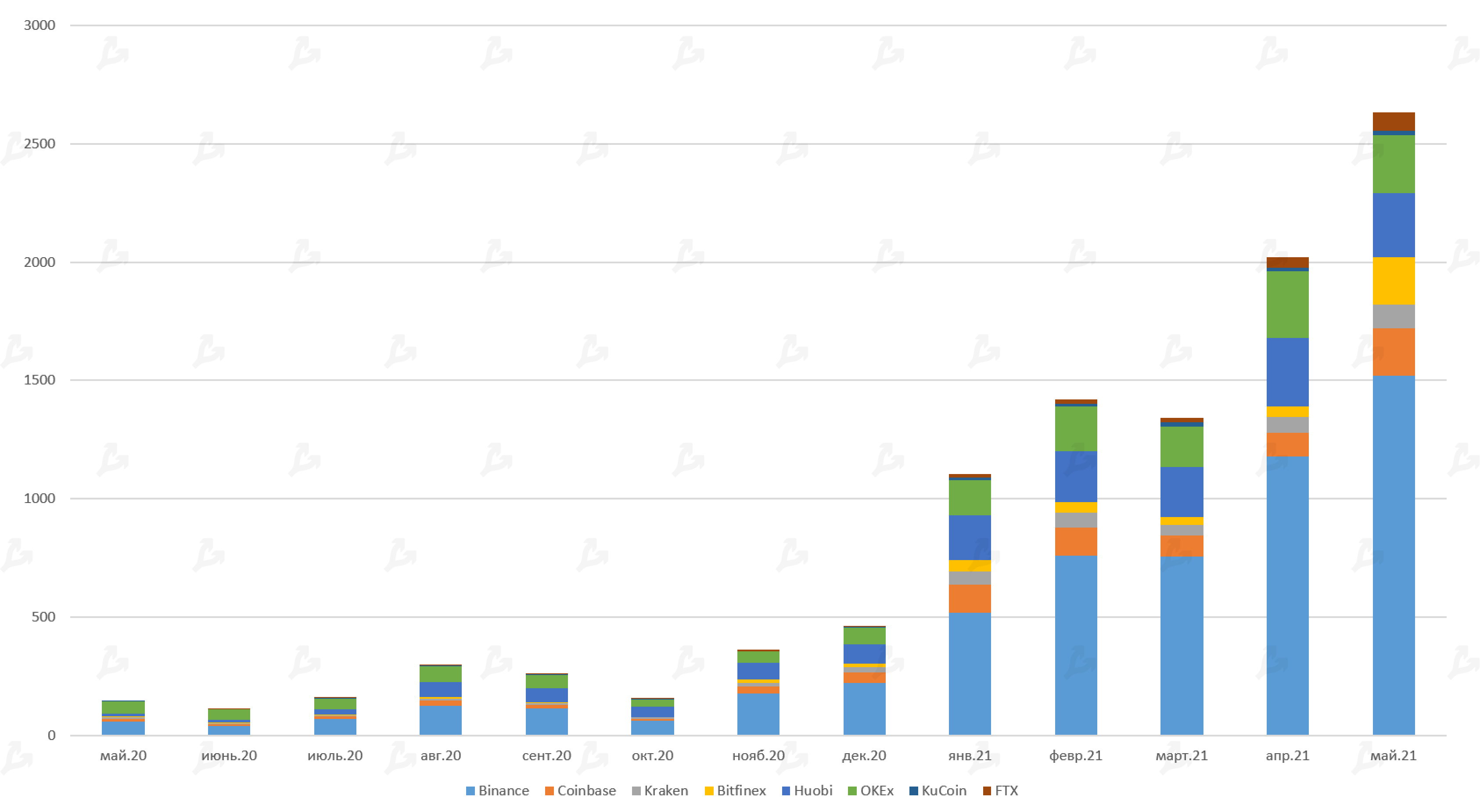
Trading volume on leading spot exchanges, in billions of dollars. Data: CryptoCompare.
May trading volume on leading spot exchanges reached a record $2.6 trillion. On a per-exchange basis, Asian platforms consistently lead.
Binance turnover reached $1.5 trillion. Huobi’s trading volume was $270 billion, OKEx — $241 billion. The US exchange Coinbase accounted for $201 billion.
Futures and options
Bitcoin and Ethereum futures trading volumes, $bn. Data: Glassnode.
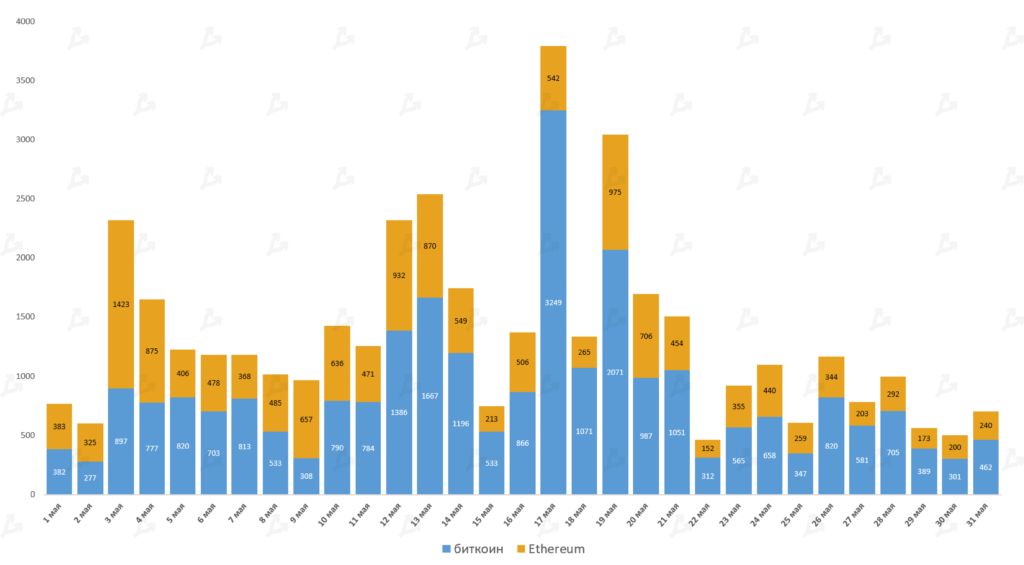
Open interest in Bitcoin and Ethereum futures, $m. Data: Glassnode.
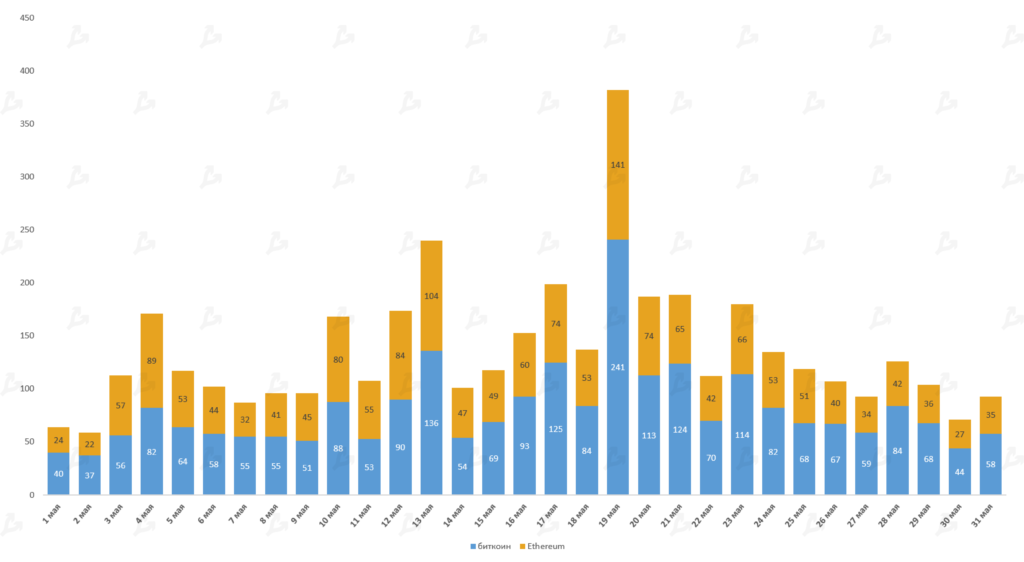
In May, aggregate Bitcoin futures trading volume topped $2.5 trillion for the first time, with just over $1 trillion on Binance. In the most active session on May 19, daily volume reached $241 billion — Bitcoin’s price fell by up to 30% during the day, from $43,500 to $30,000, with even lower levels on some derivative platforms.
Ethereum futures followed Bitcoin’s trajectory. On May 19, the volume traded was a record $140 billion.
May’s Bitcoin options market turnover stood at $27 billion. Deribit remains the undisputed leader, accounting for almost 90% of trading volume.
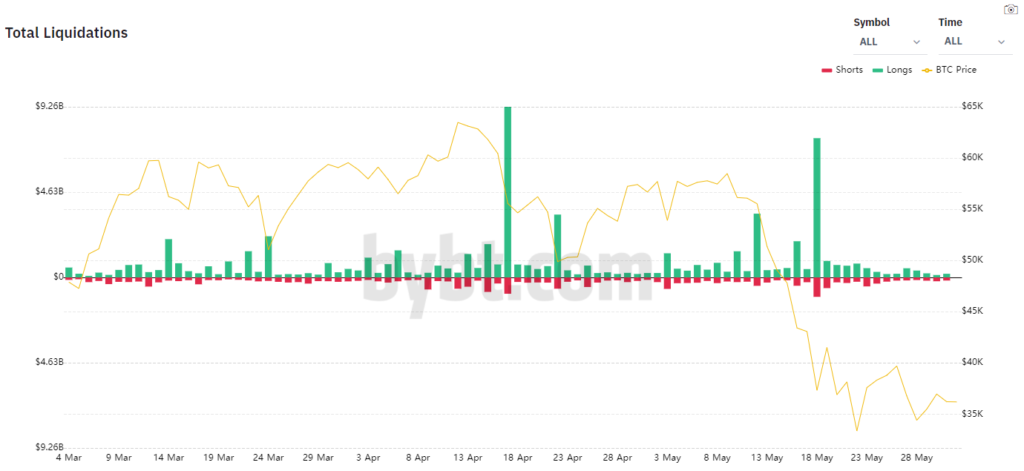
Volume of liquidations on the futures market. Data: bybt.
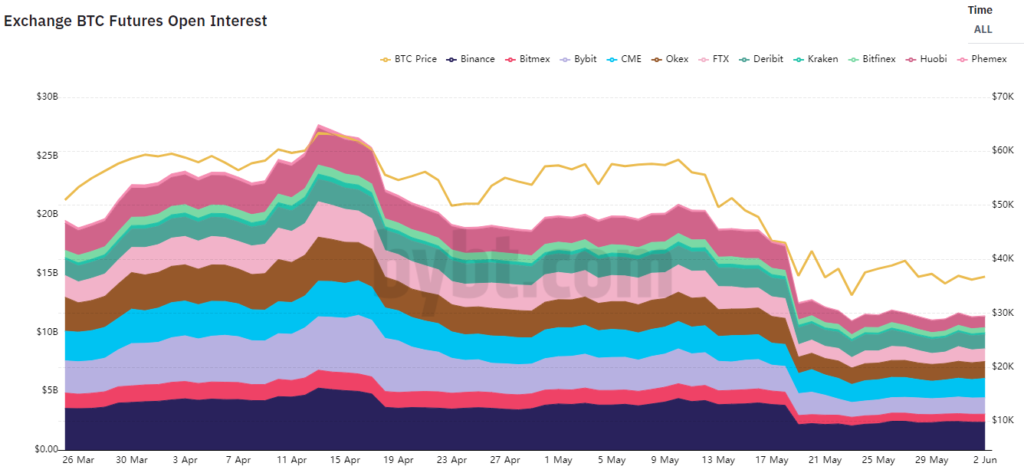
Open interest in Bitcoin futures. Data: bybt.
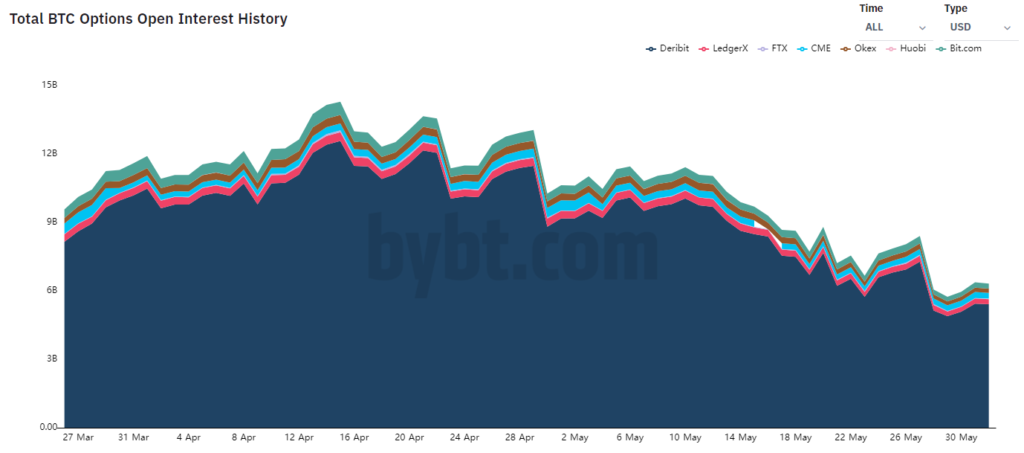
Open interest in options. Data: bybt.
As a result of the correction on May 19, liquidations totalled $8.6 billion.
This affected open interest on both futures and options. The aggregate figure for futures fell from $20 billion to $11 billion, while for options it fell from $11 billion to $6 billion.
Funding rates on May 19 plunged into negative territory, subsequently stabilising near zero.
DeFi
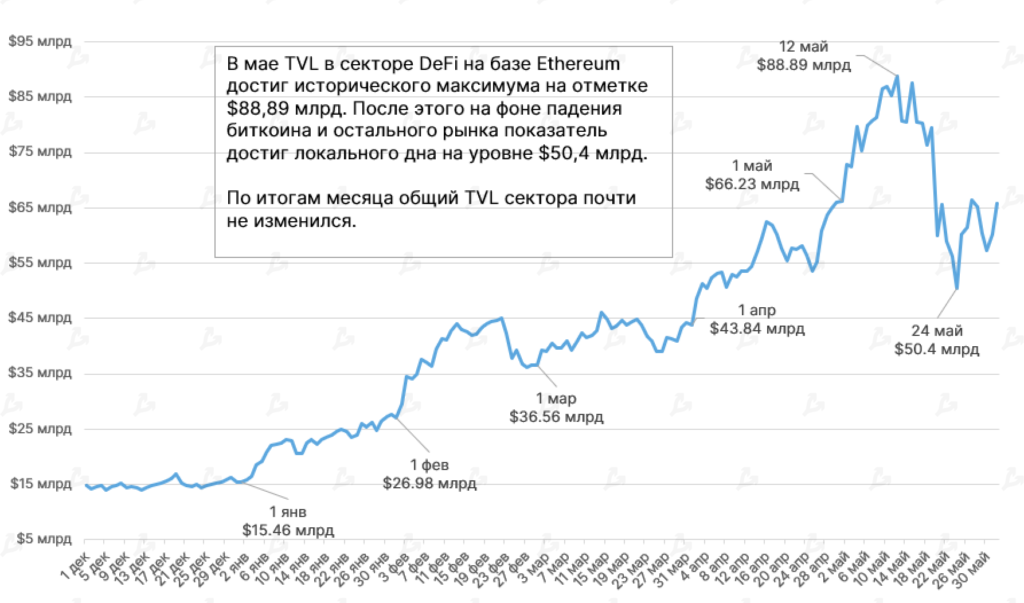
TVL dynamics of DeFi-ecosystem on Ethereum. Data: DeFi Pulse.
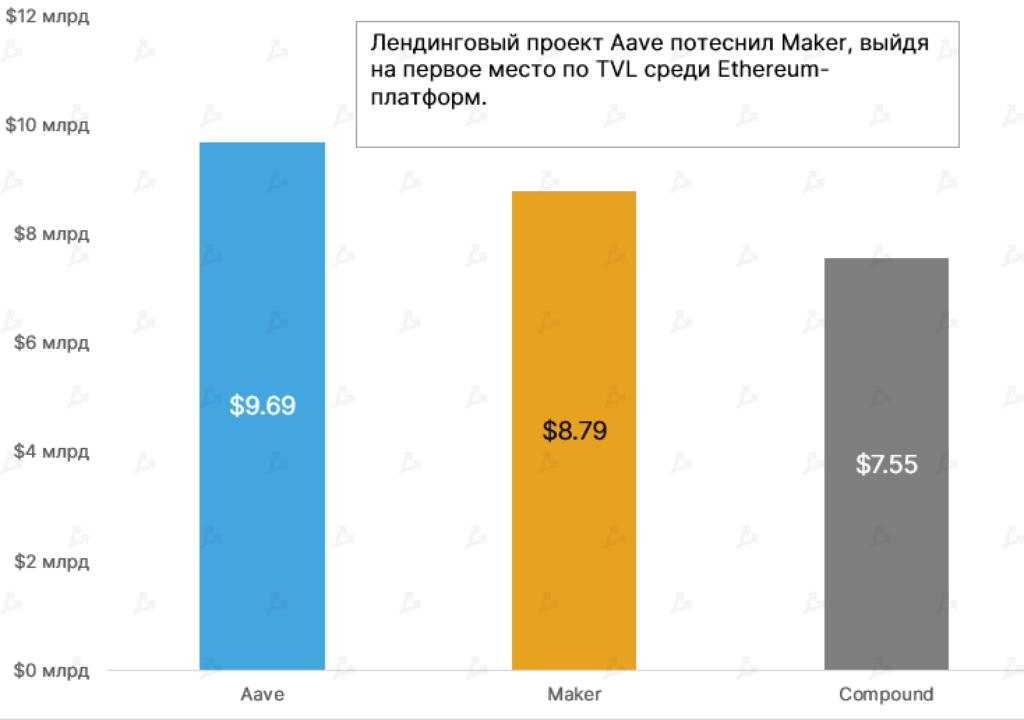
Top-3 DeFi projects by TVL on Ethereum, by DeFi Pulse as of 1.06.2021.
In May, the total value of funds locked in DeFi applications (TVL) on Ethereum stood at $50.4 billion. Amid the deep correction, the metric fell sharply but did not collapse. This signals a maturing sector.
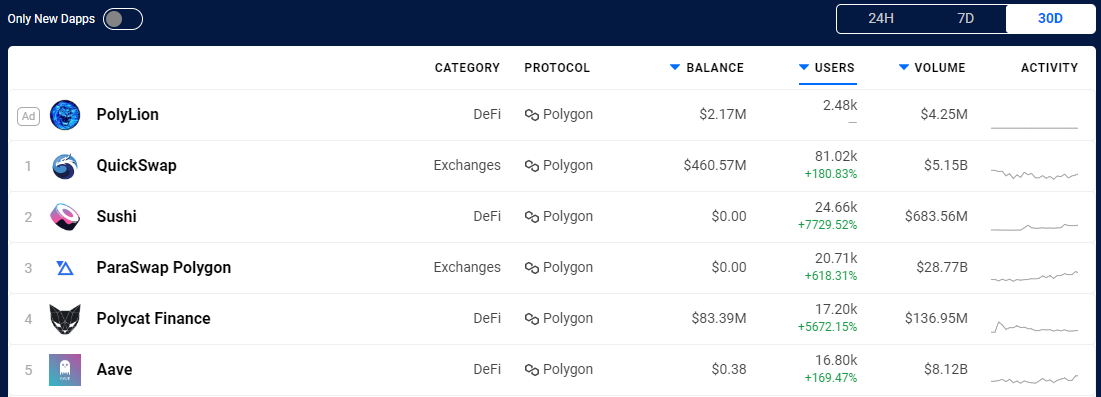
Top polygon-based projects. Data: DappRadar.
The Aave project surpassed the Maker platform, long considered a DeFi veteran. As before, lending platforms remain in the top trio. Yet Compound is being “caught up” by Polygon (formerly Matic Network), which offers near-instant and extremely cheap transactions.
TVL by main DeFi sectors based on Ethereum. Data: DeFi Pulse.
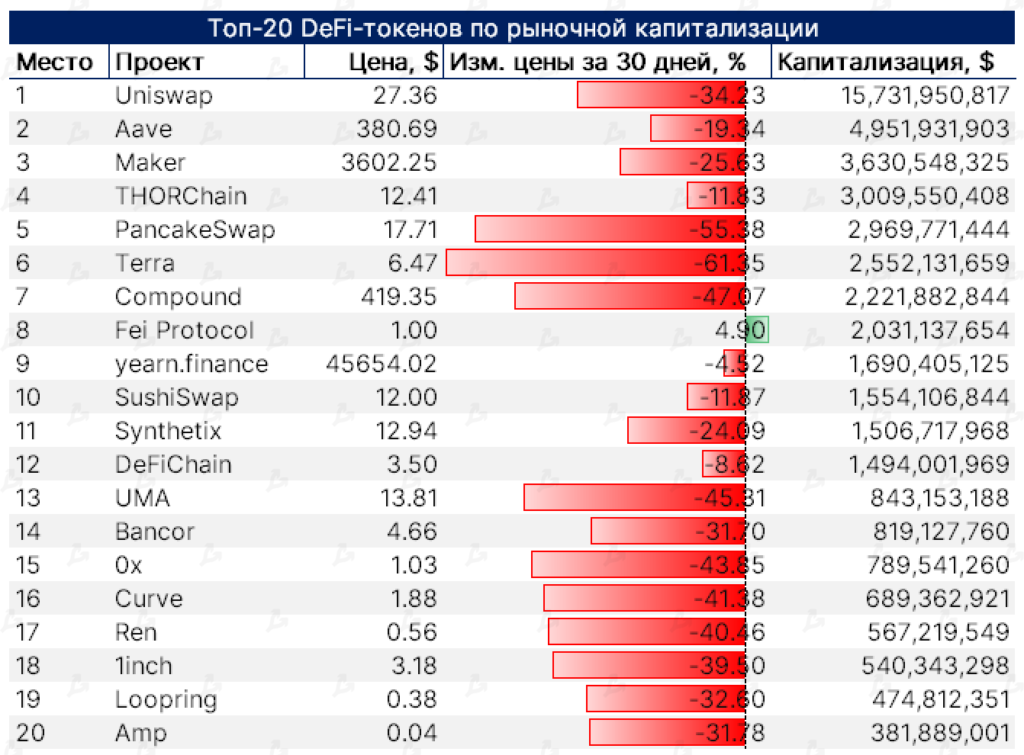
Top-20 DeFi coins by market cap. Data: Messari (as of 1.06.2021).
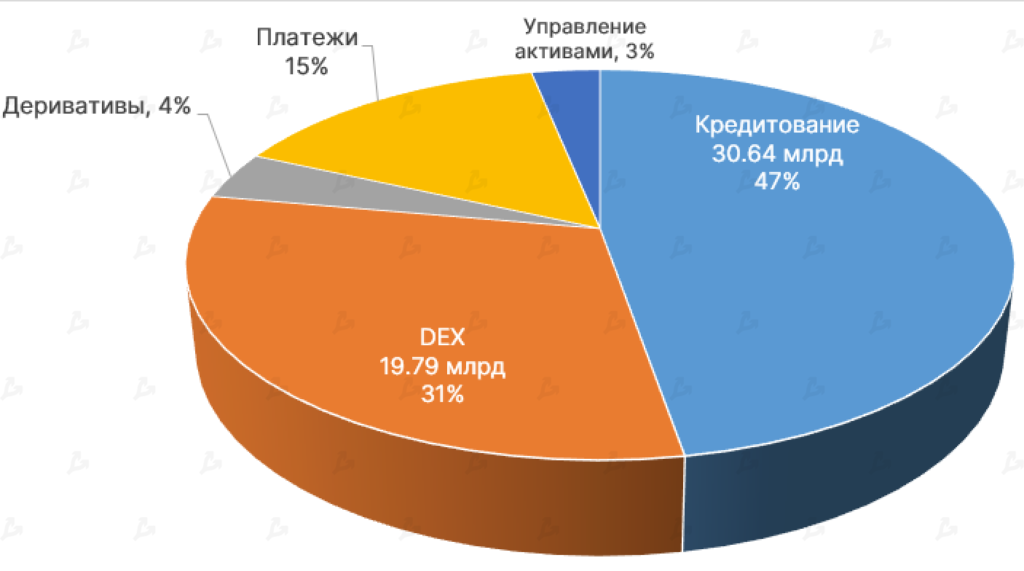
In the DeFi ecosystem by sector, lending remains dominant (47%) and DEX (31%).
By the end of May, almost all top DeFi tokens had fallen in price. Terra, PancakeSwap and Compound suffered the deepest declines among the top-20.
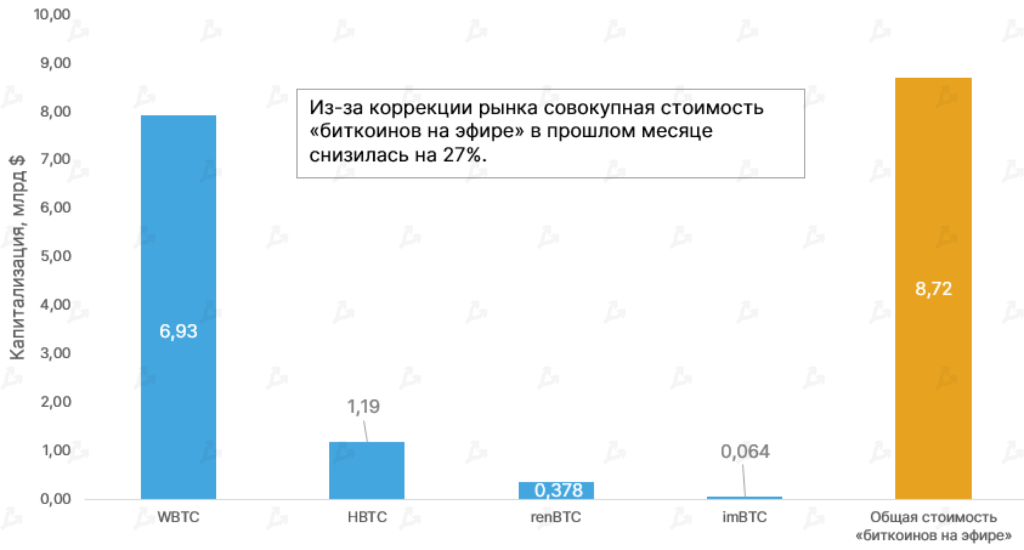
Capitalisation of popular Bitcoin on Ethereum, $m. Data: DeFi Pulse.
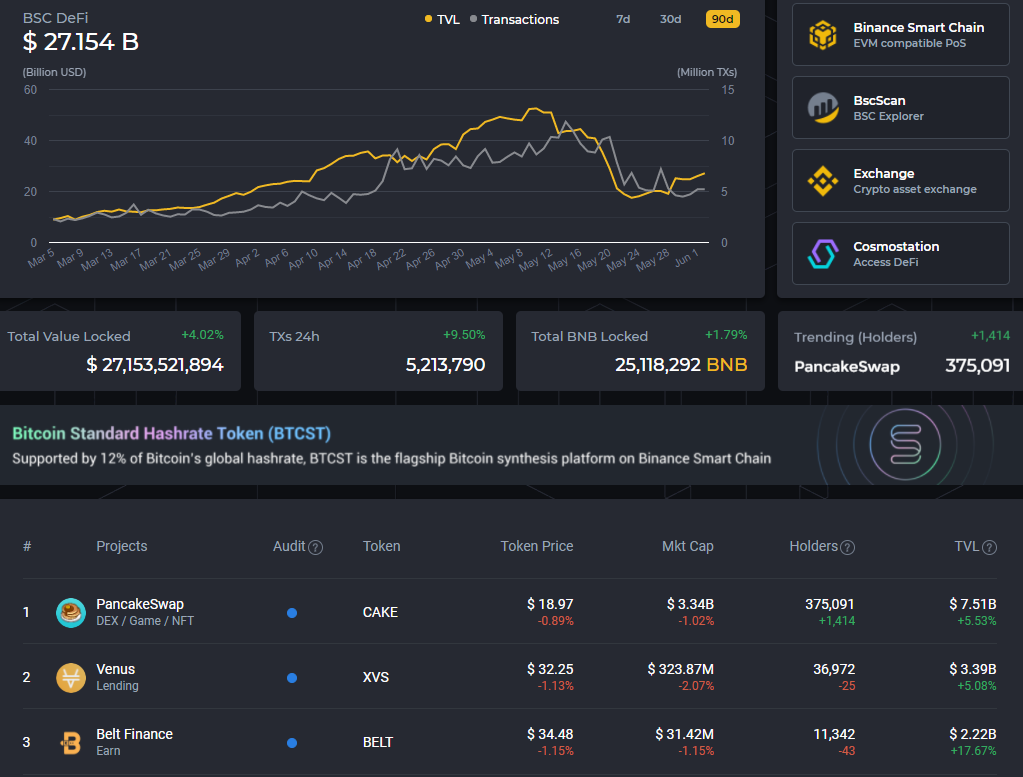
Dynamics of TVL in the Binance Smart Chain ecosystem. Data: Defistation as of 1.06.2021.
Against the correction, the overall value of tokenised Bitcoin on Ethereum fell from $11.98 billion to $8.72 billion (-27%).
TVL of the Binance Smart Chain (BSC) ecosystem dropped from $44 billion to $27 billion (-38%). PancakeSwap leads this segment. Belt Finance, which suffered a hack using flash loans, ranked third on the Defistation list.
DEX
Trading volume on decentralised exchanges, $bn. Data: Dune Analytics, CoinGecko.
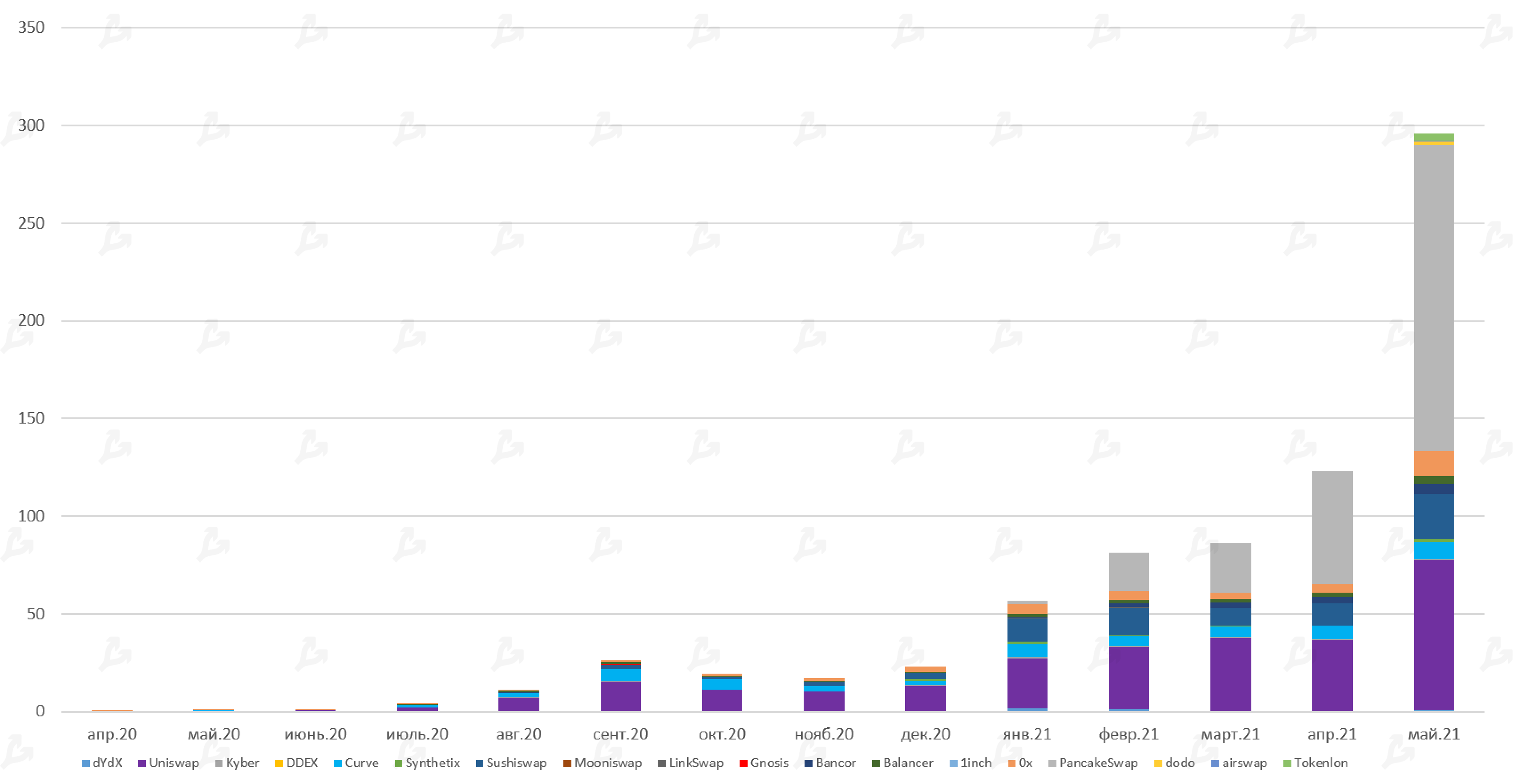
In May, trading volume on leading decentralised platforms rose by 140%, reaching a record $295 billion. We counted not only Ethereum-based protocols but also PancakeSwap, which accounted for $156 billion.
After Uniswap was upgraded to version 3, monthly platform trading volume rose by 100% and surpassed $76 billion. SushiSwap’s trading volume doubled (to $23 billion) and 0x tripled (to $12 billion).
Market shares of the largest Ethereum-based DEXes. Data: Dune Analytics as of 1.06.2021.
Top-5 Ethereum-DEX by daily turnover, $m. Data: Dune Analytics as of 1.06.2021.
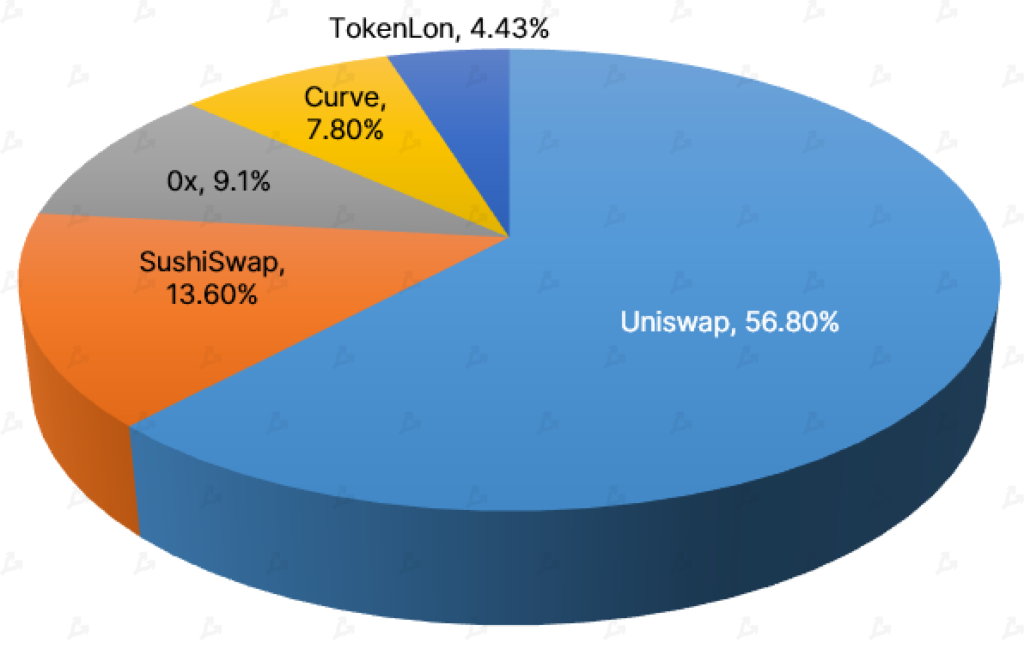
The Uniswap share of Ethereum-based DEXes rose by 2.3% over the month. The launch of version 3 with new features, including concentrated liquidity and range orders, supported this move. See the piece for details.
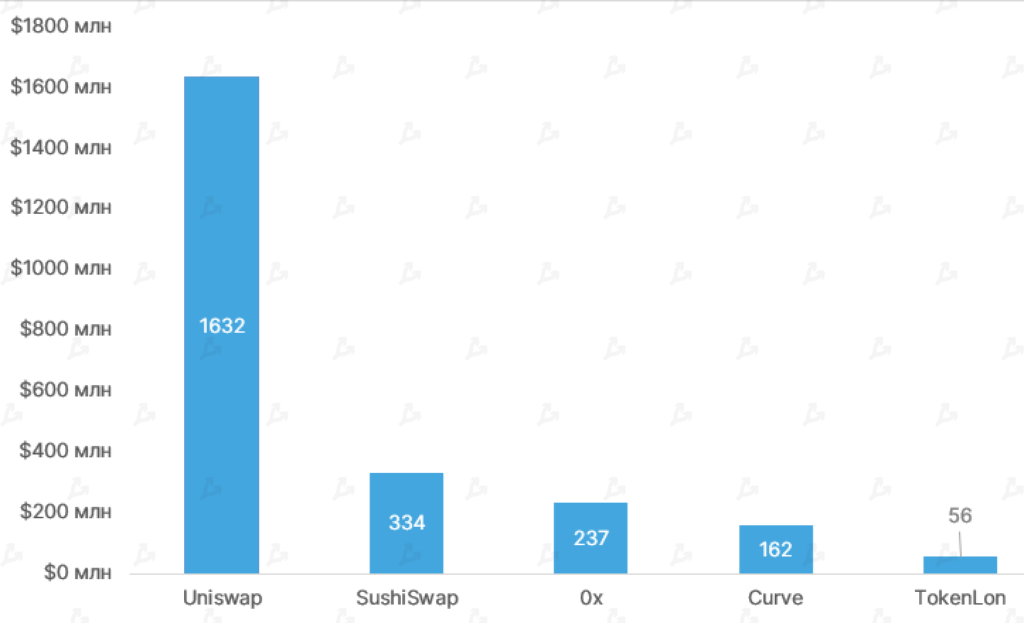
The SushiSwap share fell by 3%. The TokenLon exchange, based on the 0x protocol, entered the top-5, pushing Bancor out of the list.
Stablecoins
Market capitalisation of stablecoins, $bn. Data: Coin Metrics.
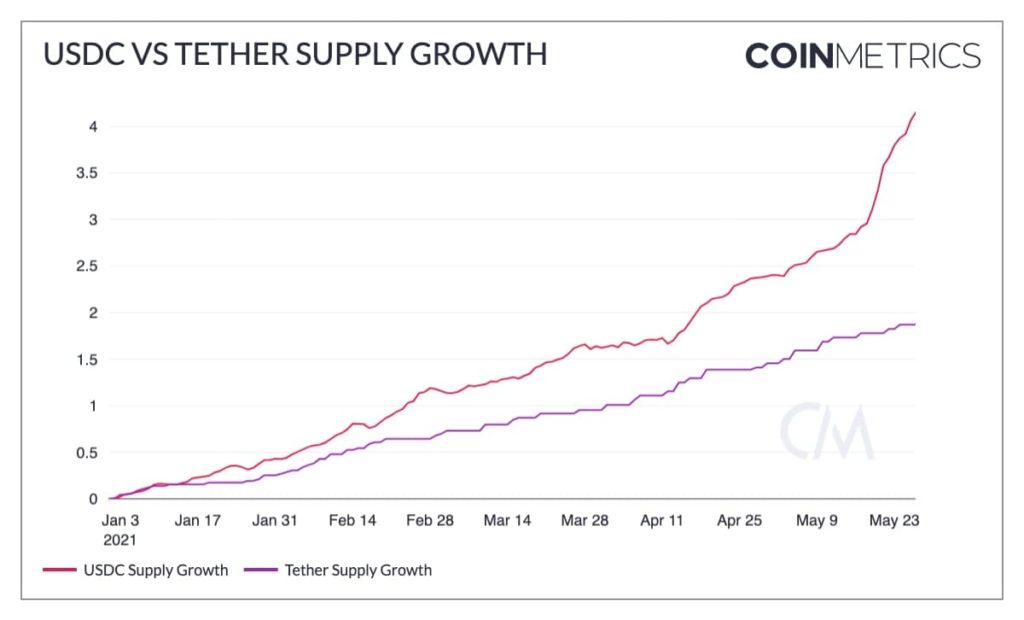
Dynamics of USDC and USDT supply. Data: Coin Metrics.
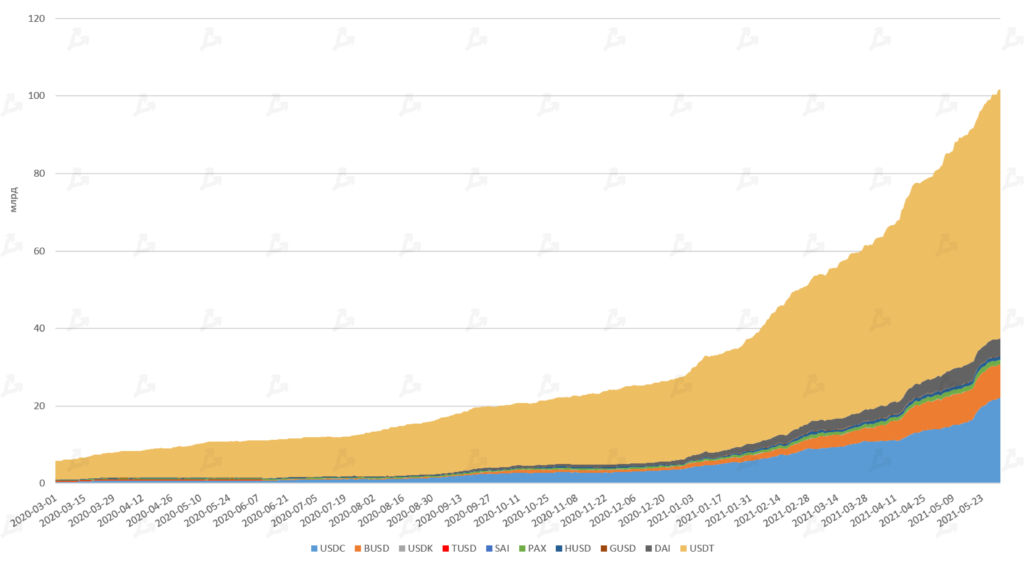
The aggregate market capitalisation of stablecoins in May surpassed $100 billion.
USDT from Tether surpassed $60 billion in market cap. USDC market cap exceeded $20 billion (+500% since January 2021).
According to Coin Metrics, USDC supply has grown faster than USDT since the start of 2021.
Mining, hash rate, fees
Ethereum miner revenues by month, $m. Data: Coin Metrics.
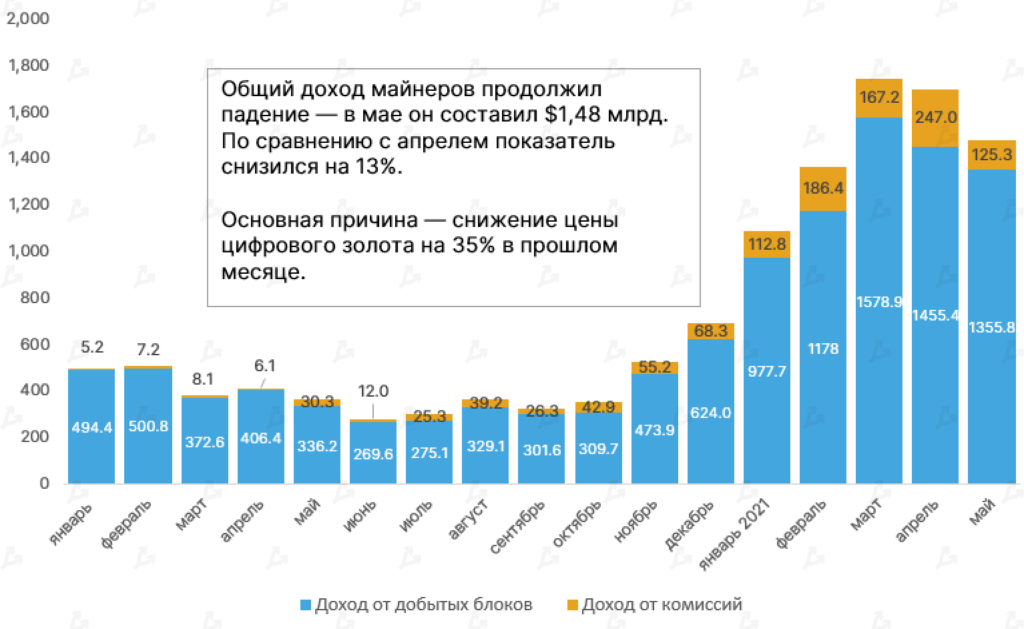
Bitcoin miner revenues by month, $m. Data: Coin Metrics.
Bitcoin miner revenues in May fell 13% to $1.48 billion. Block-reward receipts decreased 6.8% — from $1.46 billion to $1.36 billion. Fee revenues fell by more than half — from $247 million to $125.3 million.
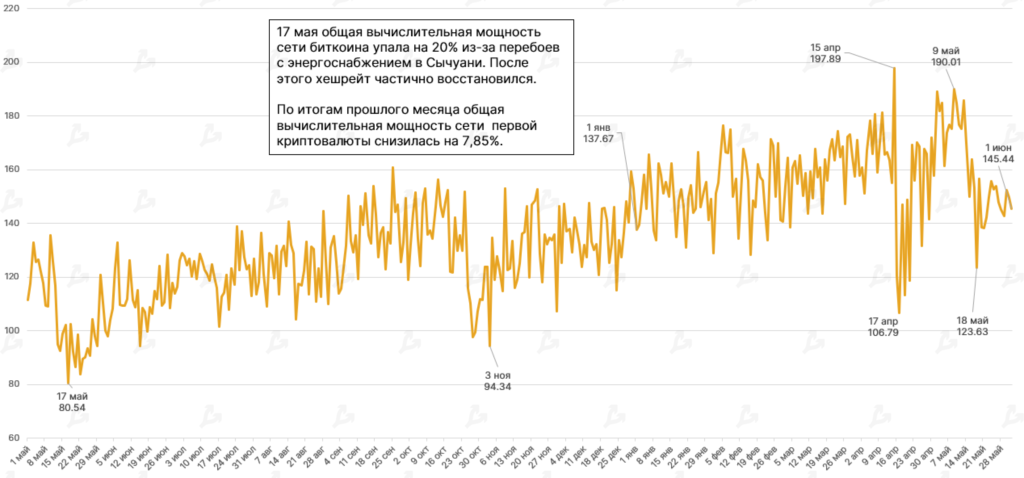
Bitcoin hash-rate dynamics. Data: Glassnode.
Mining difficulty of Bitcoin. Data: Blockchair.
In mid-May, power-supply problems in Sichuan resurfaced, causing Bitcoin hash rate to fall by 20%. By month-end, the rate partially recovered. The mining difficulty subsequently declined by 16% from the peak reached on May 13.
In the second half of May, the interval between Bitcoin blocks remained above 10 minutes. After recalibrating, the interval shortened, according to BitInfoCharts.
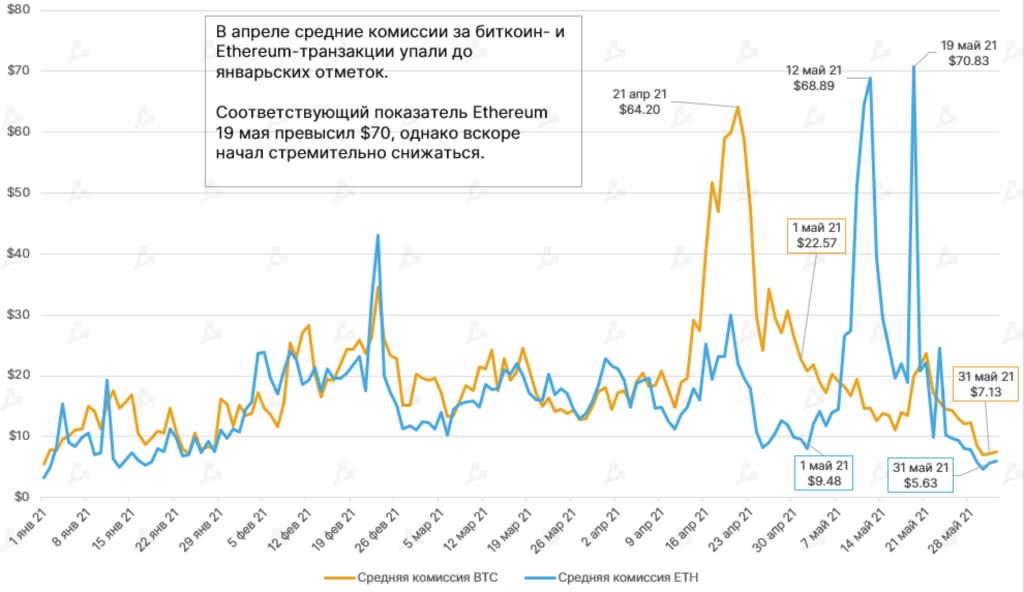
Average BTC- and ETH-transaction fee dynamics. Data: Blockchair.
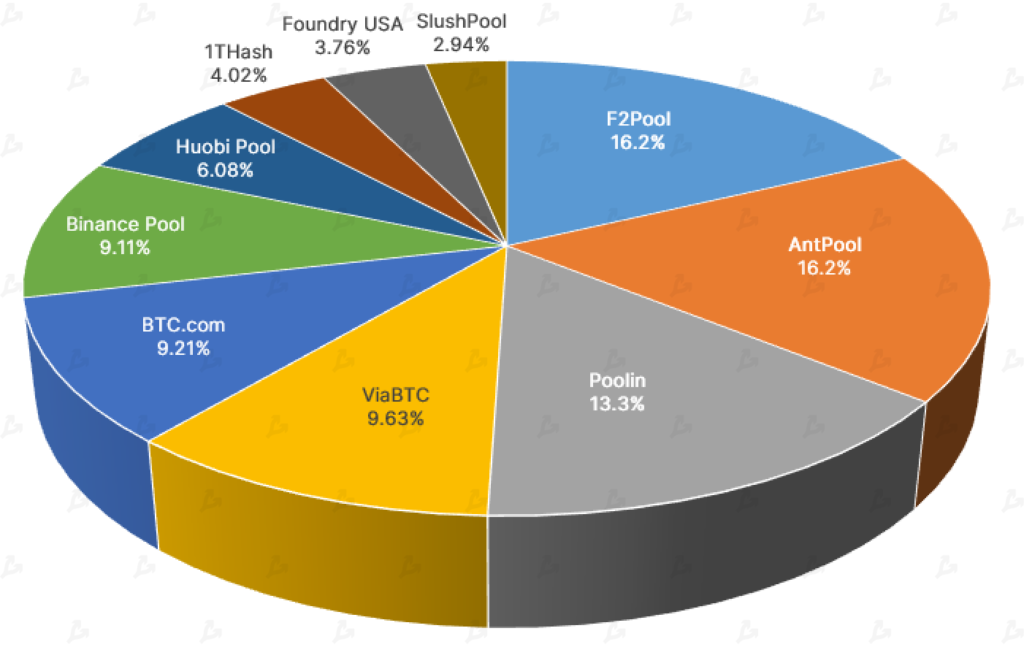
Largest Bitcoin mining pools. Data: BTC.com.
In May, the average fee for Ethereum transactions rose to above $70. One reason was hype around Shiba Inu (SHIB), a meme-coin clone of Dogecoin. By month-end, fees for Bitcoin- and Ethereum-transactions fell back to January levels.
The largest mining pools remained F2Pool, AntPool and Poolin. The balance of power in the sector remained relatively stable.
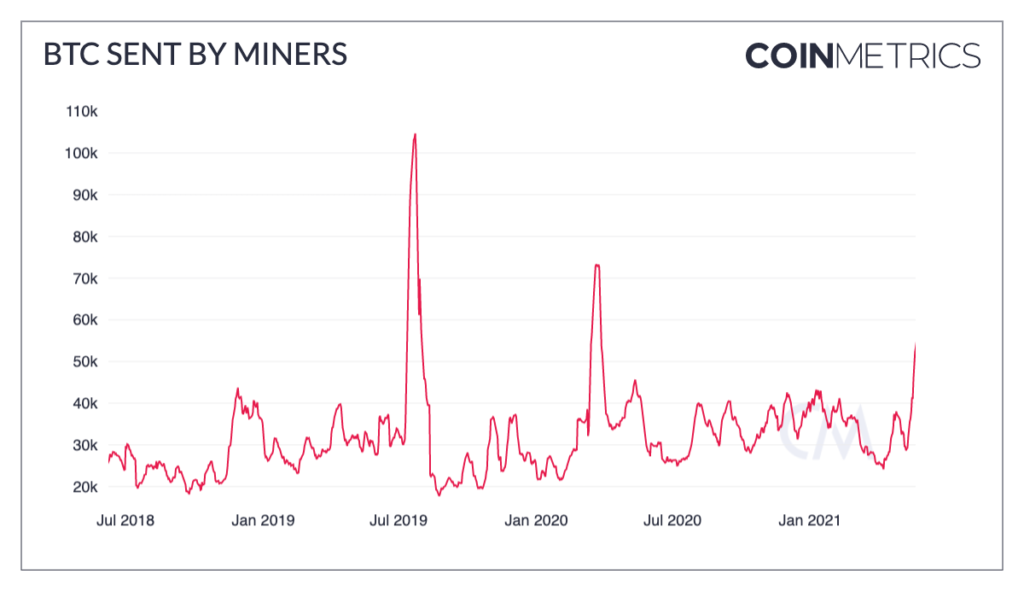
Bitcoin miners’ payouts from wallets. Data: Coin Metrics.
In May, on-chain indicators recorded the largest Bitcoin miner withdrawal since March 2020 amid events in China. By Coin Metrics, participants used off-exchange platforms.
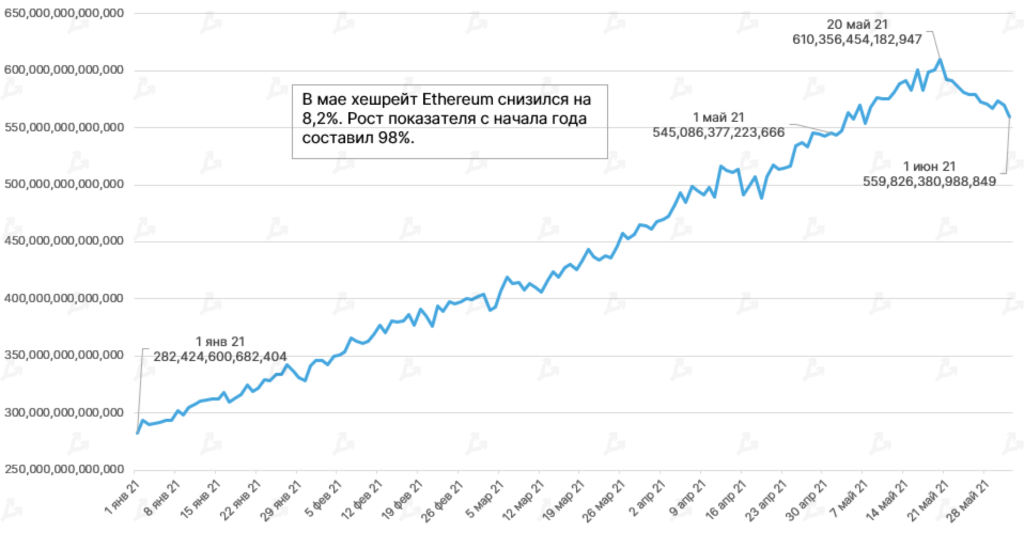
The Ethereum hash rate again hit a record high in May, but then fell by 8.2%. The year-to-date rise was 98%.
Taproot activation
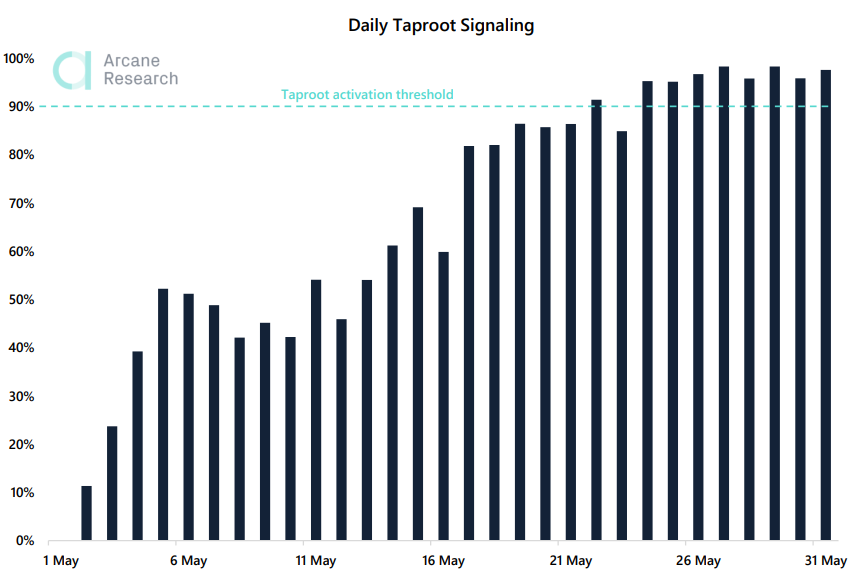
From May 2, Bitcoin miners began signaling support for the Taproot upgrade. In mined blocks, they included special “signalling bits.” The integration requires 90% of such blocks in the difficulty-recalculation window, with voting running until August 11, 2021. As of June 1, the mining pools accounting for 98% of Bitcoin’s hash rate had expressed readiness.
Taproot support dynamics by miners. Data: Arcane Research.
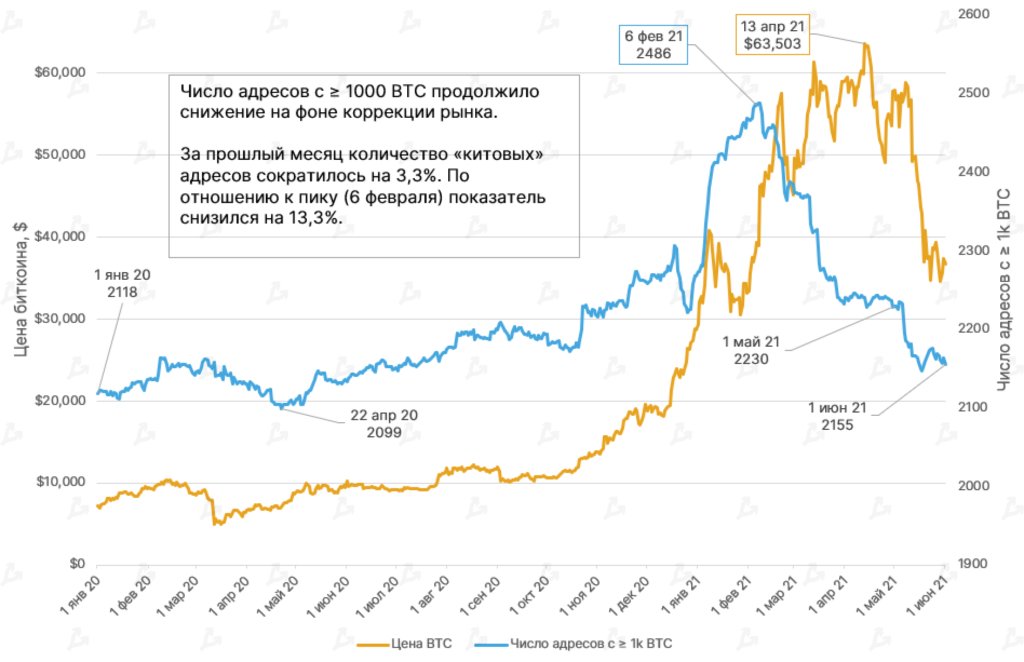
Bitcoin price and number of addresses with ≥1000 BTC. Data: Glassnode.
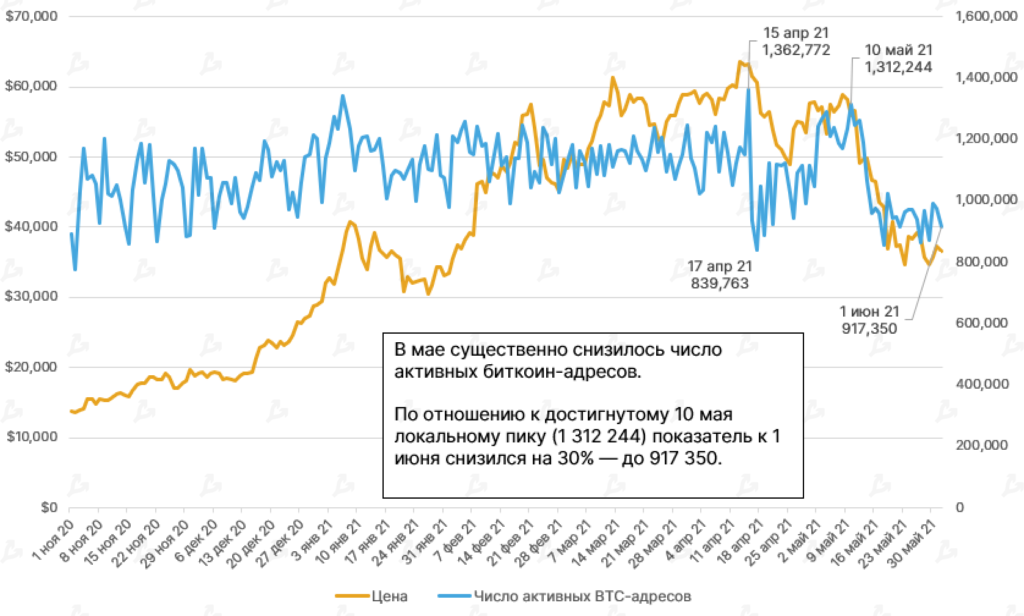
Dynamics of the number of active Bitcoin addresses. Data: Glassnode.
Against the price decline, the number of addresses in the “1000 BTC and above” category continued to fall. In the past month, their number decreased by 3.3%, and from the February peak by 13.3%. It would appear that large players were unwilling to accumulate Bitcoin.
Analysts from Glassnode and Chainalysis believe the correction was mainly triggered by short-term investors. In their view, hodlers increased purchases during the drop.
In May, bear mood coincided with a substantial reduction in on-chain activity. Compared with the May 10 local peak, on-chain activity declined by about 30%.
Transaction counts comparison in ETH- and BSC-based ecosystems. Data: Etherscan, BscScan.
Dynamics of ETH on the Ethereum 2.0 deposit contract. Source: Glassnode.
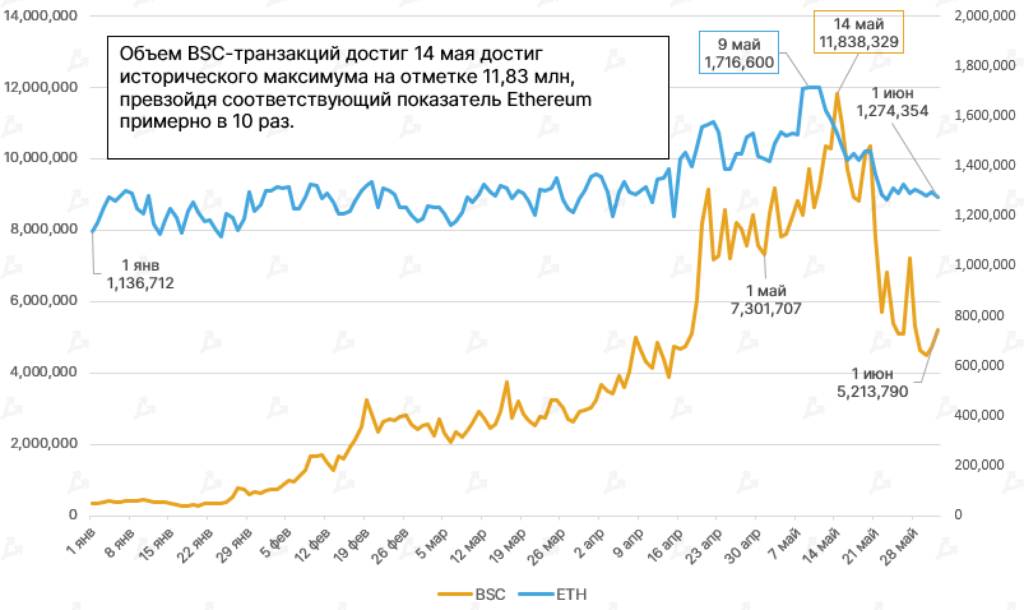
On-chain indicators in May showed a marked decline in activity. The volume of transactions in the Binance Smart Chain ecosystem reached a historical high on May 14 at 11.83 million. By June 1, the figure stood at 5.2 million (-56%). The volume of Ethereum transactions relative to the May 9 peak fell by 25%.
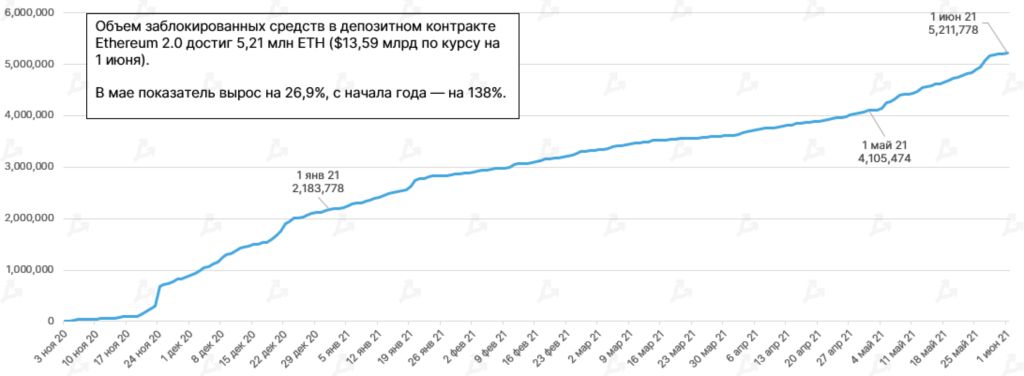
As of June 1, the locked value in the Ethereum 2.0 deposit contract stood at 5.21 million ETH ($13.59 billion at the then-exchange rate). The steady rise suggests market participants’ confidence in the future of the new version.
Activity of major players
CME
Open interest in Bitcoin microfutures on CME. Data: CFTC.
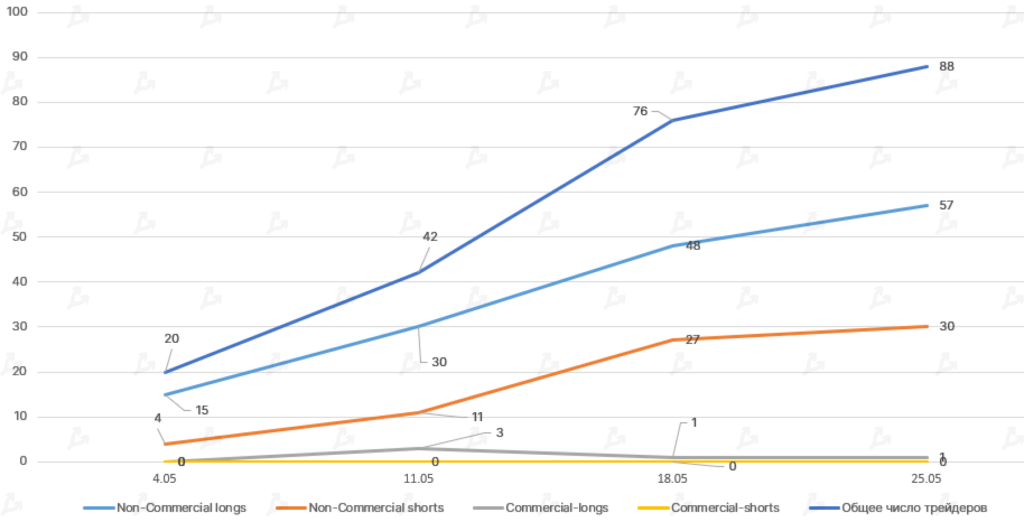
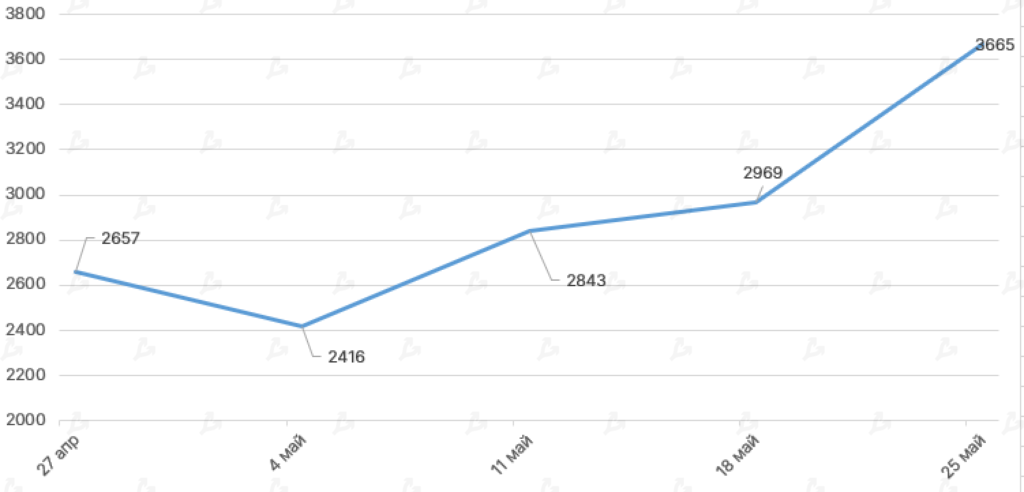
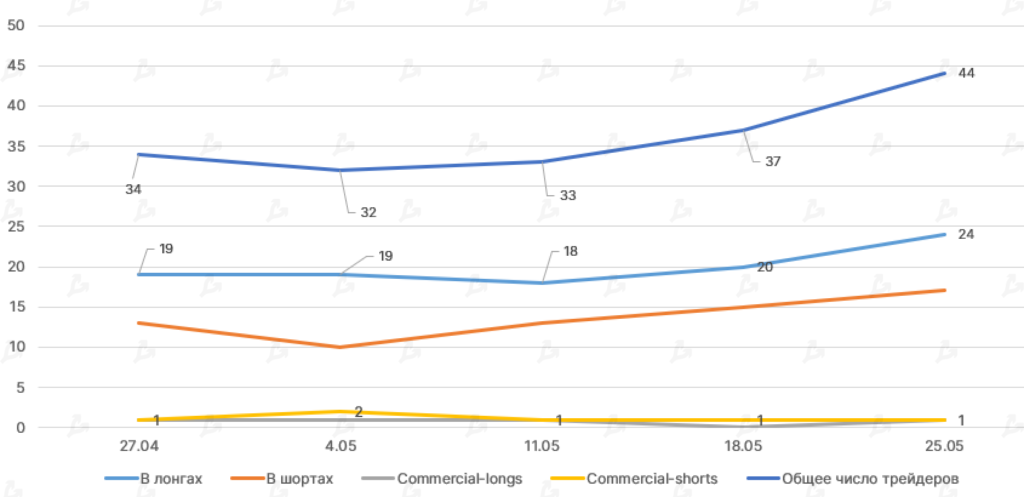
CME Bitcoin futures: positions Non-Commercial and Commercial and total traders. Data: CFTC.
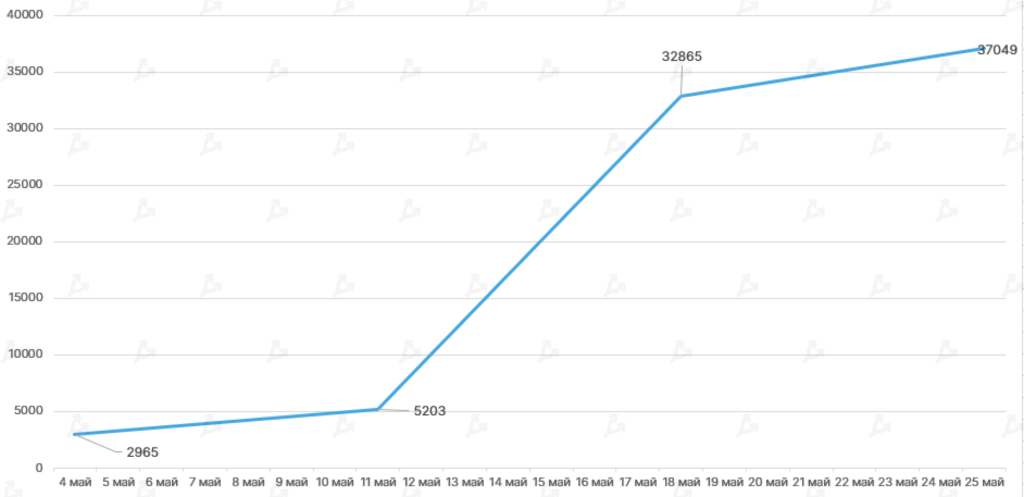
Microfutures on Bitcoin are gaining popularity among CME participants. Here, shorts are predominant among Non- Commercial traders, while longs are common among retail traders. The overall number of participants is rising.
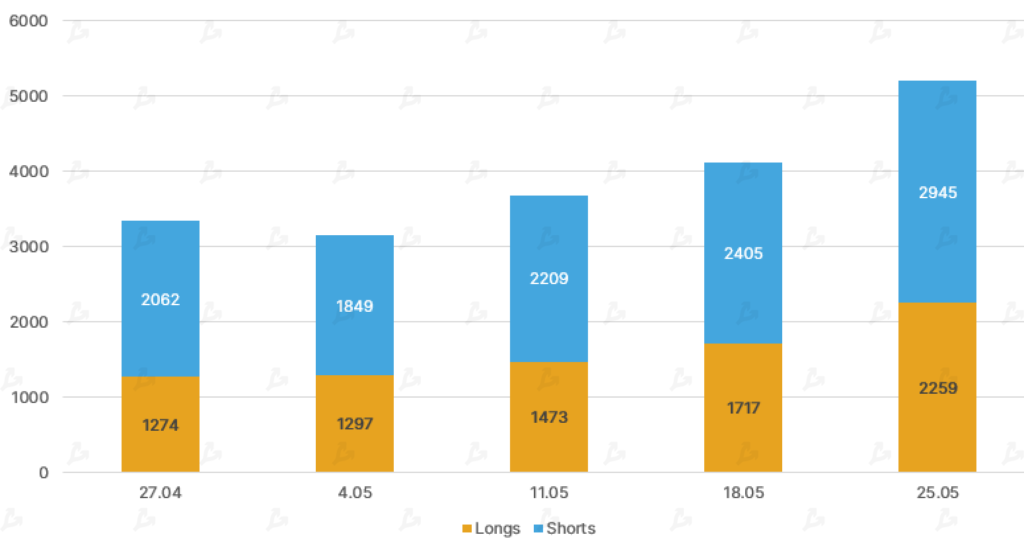
Open interest in Ethereum futures on CME. Data: CFTC.
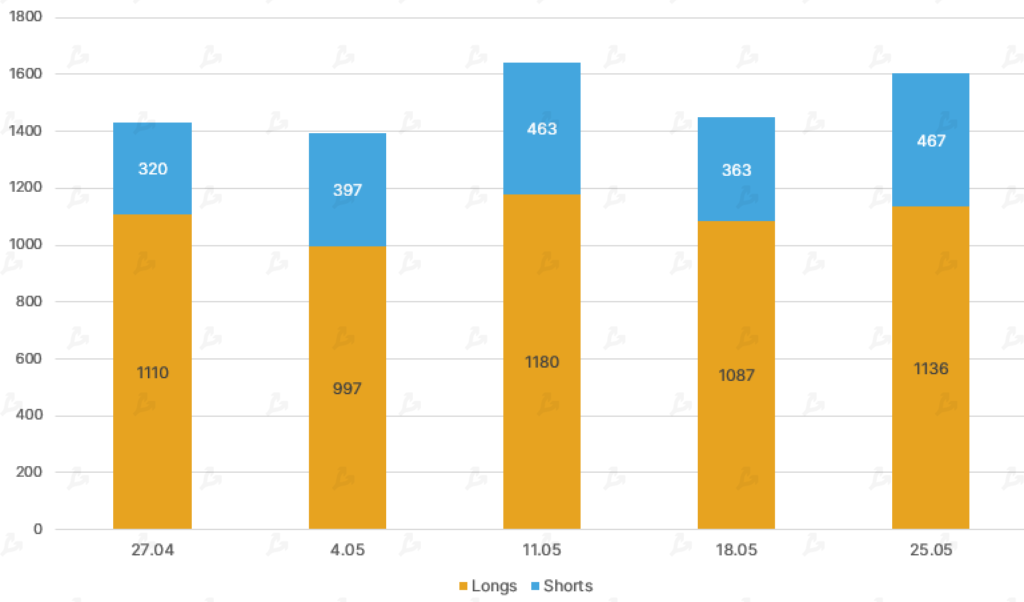
Ethereum futures on CME: Non-Commercial and Commercial positions and total traders. Data: CFTC.
Futures on Ethereum are gaining popularity too. Here, shorts predominate among Non-Commercial traders, long positions among small players. The total number of participants is rising.
Positions of small players (Nonreportable) in Ethereum futures. Data: CFTC.
Positions of small traders (Nonreportable) in Ethereum futures. Data: CFTC.
Both the CME and other venues saw growing activity in Ethereum futures, with non-commercial traders leaning short and smaller players leaning long. The overall participant count is rising.
In the State Duma, framed amendments to the Civil Code to allow cryptocurrency to be used as a means of contractual payment.
In 2020, the Bank of Russia, within its regulatory sandbox, tested three crypto-related services. The regulator disclosed the information in its annual report.
The Bank of Russia presented a report on a digital ruble. A pilot project is planned for the second half of 2021.
The government considered proposals that will form the basis of a roadmap for developing the cryptocurrency industry and blockchain technologies.
The authorities will require Bitcoin exchanges to report transactions exceeding $10,000.
Crypto firms must transmit customer data for tax monitoring.
SEC chief Gary Gensler urged Congress to provide clarity on crypto exchange regulation.
The lawmakers will require crypto exchanges to request identity documents and periodically verify them; and to report transactions above $1,200.
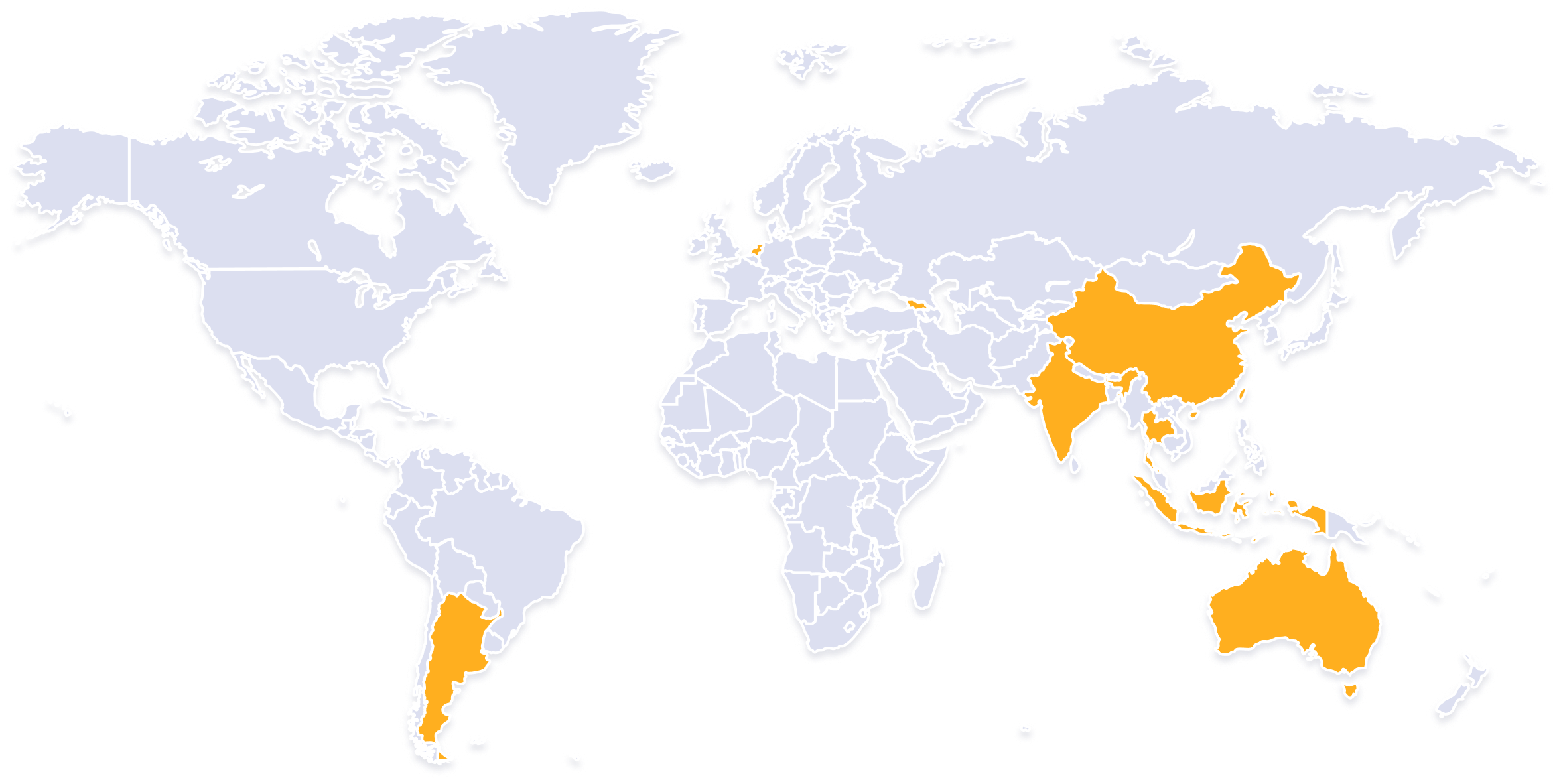
Other regions:
In China, authorities intend to take measures against mining and Bitcoin trading.
Georgiawill study the possibility of issuing a national digital currency
Central Bank of Indiareminded banks of the repeal of the crypto ban on operations
Authorities in Thailand from July 1 will require local Bitcoin exchanges to scan chips embedded in citizens’ ID cards when opening new accounts
Indonesiawill discuss imposing a tax on cryptocurrency profits.
Argentinamade it mandatory for crypto exchanges to monthly report user transactions.
Central Bank of the Netherlandsrejected tightening requirements for crypto exchanges.
Authorities in Australia will obligate crypto investors to top up taxes.
In Hong Kong, regulators plan to ban exchanges from operating without a license.
Other regions:
China’s authorities intend to take measures against mining and trading Bitcoin.
Georgiawill study the possibility of issuing a national digital currency
RBI Indiareminded banks about repealing the ban on cryptocurrency operations
Thailand’s authorities from July 1 will require local Bitcoin exchanges to scan embedded chips in citizens’ ID cards when opening new accounts
Indonesiawill discuss introducing a tax on cryptocurrency profits.
Argentinarequires crypto exchanges to report user transactions monthly.
Key features of v3 include concentrated liquidity, range-order capability and multiple positions within a single pool. Developers also plan to implement Layer 2 scaling solutions Optimism and Arbitrum. We took a close look at the update and explained its implications for the DEX segment.
Tesla stopped accepting Bitcoin payments; Musk discussed green mining with miners
On May 12, Tesla announced a pause in accepting Bitcoin for car purchases due to concerns about the environmental footprint of mining. The company said it would resume accepting Bitcoin when miners use more sustainable energy sources.
Elon Musk tweeted that the company could consider accepting Dogecoin if it becomes more widely adopted; 78% of respondents supported the idea. On May 25 Musk held a meeting with North American mining companies to discuss forming a Bitcoin Mining Council to reduce industry emissions.
The meeting was organised by MicroStrategy’s Michael Saylor and included leaders from Argo Blockchain, Blockcap, Core Scientific, Galaxy Digital, HIVE Blockchain, Hut 8 Mining, Marathon and Riot Blockchain.
Industry critics argued the initiative could risk block censorship if green-energy mining becomes the default standard, potentially harming the wider ecosystem.
Vitalik Buterin dumps meme coins
In May, meme-token clones of Dogecoin gained traction, including Shiba Inu (SHIB), AKITA (AKITA) and Dogelon Mars (ELON). According to SHIB’s white paper, half of the emission was directed to Vitalik Buterin’s personal wallet for potential burn, a move replicated by other projects. Buterin deemed the measure inappropriate and risky from a security perspective and rushed to mint the coins, provoking a dump. He donated the proceeds to charity.
ICP token from DFINITY enters the top-5
On May 7, Mercury network genesis block from Dfinity launched. The native Internet Computer (ICP) token appeared on Coinbase Pro, Binance, FTX, Huobi and OKEx. At the peak, the price reached $730, which helped ICP enter the top-5 of CoinMarketCap. By the end of the month, ICP price fell to $100. We described DFINITY in more detail in the educational cards.