



Regulation at Scale: What Changed for Bitcoin and Cryptocurrencies in 2020
In 2020, many countries made significant progress in regulating the cryptocurrency industry. A strong impulse came from the COVID-19 pandemic, during which Bitcoin’s popularity rose among institutional investors seeking legal clarity.
In some jurisdictions the sector has already been brought into a legal framework; in others, work is only getting under way. However, even proposed legislative initiatives under review could prove highly consequential in the future.
The features of the year included tighter regulatory oversight in some jurisdictions and active discussion of central bank digital currencies (CBDCs).
How and why central banks are creating digital currencies (CBDCs)
We take a detailed look at how the regulatory landscape for cryptocurrencies changed in 2020.
Post-Soviet states
Russia
In July 2020 the State Duma of the Russian Federation, in final reading, adopted the bill “On Digital Financial Assets” (“О ЦФА”). The document was signed by President Vladimir Putin. It comes into force from 1 January 2021.
The law defines cryptocurrencies and prohibits their use on the territory of the country as a means of payment for goods and services, as well as advertising such a possibility.
“Crypto-anarchists should be upset”: overview of the DFA bill
A separate bill is dedicated to digital currencies, including Bitcoin. The Bank of Russia is urging swift passage, arguing it would remove legal uncertainty.
In September the Ministry of Finance proposed to ban miners from receiving cryptocurrency—by fines and imprisonment; as of writing the amendments were not approved. If adopted, users would receive digital assets through inheritance, transfer in bankruptcy and enforcement proceedings.
With the advent of a principal regulatory instrument, authorities turned to taxation. The Ministry proposed obliging citizens and organisations to declare receipts to cryptocurrency wallets if annual operations exceed the equivalent of 600,000 rubles. Taxpayers would also need to report for operations in the equivalent of 45 million rubles.
The Ministry also proposed amendments to the Criminal and Criminal Procedural Codes introducing substantial fines and prison terms for undeclared assets. The document has not yet been approved.
The government backed the bill amending Parts I and II of the Russian Tax Code, despite negative feedback from the expert community. On 24 December the State Duma Committee on the Financial Market backed the document and recommended its adoption in the first reading.
At the level of constituent entities of the Russian Federation, the declaration requirement for digital financial assets for civil servants and their relatives was introduced by Sverdlovsk Oblast. The region outpaced Vladimir Putin, who in December codified this requirement by decree.
With all the proposed and approved initiatives, the Russian government aims, according to Prime Minister Mikhail Mishustin, to steer the development of cryptocurrencies into a civilised path.
The central bank allowed the creation of a digital ruble, but only as a third form of the national currency alongside cash and cashless means. By year-end the regulator planned to study the feasibility of issuing such an asset.
Accessibility and traceability: how the Bank of Russia sees the digital ruble
Ukraine
In January authorities approved a strategy for developing the financial sector through 2025, designating blockchain technologies as one of its directions.
Ukraine has so far exempted mining from regulation—this function remains with the protocol and network participants. The Verkhovna Rada is considering amendments allowing the possibility of reducing electricity costs for mining centers and a minimum capacity of 100 MW. The draft has drawn criticism from experts, who called it unpromising.
The State Financial Monitoring Service is investigating the sources of Ukrainians’ cryptocurrency. In the rules for declaring digital coins, they are presented as one of the types of “intangible assets.”
Since April, Ukraine has had AML/CFT legislation. Provisions relating to virtual currencies do not apply until the mechanism is developed and the law “On Virtual Assets” is enacted.
Under consideration is a mechanism for the confiscation of digital assets obtained through illicit activity.
Authorities are also moving forward with stimulating the digital economy. In November a bill was submitted to the Verkhovna Rada committee providing for the creation of a special legal regime “Diia City.”
Protection from arbitrariness and Bitcoin regulation: what Diia City offers Ukraine’s IT business
A significant change in regulation will be the bill “On Virtual Assets” — it classifies virtual assets as intangible property and defines accompanying fundamental concepts. The document does not prohibit citizens from owning and using cryptocurrencies.
On 2 December, the document in the first reading was supported by 230 deputies of the Verkhovna Rada, with 68 opposing.
Ukraine will legalise Bitcoin: how the bill “On Virtual Assets” will change things for cryptocurrency owners
Alongside other countries, Ukraine is exploring the possibility of creating a digital equivalent of the hryvnia. The financial regulator has initiated a bill titled “On Payment Services,” containing a definition of the CBDC and confirming the NBU’s right to issue them. In mid-November the document was submitted to the Verkhovna Rada.
Belarus
Despite the authorities’ prior leniency toward the crypto industry, in 2020 the Investigative Committee flagged the need to legislatively codify the seizure of cryptocurrencies.
The republic’s financial regulator proposed connecting banks to the issuance and execution of transactions with utility tokens to attract funding in national and foreign currencies.
In November, Belarusbank, the state-controlled bank, announced the launch of a legal cryptocurrency exchange service using Visa payment cards as part of its digital transformation.
Uzbekistan
Early 2020 saw the National Agency for Future Projects under the president announce the creation of a mining pool and a licensed Bitcoin exchange. The latter, named Uznex, opened on 21 January.
In May participants in the local crypto market were required to comply with anti-financial crime and anti-terrorism financing laws.
Kazakhstan
Kazakhstan approved new regulation for the crypto industry — among other things the document recognises digital assets as property and bans the issuance and circulation of Bitcoin on the territory of the republic “except as provided by law.”
In September the government decided to attract in the mining sector investments totaling 300 billion tenge (over $700 million). Authorities argue that farm activity would create new jobs, transfer technology, and utilise electricity surplus.
From September 2019 to April 2020 Kazakhstan showed notable growth in mining capacity — more than quadrupling, to 6.2% of Bitcoin’s hashrate.
The National Bank of Kazakhstan also showed interest in the possibility of issuing a CBDC. In November the regulator began studying this possibility, promising to present its conclusions in the second half of 2021.
Kyrgyzstan
In 2020 the authorities taxed miners at 15% and defined a virtual asset as a digital expression of value. Industry representatives registered with the agency must report in the prescribed form.
At the same time the legal status of cryptocurrencies in Kyrgyzstan remains undefined. Toward year-end the National Bank announced it was preparing a regulatory act to govern companies providing cryptocurrency exchange services .
North America
USA
From 2019 through April 2020, as part of the 116th Congress, American lawmakers proposed a total of 32 bills related to cryptocurrency regulation.
Some focus on building a regulatory framework, others address possible misuse of digital assets in illicit activity. Some explore government use of blockchain and cover the concept of a digital dollar.
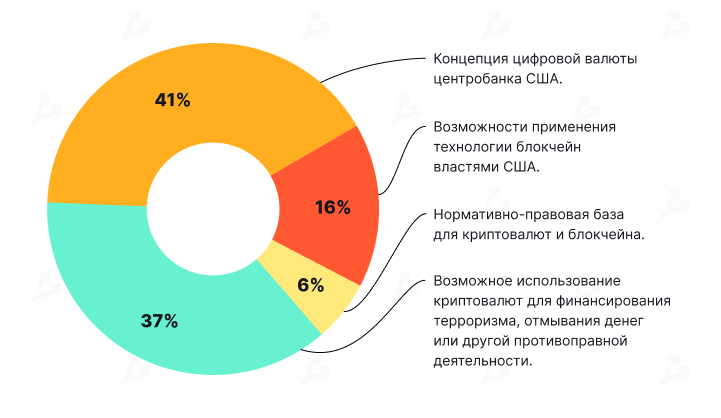
Bills on cryptocurrency and blockchain as part of the work of Congress 116th session (2019-2020). Data: Forbes.
At the start of 2020 the Financial Crimes Enforcement Network (FinCEN) together with the U.S. Treasury announced new regulatory requirements for cryptocurrencies. By December FinCEN proposed to verify Bitcoin wallet users for outgoing transactions of $3,000 or more. For transactions over $10,000, the regulator envisaged that companies would inform the agency directly.
The Commodity Futures Trading Commission (CFTC) clarified the definition of the delivery of digital assets to a purchaser, and a month later decided to monitor unregistered derivative offerings to U.S. investors by foreign firms.
Later, CFTC Chairman Heath Tarbert, whose resignation the agency announced on December 10, urged speeding up the legitimisation of cryptocurrencies and to regulate them by principles rather than rules.
At the state level, Louisiana approved a bill licensing crypto businesses. It set out the licensing process, and the definitions of exchanges and terms related to digital assets entered the legal framework.
Positive changes occurred in Hawaii: under a pilot programme organisations can issue cryptocurrencies without a payment services licence. Senators floated proposals to allow banks to offer digital services to clients, hold virtual assets and other “open blockchain tokens.”
From July in Wyoming, insurers may invest in Bitcoin and other digital assets, excluding those used or purchased for consumer, personal or household purposes.
In September the Wyoming Banking Board granted Kraken, the first US-based Bitcoin exchange, traditional banking functions. In October a similar decision was taken for the crypto startup Avanti.
In July the Office of the Comptroller of the Currency (OCC) within the Treasury allowed national banks to hold cryptographic keys for crypto wallets, and in September — reserves of stablecoin issuers.
These steps drew the ire of US Representative Maxine Waters, who urged the Biden administration to roll back the OCC’s decisions.
The states obliged residents to report to the Internal Revenue Service (IRS) any Bitcoin and other cryptocurrency transactions — as indicated by Form 1040. In the autumn the IRS asked citizens to report coin receipts as a result of hard forks. However, in the absence of buying or selling activity the service allowed not to disclose information about holdings.
Toward year-end a group of congressmen proposed to require stablecoin issuers to obtain banking licences and regulatory approval. They argued this would protect users from risks associated with digital payment instruments.
Canada
From June onwards, Canada began enforcing new rules requiring local and foreign firms offering exchanges and transfers, including those involving virtual currencies, to register with FINTRAC and comply with its rules.
Under the rules, cryptocurrency transactions above 10,000 Canadian dollars require reporting and customer identification, with primary relevance to crypto firms dealing with fiat.
In February 2020 the Bank of Canada said it did not find compelling reasons for issuing a CBDC, thus ruling out a domestic digital currency in the near term.
In October, central-bank experts saw CBDCs as a threat to financial stability. They argued extra attention should be paid to safe custody and e-wallets. To avoid surprises, the Bank of Canada urged countries to coordinate actions in developing digital currencies.
European Union
Against the backdrop of the pandemic, the European Commission accelerated regulation of cryptocurrencies and stablecoins. Brussels recognised that people were turning more to online payments and digital assets, hence the need to accelerate legislative standards.
Since January 2020 the fifth anti-money-laundering directive (5AMLD EU) has been in force, intended to strengthen global security and financial-system integrity. Some countries have implemented it, and a number of crypto firms provide services under its provisions.
In September the EC presented an 168-page document, setting out “tougher requirements” for capital controls, investor protection and supervision. By 2022 the EC plans to establish a regulatory sandbox for testing smart contracts and blockchain-based products.
European authorities also proposed regulating cryptocurrencies, stablecoins and security tokens on par with other financial assets. The INATBA (International Association of Trusted Blockchain Applications) warned the measures could overload the industry.
CBDC remained a major theme. In the ECB, a study group was tasked with examining its feasibility, while the regulators sought a trademark filing for a “digital euro” ahead of publication of a formal report.
A report on possible launch emerged in October. The ECB announced the start of consultations and experiments, and launched a survey on the need for a CBDC. Work on a plan for a digital-asset launch is planned to begin in mid-2021.
Regulatory questions for the cryptocurrency industry also engaged several European countries.
Austria
Austria imposes fines of €200,000 on crypto firms that do not comply with the EU’s 5AMLD directive.
Germany
In Germany digital assets are recognised as financial instruments, and the blockchain is to be introduced on the securities market to boost liquidity and improve regulatory compliance.
For providers of crypto ATMs rules have been defined — they must obtain a permit to install devices in public places. As of writing, Germany had 52 crypto-atms.
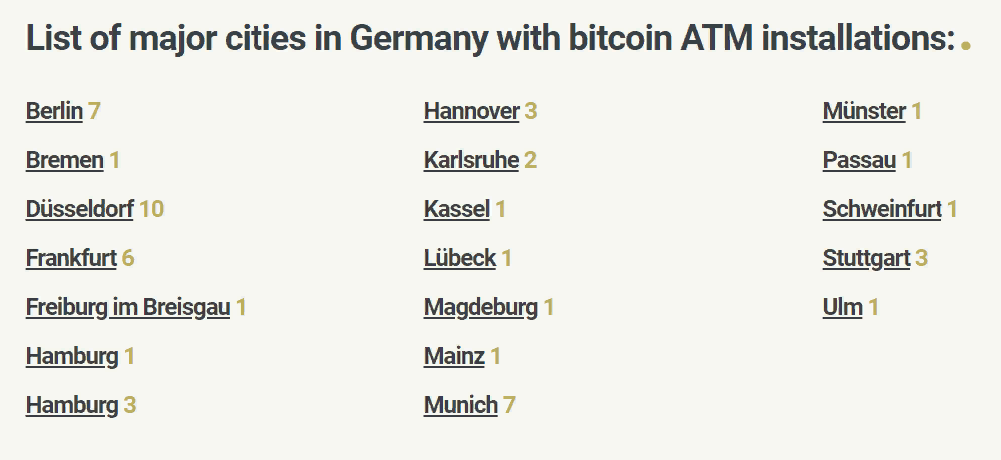
Data: Coin ATM Radar.
Also banks may sell and hold client cryptocurrencies in line with 5AMLD EU.
On 22 December authorities imposed a de facto ban on crypto-derivatives trading for 2021. The new tax regime caps losses from these operations at €10,000.
Ireland
The Irish Cabinet decided to align crypto regulation with the 5AMLD EU, tightening rules for sector players, dealers and art-market intermediaries.
Spain
Under the same directive, Spain’s authorities plan to require crypto exchanges, wallet operators and private-key holders to register with the central bank.
A draft bill requiring crypto holders to disclose their assets and profits is under development.
Spain is aiming to keep pace with neighbours on a national digital currency. CBDC development remains a priority area for 2020–2024.
France
In April the French Financial Markets Authority (AMF) defined cryptocurrencies as a {“digital asset based on cryptography and existing on a distributed ledger”}. A month earlier the Commercial Court of Nantes effectively equated Bitcoin with fiat currency, recognising it as a convertible intangible asset.
In October 2020 the economy and finance minister Bruno Le Maire announced amendments to the anti-separatism bill tightening regulation of cryptoassets. The minister linked the measures to drug trafficking and money laundering, arguing that stricter oversight would reduce the financing of terrorism.
In December it emerged that authorities plan to require companies to verify users engaging in crypto-fiat transactions for any amount, and to regulate platforms that do not support fiat currencies.
In March the Bank of France began studying CBDCs for tokenising financial assets. In mid-May the regulator sold securities for a digital euro and planned further tests with counterparties from other euro-area countries.
In September the bank selected a platform for CBDC experiments—Tezos. In the pilot, participants will explore settlement via assets on digital securities.
Estonia
Estonia tightened its approach to crypto projects. From 1 July, applicants must provide not only a full dossier but also have staff physically present in Estonia.
Ranging submission times for licences rose from 60 to 120 days. Fees increased from €345 to €3,300.
In 2020 authorities revoked licences for more than 1,000 companies. Some 400 crypto service providers continue to operate in the country.
Other jurisdictions
United Kingdom
The authorities turned their attention to advertising financial products and services, including cryptocurrencies. The Treasury proposed adding an extra ‘gate’ and requiring firms to obtain consent to advertise from the Financial Conduct Authority (FCA).
Trading of crypto derivatives and exchange-traded notes to retail investors has been prohibited since October 2020.
Crypto firms were also required to apply to register with the FCA; however, many were unable to obtain approvals due to the pandemic. A temporary registration regime was introduced for them to operate until mid-2021.
Britain has considered regulation of stablecoins and the feasibility of issuing a CBDC. The Bank of England and the Treasury were tasked with leading this exploration.
Gibraltar
One of the most crypto-friendly jurisdictions in 2020 moved to tighten its regulation. New rules include market-manipulation controls and a system to enable crypto firms to gather customer information.
The authorities updated FATF compliance for blockchain firms. The amendments clarify token issuance and include a risk-management framework.
Cayman Islands
The Cayman Islands Ministry of Finance, which the EU had earlier removed from the list of non-cooperative jurisdictions, seeks to create a favourable environment for virtual asset service providers (VASPs) under FATF rules. They must comply with AML/CFT and register with the local financial regulator.
Switzerland
One of the crypto-friendliest countries tightened requirements for sending Bitcoin payments of more than $1,000 to identify the counterparties.
New standards for storage and management of digital assets appeared, explaining differences from traditional asset custody and establishing custodial guidelines.
The legal framework for regulating blockchain and the crypto industry will be implemented in August 2021.
Switzerland is not lagging in CBDC development. It joined the Bank for International Settlements (BIS) for experiments.
Asia
Hong Kong
The jurisdiction passed FATF assessment and announced tougher regulation of the sector in anti-money-laundering and financing of terrorism contexts.
In November the local Securities and Futures Commission proposed a new licensing scheme covering all Bitcoin exchanges. Previously a regulator was required only if a platform offered even a single security token.
India
In March 2020 the Supreme Court of India overturned the RBI directive prohibiting regulated entities from dealing with digital assets. However, several large banks moved to resume serving Bitcoin exchanges only in December amid a rise in Bitcoin’s price.
The lack of a clear regulatory stance yielded several misinformation campaigns. In June there were reports of a total ban on cryptocurrencies, and in September — restrictions on trading — but there was no official confirmation.
China
2020 in China was dominated by the digital yuan, but authorities paid attention to setting a regulatory framework for cryptocurrencies as well.
At the end of July the Beijing Arbitration Commission clarified that activity related to Bitcoin is not prohibited when the asset is used as a digital commodity.
One regulatory initiative was the creation of a special committee to develop national standards for blockchain and distributed ledger technology (DLT).
In May a draft law included internet assets and cryptocurrencies on a list of inheritable properties. The latter would be distributed according to a will or other inheritance norms.
Since July the definition of blockchain has official status. The Supreme People’s Court ruled that it is a technology supported by multiple parties, using cryptography to ensure secure transmission and access, immutability of data, protection against unauthorized access and non-repudiation.
In October the financial regulator proposed to legalise the digital yuan and to ban issuance of tokens tied to it. Subsequently, authorities carried out a lottery in Shenzhen to distribute red envelopes; a similar distribution was planned in Suzhou.
Malaysia
From late 2020 the country allows startups to issue tokens through venture capital firms and financial institutions without selling equity or using debt instruments.
Both institutional and retail investors may participate, but the maximum raise through ICOs was capped at MYR 100 million.
IEO platform organisers must now register with the Securities Commission and conduct issuer due diligence.
Singapore
From the start of the year crypto firms, including exchanges, must register and apply for a payment-service licence.
A more tolerant stance toward individual miners and coins obtained from hard forks or airdrops means they are not taxed.
Thailand
Local financial institutions gained the right to include crypto assets in asset valuations. This would free liquidity for organisations planning to launch crypto or security-token trading platforms.
South Korea
Parliament supported legalising crypto trading. By roughly September 2021, all industry participants should comply with financial reporting, comply with KYC procedures, and certify information-security-management systems.
The Financial Services Commission of South Korea banned providers of services tied to digital assets from operating domestically with anonymous cryptocurrencies. The amendments will take effect from March 2021.
A positive note came from the National Assembly’s Planning and Finance Committee — it decided to defer the introduction of income tax on crypto transactions until January 2022.
Regarding CBDC, the central bank confirmed plans to develop it. The latest stage of testing is scheduled for the coming year.
Japan
In Japan, with a one-month delay, amendments to the Payment Services Act and the Financial Instruments and Exchange Act took effect. Instead of the term “virtual currency,” the term “crypto asset” is used, and exchanges may segregate their own and users’ funds through a third party. The third party must utilise reliable methods such as cold wallets.
Game tokens from crypto-game projects cannot participate in trading. In addition, the Financial Services Agency (FSA) required the elimination of anonymous features from decentralized applications.
Authorities included CBDC in official economic planning, but indicated they might abandon the project if it does not garner public support.
Africa
South Africa
In April, the Inter-Governmental Working Group on Fintech proposed tighter controls over the crypto industry. The proposal could strip digital assets of their status as legal tender and bring them under tighter control, restricting their use to “internal payment purposes.”
Later, the local regulator proposed treating Bitcoin and other cryptocurrencies as financial instruments and requiring providers to register as such.
Zimbabwe
In this country Bitcoin and other digital currencies are prohibited until a suitable regulatory framework is in place. The central bank proposed laying the groundwork in April for a fintech framework to evaluate the direction of crypto-asset activity.
Nigeria
The Securities and Exchange Commission (SEC) of Nigeria recognised digital assets as securities, “unless proven otherwise.” A regulatory framework is also being prepared.
Conclusions
The past year showed that decentralisation and anonymity continue to worry authorities, although some countries have offered industry participants pragmatic compromises.
SEC Commissioner Hester Peirce argued that cryptocurrencies require progressive rules, and she repeatedly spoke in defense of the industry, urging authorities to find ways to anchor principles of individual freedom at the heart of digital assets and to resist over-regulation.
Circle chief executive Jeremy Allaire urged collaboration in formulating regulatory policy in the United States. The FATF acknowledged that the industry is only beginning to adjust to regulatory requirements.
In the EU, regulators remain wary about the origin and traceability of digital assets.
As institutional investors come on board, there is growing regulation, oversight and taxation-related initiatives. Not everyone in the community welcomes this trend, because at the core of Bitcoin lie different values.
For now, the balance of power is shifting toward regulators who are less tolerant of financial sovereignty and the inability to reverse transactions. Whether developers will be able to resist at the code level remains to be seen.
Subscribe to ForkLog’s channel on YouTube!
Рассылки ForkLog: держите руку на пульсе биткоин-индустрии!