




Markets recovered after a de-escalation in the Middle East; the head of the Fed backed crypto legislative initiatives; in Russia, P2P transactions with digital assets were deemed entrepreneurial activity; and other events from the past week.
Crypto market strengthens
Last week bitcoin ended below $100,000 amid fears Iran might block the Strait of Hormuz. On Monday the asset began to gradually recover.
On Tuesday the leading cryptocurrency returned above $105,000 following U.S. President Donald Trump’s remarks on prospects for ending the conflict in the Middle East.
By Wednesday bitcoin rose to $108,000, but traded in a $106,000–108,000 range through the end of the week.


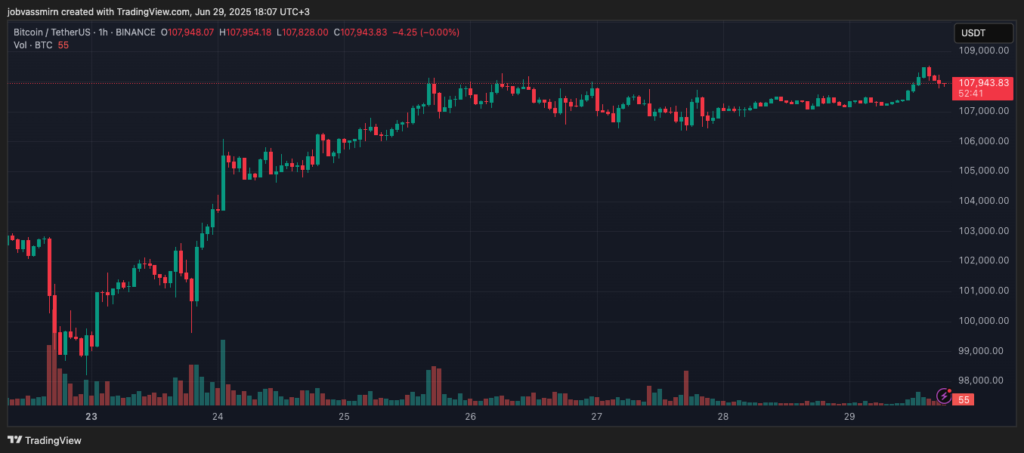
On Sunday digital gold tried to break the upper bound but reversed near $108,500. It now trades around $107,900.
CoinDesk analyst Omkar Godbole believes that a rise above the $109,000 resistance would complete a “bull flag” and deliver new highs.
Meanwhile bitcoin’s dominance rose to 62%. That reflects strong investor interest in the asset and less engagement with altcoins.
Week on week, bitcoin gained 8.4%, while Ethereum added almost 11%, trading around $2450 at the time of writing. The slight divergence likely stems from the depth of the previous drawdown.


All top-10 coins by market capitalisation finished the week in the green.
XRP added 11.9% over seven days amid the gradual winding down of litigation with the SEC.
Solana rose 16.5%, Dogecoin by 10.5%.
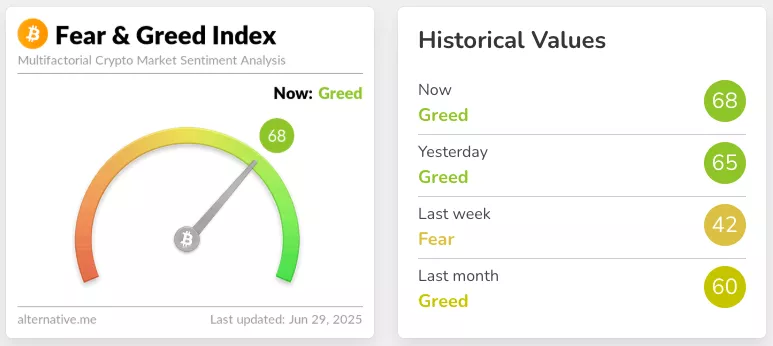
Total market capitalisation increased to $3.43 trillion. The crypto Fear and Greed Index stands at 68.

A boost from the Fed
On 24 June Federal Reserve chair Jerome Powell backed work on cryptocurrency bills at a press conference. He said the country needs a regulatory framework for stablecoins.
“It is great that bills are moving forward. We need a framework for ‘stablecoins’,” he noted.
The remarks came after Congress recently passed the GENIUS Act, which sets rules for issuing and circulating stablecoins.
In addition, the Fed will no longer consider “reputational risk” in bank examinations. Regulators had used that factor against financial institutions working with the crypto industry.
“We believe that banks decide for themselves who their customers are. They are also free to conduct operations with cryptocurrencies if this does not pose risks to their safety and soundness,” the Fed chair added.
The day after Powell’s remarks, on 25 June, U.S. Federal Housing Finance Agency director William Pult instructed mortgage giants Fannie Mae and Freddie Mac to explore the use of digital assets.


The organisations will prepare a proposal on accounting for cryptocurrencies when assessing risks on retail mortgages.
“This aligns with President Trump’s vision to make the United States the world’s crypto capital,” Pult stressed.
What to discuss with friends?
- Vitalik Buterin unveiled the concept of “pluralistic identification”.
- Ledger explained the end of support for the Nano S wallet.
- AI will not replace empathy: the popularity of “neuro-support” is overstated.
- Scientists will create synthetic DNA from scratch.
Mining difficulty drops
On 29 June, after the latest adjustment, bitcoin mining difficulty fell by 7.48% — to 116.96 T.


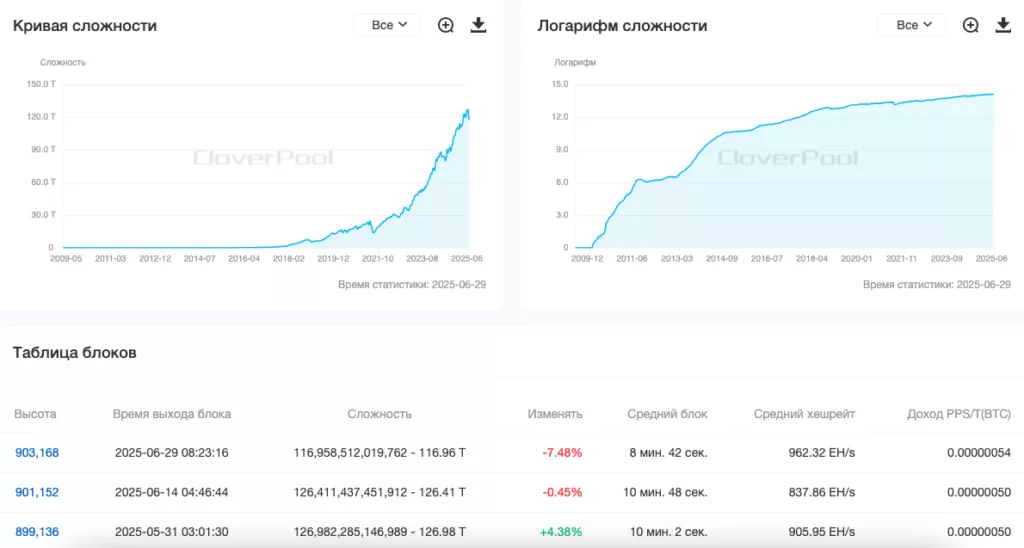
It was the second consecutive decrease, and the sharpest in years.
The seven-day moving average hash rate plunged to 799 EH/s from near-record levels.


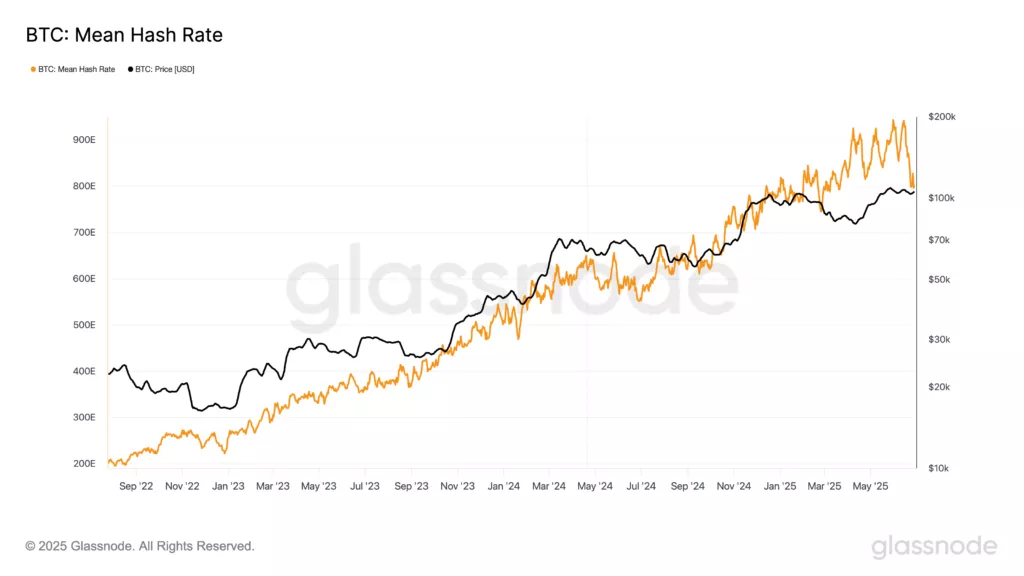
Hashprice, by contrast, increased from $53 to $58 per PH/s per day, returning to late-May levels. The metric signals a recovery in mining profitability.


Also this week, CryptoQuant analysts noted that miners have increased reserves by 4000 BTC since April despite falling revenues. At the same time, “Satoshi-era” participants have moved to accumulation.
According to their data, miners’ daily revenue dropped to the lowest since 20 April 2025 ($34 million). The reason: lower transaction fees and swings in the asset’s price.


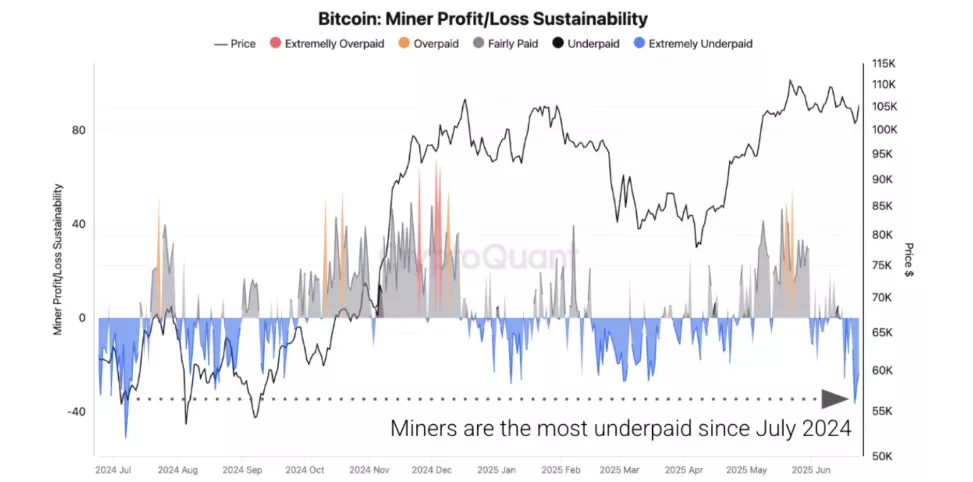
Experts also noted that the network hash rate has fallen by 3.5% over the past ten days.
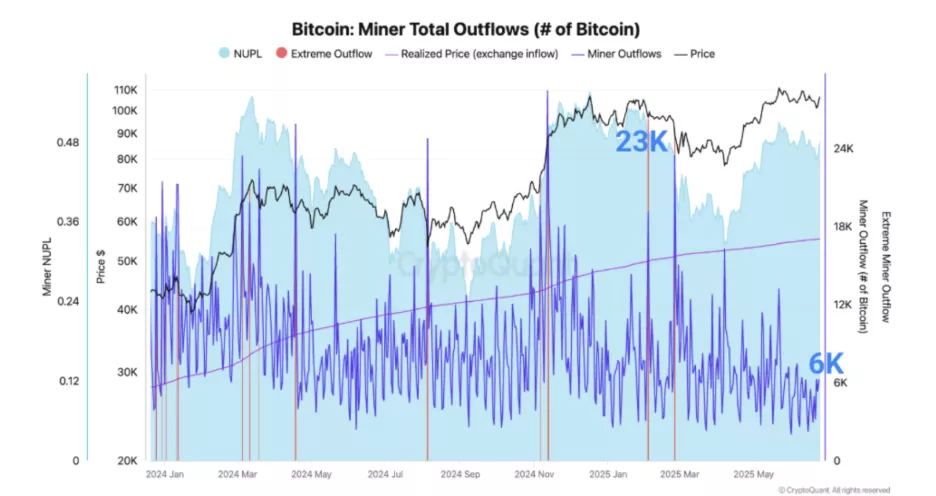
Despite the relatively tough backdrop, miners are not selling. Outflows from their wallets have dropped from a peak of 23,000 BTC per day in February 2025 to roughly 6000 BTC. Direct transfers of bitcoin from miners to exchanges also remain low.


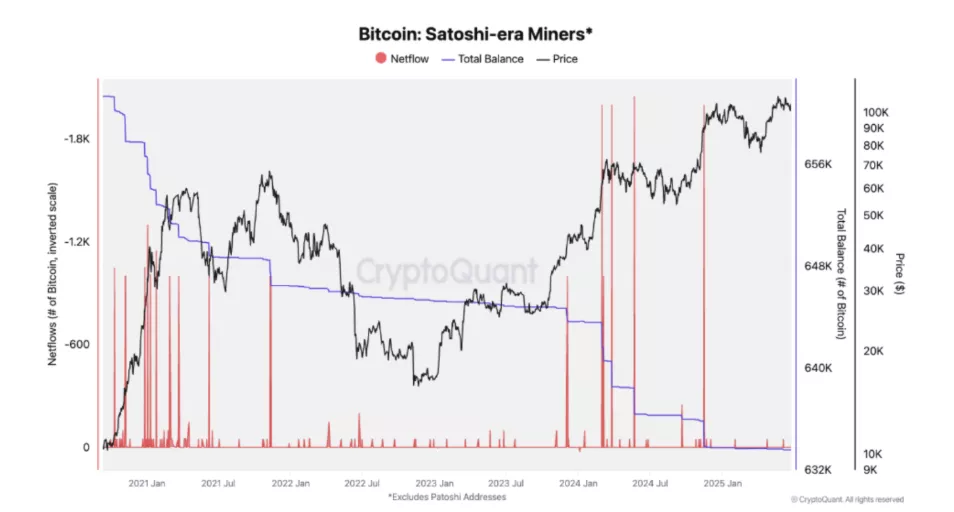
Meanwhile, Satoshi-era actors have pared sales to a minimum. In 2025 they sold just 150 BTC. For comparison, in 2024 the figure was nearly 10,000 BTC. Historically, “old” miners sold coins after strong price increases, “which indicated a possible market top”.


Not all participants are ready to accept thin margins, however. Nasdaq-listed miner Bit Digital intends to shift focus from digital gold to staking and custody of Ethereum.
The company is considering options up to a complete halt to bitcoin mining and asset sales. Proceeds are planned for projects related to the second-largest cryptocurrency.
P2P deemed entrepreneurship
This week the Rostov Region Arbitration Court ruled that P2P crypto buy/sell transactions constitute entrepreneurial activity.
In a case against the FTS, the defendant had been registered since 2020 as an individual entrepreneur under the simplified tax system (STS). In his 2022 return he reported RUB 800,000 of income. However, the tax authority requested bank information and found that a total of RUB 143 million had been credited to the sole proprietor’s accounts over the period.
After meeting FTS representatives, the citizen stated in an amended return that RUB 92.4 million came from cryptocurrency sales and claimed a property deduction of RUB 92.6 million. He provided no supporting documents.
By buying and selling cryptocurrencies, the sole proprietor was in fact conducting business, the tax service concluded. Accordingly, all income is taxable under the STS.
Among the claims were the systematic and large-scale nature of operations — 92 bank cards, the involvement of third parties and the use of foreign accounts.
The court sided with the FTS. According to the ruling, even without special rules digital assets are property, transactions in which are taxable, and regular trading by a registered sole proprietor is considered entrepreneurial activity.
As a result, the citizen was assessed RUB 5.46 million in STS taxes and RUB 273,000 in penalties.
“If you have become a sole proprietor, the tax office has the right to recognise all your transactions on personal accounts as entrepreneurial provided there is regularity and an intent to make a profit, combined with not using the resold property for personal purposes,” Cartesius legal agency founder Ignat Likhunov told ForkLog.
Exved CEO Sergei Mendeleev also agreed the court’s decision was lawful. In his view, the defendant should have fought over the amount assessed.
Since November 2024, a law on cryptocurrency taxation has been in force in Russia. It recognises cryptocurrency as property. The tax base is the excess of an asset’s value over the costs of purchasing or mining it.
Individuals selling cryptocurrency must pay PIT at 13–15%, while legal entities pay profit tax of 25%.
Also on ForkLog:
- AI countenanced a hypothetical human death for its own “survival”.
- Glassnode analysts pointed to signs of bitcoin-market fatigue.
- A quantum computer cracked 22-bit RSA encryption.
- Robonomics’ Web3 sensors began tracking air quality on a hippy island.
Front-end compromises
On 23 June the front end of Cointelegraph’s website was attacked. Malefactors injected code that displayed a phishing window offering a fake airdrop.


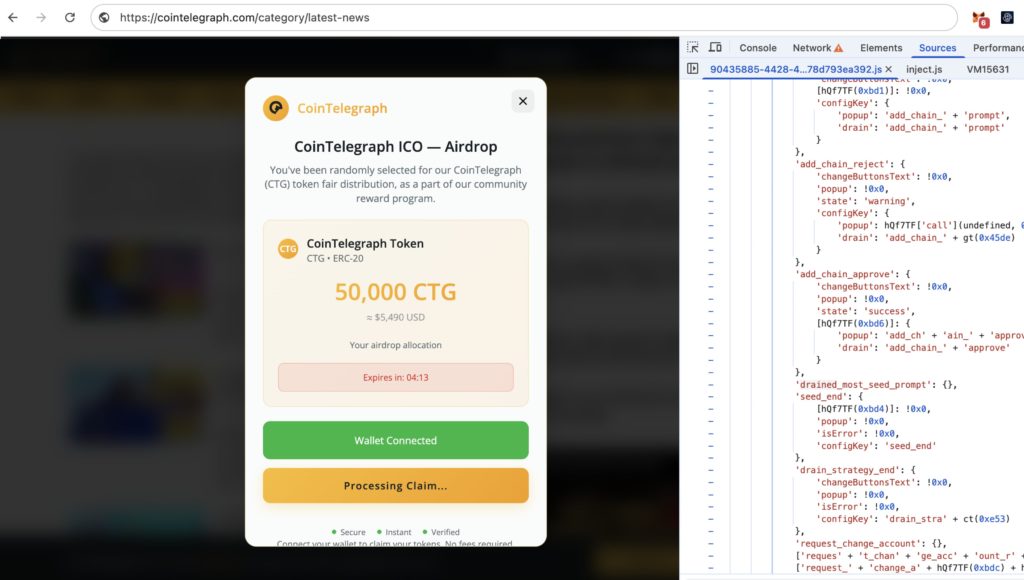
Hackers tried to persuade users to connect wallets to receive $5500 of CTG tokens. To make it convincing, the scammers referenced a “fair launch” and “an audit by CertiK”.
Cointelegraph representatives confirmed the incident, urging people not to click pop-ups or enter personal information.
The attack resembled a recent incident on aggregator CoinMarketCap’s site. On 20 June criminals used a similar phishing scheme.
Also this week it emerged that hackers attacked Trezor customers via the support contact form on the official site.
Attackers submitted requests to support on behalf of users, triggering an automatic reply from Trezor to clients’ email addresses. They then sent a phishing message that looked like a continuation of the correspondence.
The hardware wallet team reminded users that seed phrases must never be shared and staff never ask for personal data.
According to TRM Labs, losses to hackers in the crypto industry during the first half of 2025 totaled $2.1 billion.
Infrastructure attacks (over 80% of losses) included theft of private keys, seed phrases and front-end substitution. Criminals often used social engineering or insiders.
What else to read?
Shard’s director of investigations, Grigory Osipov, explained how to act if you fall victim to crypto fraud.
We examine the latest advances by regulators in the crackdown on internet freedom and set out the plans of individual governments.