



Week in review: Ethereum shows resilience as Russia proposes fines for crypto payments
The second-largest cryptocurrency by market capitalisation outpaced bitcoin by trading volume, NFTs staged a rally, Russia floated fines for crypto payments, Tron landed on Nasdaq, and more from the week.
Ethereum outpaced Bitcoin
The past seven days were relatively calm for crypto markets. In the first half of the week, digital gold traded in a $118,000–120,000 range, marking a peak on Wednesday.
However, a pullback followed the top. On Thursday bitcoin sharply slumped from $119,000 to $115,000 — roughly 3%. The drop came after Galaxy Digital sold 30,000 BTC worth $3.5bn.
At the time of writing, the coin had recovered to near the week’s opening level around $118,000.
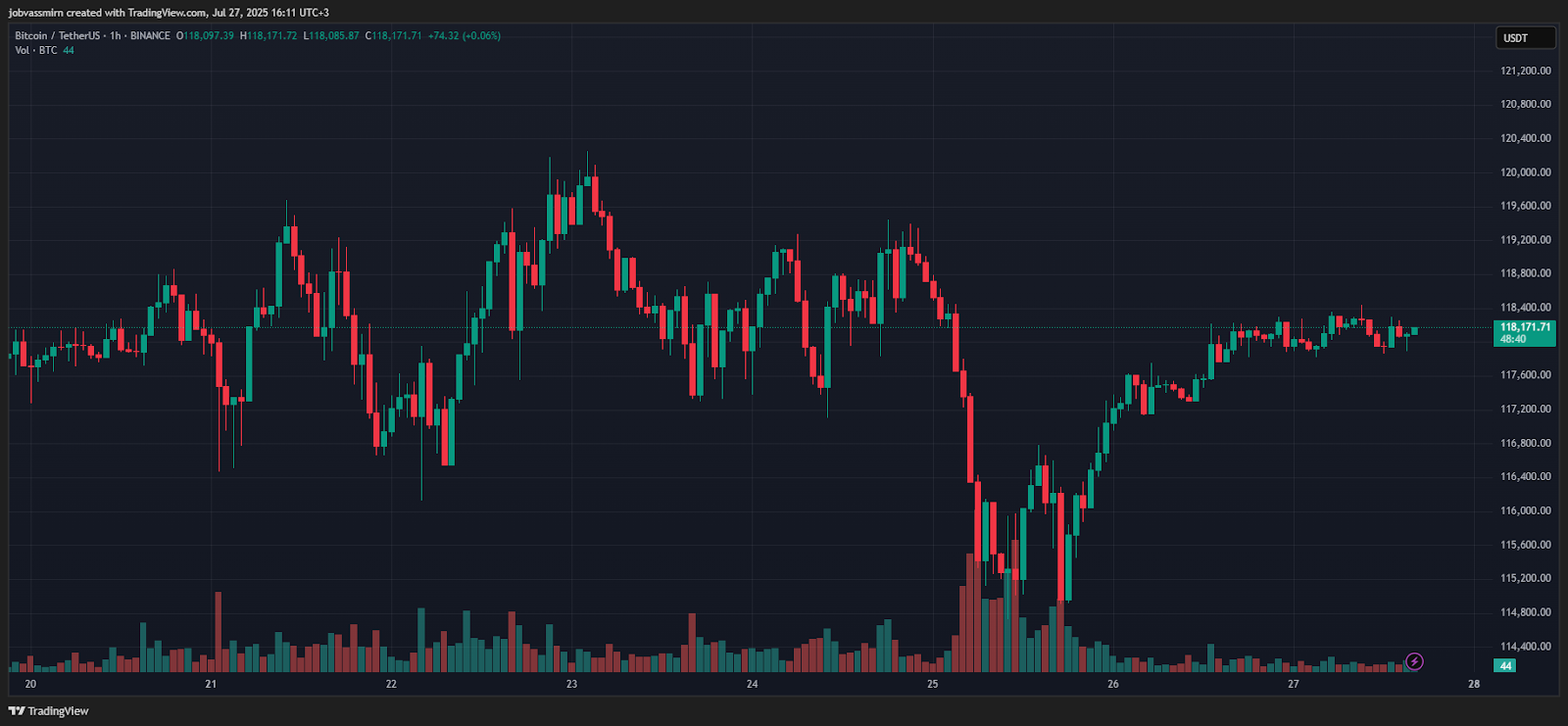
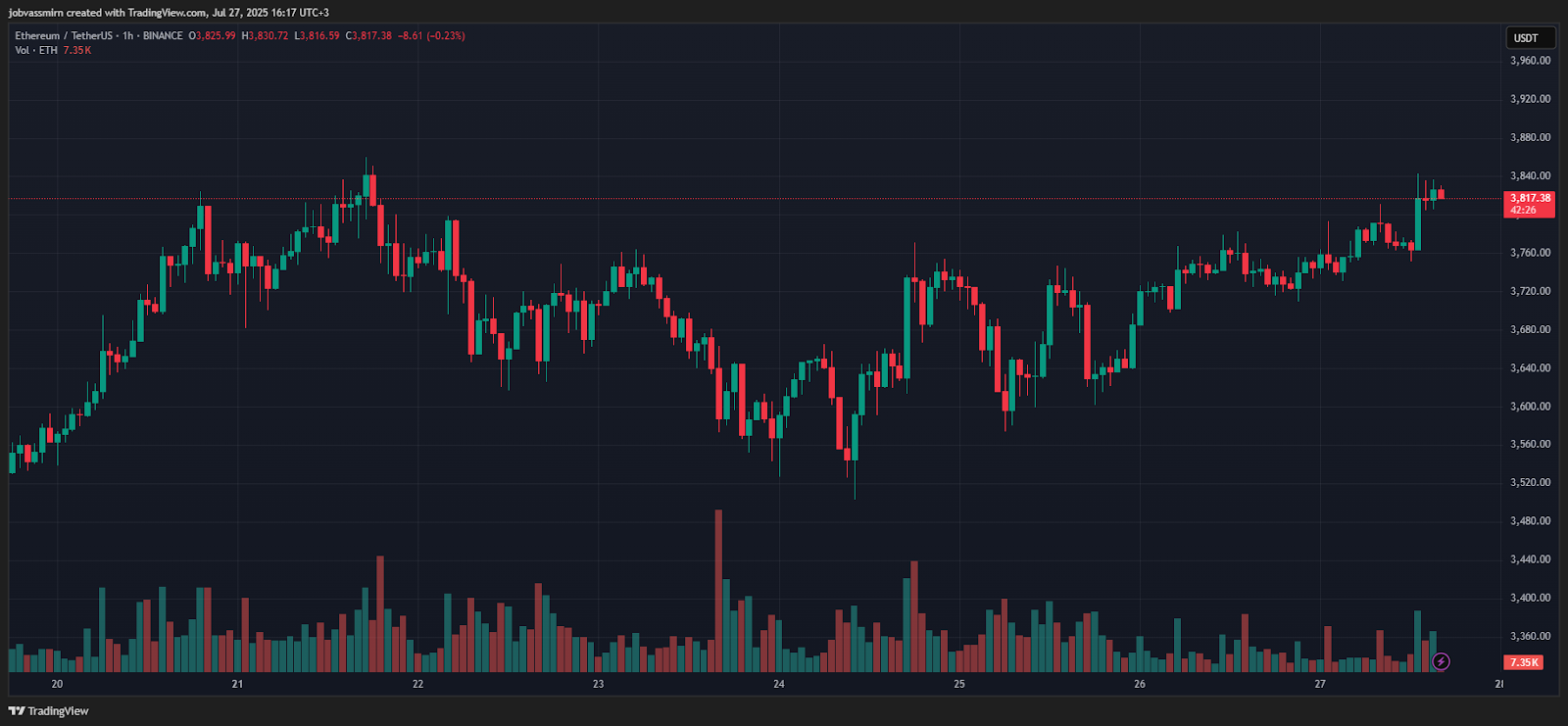
Meanwhile, Ethereum put in a firmer showing. While the first cryptocurrency was little changed on the week, its closest rival added 2%.
Galaxy’s sale had a far milder impact on ETH quotes. The asset now trades around $3,800.
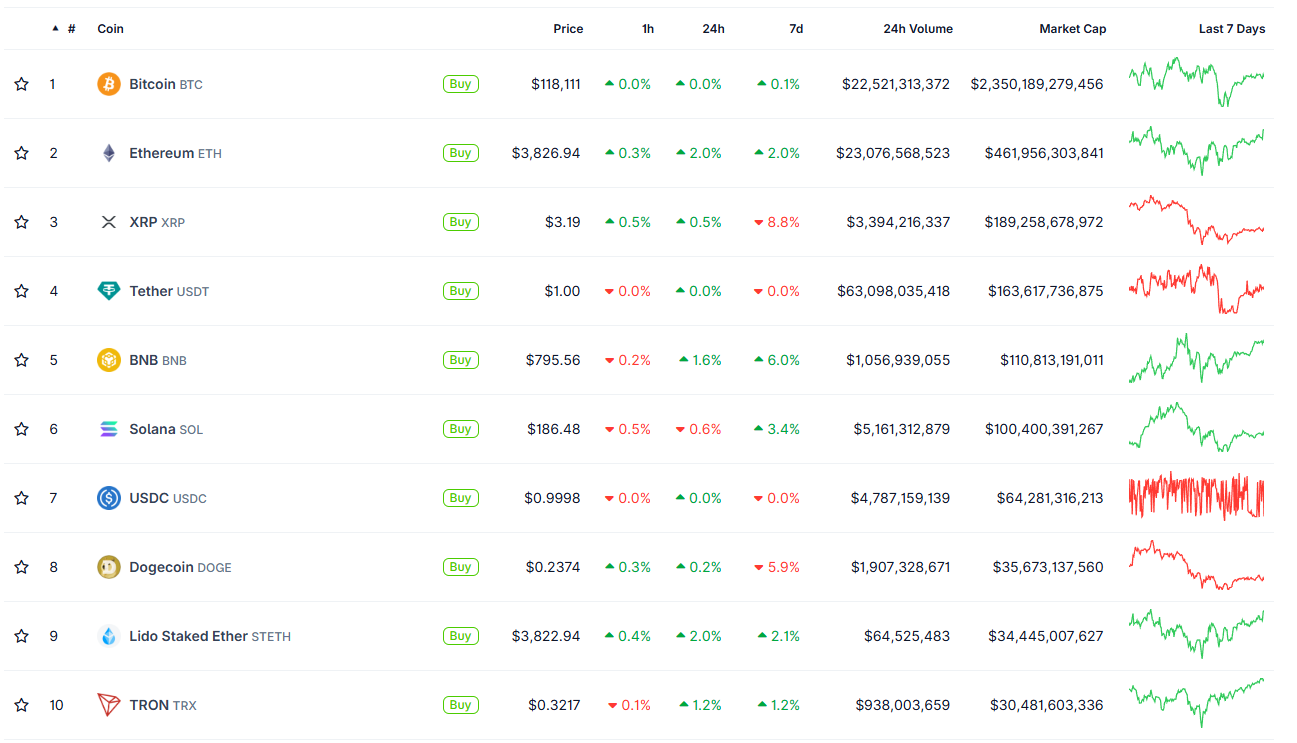
Ethereum also overtook bitcoin by trading volume for the first time in a while. Over the past 24 hours the figures stand at $23bn and $22.5bn, respectively.
Even so, Santiment noted the risk of a correction in altcoins. According to the firm, Ethereum’s leading rally sparked a surge in social-media mentions. The metric hit an “extreme euphoria” level, signalling a possible pullback.
Over the month, ETH is up 50%, and has recovered 150% from April lows. Bitwise CIO Matt Hougan explained the move as a “demand shock” and suggested further upside.
Among other large cryptocurrencies, BNB posted a positive week, testing an all-time high near $800.
Solana approached $200, but corrected to $180 by the end of the week.
The total market capitalisation of digital assets stands at $3.97 trillion, with bitcoin dominance at 59%.
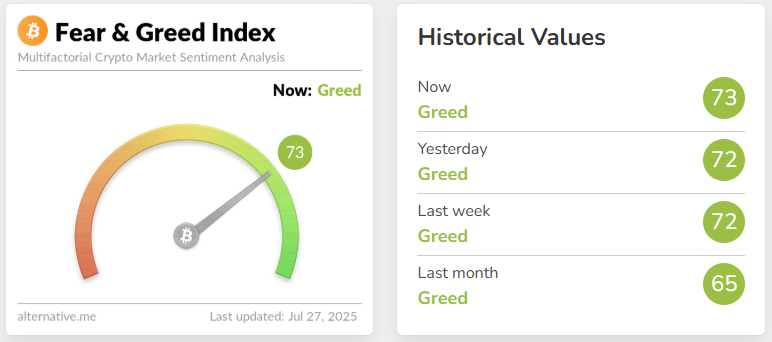
The Crypto Fear & Greed Index sits at 73.
An unexpected NFT rally
As the market picked up, the non-fungible token (NFT) segment began to stir. According to CryptoSlam, weekly trading volume reached $225.7bn — a rise of roughly 45%.
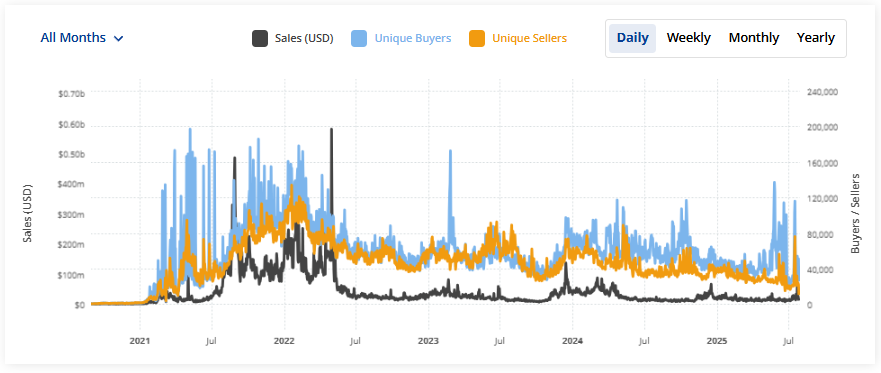
The number of NFT buyers was 478,522, and sellers 299,370.
Market capitalisation exceeded $6.35bn.
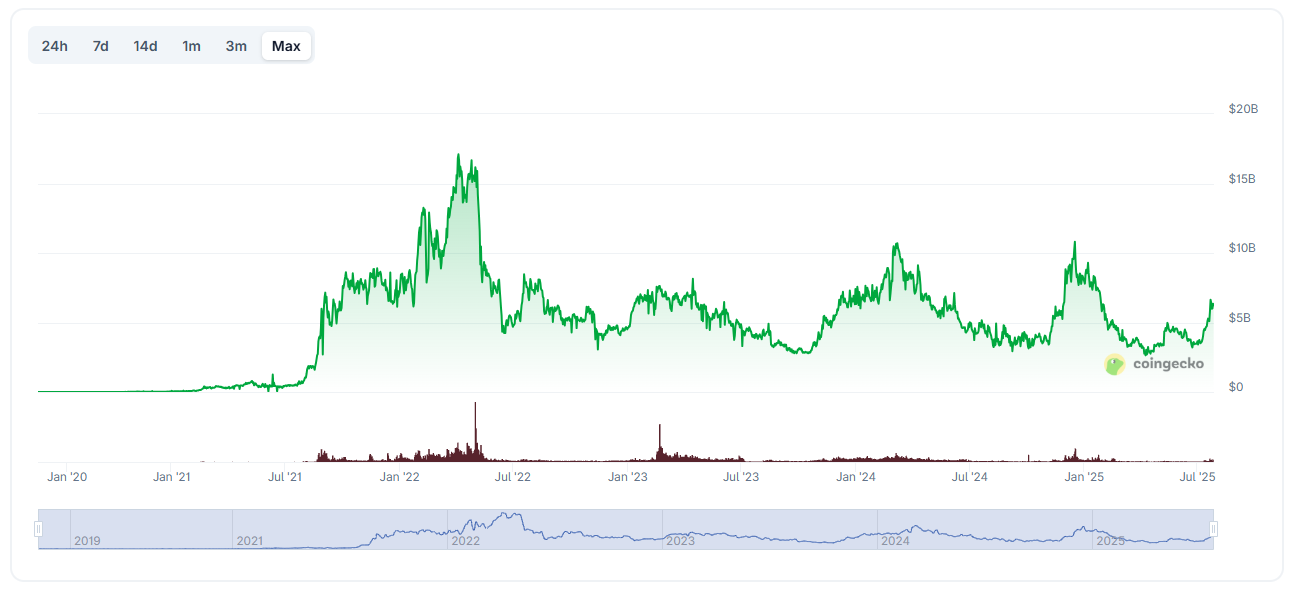
One trigger for the NFT sector’s rise was a large purchase on OpenSea. An unknown buyer acquired 45 tokens from the CryptoPunks collection, spending more than 2,080 ETH (~$7.8m).
Analysts at LVRG Research say the segment is gathering momentum amid the broader bull trend. Traders are returning to leading projects such as CryptoPunks, assuming they are undervalued.
Kronos Research CIO Vincent Lyu added that the whale’s purchase signals the strength of “blue chips” and growing appetite among large players.
The view was reinforced by public company GameSquare, which bought a CryptoPunk for its treasury reserve for $5.15m from its previous owner, Superstate and Compound founder Robert Leshner.
The deal was over-the-counter, so it did not affect aggregate figures. The company paid with its preferred shares.
What to discuss with friends?
- Vitalik Buterin backed raising the gas limit on Ethereum.
- An analyst pointed to the end of the era of “mass alt seasons”.
- XRP overtook Uber and BlackRock by market capitalisation.
- PumpFun postponed its airdrop and faced a lawsuit.
Crypto firms on the stock market
On 24 July, trading began on Nasdaq in shares of Tron Inc (TRON), associated with the eponymous blockchain. Protocol founder Justin Sun opened the session by ringing the bell.

The vehicle was formed through a merger with SRM Entertainment.
“With Justin Sun joining as our global advisor and our ongoing expansion of blockchain-based treasury assets, this [listing] moment underscores our long-term vision to increase shareholder value through innovation and strategic leadership,” said Tron Inc CEO Rich Miller.
The firm’s shares now trade around $9.6.
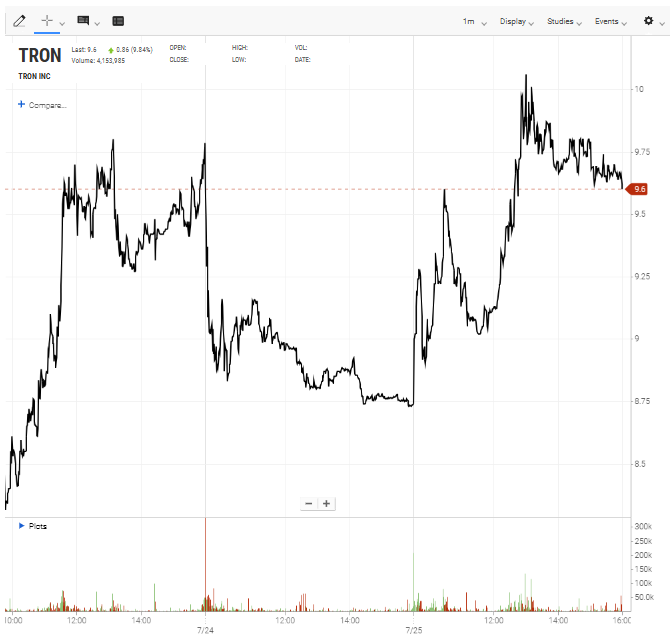
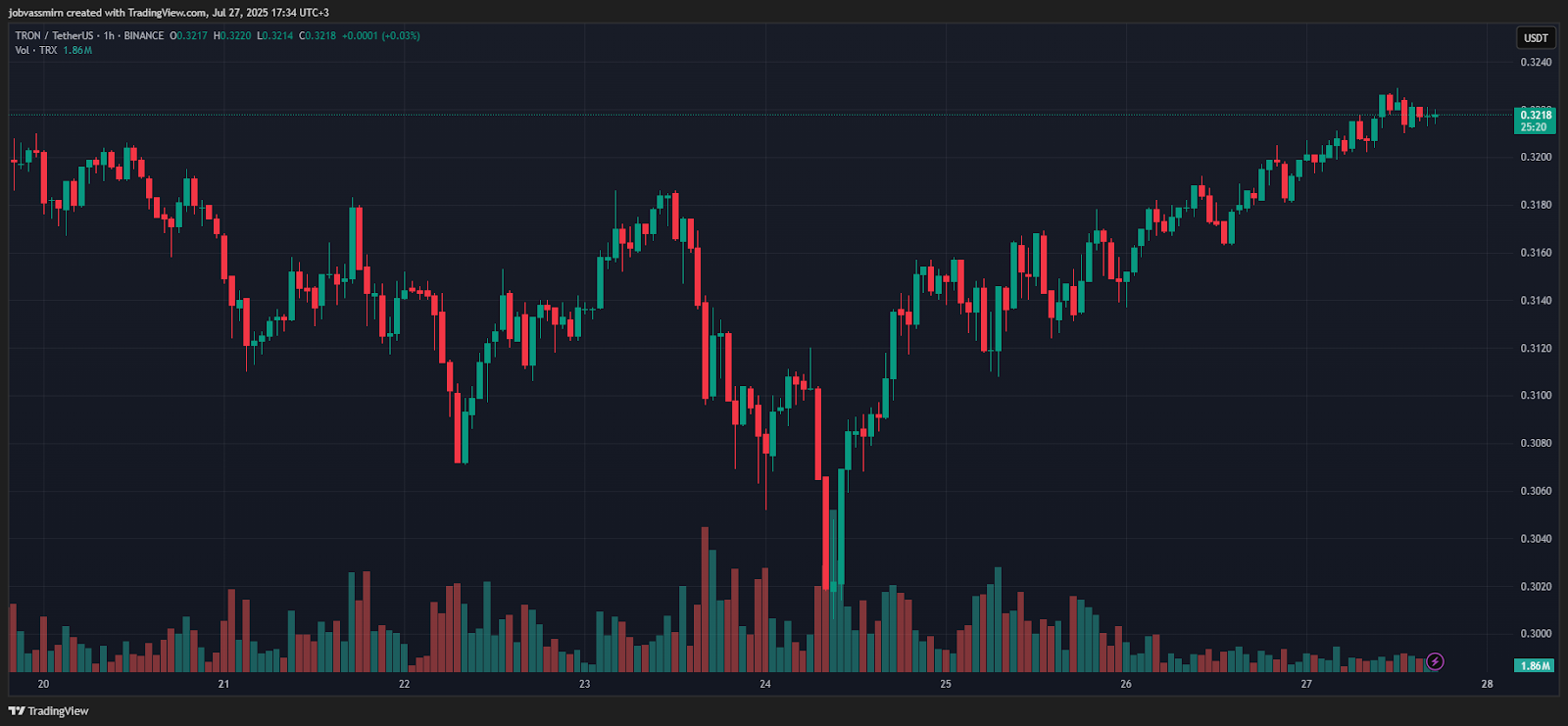
Rumours of Tron’s listing emerged in mid-June. TRX rose 9% then, so it hardly reacted to the official announcement. The token now changes hands around $0.32.
The week also brought “stock-market progress” for Jack Dorsey’s Block. The firm officially joined the S&P 500.
“This is an important milestone that demonstrates the resilience of our business and the results of the work of thousands of people building tools to expand economic access across all of our products — Square, Cash App, Afterpay, TIDAL, Proto and Bitkey,” the company said.
In parallel, Block launched a pilot for real-time bitcoin payments within the Square app.
“Transparent Blockchain” and fines for crypto payments in Russia
Anton Lisitsyn, deputy head of Rosfinmonitoring, said the agency plans by end-2025 to connect Russian banks fully to its Transparent Blockchain service. The initiative will enable banks to link clients to cryptocurrency transactions.
According to Lisitsyn, the pilot is in its final approval stage.
The tool is designed to standardise information exchange between banks for crypto-compliance and anti–money laundering, while reducing the risk of disclosing confidential data.
Transparent Blockchain will be integrated into personal-account systems, and the technology can be refined “to banks’ needs,” the deputy head noted.
He pointed to a “multiple” increase in suspicious crypto-related operations over the past three years. Thanks to the new technology, the agency has made significant progress in financial investigations of such cases, he added.
This week, Anatoly Aksakov, head of the State Duma’s financial markets committee, also said there are plans to introduce fines for paying for goods and services with cryptocurrency from 2026.
Fines would range from 100,000 to 200,000 rubles for individuals, and from 700,000 to 1m rubles for legal entities. Cryptocurrency used for payments would be confiscated.
Aksakov said the main goal is to combat shadow payments.
In comments to ForkLog, GMT Legal founder Andrey Tugarin explained that a ban on paying with cryptocurrency has been in place since 2021 under Federal Law 259-FZ. The restriction applies to digital currencies such as bitcoin, but not to stablecoins.
“The essence of the ban is that digital currency cannot be accepted as payment for the transfer of goods, the performance of work or the provision of services,” he noted.
The bans will primarily affect legal entities and sole proprietors, the expert said. Ordinary users will be in a more ambiguous position:
“If an individual does not have a clear and understandable answer to the question of where the cryptocurrency came from, as a result of exchanging which rubles appeared in their current account, such persons may potentially fall under a fine.”
Receiving salaries in cryptocurrency also entails risks. According to Tugarin, remuneration in Russia may be paid only in rubles.
Lawyer and Cartesius founder Ignat Likhunov stressed that fines are ineffective in practice, since the state cannot physically track all P2P transfers or cash settlements.
Also on ForkLog:
- Solana increased the per-block compute limit by 20%.
- Hackers infected more than 3,500 websites with a hidden Monero miner.
- The crypto community accused Ripple co-founder Chris Larsen of dumping XRP.
- 7.6 tonnes of gold: Tether disclosed the backing of XAUT.
Record difficulty
On 26 July, following the latest retargeting, bitcoin mining difficulty rose by 1.07%. Though the increase was modest, the metric hit a record 127.62 T.
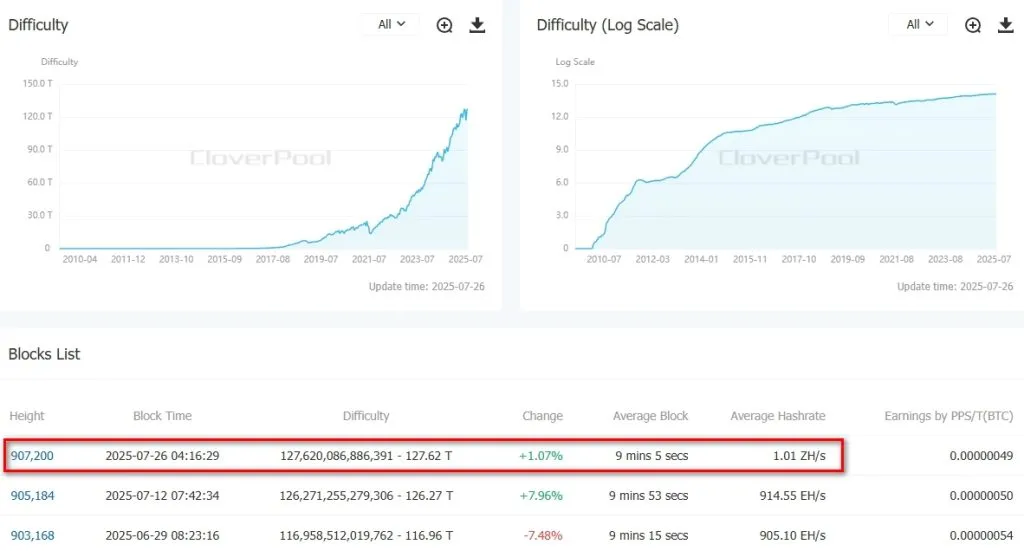
Network hashrate exceeded 1 ZH/s, and the interval between blocks shortened to almost 9 minutes.
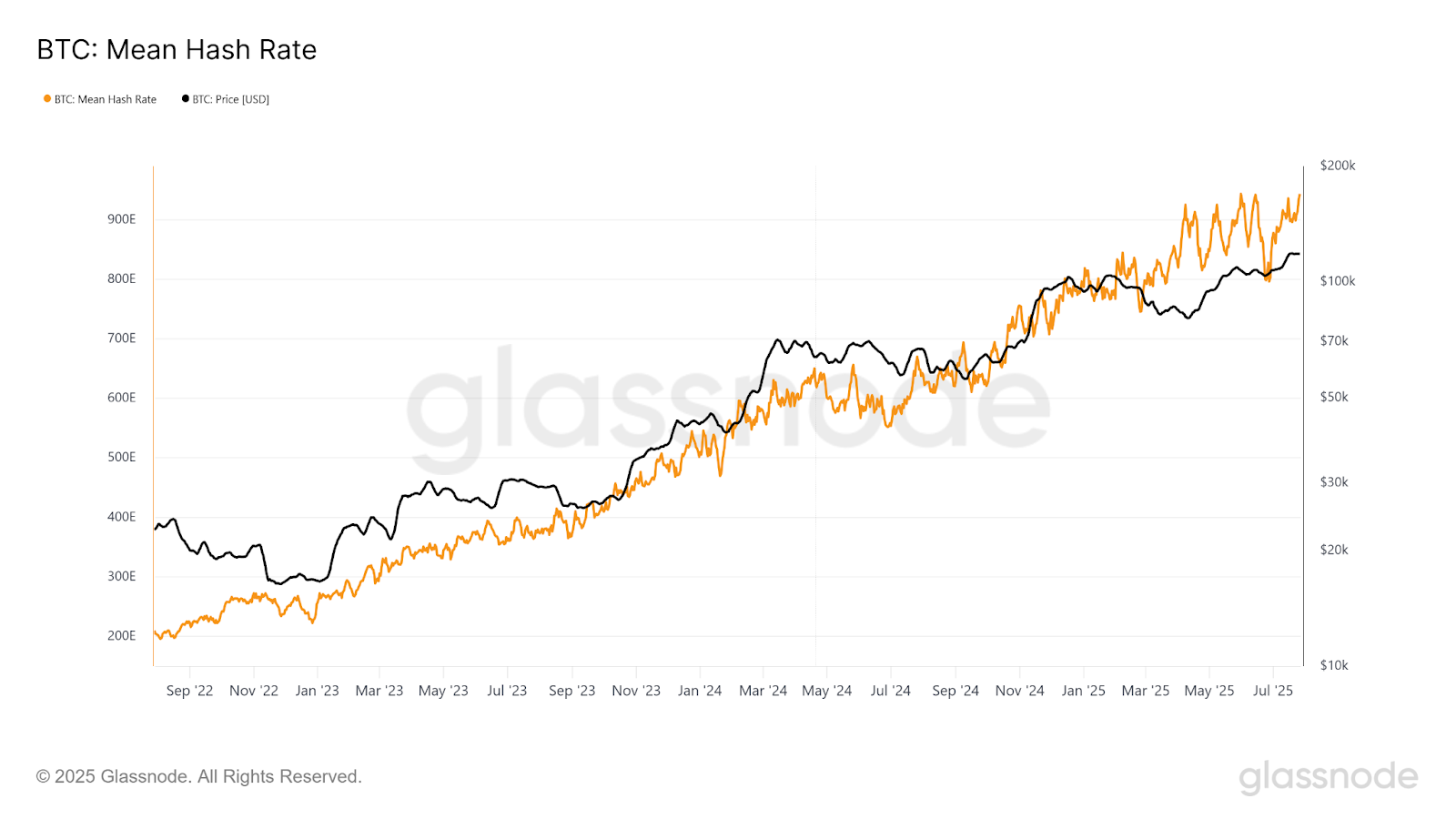
According to Glassnode, the seven-day moving average of the blockchain’s computing power is near record highs at 943 EH/s.
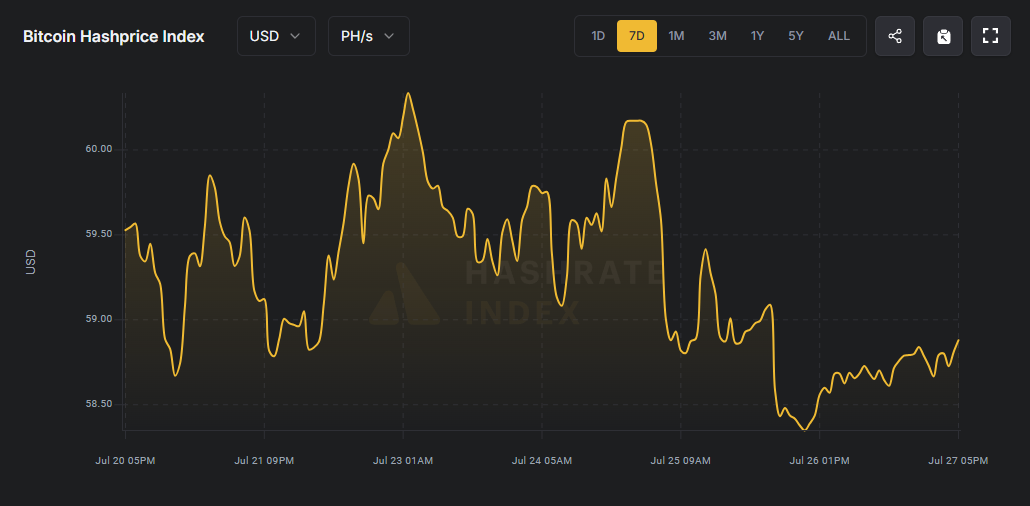
After the difficulty adjustment, the hashprice fell to $58.8 per PH/s per day.
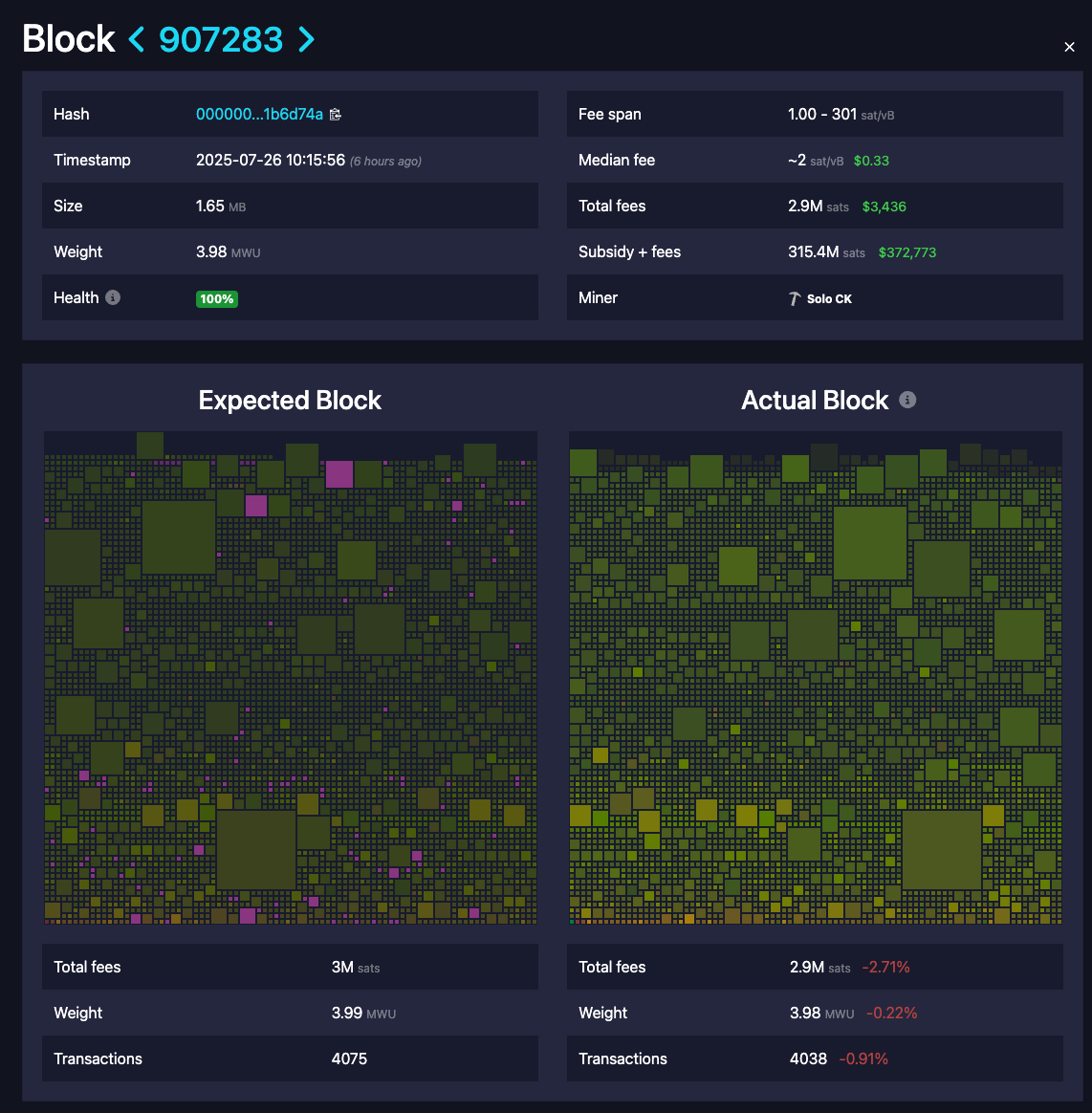
Despite rising difficulty, during the week a solo miner managed to mine block #907,283 on the network of the first cryptocurrency, receiving 3.154 BTC (~$372,773) in rewards and fees.
The participant used CKpool. They mined coins with hardware rated at 49 TH/s. The chance of such an event is roughly 1 in 130,000 per day.
What else to read?
ForkLog examined how the Chicago school of thought became synonymous with neoliberalism, why it is criticised, and what alternatives are proposed by supporters of more traditional liberal doctrines.
Is it possible to trace where the digital footprint ends? Grigory Osipov, director of investigations at Shard, explains.
Рассылки ForkLog: держите руку на пульсе биткоин-индустрии!