




In 2025 the crypto industry showed its mettle, while reminding investors about the importance of hedging risk. There was plenty of good news for digital assets, but caution remained warranted.
Rising institutional demand and regulatory progress came alongside major hacks, memories of past blow-ups and the usual corrections. Even so, the past 12 months made one thing clear: crypto has become a durable part of global finance.
Events
New peaks and extreme fear
Investor expectations were mixed in 2025, but bitcoin hardly had a bad year. Rather, the market offered a bit of everything: new all-time highs (ATHs) and extreme greed alongside record liquidations and bouts of panic.
Bitcoin began January near where it ended December — around $92,000. The coin was already rallying, buoyed by Donald Trump’s victory in America’s presidential election.
The new ATH did not take long. On January 20th, on the eve of the new president’s inauguration, bitcoin hit $109,000 (the previous record at $108,000 had been set just over a month earlier).


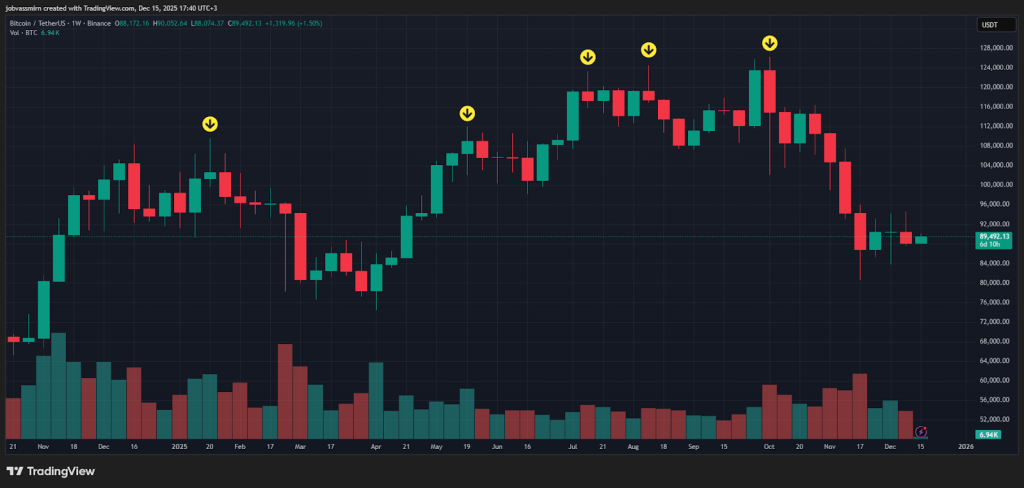
After the peak, bitcoin entered a five-month correction that bottomed around $74,500 in early April. It did not trade below that level again.
The market’s stall likely owed much to a “stop signal” from the Fed on rate cuts. At its first meeting of 2025 the central bank paused the easing cycle, leaving the policy rate unchanged at 4.25–4.5%.
Although nearly every Fed meeting jolted markets, the rate stayed put until the end of July.


Fed chair Jerome Powell justified the hawkish tone by citing elevated inflation, unemployment and other weak microdata. Fuel was added by Mr Trump’s first big international move of his second term — tariffs against a long list of countries.


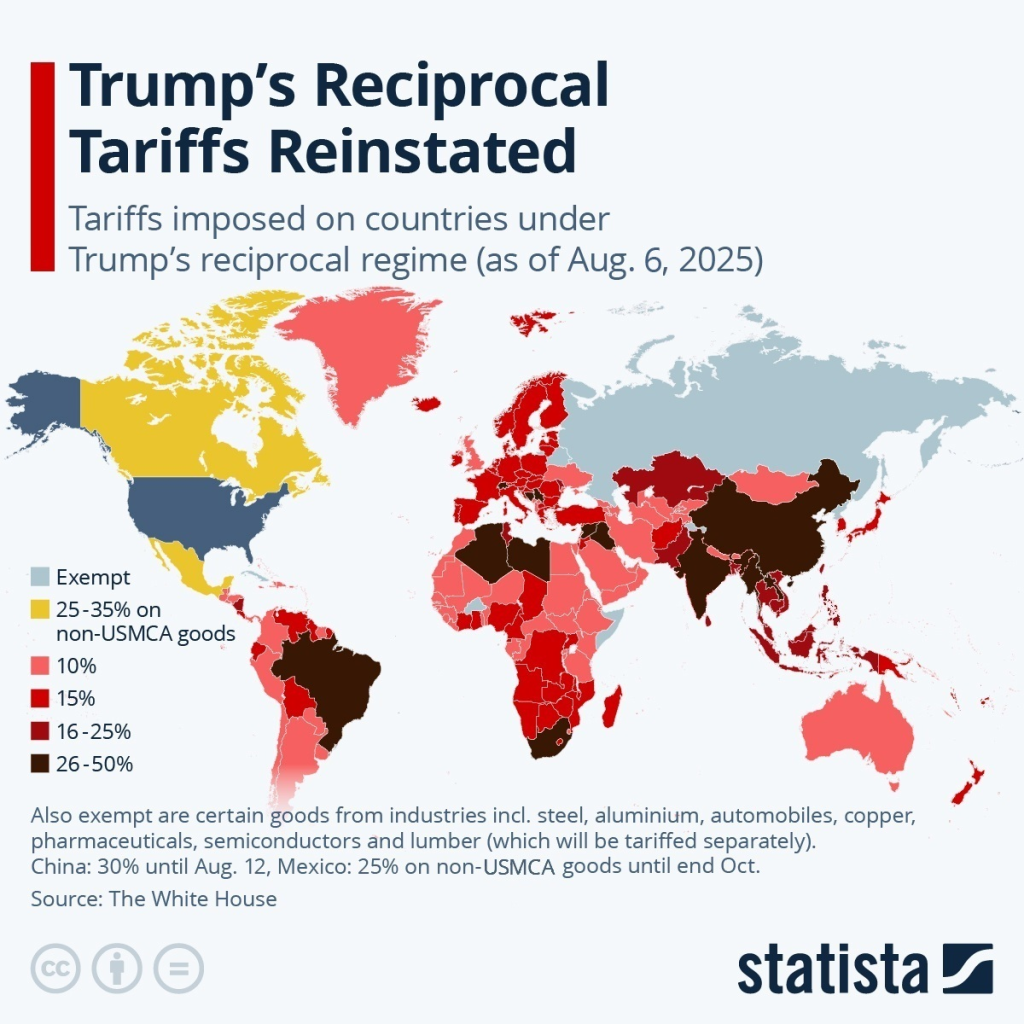
Even at its December meeting the Fed cited tariffs as one of the main reasons for America’s economic stagnation.
The “tariff war” weighed on crypto, too. Each fresh salvo of countermeasures from Mr Trump sparked corrections.
Despite the headwinds, bitcoin returned to a six-figure price in April and in May set a new ATH at $112,000. Institutional investors and inflows into ETFs underpinned the coin all year.


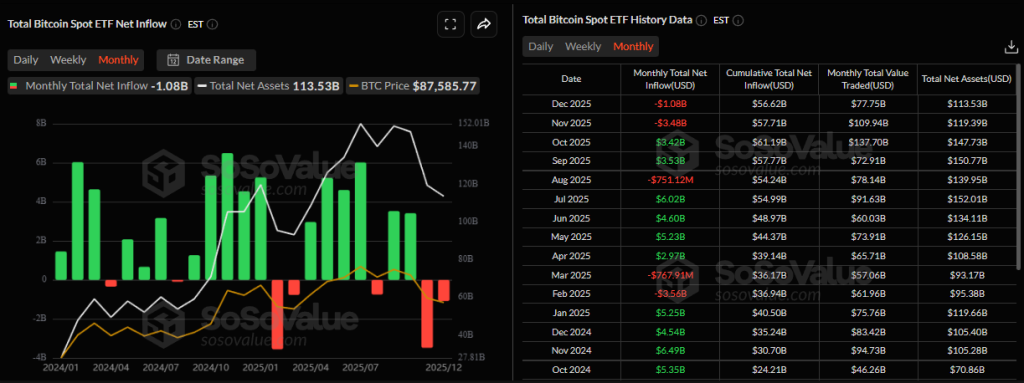
Cumulative net inflows into US spot products since their January 2024 launch reached $56.6bn. In all, the funds absorbed 6.49% of bitcoin’s supply.
BlackRock’s IBIT remains the segment’s leader, managing $67bn.
There were more “negative” months for ETFs than in 2024, yet institutions and other organisations showed steady interest in digital gold.
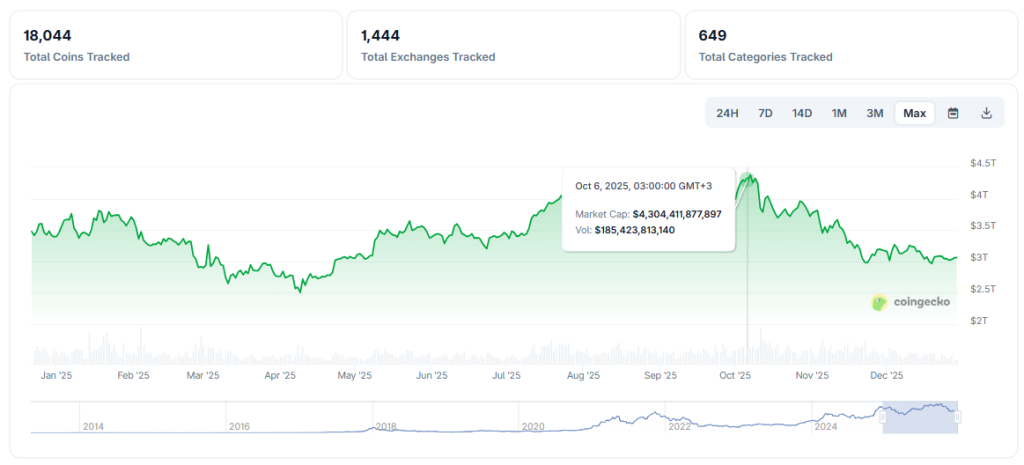
Summer brought a fresh rally on hopes of easier US monetary policy. On July 10th bitcoin broke through $113,000 and days later reached $123,000. At the same time total crypto market capitalisation surpassed $4trn for the first time.
According to CoinGecko, the peak was $4.3trn, easing to roughly $3.05trn by year-end.


In August, digital gold set a fresh ATH above $124,000.
The Fed kept rates at 4.25–4.5% through summer, but on September 17th it decided to cut by 25bp. That shored up bitcoin after it had slid to $110,000.
The positive turn from the Fed paved the way for the final record of the year. On October 6th bitcoin printed a high above $126,000. Although the shutdown of the US government that began in late September initially perked up crypto, “bloody times” followed after the ATH.
October 11th became “Black Saturday” for investors. Bitcoin fell below $111,000, posting its first daily candle of $20,000. Liquidations topped $19bn, the largest on record. The drop, as so often, was sparked by fresh US tariffs on China.
By November digital gold slipped below the psychologically important $100,000 level.
Crypto’s fear-and-greed index entered “extreme fear” for the second time this year — the first was after Mr Trump’s February tariffs. The metric remains near its lows.


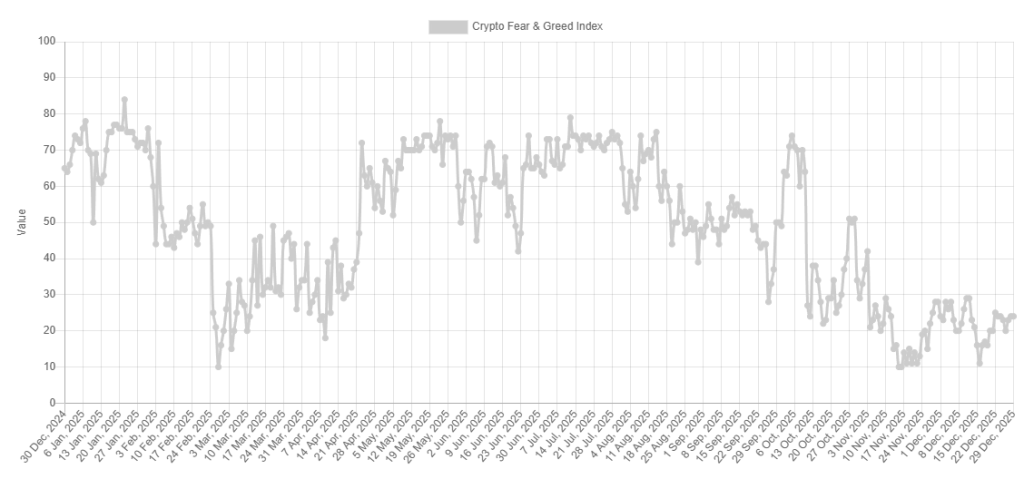
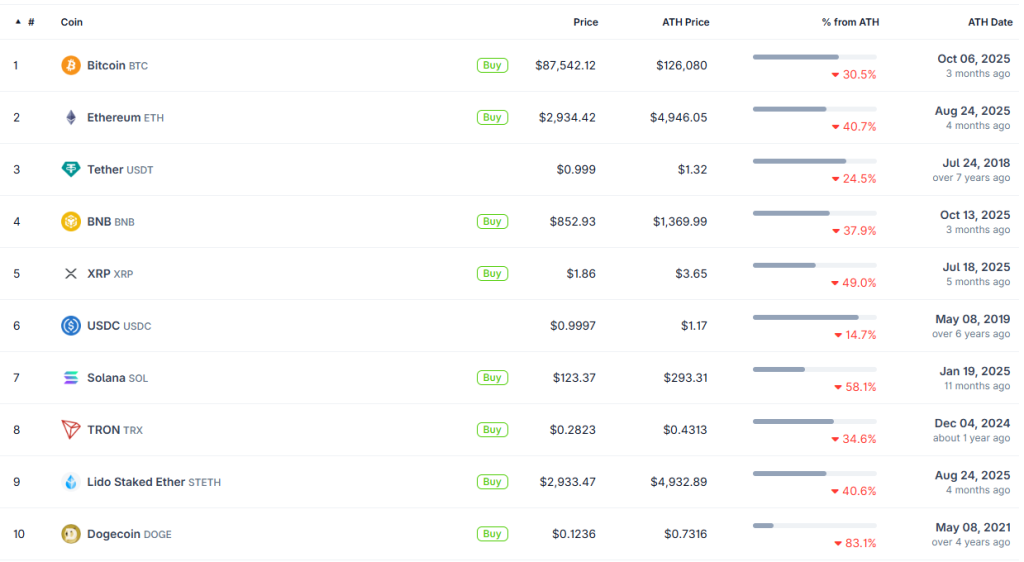
Despite the Fed’s ongoing rate cuts and the end of the 43-day shutdown, bitcoin failed to reclaim $100,000. It ended the year around $87,000.
Other digital assets broadly followed the flagship, though not many leaders posted new ATHs.


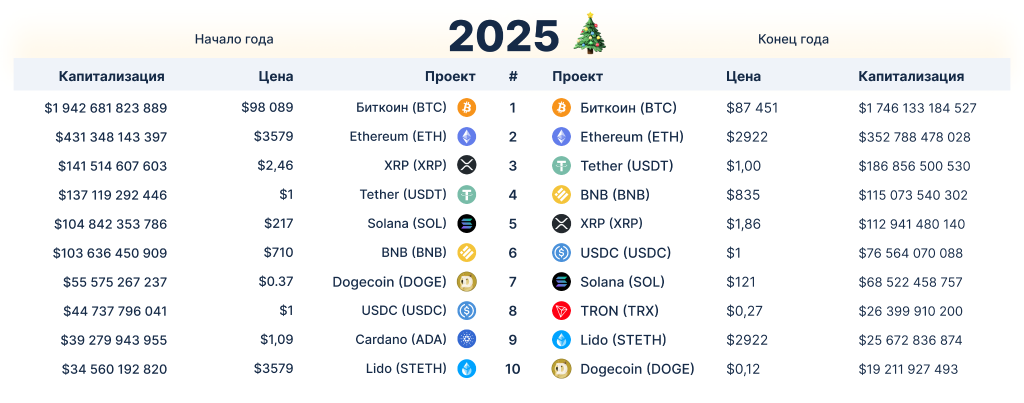
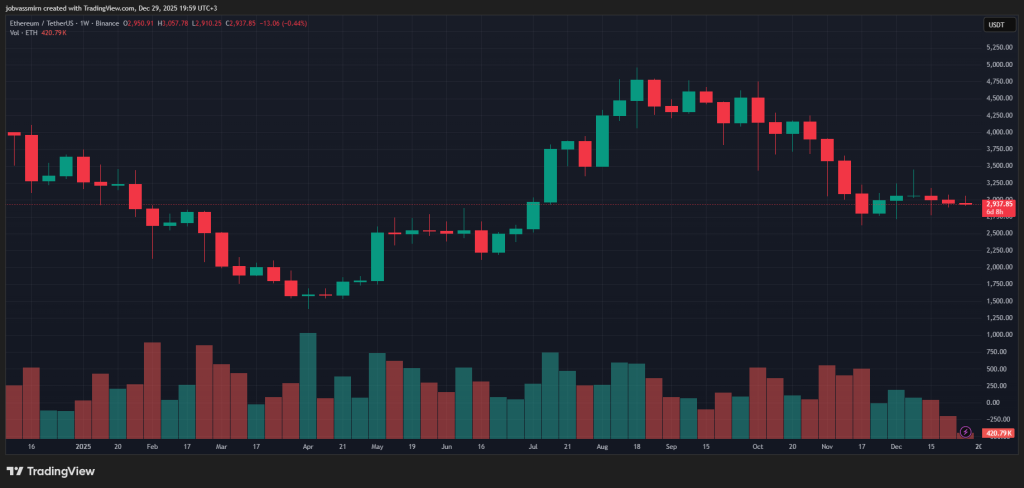
Ethereum stalled around $3,000, down 12% over 12 months. In August it managed a fresh record at $4,956 — only a few dollars above the prior $4,889 on Binance.
Solana set its ATH in early January at $293, but has since fallen to $120.
XRP tested a $3.5 high in July, and BNB hit a record $1,369 in October.


Late-2025 corrections revived talk of a bear market. Some analysts even suggested bitcoin could fall below $10,000 in 2026. Others forecast the rally would continue on stronger institutional support.
Most agreed the four-year halving cycle for bitcoin is over. From here the asset may grow steadily, if less dramatically.
State bitcoin reserves and the GENIUS Act
If the market’s 2025 price action is debatable, the regulatory shift was not. The bulk of the good news came from the US, though others tried to keep up.
First, Mr Trump partly dispelled fears he would renege on crypto promises. On March 6th the US president signed an order to establish a national Strategic Bitcoin Reserve (SBR).
The decree provides for storing assets seized by the Treasury in criminal and civil cases. Sales from the reserve are banned — the crypto will serve as a long-term store of national assets.
The order also creates a separate treasury for altcoins, fed only by seizures. Those tokens can be sold in exceptional cases if the Treasury deems it necessary.
Similar state-level crypto-reserve laws passed in New Hampshire, Arizona and Texas.
According to BitcoinTreasuries, the US government holds 328,372 BTC worth $28.77bn.


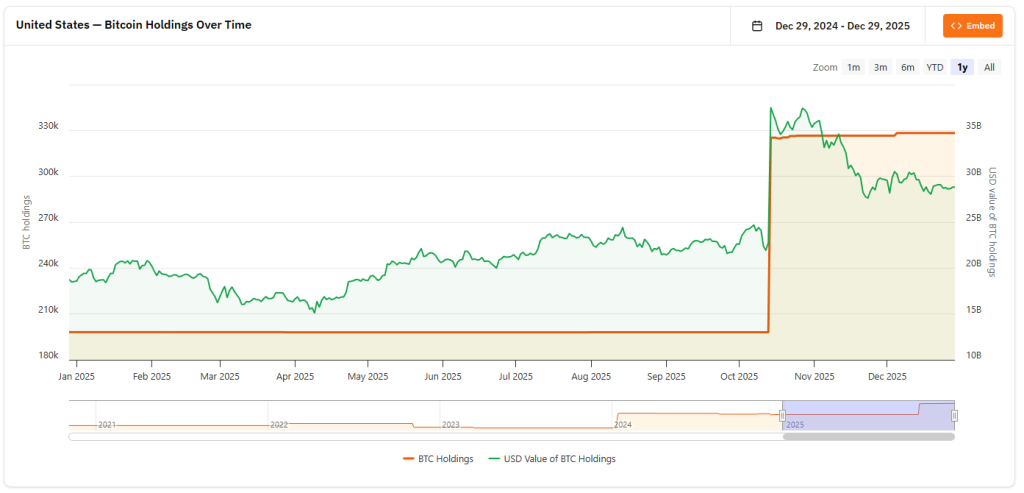
America’s move spurred other governments to explore similar ideas. Those considering crypto reserves in one form or another include:
- Ukraine — lawmakers filed a bill on holding crypto in state reserves;
- Kyrgyzstan — provisions on an SBR were approved;
- Kazakhstan — will create a bitcoin reserve of up to $1bn;
- Germany — will consider recognising bitcoin as a strategic asset;
- Sweden — the idea of a bitcoin reserve was floated;
- Czechia — the central bank created a $1m test crypto portfolio.
Another big step for the US was Mr Trump’s July signing of the GENIUS Act — the first major federal crypto law, setting rules for stablecoins.
Congress also passed two other notable crypto bills, the CLARITY Act and the Anti-CBDC Act.
The GENIUS Act requires stablecoins to be fully backed by liquid assets and mandates annual audits for issuers with market caps above $50bn. It bans paying interest or other income to stablecoin holders and sets ground rules for foreign firms in the segment.
“GENIUS Act creates a clear and simple regulatory framework to create and unlock the vast potential of dollar-backed stablecoins,” said Trump during the signing ceremony.
Under the law, the Commodity Futures Trading Commission launched a pilot for using digital assets as collateral in derivatives markets.
In parallel the Federal Deposit Insurance Corporation published draft rules governing applications to issue stablecoins. The proposal covers depository institutions seeking to create subsidiaries for token issuance.
By passing the GENIUS Act, the world’s biggest economy effectively opened the door to the legal use of dollar stablecoins. Banks and other firms can now issue and use them “in the clear”, a development that should add momentum to the industry.
The biggest hack on record
On February 21st crypto watched a single player — Bybit. The exchange suffered a hack of nearly $1.5bn, later dubbed the largest ever.


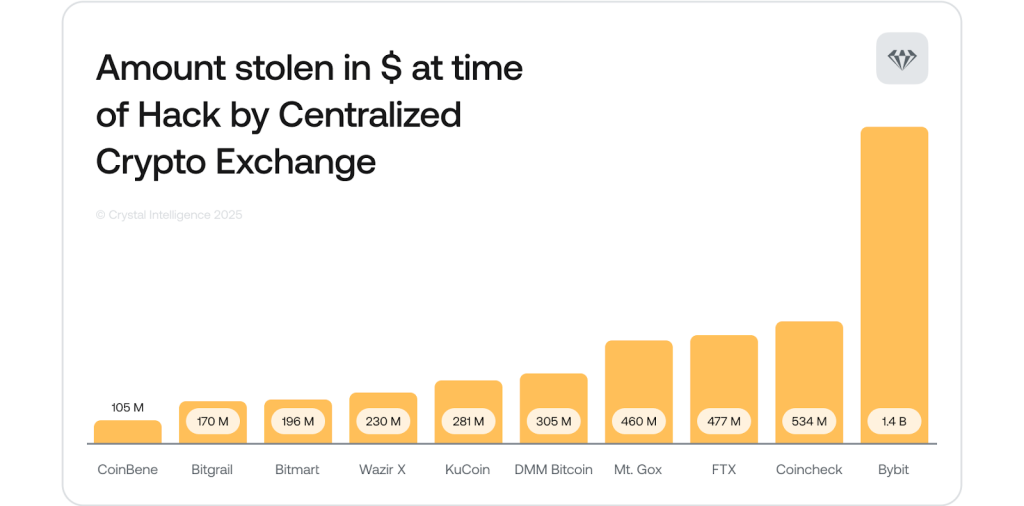
On-chain sleuth ZachXBT was among the first to flag suspicious outflows from Bybit: 499,395 ETH.
CEO Ben Zhou soon confirmed a breach. Staff said the incident occurred while moving ETH from a cold multisig vault to a hot wallet.
Attackers replaced the signing interface so all signers saw a legitimate address. In reality, the hackers had gained control of the Ethereum wallet and drained funds by changing the smart contract’s logic.
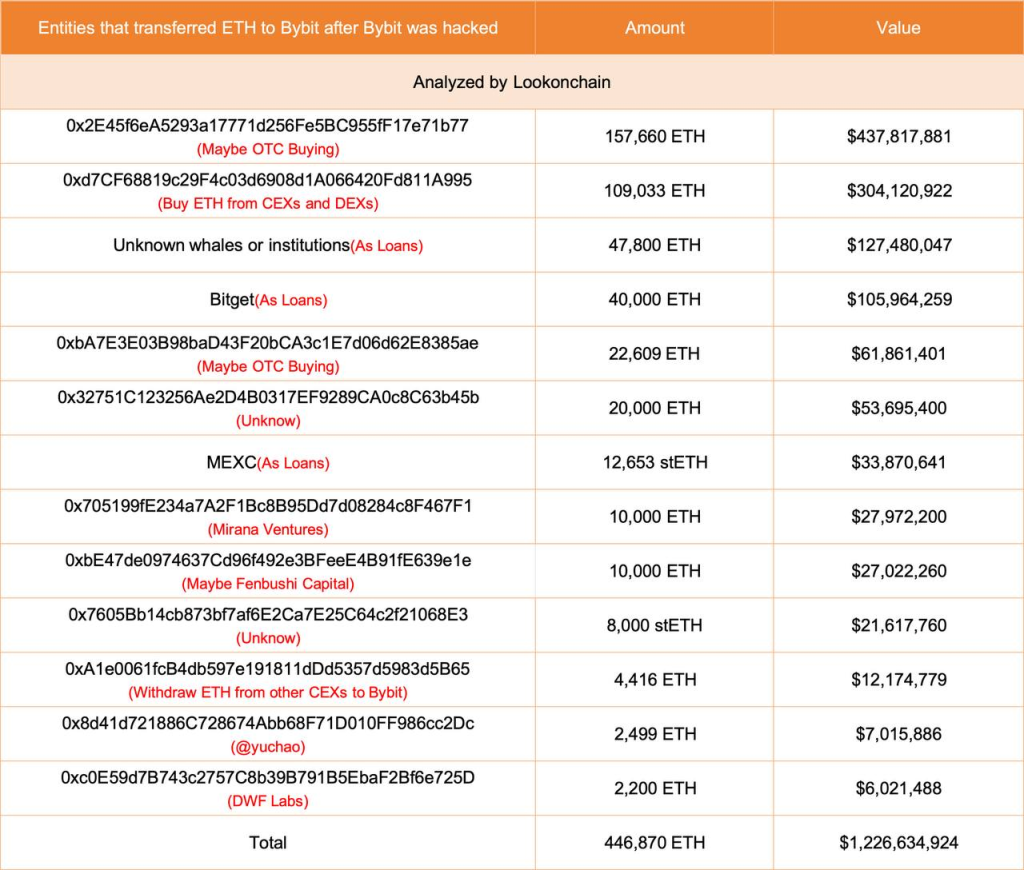
Mr Zhou said the exchange was fully solvent. Bybit continued processing withdrawals, albeit with delays. He also asked partners for ETH loans to cover liquidity in the crisis period; more than ten firms pitched in.


The following day Arkham Intelligence researchers said North Korea’s Lazarus Group was behind the attack. The FBI confirmed it.
The thieves quickly laundered funds through mixers and services. They swapped mETH and stETH for ETH on decentralised exchanges. Some 10,000 ETH were split across 36 wallets before being bridged elsewhere.
They laundered the lot in roughly ten days.
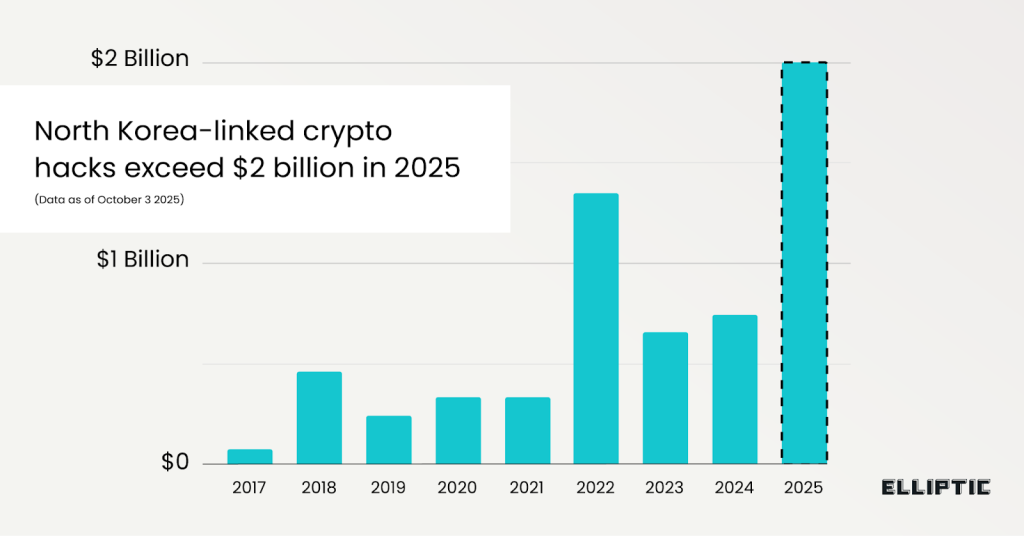
Thanks to the Bybit haul, 2025 was Lazarus’s most lucrative year. Per Elliptic, losses tied to the group hit $2bn — more than double 2024’s figure.


Handling of Bybit’s stolen funds sparked scandals around the multichain protocols THORChain and ParaSwap — both were pressed to return fees from laundering transactions. Accused of ties to the hackers, the eXch platform shut down.
The attack also mooted an Ethereum state “rollback” to claw back funds, prompting comparisons with The DAO hack in 2016.
Most rejected a fork, so the funds appear gone for good, despite Bybit’s CEO saying there was the ability to trace more than half the sum.
According to the exchange’s tracker, over 90% of the assets have “gone dark” (~$1.28bn). Around 5% are frozen and 4% remain traceable.


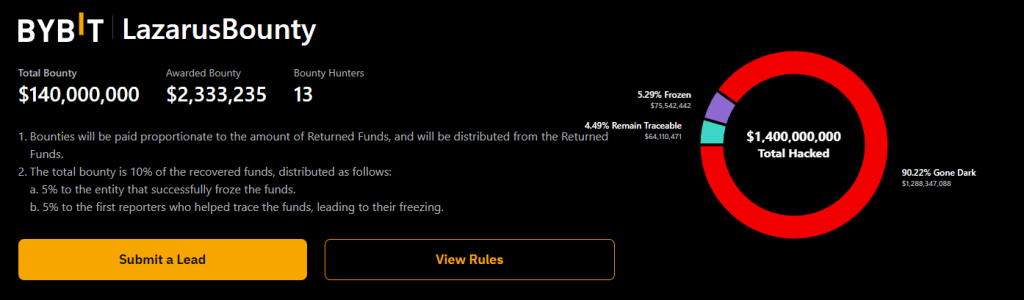
The platform paid 13 white-hat hackers a total of $2.33m for help tracking and intercepting transactions.
Bybit weathered the hack: user funds were safe, operations continued and borrowed ETH was swiftly returned. There were no major collapses or bankruptcies — a credit to both the exchange and a market that avoided panic.
Key Ethereum upgrades
Developers of the second-largest crypto network heeded criticism of their slow pace and delivered two big upgrades.
On May 7th Ethereum’s mainnet activated the Pectra upgrade — the chain’s largest hard fork by number of proposals. It bundles improvements to make Ethereum more convenient and efficient.

The upgrade contains 11 key EIPs. A major change is extra wallet functionality that simplifies use and recovery.
EIP-7702 integrates account abstraction (AA) and a new transaction type that temporarily endows addresses with smart-contract functionality, reverting afterwards. The goal: make Ethereum more accessible to ordinary users.
Other highlights include:
- doubling data storage capacity for scaling L2 networks;
- user-interface improvements for validators.
By year-end authorisations of smart accounts under EIP-7702 topped 5.9m, signalling strong interest from exchanges, wallets and dapps.


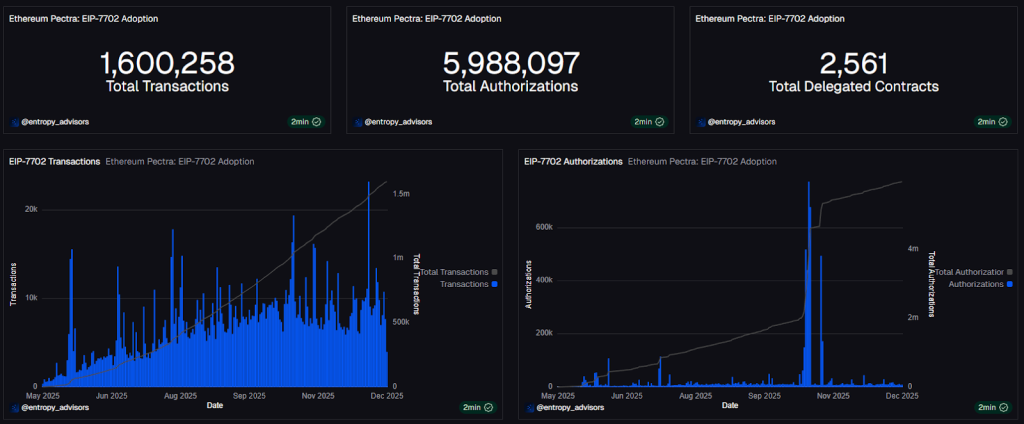
AA’s arrival also brought a wave of phishing: criminals mass-produced malicious contracts that seized control of victims’ wallets.
On December 3rd developers successfully deployed a second upgrade — Fusaka — on mainnet, adding fundamental improvements to scalability, efficiency and security.


Fusaka includes ten EIPs. Chief among them is EIP-7594, which introduces the PeerDAS protocol. It lets validators check small pieces instead of entire BLOBs, improving data availability across the ecosystem.
The upgrade also more than doubles the L1 gas limit. In theory, that could lift throughput to 12,000 TPS.
Other changes include:
- EIP-7825: caps gas at 30m per transaction to bolster security and prevent overloads;
- EIP-7939 and EIP-7951: boost performance and expand ZK solutions.
There were hiccups. Shortly after Fusaka’s rollout, a bug in the Prysm consensus client knocked offline some validators.


Meanwhile the Ethereum Foundation set out a course to simplify user experience. Its research cites UX gaps as the most acute problem for retail and institutional users alike.
Vitalik Buterin also pointed to this “bottleneck”. The roadmap concedes Ethereum remains too complex for the masses. The goal is to make using it as intuitive as any web app.
In December the protocol set a throughput record of 32,950 TPS after ingesting L2 data from the Lighter decentralised exchange.


Even so, price action disappointed many. Despite steady ETF inflows and shrinking exchange balances, ETH remains far from its peaks.


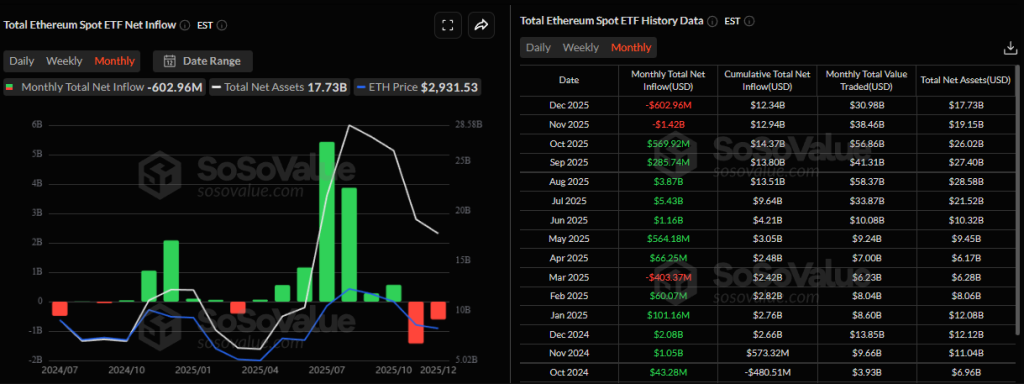
The forecast of hitting $7,000 in 2025 from Bitwise never came close. Lofty expectations for ETH’s price not only slowed its momentum, they also buried hopes of an altseason.
An IPO cascade
Softer US crypto rules opened the stock market to many industry players previously seen as “unfriendly”.
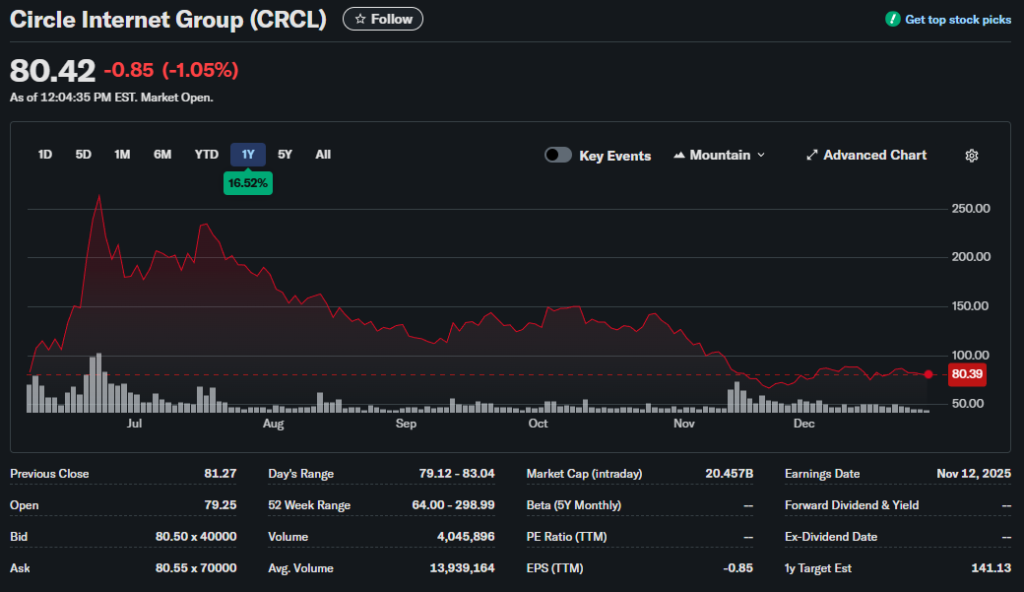
Circle was among the first. The USDC co-issuer’s listing took place on June 5th on the NYSE under the ticker CRCL. The IPO valued the firm at $6.9bn; it sold 34m shares at $31 to raise about $1.05bn.
At the peak, shares topped $260, and Circle’s market value surpassed USDC’s.


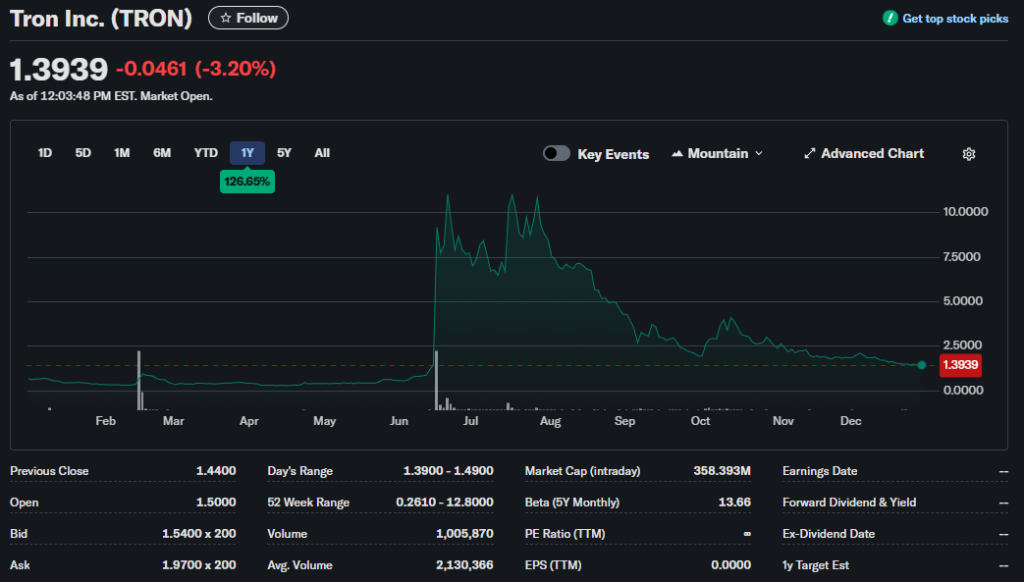
In summer, Tron listed on Nasdaq via a reverse merger with SRM Entertainment rather than an IPO.


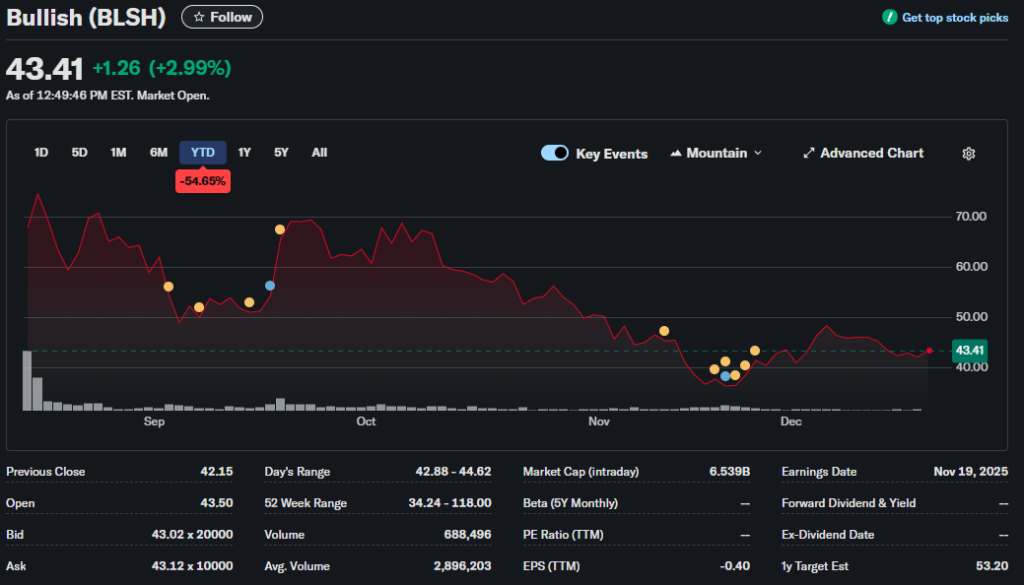
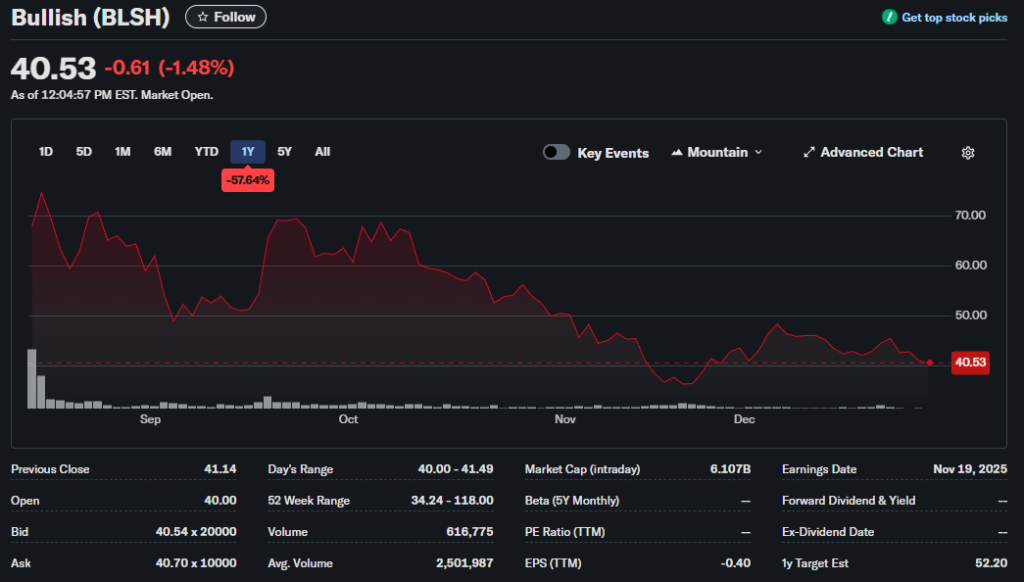
Next, the crypto exchange Bullish went public. On August 14th it listed 30m common shares at $37 on the NYSE for proceeds of about $1.03bn.
At the peak BLSH traded at $118.


On September 12th Gemini listed via 31.5m Class A shares at $25, a $787.5m offering that raised $425m.
Trading under GEMI on Nasdaq, the stock’s ATH stands at $45.
Beyond the completed listings, public-market plans were announced by:
- the custodian BitGo;
- the trading platform Kraken;
- the Trump-linked miner American Bitcoin;
- Galaxy Digital of Mike Novogratz;
- asset manager Grayscale Investments;
- MetaMask developer ConsenSys, which picked JPMorgan for its IPO.
With many firms already setting timelines and preparing to go public, crypto’s integration with stock markets — including via traditional exchanges — should become more visible in 2026.
Trends
Stablecoinisation
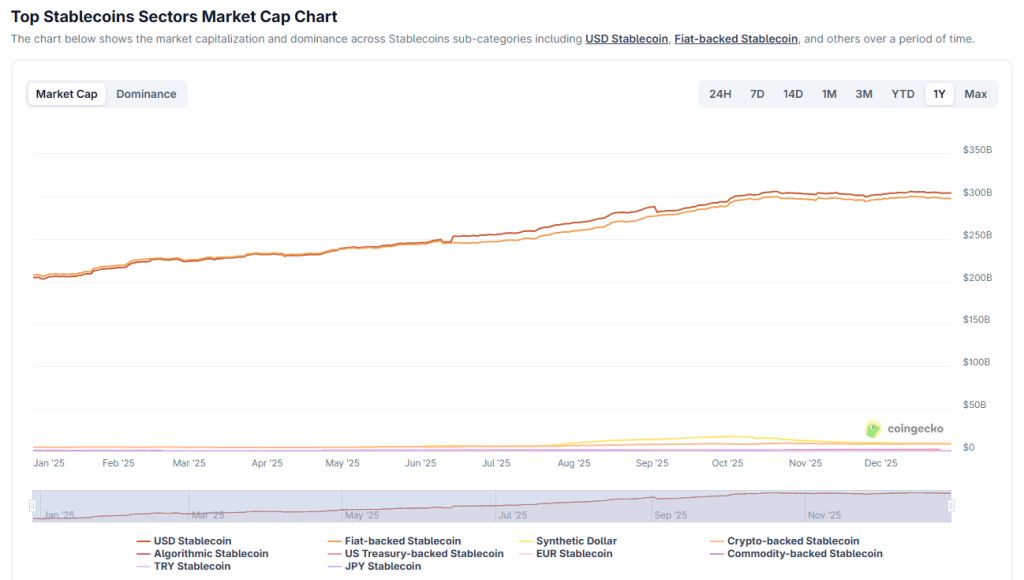
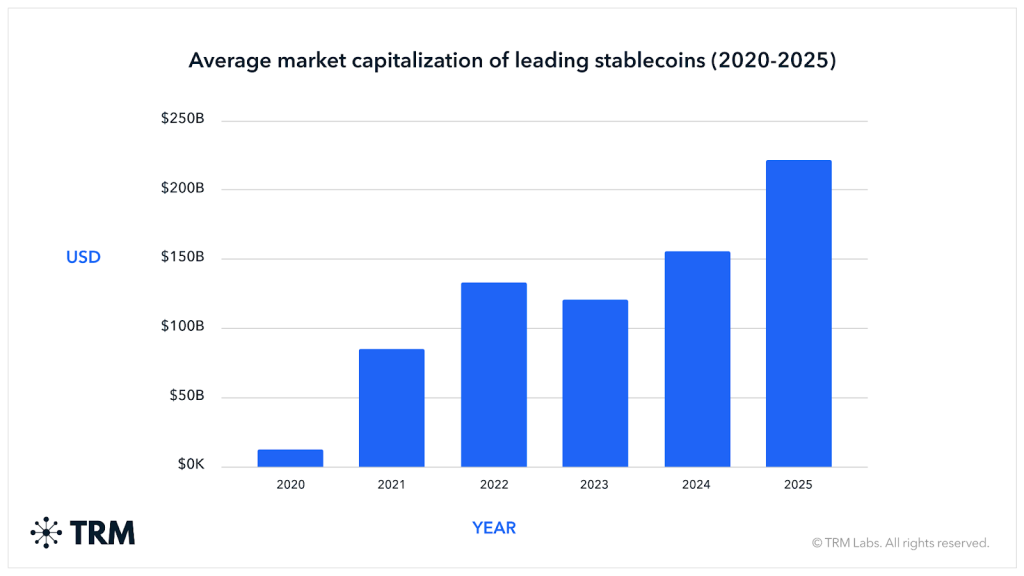
Easing regulation worldwide gave stablecoins fresh momentum, legitimising them among institutions. Their already hefty market cap set new records in 2025.
Per CoinGecko, market cap rose from $205bn to $312bn in 12 months, with dollar coins accounting for $304bn.


According to TRM Labs, stablecoin transfers exceeded $4trn in 2025, a record — and far above volumes at the likes of Visa or Mastercard.


Illicit use of digital assets fell by roughly 60% from the prior year.
Analysts noted the expansion of retail use of stablecoins, while big payments firms also moved:
- Visa announced a raft of crypto efforts, including adding new blockchains, integrating stablecoins into Visa Direct and direct cross-border payments in USDC;
- Citi Group will roll out stablecoin settlement with Coinbase;
- JPMorgan began actively deploying its JPM Coin deposit token and announced pilots using stablecoins for interbank operations.
Gold-backed stablecoins also surged. By December the segment’s cap exceeded $4bn, up nearly $3bn in a year.


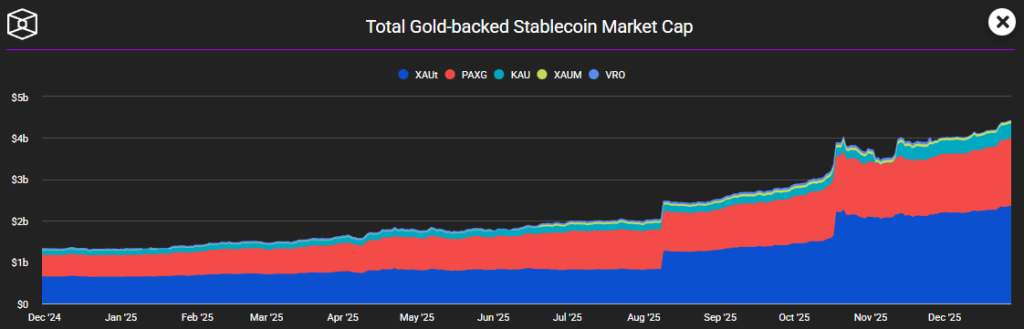
The leader is Tether’s XAUT at about $2.2bn, or 50% of the “gold” market. Paxos Gold (PAXG) is second at $1.35bn. Together they control nearly 90% of the sector.
A separate 2025 theme was tokenisation and RWA. The segment’s total market cap topped $19bn.


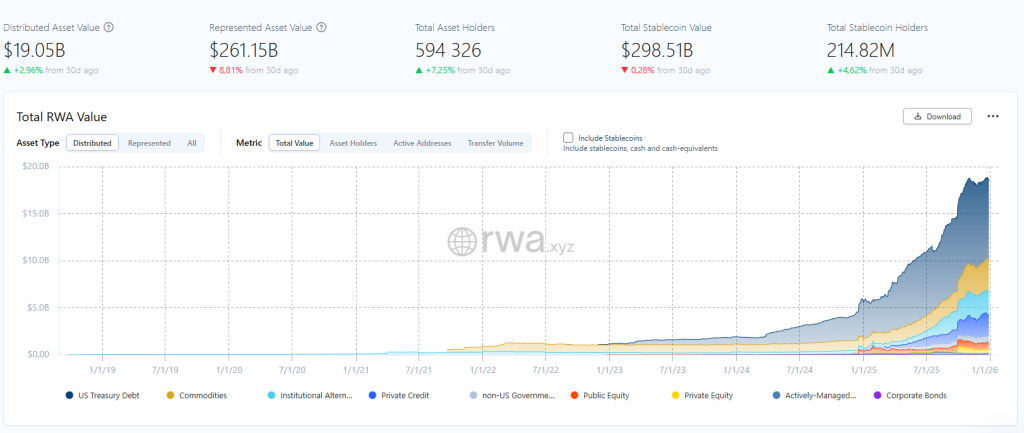
Some 429 products count over 590,000 holders. Private credit is the largest category, followed by US Treasuries.
Standard Chartered analysts reckon tokenised assets will rise to $2trn by 2028. The bank’s research head, Geoffrey Kendrick, says the rise of stablecoins laid the groundwork.
Strategy’s imitators
In 2025 interest in cryptoassets spread from governments to corporates. The pioneer for five years has been Strategy, Michael Saylor’s company — it holds 672,497 BTC worth over $58bn, according to BitcoinTreasuries.


Last year, dozens of firms began copying Strategy’s approach. While Strategy can still justify its buying, newcomers drew many questions.
In all, 211 companies now hold bitcoin, with about 1.08m BTC worth roughly $95.5bn on balance sheets — 5.1% of supply.
Meanwhile spot bitcoin ETFs’ AUM is around 1.37m BTC ($112.5bn), or 6.57% of supply. Institutional structures thus control over 11% of bitcoin’s float.
Another 67 firms added Ethereum, accumulating 6.81m ETH worth $19.9bn (5.6% of circulating supply).


ETH ETFs hold 61m coins worth $17.9bn — 5.07% of supply.
Eighteen organisations also hold Solana, with 18.3m SOL worth $2.25bn (2.97% of supply).

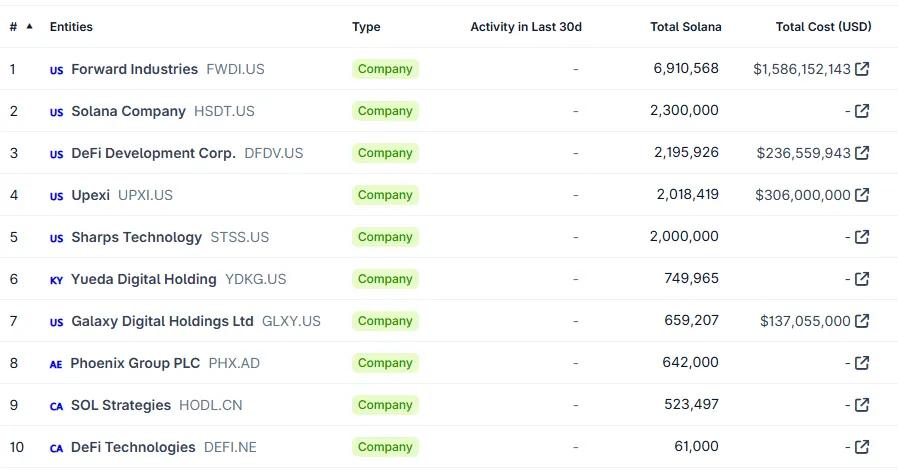
Some firms also accumulate BNB, Chainlink, Dogecoin, Hyperliquid, Sui and many others.
Problems for DAT companies began after autumn’s correction: summer saw many stocks trade at 3x to 10x premia, but the drawdown pushed median mNAV below one. Strategy’s now sits at 0.8.

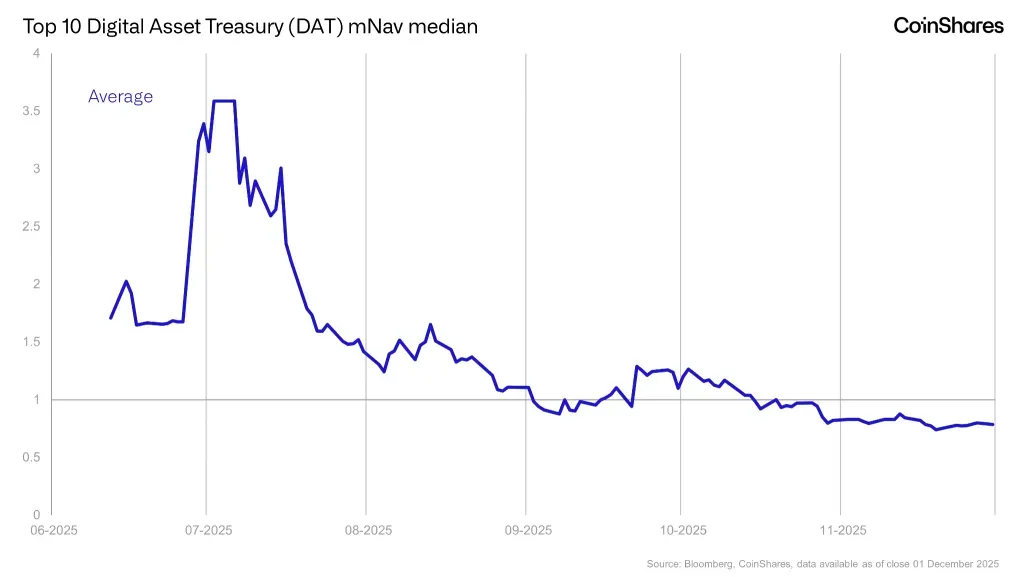
By year-end growth in corporate crypto reserves slowed sharply; some experts called it a bubble. Coinbase Institutional called the rise of corporate bitcoin reserves a key systemic risk.
The shakiness of some players raised fears of cascades and kept investors cautious.
Some risks have already materialised. In November, the DAT firm Sequans sold 970 BTC for $94.5m to repay debt after bitcoin’s fall, sending its shares down 16%.
Critics also seized on the botched December debut of Twenty One Capital, backed by Cantor Fitzgerald and Tether. Its shares fell 20% on day one, despite the firm having the third-largest bitcoin reserve.
A collapse of the DAT segment could weigh heavily on crypto. For now, with big players involved, the sector looks relatively stable and 2026 does not yet portend major trouble.
Celebrity memecoins
There was no shortage of memes in 2025. The market had seen quick, pointless Solana meme-coins, which faded fast; they gave way to celebrity tokens.
The wave was kicked off by the US president himself and his TRUMP. On January 18th Mr Trump announced an “official” memecoin on Solana. It jumped 220% in a day.
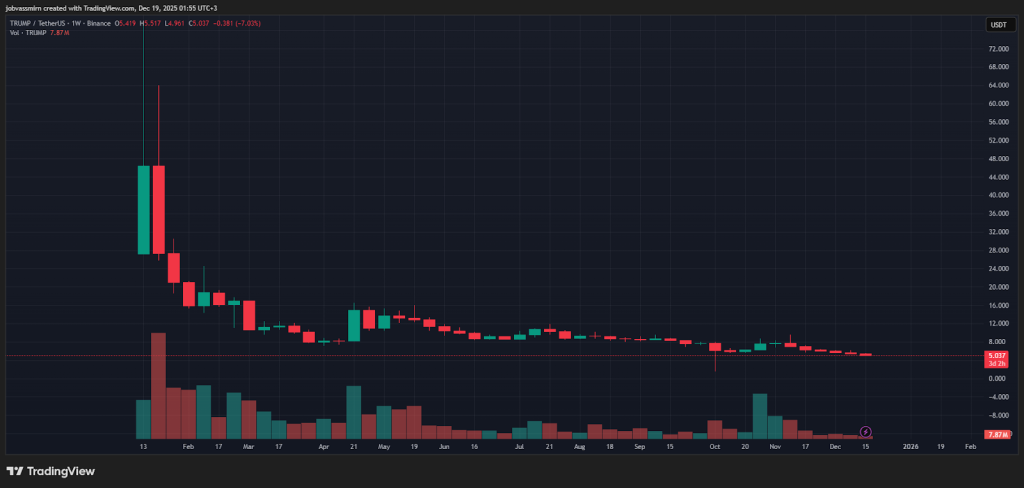
On January 19th it hit an ATH of $73, then crashed. TRUMP now trades around $5.
NYT estimates investors in the memecoin incurred about $2bn of losses, affecting more than 813,000 users.
Beyond disgruntled buyers, the presidential token raised ethical questions. The Senate’s investigative committee opened a probe into potential conflicts of interest.
A follow-up announcement of a dinner for TRUMP buyers prompted calls for impeachment. No sanctions have followed so far.
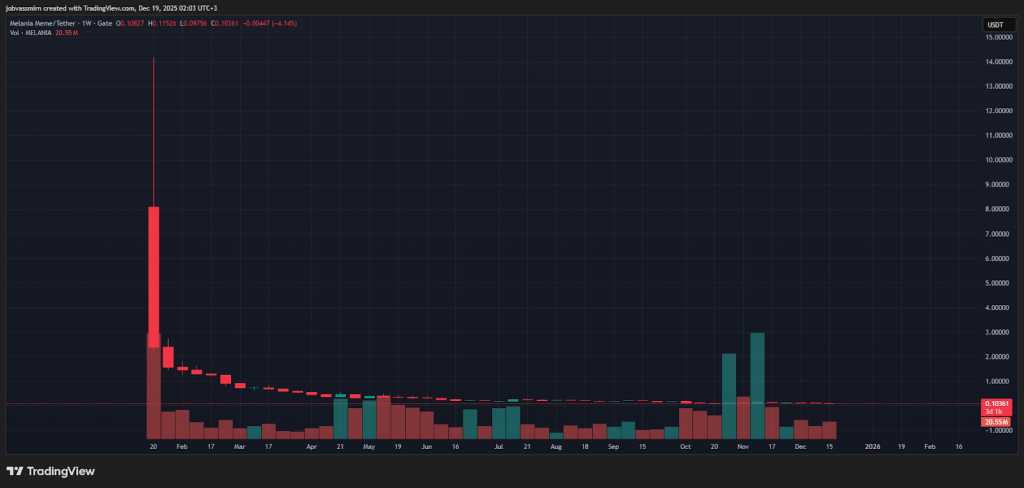
A day after TRUMP, a token from the president’s wife launched: MELANIA launched and traced a similar arc with smaller size — a spike then a plunge. From a $13 peak it trades near $0.1.
The token of Eric Trump met a similar fate. Within a day the ERICTRUMP memecoin’s market cap hit $140m before a 99% collapse.
The saga spurred concerns about possible insider trading. Some analysts observed a group of traders made nearly $100m on MELANIA’s launch.
Political memecoins did not stop there. The peak of the craze was LIBRA.
In February Argentina’s president Javier Milei promoted the token on social media. Within hours the price plunged 94%. Pitched as a “private initiative”, it was marketed as a way to “stimulate Argentina’s economic growth”.

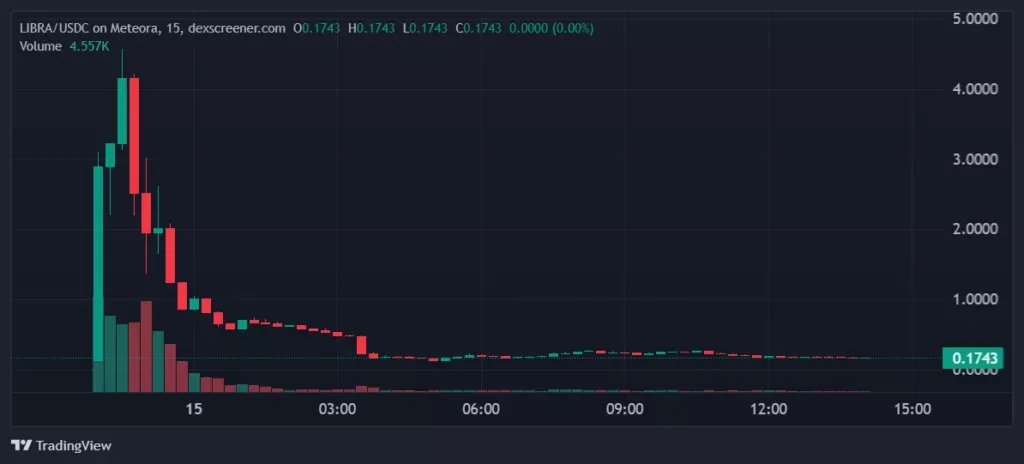
The scandal triggered a probe by Argentina’s Anti-Corruption Office. Mr Milei was later cleared, but America’s Department of Justice launched its own investigation.
Analytics firm Bubblemaps quickly linked LIBRA to Kelsier Ventures CEO Hayden Davis, whose team was behind several other memecoins, including MELANIA and YZY by rapper Kanye West.
Fraud accusations focused on Mr Davis and accomplices. Despite an international warrant, he spent the year launching celebrity tokens and draining wallets.
No star involved in promoting the scams has been held to account.
In hindsight, every headline celebrity token in 2025 ended badly. Yet authority and celebrity faith kept luring retail buyers. One hopes the churn taught some not to believe in easy money — even when promised by a president.
Perp-DEX
DeFi had a true breakout in 2025 with perp-DEX — decentralised derivatives exchanges. November volumes reached $1.31trn and an incomplete December saw $972m.


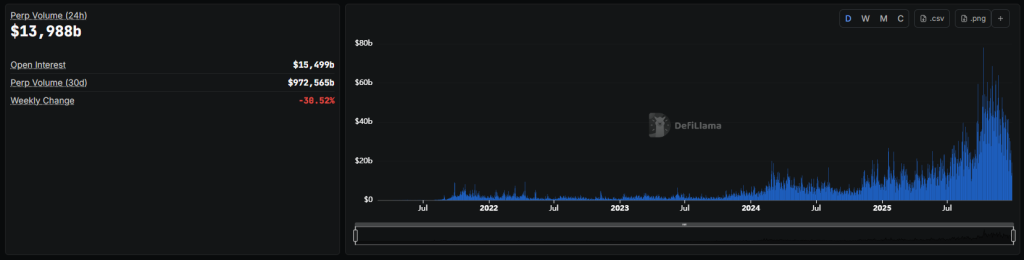
Top venues now include Lighter ($203bn), Aster ($171bn in the past 30 days) and Hyperliquid ($160bn).
Much of the credit goes to Hyperliquid, whose success spurred rivals to launch. High throughput, no KYC and ample liquidity made it a magnet for whales.
Hyperliquid also let traders track whales, including James Winn.
Hyperliquid could not hold the volume crown for long. It was overtaken by Aster, helped by Binance founder Changpeng Zhao.
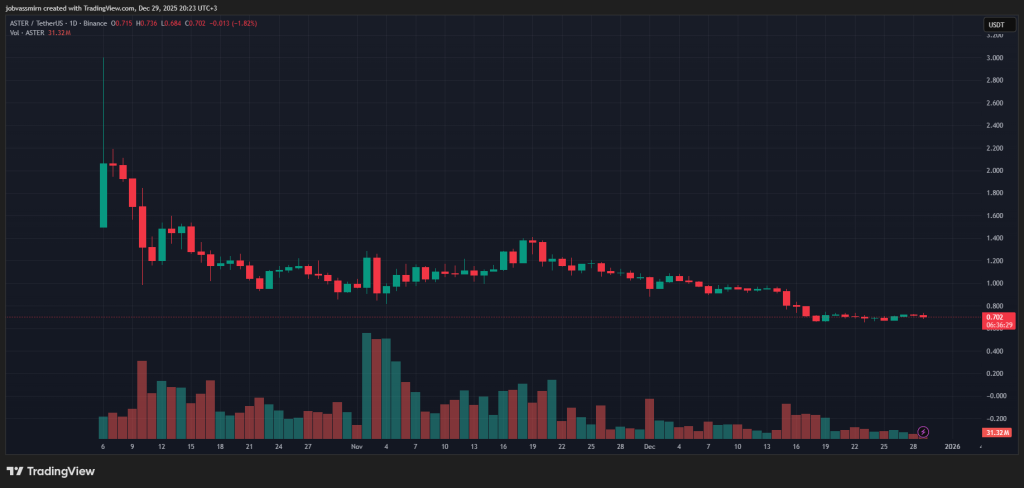
Aster lured users with points, while Mr Zhao’s involvement added buzz. Within days of its September launch, ASTER’s market cap hit several billion dollars, then faded by year-end.
TRON founder Justin Sun joined the fray too, announcing in October the launch of the SunPerp futures platform.
The frenzy was stoked by Lighter, which uses ZKP tech to verify operations. In autumn it launched an L2 mainnet and quickly climbed the volume ranks.
There were snags. Early in the year Hyperliquid faced controversies, including accusations of validator centralisation, DAO governance issues and questionable management decisions.
On March 26th, high-risk DEX positions of about $8m also threatened platform stability and client funds in the Hyperliquidity Provider Vault.
Later, Aster was suspected of inflating volumes. Even so, traders’ interest held up. With trust in centralised platforms eroding, perp-DEXs are taking a growing share.
Altcoin ETFs
Another by-product of America’s regulatory shift — specifically the SEC’s leadership change from Gary Gensler to Paul Atkins — was a wave of altcoin ETFs.
Over the year, products launched on coins previously deemed “unacceptable”, including ETH ETFs with staking and combined funds.
In September the first spot ETFs for XRP and Dogecoin launched in the US from REX Shares and Osprey Funds. These are not classic ETFs, however; they are registered under the Investment Company Act of 1940 with simplified listing procedures.
Mid-November brought approval of “full” XRP ETFs. Spot products from Canary (XRPC), 21Shares (TOXR), Grayscale (GXRP), Bitwise (XRP) and Franklin Templeton (XRPZ) now manage $1.1bn — 0.98% of XRP’s supply.
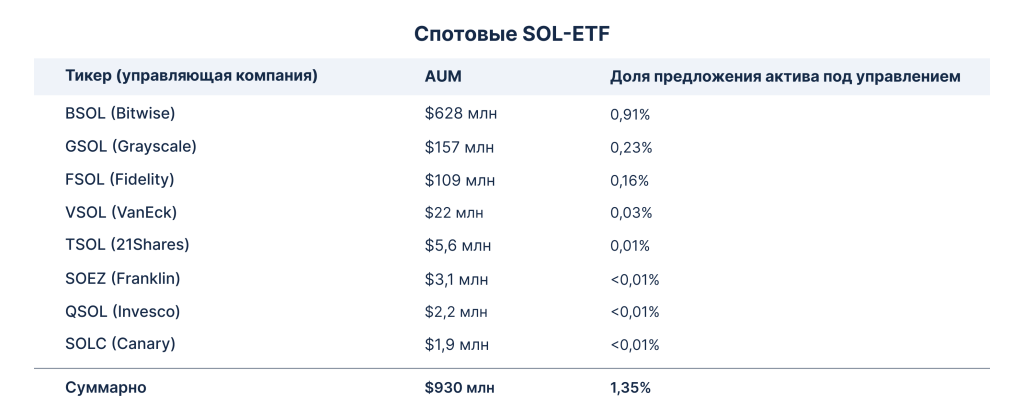
On October 28th Bitwise debuted BSOL, the first spot Solana ETF with staking, on the NYSE. The firm stakes 100% of holdings.
The next day Grayscale launched GSOL, converted from a trust; 77% of coins are staked. Six other firms offer Solana funds.


Later in autumn, Grayscale also launched a DOGE ETF, followed by Bitwise.
Other listed altcoins include LINK, HBAR and LTC.


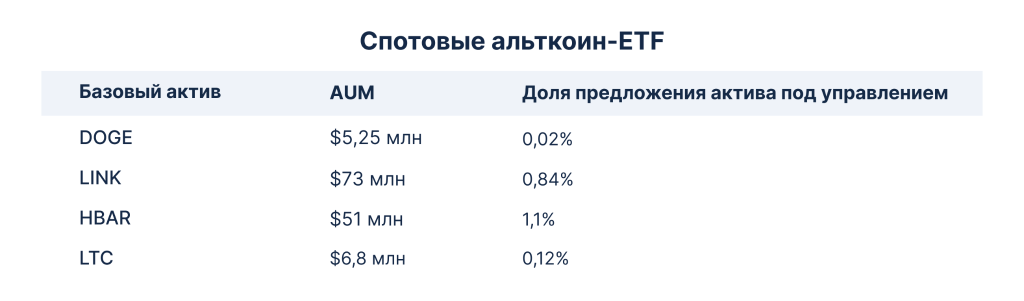
Manager activity and the success of many instruments suggest the trend will continue in 2026.
Experts expect traditional investors soon to access a broader set of crypto products that offer not only exposure to underlying assets but also features such as staking.
***
The year cemented digital assets: institutions arrived, regulators engaged. Bitcoin is taken seriously; blockchains are now part of mainstream finance.
The road ahead is not fully clear, and some see “tradification” as betrayal, but crypto stands on firmer ground and is ready to move on.
Stay with ForkLog. Happy New Year!